What was the California Gold Rush?
Short answer
The California Gold Rush was a period of mass migration to California following the discovery of gold at Sutter’s Mill on January 24, 1848. Over 300,000 people traveled to the territory, fundamentally transforming California’s economy, accelerating its path to statehood, and causing devastating long-term consequences for the region’s indigenous populations.
On this page
How did the California Gold Rush start?
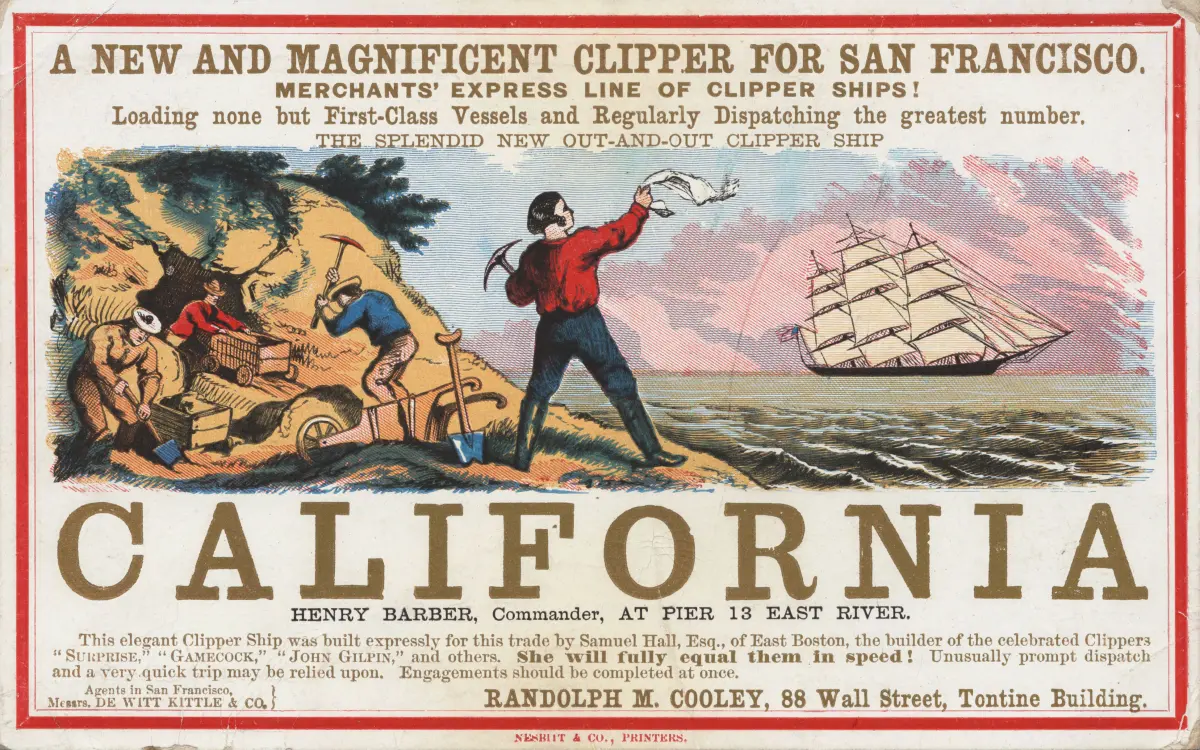
The discovery occurred when James W. Marshall, a carpenter working for John Sutter, spotted flakes of gold in the tailrace of a sawmill being built along the American River in Coloma. Despite Sutter’s attempts to keep the find secret to protect his land interests, word spread rapidly after merchant Samuel Brannan publicly announced the discovery in San Francisco. By mid-1848, the news reached the East Coast and international ports, triggering a massive influx of prospectors known as "forty-niners."
This event fundamentally altered the trajectory of the American West. Before 1848, California was a sparsely populated territory recently acquired from Mexico following the Mexican-American War. The sudden arrival of hundreds of thousands of immigrants, including people from China, Europe, and South America, forced the United States to expedite California’s admission to the Union. On September 9, 1850, California became the 31st state, bypassing the typical territorial phase due to its rapid population growth and economic significance.
What methods did miners use to find gold?
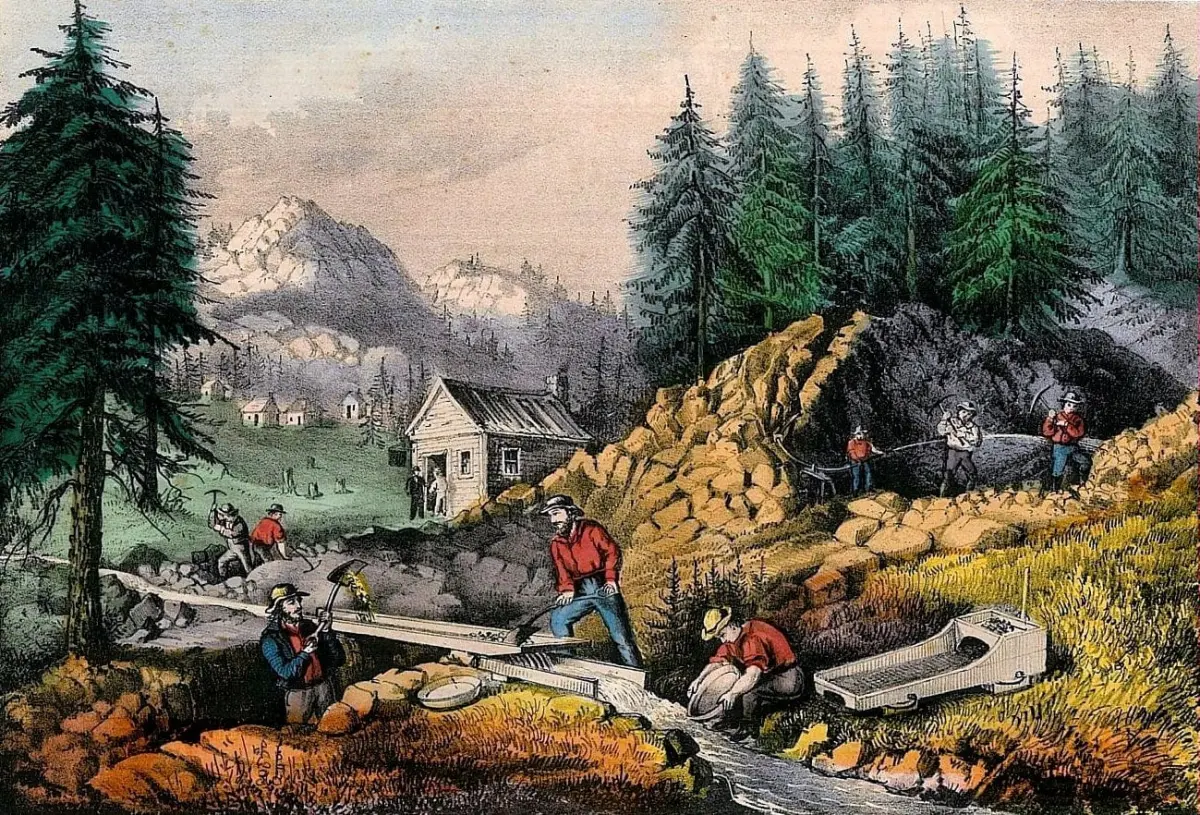
Early prospectors relied on simple, manual techniques to extract gold from riverbeds and streams. As surface gold became scarcer, miners developed more sophisticated tools to process larger volumes of earth. These methods ranged from individual labor to large-scale industrial operations that permanently scarred the landscape through hydraulic mining.
- Panning: Using a shallow metal or plastic pan to wash away silt and gravel, leaving behind heavier gold flakes.
- Rocker boxes: A wooden cradle that used water to sift through dirt, allowing heavier gold to catch on riffles.
- Long toms: A longer, more efficient version of the rocker box that required a steady stream of diverted water.
- Hydraulic mining: Blasting high-pressure water at hillsides to wash away soil and expose gold-bearing gravel, which caused massive environmental destruction.
While these tools were effective for finding gold, the physical toll was immense. Miners often worked in freezing water for twelve hours a day, suffering from rheumatism, scurvy, and dysentery. The competition for claims was fierce, often leading to violence and the establishment of informal, often brutal, mining camp laws.
Why did the Gold Rush change California’s population?
The demographic shift was unprecedented in American history. In 1848, the non-indigenous population of California was estimated at roughly 15,000 people; by 1852, that number had surged to over 250,000. This influx created an instant demand for goods, services, and infrastructure, turning small outposts like San Francisco into bustling, chaotic metropolises almost overnight.
- Merchants and suppliers often made more money than the miners themselves by selling tools, food, and clothing at inflated prices.
- The diverse population brought global culinary, architectural, and cultural influences to the region.
- Rapid urbanization led to the development of early banking, legal systems, and transportation networks.
- The sudden wealth disparity created a high-stakes environment where social status was constantly in flux.
However, this growth came at a horrific cost to California’s native inhabitants. The indigenous population plummeted from approximately 150,000 in 1848 to roughly 30,000 by 1870. They faced state-sponsored violence, forced displacement, and the introduction of foreign diseases, leading to what many historians categorize as a systematic genocide.
Common mistakes when researching the Gold Rush
Many people mistakenly believe that most miners became wealthy. In reality, the vast majority of prospectors barely broke even, often spending their life savings on the arduous journey to California only to find meager returns. Another common error is viewing the Gold Rush as a purely American phenomenon, ignoring the significant contributions and struggles of the thousands of Chinese, Chilean, and Mexican immigrants who participated.
When studying this era, avoid these common pitfalls:
- Assuming that gold was easy to find; most accessible surface gold was depleted within the first few years.
- Overlooking the role of the 1849 Constitutional Convention, which established the legal framework for the new state.
- Ignoring the environmental legacy, such as the massive amounts of sediment that clogged rivers and destroyed farmland in the Central Valley.
- Believing that the Gold Rush ended abruptly; while the peak occurred between 1849 and 1855, mining operations continued for decades in various forms.
How to visit Gold Rush historical sites today
For those interested in the history of the era, California maintains several well-preserved sites that offer a glimpse into the life of a forty-niner. The most significant is the Marshall Gold Discovery State Historic Park in Coloma, which features a reconstruction of the original sawmill and numerous historic buildings. Other locations include Columbia State Historic Park, which provides an immersive experience of a "living" gold rush town.
When planning a visit, keep these tips in mind:
- Check the official park websites for seasonal hours, as many sites are located in remote areas with limited access during winter.
- Participate in guided tours or gold-panning demonstrations, which are often led by experts who can explain the geology of the region.
- Visit museums in Sacramento and San Francisco to see original artifacts, including mining equipment, period clothing, and personal journals.
- Respect the historical integrity of the sites by staying on marked paths and avoiding the removal of any natural or historical items.
Key facts
- The Gold Rush began on January 24, 1848, when James W. Marshall discovered gold at Sutter’s Mill in Coloma, California.
- Approximately 300,000 people migrated to California from the United States and abroad between 1848 and 1855.
- Prospectors often used a simple metal pan to wash sediment from riverbeds, relying on gold’s high density to settle at the bottom.
- Merchants often made more money than miners by selling supplies like shovels, picks, and sturdy denim trousers at inflated prices.
- To pan for gold effectively, keep your pan submerged and use a circular motion to wash away lighter silt while keeping the heavy gold flakes.
- Avoid "gold fever" by researching the legal status of land before prospecting, as modern mining claims are strictly regulated and protected by law.
The bottom line
The California Gold Rush was a transformative period that reshaped the American West through massive migration and economic expansion. While the dream of instant wealth drew hundreds of thousands to the region, the lasting reality was a permanent shift in demographics, infrastructure, and statehood. Despite the environmental destruction and human suffering it caused, the era remains a defining chapter in the rapid development of the United States.
People also ask
How did the Gold Rush change California’s population?
California’s non-native population exploded from roughly 15,000 in 1848 to over 300,000 by 1855. This rapid influx accelerated California's admission to the Union as the 31st state in 1850.
What were the primary routes taken by prospectors?
Travelers arrived by sea around Cape Horn, across the Isthmus of Panama, or overland via the California Trail. Each route was perilous, often taking months and exposing migrants to disease and starvation.
Did most miners become wealthy during the Gold Rush?
Very few miners struck it rich; most barely earned enough to cover their daily expenses for food and tools. The high cost of living in mining camps meant that wealth was concentrated among successful merchants and mine owners.
What was the environmental impact of the Gold Rush?
Hydraulic mining techniques used high-pressure water cannons to blast hillsides, which caused massive erosion and clogged rivers with sediment. This destroyed local ecosystems and permanently altered the landscape of the Sierra Nevada foothills.
How did the Gold Rush affect Indigenous populations?
The arrival of settlers led to the displacement, enslavement, and systematic genocide of California’s Native American tribes. Their population plummeted due to introduced diseases, violence, and the destruction of traditional food sources.
What is the legacy of the Gold Rush today?
The era established California as a global economic powerhouse and a center for innovation and migration. It left a lasting cultural imprint on the American West, symbolized by the state's nickname, the Golden State.
This answer was created with the help of AI research tools and reference sources. Spotted an error? Let us know — we correct mistakes quickly. See our editorial policy.