What colors make gold?
Short answer
Gold is a chemical element with the symbol Au and cannot be created by mixing other colors. However, you can replicate the visual appearance of gold using a combination of yellow, brown, and white pigments. In digital design, gold is achieved by blending specific shades of yellow and orange with darker gradients.
On this page
How to mix paint to make gold
Creating a metallic gold appearance with paint requires more than just yellow. Because gold is a reflective metal, standard flat pigments cannot perfectly mimic its luster. To achieve the best visual approximation, artists typically combine a primary yellow base with small amounts of burnt umber and white to create a dull, metallic-looking mustard tone.
For a more realistic effect, you must incorporate metallic mediums into your palette. Using plain yellow paint will only result in a matte ochre color rather than a shimmering finish. Follow these steps to prepare a gold-like paint mixture:
- Start with a base of bright cadmium yellow.
- Add a tiny drop of burnt umber to deepen the tone.
- Mix in a small amount of white to increase opacity.
- Incorporate a metallic gold acrylic medium or mica powder to provide the necessary light reflection.
How to create gold colors in digital design
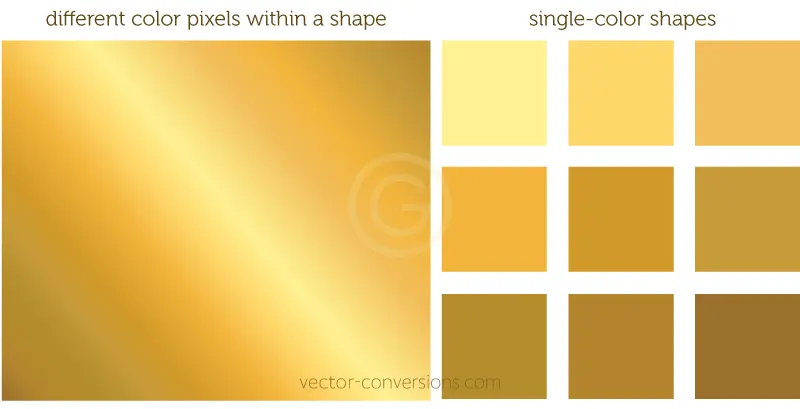
In digital environments, gold is simulated using gradients rather than a single solid color. Since computer screens emit light, you must use a combination of yellow, orange, and brown hues to mimic the way light hits a metallic surface. Designers often use a linear or radial gradient to create the illusion of depth and shine.
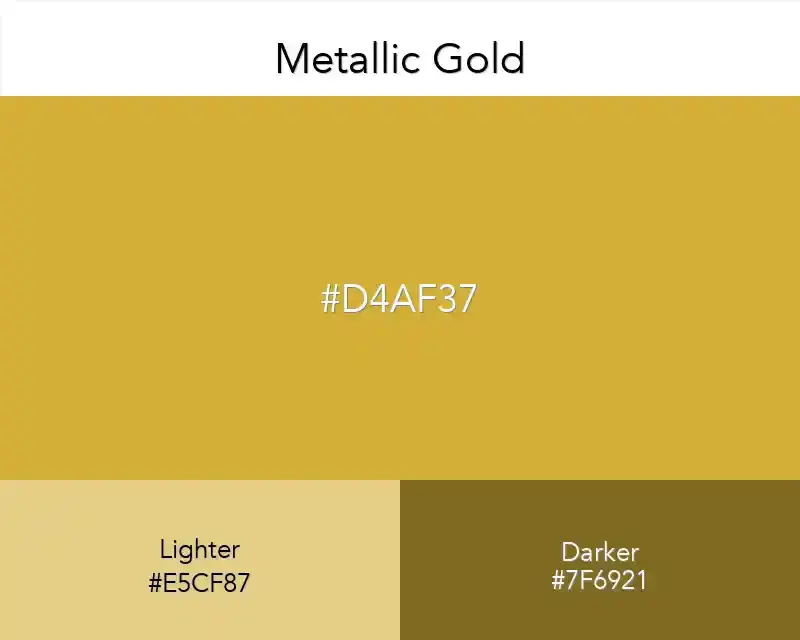
To build a standard gold gradient, you should use a color palette that transitions between light and dark tones. The following color codes are commonly used to represent gold in hex format:
- Pale gold: #E6BE8A
- Metallic gold: #D4AF37
- Darker gold shadow: #B8860B
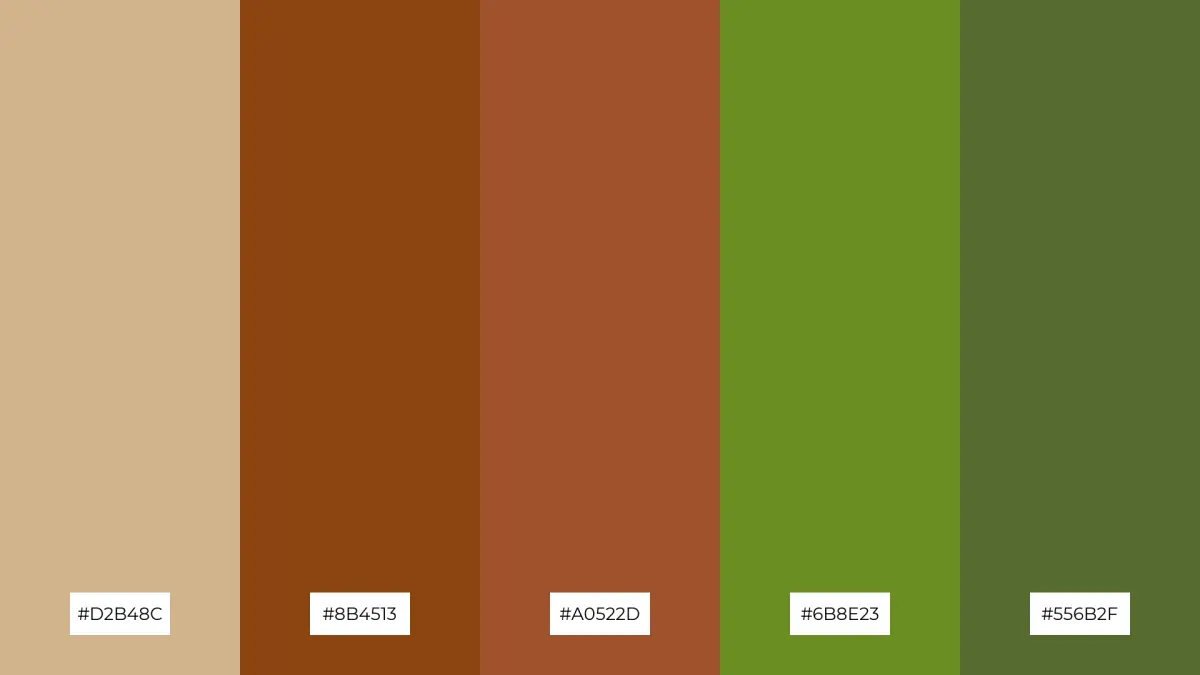
- Deep bronze: #8B4513
By placing the lightest color in the center and the darkest color at the edges, you replicate the highlight and shadow patterns typical of polished gold.
Why gold looks different under different lights
Gold is highly reflective, meaning its appearance changes drastically depending on the light source. This phenomenon is known as metamerism, where colors appear to shift when the spectral composition of the light changes. Under warm incandescent light, gold takes on a rich, reddish-yellow hue, while cool fluorescent light makes it appear greenish or pale.
When you are trying to match a gold color, you must test your mixture under various lighting conditions. A paint or digital color that looks perfect in a studio might appear dull or brownish in natural daylight. Always observe your work in a neutral, white-light environment to ensure the color balance remains consistent. If you are working on a physical project, consider how the texture of the surface impacts the way light bounces off the gold pigment.
Common mistakes when mixing gold
One of the most frequent errors is adding too much black paint to a mixture. Because gold is essentially a bright yellow, black will quickly turn the mixture into a muddy, olive-green color. If you need to darken your gold, always opt for a warm brown or a deep orange instead of black.
Another common mistake is failing to account for the sheen of the material. Gold is defined by its ability to reflect light, so using a matte finish will almost always result in an unconvincing look. Avoid these common pitfalls to maintain the integrity of your gold color:
- Avoid over-mixing, which can cause the metallic particles to settle and lose their shine.
- Do not use blue or purple pigments, as these will neutralize the yellow and create a dull gray.
- Do not apply the color too thinly, as gold requires a certain level of opacity to look like a solid metal.
Best practices for achieving a metallic finish
To achieve the most authentic look, professionals often use a two-step process involving a base coat and a metallic top coat. The base coat establishes the warm, yellow foundation, while the top coat provides the reflective particles necessary for the metallic effect. This layering technique mimics the way light interacts with the crystalline structure of real gold.
When working with metallic powders or mica, ensure that you use a clear binder or varnish to suspend the particles. Without a proper binder, the metallic effect will be inconsistent and prone to rubbing off over time. By following these refined techniques, you can successfully replicate the aesthetic of gold in your art, design, or craft projects. Always remember that gold is a play of light and shadow, so focus on the contrast between your highlights and your shadows to create a truly convincing result.
Key facts
- Pure gold is a chemical element with the symbol Au and is naturally a bright, yellow metallic color.
- You cannot create gold by mixing pigments or paints; it is a precious metal, not a color derived from a spectrum.
- To mimic the appearance of gold in art, combine yellow ochre, raw sienna, and a touch of white or metallic bronze powder.
- Jewelers create different "colors" of gold alloys by mixing pure gold with other metals like copper, silver, or nickel.
- Rose gold is achieved by increasing the copper content in the alloy, which gives the metal a distinct pinkish hue.
- White gold is created by mixing pure gold with white metals such as palladium, silver, or nickel and often plating it with rhodium.
The bottom line
Gold is a singular chemical element rather than a composite color, meaning it cannot be manufactured by mixing pigments. While artists use specific paint combinations to simulate its metallic luster, jewelers alter the appearance of real gold by alloying it with metals like copper or silver. Understanding these distinctions helps clarify why gold remains a unique, precious material that cannot be replicated through simple color mixing.
People also ask
Why does gold have a yellow color?
Gold appears yellow because of its unique electronic structure, which absorbs blue and violet light while reflecting longer wavelengths. This physical property is inherent to the element's atomic configuration and cannot be replicated by combining other colors.
Can I turn silver into gold?
No, you cannot turn silver into gold through chemical or physical mixing. Gold is a distinct element on the periodic table, and changing one element into another requires nuclear transmutation, which is not possible through standard artistic or metallurgical processes.
What is "fool's gold"?
Fool's gold is the common name for the mineral pyrite, which has a brassy yellow metallic luster that resembles gold. While it looks similar, it is an iron sulfide and lacks the malleability and chemical stability of genuine gold.
How do jewelers measure gold purity?
Jewelers measure gold purity in karats, where 24 karats represents pure gold. A 14-karat piece consists of 14 parts gold and 10 parts of other metals, which are added to increase durability and change the metal's color.
Is green gold a real thing?
Yes, green gold is an alloy created by mixing pure gold with silver. The specific ratio of metals shifts the light reflection properties of the alloy, resulting in a pale, greenish-yellow metal.
Why is some gold jewelry magnetic?
Genuine gold is not magnetic, so if a piece of jewelry is attracted to a magnet, it contains other metals like iron, nickel, or cobalt. This usually indicates that the item is either gold-plated or a low-quality alloy.
This answer was created with the help of AI research tools and reference sources. Spotted an error? Let us know — we correct mistakes quickly. See our editorial policy.