What is the speed of light?
Short answer
The speed of light in a vacuum is exactly 299,792,458 meters per second, or approximately 186,282 miles per second. This universal physical constant, denoted by the symbol c, represents the maximum speed at which all conventional matter and information in the universe can travel, serving as a fundamental pillar of modern physics.
On this page
What is the speed of light?
The speed of light is the velocity at which electromagnetic radiation propagates through a vacuum. Because light is composed of photons that have no mass, they can reach this ultimate speed limit without requiring infinite energy. This constant is central to Albert Einstein’s theory of special relativity, which dictates that the laws of physics remain consistent for all observers, regardless of their motion.
When light travels through different mediums, such as water, glass, or air, its speed decreases because it interacts with the atoms of the material. This phenomenon is known as refraction. In water, for instance, light travels at about 75 percent of its vacuum speed. Despite these variations in different substances, the speed in a vacuum remains the absolute limit for the universe.
How long does it take to travel through space?
Because the universe is vast, light takes a measurable amount of time to travel between celestial bodies. We use the term "light-year" to describe the distance light travels in one year, which is roughly 5.88 trillion miles. These measurements help astronomers understand the scale of the cosmos and the age of the objects we observe.
- Earth to the Moon: Approximately 1.3 seconds.
- Earth to the Sun: Approximately 8 minutes and 20 seconds.
- Sun to Pluto: Approximately 5.5 hours.
- Earth to the nearest star, Proxima Centauri: 4.24 years.
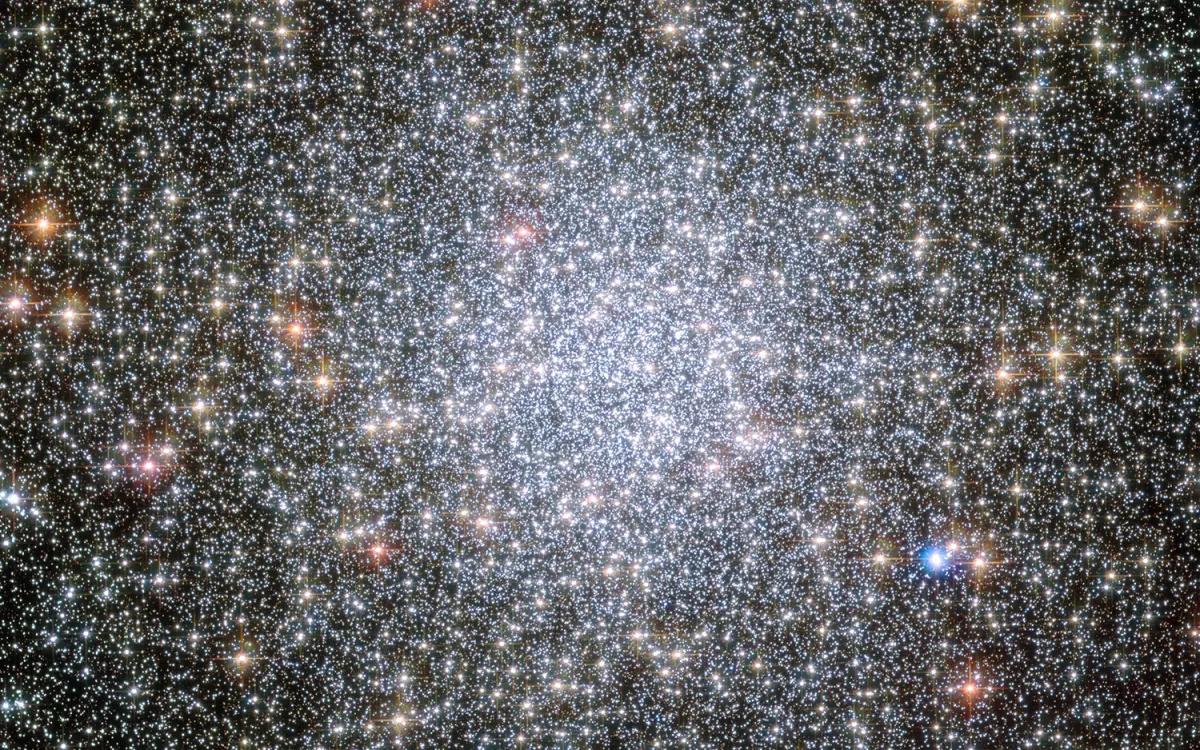
When you look at stars in the night sky, you are essentially looking back in time. Because the light from these distant objects takes years to reach our eyes, we see them as they existed in the past rather than how they appear at this exact moment.
How do scientists measure the speed of light?
Historically, early scientists believed light traveled instantaneously. In 1676, Danish astronomer Ole Rømer provided the first quantitative measurement by observing the eclipses of Jupiter’s moon, Io. He noticed that the timing of these eclipses shifted depending on the distance between Earth and Jupiter, concluding that light must have a finite speed.
Later, in 1849, Hippolyte Fizeau conducted a terrestrial experiment using a rotating toothed wheel and a distant mirror. By measuring how long it took for a beam of light to pass through the teeth, reflect off the mirror, and return through a different gap, he calculated a value remarkably close to the modern standard. Today, we define the meter based on the distance light travels in a vacuum during a specific fraction of a second, ensuring the constant remains perfectly accurate.
Common mistakes when calculating light speed
A frequent error is assuming that the speed of light is the same in all environments. While c is a constant in a vacuum, light slows down significantly when passing through denser media. If you are calculating the travel time of a laser through a fiber optic cable, you must use the refractive index of the glass rather than the vacuum constant.
Another common mistake involves confusing the speed of light with the speed of sound. Sound requires a physical medium like air or water to travel and moves at roughly 343 meters per second in air. Light is nearly a million times faster. If you are observing a lightning strike, you see the flash almost immediately, while the thunder follows much later because the sound waves are traveling at a much slower pace.
Why does the speed of light matter?
The speed of light is the foundation for the most famous equation in physics, E=mc². This formula explains that energy and mass are interchangeable, which is the principle that powers the Sun and nuclear reactors. Without this specific speed limit, the conversion of mass into energy would not function in the way required to sustain stars and life.
- It enables modern telecommunications by allowing data to travel via fiber optics.
- It defines the constraints of GPS technology, which must account for the time light takes to reach receivers from satellites.
- It provides the basis for the cosmic distance ladder, allowing us to map the structure of the universe.
- It limits the speed of information transfer, meaning that real-time communication between Earth and distant space probes is physically impossible.
By understanding this constant, we gain insight into the fundamental structure of space and time. It serves as the ultimate "speed limit" that governs everything from the smallest subatomic interactions to the expansion of the entire universe.
Key facts
- The speed of light in a vacuum is exactly 299,792,458 meters per second.
- In everyday units, this is approximately 186,282 miles per second.
- Light travels from the Sun to the Earth in about 8 minutes and 20 seconds.
- Nothing in the universe can travel faster than the speed of light in a vacuum.
- Light slows down when passing through materials like water, glass, or air.
- To calculate distance in space, remember that one light-year is about 5.88 trillion miles.
The bottom line
The speed of light is a fundamental constant of the universe, serving as the ultimate cosmic speed limit. At approximately 300,000 kilometers per second, it dictates how we perceive the universe, from the delay in sunlight reaching Earth to the light-years required to observe distant stars. Understanding this constant is essential for modern physics, enabling technologies like GPS and our comprehension of time and space.
People also ask
Does light always travel at the same speed?
No, light only maintains its maximum speed in a vacuum. When light passes through mediums like water or diamond, it slows down significantly due to interactions with atoms.
Why can't objects with mass travel at the speed of light?
According to Einstein’s theory of relativity, as an object with mass approaches the speed of light, its relativistic mass becomes infinite. This would require an infinite amount of energy to accelerate further, making it physically impossible.
How do scientists measure the speed of light so precisely?
Scientists use laser interferometry and atomic clocks to measure the time it takes for light to travel a known distance. The current definition is fixed by international agreement based on the meter's definition relative to light's travel time.
Can anything travel faster than light?
While physical objects cannot, the expansion of the universe itself can move galaxies apart at speeds exceeding light. Additionally, some quantum phenomena appear to correlate instantaneously, though they do not transmit usable information faster than light.
Is the speed of light constant in all directions?
Yes, the speed of light is isotropic, meaning it remains the same regardless of the direction of travel. This principle is a fundamental pillar of modern physics and the basis for the theory of special relativity.
What happens if you could travel at the speed of light?
Time would effectively stop for the traveler, a phenomenon known as time dilation. From the perspective of an outside observer, the traveler would appear to have infinite mass and zero length in the direction of motion.
This answer was created with the help of AI research tools and reference sources. Spotted an error? Let us know — we correct mistakes quickly. See our editorial policy.