What is the speed of sound?
Short answer
The speed of sound is approximately 343 meters per second (1,125 feet per second) in dry air at a temperature of 20°C (68°F). This speed is not a universal constant; it varies significantly depending on the medium, such as air, water, or steel, and shifts based on temperature, density, and atmospheric pressure.
On this page
Why the speed of sound changes
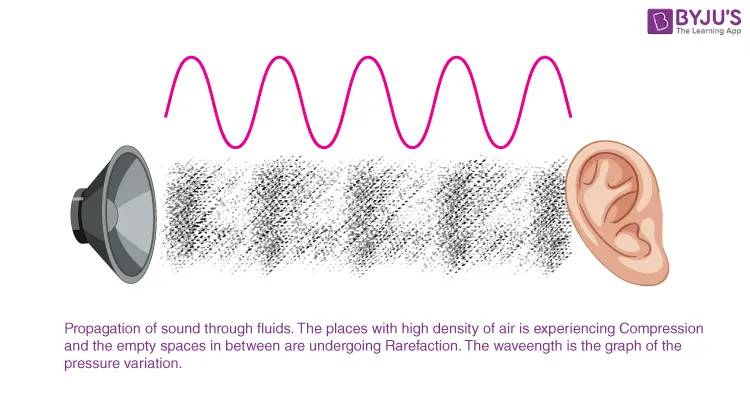
The speed of sound is essentially the rate at which pressure waves travel through a medium. Because sound requires molecules to collide to transmit energy, the physical properties of the material dictate how quickly that transmission occurs. In gases, sound moves slower because molecules are far apart, while in solids, the tightly packed atomic structure allows vibrations to pass through almost instantly.
Temperature is the most significant factor affecting sound speed in air. As air warms, molecules gain kinetic energy and move more rapidly, allowing them to collide and transfer sound energy more efficiently. Conversely, in colder temperatures, the slower movement of molecules results in a decrease in sound velocity. This is why sound travels faster on a hot summer day than during a freezing winter night.
- Air at 0°C: 331 meters per second
- Air at 20°C: 343 meters per second
- Air at 100°C: 386 meters per second
How to calculate the speed of sound
To determine the speed of sound in air at a specific temperature, you can use a simple linear approximation. For every degree Celsius increase in temperature, the speed of sound increases by approximately 0.6 meters per second. This formula is highly reliable for standard atmospheric conditions near sea level and is frequently used by meteorologists and aviation professionals to calibrate equipment.
- Start with the baseline speed of 331 meters per second at 0°C.
- Identify the current air temperature in degrees Celsius.
- Multiply the temperature by 0.6.
- Add this product to the baseline speed to find the approximate velocity.
If you are working in Fahrenheit, remember to first convert the temperature to Celsius by subtracting 32 and then multiplying by 5/9. Failing to convert units correctly is the most common error when performing these calculations, leading to significant inaccuracies in distance estimations.
How long does it take for sound to travel
You can estimate your distance from a lightning strike by timing the delay between the visual flash and the arrival of the thunder. Because light travels nearly instantaneously, the time gap represents the duration sound takes to cover the distance between the source and your ears. By counting the seconds and applying the constant for the speed of sound, you can determine how far away the event occurred.
If you count five seconds between seeing lightning and hearing thunder, the strike is roughly 1.7 kilometers (about 1 mile) away. This method provides a practical way to assess proximity to dangerous weather events. Always prioritize safety over precision; if the time gap is very short, seek shelter immediately rather than attempting to perform complex calculations, as sound travels faster than human reaction times.
Why sound travels faster in water
Sound travels significantly faster in liquids and solids than in air because of the increased density and the elasticity of the medium. In water, sound moves at approximately 1,480 meters per second, which is more than four times faster than in air. This occurs because water molecules are much closer together than air molecules, allowing the pressure wave to propagate through the liquid with far less resistance.
This property is essential for marine life and technology. Whales use these high-speed, long-distance sound waves to communicate across vast oceanic basins, while sonar systems rely on the predictable speed of sound in water to map the seafloor or detect submarines. Engineers must account for salinity and pressure, as these factors also influence the speed of sound in deep-sea environments, making underwater navigation a complex science.
Common mistakes when measuring sound
One frequent mistake is assuming that sound speed remains constant regardless of the environment. Many people mistakenly believe that altitude does not affect sound, yet as air density decreases at higher elevations, the speed of sound changes. Pilots and aeronautical engineers must constantly adjust their calculations for the "Mach number," which is the ratio of an object's speed to the local speed of sound in the surrounding air.
Another error involves ignoring the influence of wind. Wind does not change the speed of sound relative to the air, but it does change the speed of sound relative to the ground. If you are standing downwind from a source, the sound will reach you faster because the moving air mass carries the sound waves along with it. Always consider the direction of airflow when attempting to measure or predict the arrival time of distant noises.
Key facts
- The speed of sound in dry air at 20°C (68°F) is approximately 343 meters per second, or 1,235 kilometers per hour.
- Sound travels faster through solids and liquids than through gases because molecules are packed more tightly together.
- Temperature is the primary factor affecting speed in air; sound travels faster as the air temperature increases.
- You can estimate your distance from a lightning strike by counting the seconds between the flash and the thunder, dividing by three to get kilometers.
- Supersonic flight occurs when an aircraft travels faster than the speed of sound, creating a shock wave known as a sonic boom.
- Avoid the common mistake of assuming sound travels at a constant speed; it varies significantly based on altitude, humidity, and medium density.
The bottom line
The speed of sound is not a fixed constant but a dynamic value determined by the medium and temperature. While we often reference the standard speed in air, sound moves significantly faster through denser materials like steel or water. Understanding these variations helps explain everyday phenomena, from the delay of distant thunder to the engineering challenges of supersonic aviation, highlighting the physical nature of acoustic waves.
People also ask
Does sound travel through a vacuum?
No, sound is a mechanical wave that requires a medium, such as air, water, or metal, to propagate. In the vacuum of outer space, there are no particles to vibrate, meaning sound cannot travel.
Why does sound travel faster in water than in air?
Water is much denser than air and its molecules are more closely linked, allowing vibrations to transfer energy more efficiently. Sound travels through water at about 1,480 meters per second, roughly four times faster than in air.
What is the Mach number?
A Mach number is a dimensionless quantity representing the ratio of an object's speed to the speed of sound in the surrounding medium. Mach 1 is exactly the speed of sound, while Mach 2 is twice that speed.
Does humidity affect how fast sound travels?
Yes, sound travels slightly faster in humid air than in dry air. This occurs because water vapor molecules are lighter than nitrogen and oxygen molecules, making the air less dense and easier for sound waves to move through.
How does altitude impact the speed of sound?
As altitude increases, the air temperature typically drops, which slows down the speed of sound. Pilots must account for these changes in air density and temperature to maintain accurate navigation and performance metrics.
Can sound travel faster than light?
No, nothing can travel faster than the speed of light in a vacuum, which is approximately 299,792 kilometers per second. Sound is millions of times slower than light, which is why you see a firework explode before you hear the bang.
This answer was created with the help of AI research tools and reference sources. Spotted an error? Let us know — we correct mistakes quickly. See our editorial policy.