What is the greenhouse effect?
Short answer
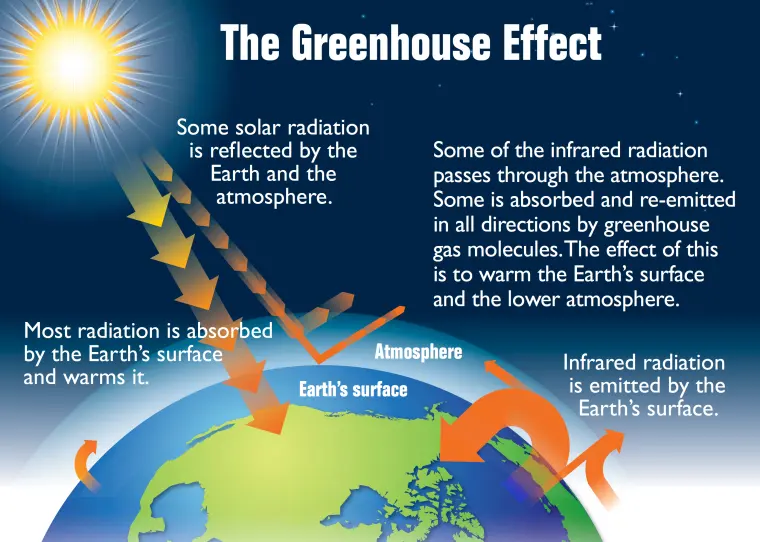
The greenhouse effect is a natural process where atmospheric gases trap heat radiating from Earth’s surface, warming the planet to temperatures capable of supporting life. By absorbing infrared radiation, gases like carbon dioxide and methane prevent heat from escaping into space, acting similarly to the glass walls of a greenhouse.
On this page
Why the greenhouse effect happens
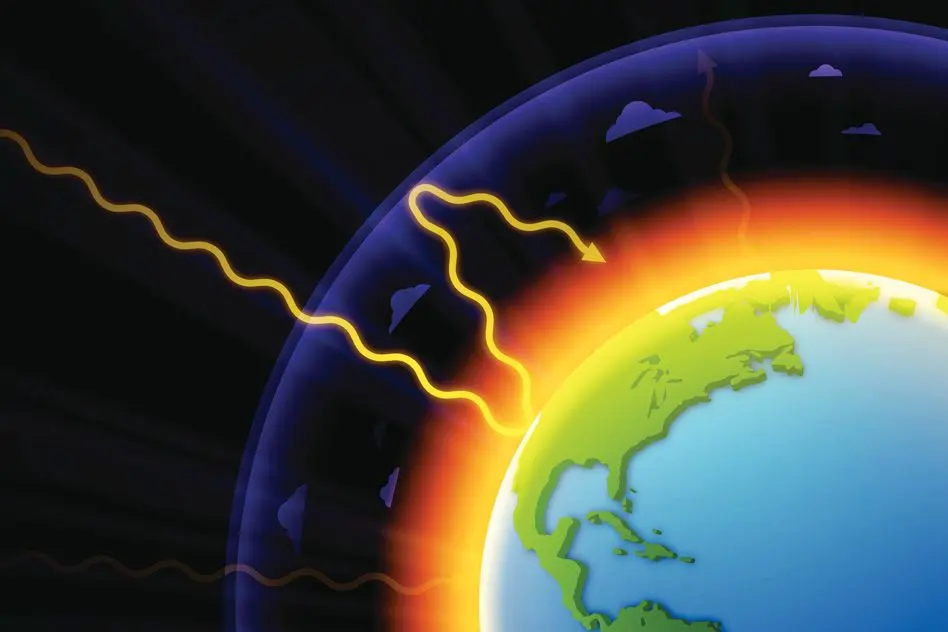
The greenhouse effect occurs because Earth’s atmosphere is transparent to incoming sunlight but opaque to the infrared radiation emitted by the surface. When solar energy reaches the planet, the ground absorbs it and re-emits it as heat. Greenhouse gases, including water vapor, carbon dioxide, methane, and nitrous oxide, absorb this outgoing energy and radiate it back toward the surface. Without this mechanism, Earth’s average temperature would be approximately -18 degrees Celsius (0 degrees Fahrenheit), rendering the planet largely uninhabitable.
Human activities have significantly intensified this natural process since the Industrial Revolution. By burning fossil fuels for electricity, heat, and transportation, humans have released massive quantities of carbon dioxide into the atmosphere. Deforestation further exacerbates the problem, as fewer trees are available to sequester carbon through photosynthesis. This imbalance leads to an enhanced greenhouse effect, trapping excess heat that causes global temperatures to rise. The concentration of atmospheric carbon dioxide has increased from about 280 parts per million in the pre-industrial era to over 420 parts per million today.
Which gases cause the greenhouse effect
Not all greenhouse gases have the same capacity to trap heat, a metric known as Global Warming Potential (GWP). While carbon dioxide remains the primary driver of climate change due to the sheer volume of its emissions, other gases are far more potent on a molecule-for-molecule basis. Understanding the differences between these gases is essential for identifying the most effective mitigation strategies.
- Carbon Dioxide (CO2): The most significant contributor, primarily from fossil fuel combustion and land-use changes.
- Methane (CH4): Much more effective at trapping heat than CO2, though it persists in the atmosphere for a shorter duration.
- Nitrous Oxide (N2O): Emitted largely through agricultural practices and industrial processes, with a high GWP.
- Fluorinated Gases: Synthetic gases used in refrigeration and industrial applications that have extremely high warming potentials.
Water vapor is the most abundant greenhouse gas, but it acts as a feedback mechanism rather than a primary driver. As the atmosphere warms due to CO2, it holds more water vapor, which in turn traps more heat. This creates a cycle that amplifies the initial warming effect initiated by human activities.
How to reduce your carbon footprint
Reducing individual contributions to the greenhouse effect involves making conscious choices about energy consumption and resource management. Small, consistent changes in daily habits can collectively lower the demand for fossil fuels and reduce the release of potent greenhouse gases. Focus on efficiency and sustainable alternatives to minimize your personal impact on the climate.
- Audit your home energy use by installing LED bulbs and sealing drafts around windows to reduce heating and cooling needs.
- Shift toward plant-based diets, as livestock production is a major source of methane emissions.
- Prioritize public transportation, cycling, or electric vehicles to decrease dependence on gasoline-powered engines.
- Support renewable energy initiatives, such as community solar programs or green power plans offered by utility providers.
- Minimize food waste, as organic matter decomposing in landfills produces significant amounts of methane.
By adopting these practices, you lower the demand for industrial processes that rely on high-carbon energy sources. Tracking your progress can help maintain motivation and identify areas where further efficiency gains are possible.
Common mistakes when discussing climate change
A frequent error in public discourse is confusing the greenhouse effect with the hole in the ozone layer. While both involve atmospheric chemistry, they are distinct phenomena. The greenhouse effect relates to heat retention and global temperature regulation, whereas ozone depletion involves the thinning of the stratosphere's protective layer against ultraviolet radiation. Conflating these issues often leads to misunderstandings about the solutions required for each.
Another common mistake is assuming that "natural" means "safe." While the greenhouse effect is a natural process that sustains life, the current rate of change is unprecedented. Critics often point to historical climate shifts to suggest that current warming is merely a natural cycle. However, geological records show that the current speed of CO2 accumulation is far faster than natural variations observed over the last 800,000 years. Ignoring the human-driven acceleration of this process prevents a clear understanding of the risks associated with rapid environmental shifts.
What is the future of greenhouse warming
The future of Earth’s climate depends heavily on the trajectory of global greenhouse gas emissions over the coming decades. Projections from scientific bodies like the Intergovernmental Panel on Climate Change (IPCC) indicate that if warming exceeds 1.5 to 2 degrees Celsius above pre-industrial levels, the risk of irreversible changes increases significantly. These changes include rising sea levels, more frequent extreme weather events, and the disruption of critical ecosystems that support global food security.
Transitioning to a net-zero economy is the primary goal for international climate policy. This requires a fundamental shift in how societies produce energy, manage land, and manufacture goods. While the challenge is immense, technological advancements in carbon capture, renewable energy storage, and sustainable agriculture offer pathways to stabilize the climate. The effectiveness of these solutions depends on global cooperation and the willingness of nations to implement policies that prioritize long-term environmental stability over short-term economic gains. The decisions made in the next several years will dictate the severity of the warming that future generations will experience.
Key facts
- The greenhouse effect is a natural process that warms the Earth's surface to a temperature capable of supporting life.
- Without this effect, Earth's average surface temperature would be approximately -18°C (0°F) instead of the current 15°C (59°F).
- Primary greenhouse gases include carbon dioxide (CO2), methane (CH4), nitrous oxide (N2O), and water vapor.
- Since the Industrial Revolution in the 1750s, human activities have increased atmospheric CO2 concentrations by nearly 50%.
- To reduce your carbon footprint, prioritize energy efficiency at home by sealing air leaks and switching to LED lighting.
- Avoid the common mistake of assuming all greenhouse gases are harmful; the natural greenhouse effect is essential, but the human-enhanced effect causes rapid global warming.
The bottom line
The greenhouse effect is a vital natural mechanism that maintains Earth's habitable climate by trapping solar heat. While essential for life, human activities have intensified this process by releasing excessive greenhouse gases, leading to rapid global warming. Understanding this balance is crucial, as individual actions like improving energy efficiency and supporting sustainable practices help mitigate the human-enhanced portion of this effect, ensuring a more stable future climate.
People also ask
What is the difference between the greenhouse effect and global warming?
The greenhouse effect is the natural physical process of trapping heat in the atmosphere. Global warming refers to the specific, long-term rise in Earth's average temperature resulting from human-induced increases in greenhouse gas concentrations.
Which gas contributes most to the greenhouse effect?
Water vapor is the most abundant greenhouse gas and accounts for the largest percentage of the natural greenhouse effect. However, carbon dioxide is the primary driver of human-caused climate change because it remains in the atmosphere for centuries.
How do greenhouse gases trap heat?
These gases act like a blanket by absorbing infrared radiation emitted from the Earth's surface. They then re-radiate this energy in all directions, sending some of it back toward the surface and further warming the planet.
Does the ozone hole cause the greenhouse effect?
No, the ozone hole and the greenhouse effect are distinct environmental issues. The ozone hole involves the depletion of the protective layer against ultraviolet radiation, while the greenhouse effect involves the trapping of thermal heat.
Can we stop the greenhouse effect entirely?
It is neither possible nor desirable to stop the natural greenhouse effect, as it is necessary for life. The goal is to reduce the "enhanced" greenhouse effect by lowering human-made emissions to stabilize the climate.
Does planting trees help reduce the greenhouse effect?
Yes, trees act as carbon sinks by absorbing carbon dioxide from the atmosphere during photosynthesis. Reforestation and protecting existing forests are effective strategies for mitigating the concentration of greenhouse gases.
This answer was created with the help of AI research tools and reference sources. Spotted an error? Let us know — we correct mistakes quickly. See our editorial policy.