What is the difference between a rainforest and a jungle?
Short answer
Rainforests are complex, high-canopy ecosystems defined by heavy rainfall and dense, layered vegetation that blocks most sunlight from reaching the forest floor. Jungles are distinct, secondary-growth areas characterized by thick, impenetrable undergrowth that develops when sunlight reaches the ground, usually after a canopy gap or near the edge of a forest.
On this page
What is the scientific definition of a rainforest?
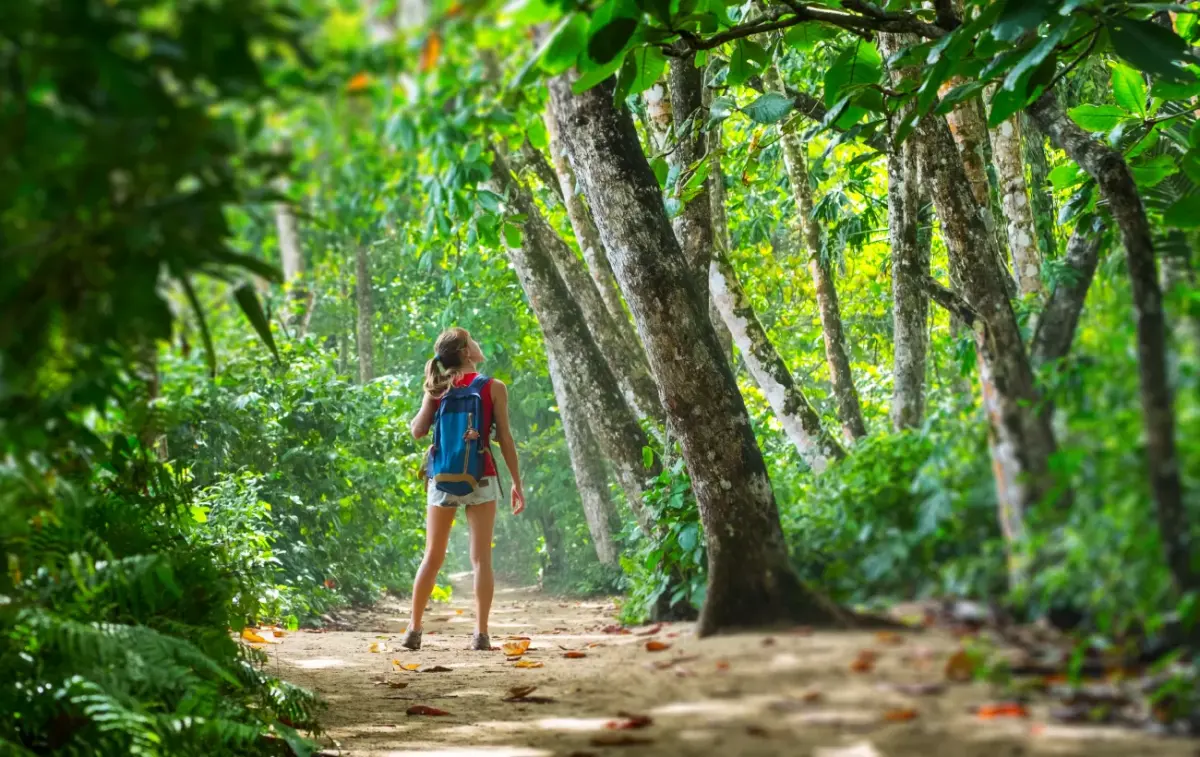
A rainforest is a broad, mature ecosystem that receives high annual rainfall, typically exceeding 80 to 100 inches. These forests are structured into distinct vertical layers: the emergent layer, the canopy, the understory, and the forest floor. The canopy is so dense that it acts as a massive umbrella, absorbing most of the sunlight and preventing it from reaching the lower levels. Because of this limited light, the floor of a primary rainforest is often surprisingly open and easy to walk through.
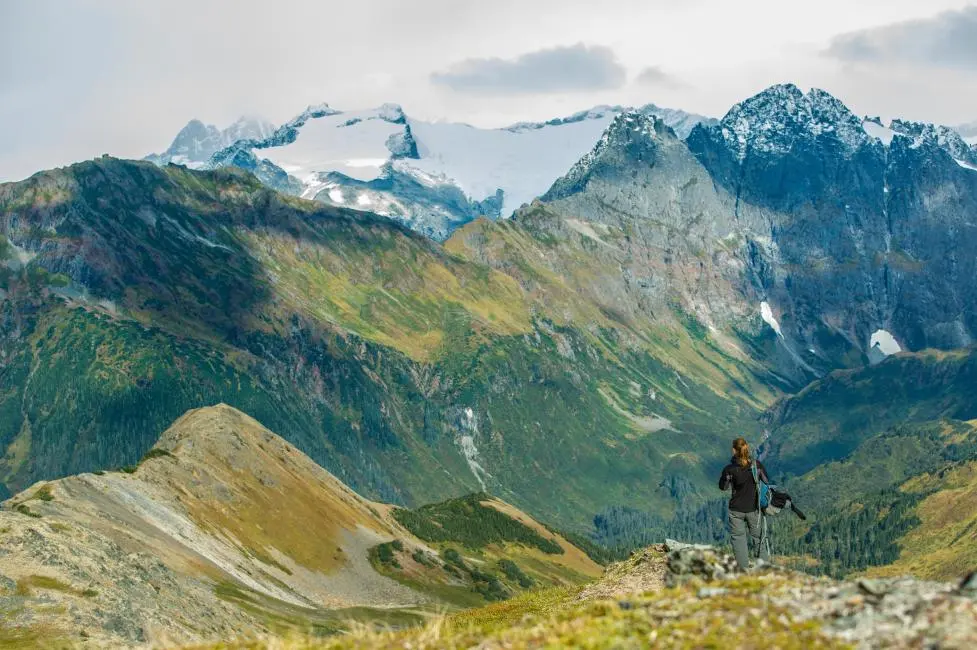
Scientists classify these ecosystems based on their latitude and temperature. Tropical rainforests, such as the Amazon in South America or the Congo Basin in Africa, remain warm and humid year-round. Temperate rainforests, found in regions like the Pacific Northwest of North America, experience cooler temperatures but maintain high moisture levels. In these mature environments, trees grow to massive heights, creating a stable, long-term habitat for thousands of specialized species that rely on the specific microclimates found within each layer.
Why do people confuse rainforests and jungles?
The confusion between these two terms stems largely from popular culture and the way early explorers described tropical regions. In literature and film, the word "jungle" is often used as a catch-all term for any dense, hot, and threatening tropical environment. Because rainforests are indeed dense and tropical, the terms became interchangeable in casual conversation. However, from an ecological perspective, they describe two very different stages of forest development.
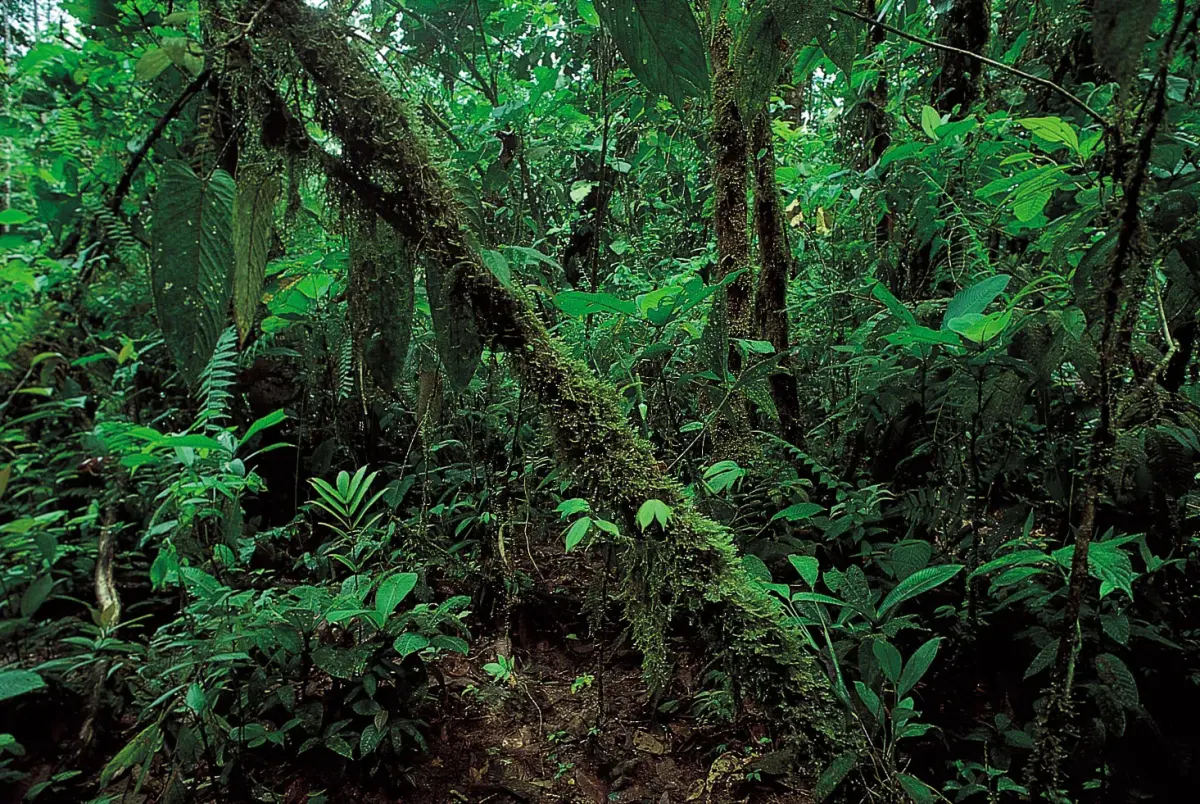
A jungle is essentially a transition zone or a disturbed area. When a large tree falls in a rainforest, it creates a "gap" in the canopy. This sudden influx of sunlight triggers a rapid explosion of vines, shrubs, and fast-growing plants on the forest floor. This thick, tangled mess is what ecologists define as a jungle. While a rainforest is a stable, ancient system, a jungle is a chaotic, secondary-growth environment that exists only where the canopy has been broken.
How to identify a jungle in the wild
Identifying a jungle is straightforward once you understand the role of sunlight. If you are walking through an area where you must constantly hack through thick, tangled vines and dense brush to move forward, you are likely in a jungle environment. These areas are often found along riverbanks, near human-made clearings, or in the wake of natural disasters like cyclones or landslides.
To distinguish between the two environments, look for these specific indicators:
- Canopy coverage: Rainforests have a closed, high canopy; jungles have broken or low-level light penetration.
- Ground vegetation: Rainforest floors are relatively clear; jungles are dominated by dense, impenetrable undergrowth.
- Plant growth speed: Rainforests consist of slow-growing, hardwood trees; jungles consist of fast-growing, opportunistic vines and shrubs.
- Accessibility: Rainforests allow for easier movement; jungles require tools like machetes for navigation.
Common mistakes when exploring tropical forests
Many travelers assume that all tropical forests are the same, leading to poor preparation for their environment. One common mistake is underestimating the humidity and the risk of dehydration. Even in a dense jungle, the heat can be extreme, and the physical effort required to navigate tangled vegetation is significantly higher than walking on a established rainforest trail. Always carry more water than you think you need and prioritize physical conditioning before attempting treks in these regions.
Another major error is failing to respect the local wildlife and vegetation. Beginners often try to touch plants or trees for balance, which can lead to encounters with toxic sap, stinging insects, or camouflaged reptiles. When navigating these areas, follow these safety protocols:
- Stay on marked paths to avoid creating new gaps in the canopy.
- Wear long sleeves and pants to protect against thorns and insects.
- Use a guide who understands the difference between primary forest and secondary growth.
- Never touch plants without knowing their potential for irritation or toxicity.
Which environment supports more biodiversity?
Primary rainforests are widely considered the most biodiverse terrestrial ecosystems on Earth. Because they have remained stable for millions of years, they have allowed for the evolution of highly specialized species. For example, a single hectare of the Amazon rainforest can contain more tree species than the entire continent of North America. These forests provide specific niches for animals, from the high-canopy dwellers like monkeys and toucans to the specialized insects living in the leaf litter.
Jungles, while dense with life, generally support less biodiversity than mature rainforests. Because they are often the result of environmental disturbance, they lack the complex, multi-layered structure required by many specialized species. Instead, jungles are dominated by generalist species that thrive on rapid growth and high-light conditions. While they are vital for the forest's natural regeneration process, they do not offer the same level of ecological depth as the ancient, towering rainforests that surround them. Understanding this distinction helps conservationists prioritize the protection of mature forests, which are far more difficult to replace once they are lost to deforestation or human development.
Key facts
- A rainforest is a biome defined by high annual rainfall, typically exceeding 80 to 100 inches per year.
- Jungles are not a formal scientific biome but rather a term describing dense, tangled vegetation often found at the edges of rainforests.
- Rainforests feature a high, closed canopy that blocks most sunlight from reaching the forest floor, creating an open, park-like ground level.
- Jungles occur where sunlight reaches the ground, such as along riverbanks or in areas where trees have fallen, allowing thick undergrowth to thrive.
- The word "jungle" originates from the Sanskrit word jangala, meaning uncultivated or desert land, which evolved to describe impenetrable thickets.
- When trekking, avoid confusing the two; rainforests are easier to walk through than jungles because the dense canopy suppresses ground-level plant growth.
The bottom line
While people often use the terms interchangeably, they describe different ecological conditions. A rainforest is a vast, climate-controlled biome characterized by a towering canopy that keeps the forest floor relatively clear. Conversely, a jungle is a localized, tangled thicket of vegetation that thrives where sunlight reaches the ground. Understanding this distinction helps clarify why some forest areas are easily traversable while others remain nearly impenetrable.
People also ask
Can a jungle exist inside a rainforest?
Yes, jungles often exist as pockets within a rainforest. This occurs whenever sunlight hits the ground, such as near rivers or in clearings, triggering aggressive plant growth.
Which environment has more biodiversity?
Tropical rainforests are among the most biodiverse ecosystems on Earth, housing more than half of the world's plant and animal species. While jungles are part of these systems, they represent only the disturbed or edge-growth portions.
Is it dangerous to walk through a jungle?
Navigating a jungle is physically demanding and hazardous due to dense vines, thorns, and hidden obstacles. Always carry a machete and a compass, as the thick vegetation makes it easy to lose your sense of direction.
Do all rainforests look the same?
No, rainforests vary significantly by latitude. Tropical rainforests, like the Amazon, remain warm year-round, while temperate rainforests, such as those in the Pacific Northwest, experience distinct seasonal temperature changes.
What is the primary difference in ground visibility?
In a mature rainforest, the ground is relatively clear because the canopy prevents sunlight from reaching the floor. In a jungle, the ground is covered in a chaotic, impenetrable mass of shrubs, vines, and saplings.
Are there jungles in non-tropical regions?
The term "jungle" is almost exclusively associated with tropical or subtropical regions. Because it describes dense, sun-drenched vegetation, it does not apply to the sparse undergrowth of temperate or boreal forests.
This answer was created with the help of AI research tools and reference sources. Spotted an error? Let us know — we correct mistakes quickly. See our editorial policy.