What is a glacier?
Short answer
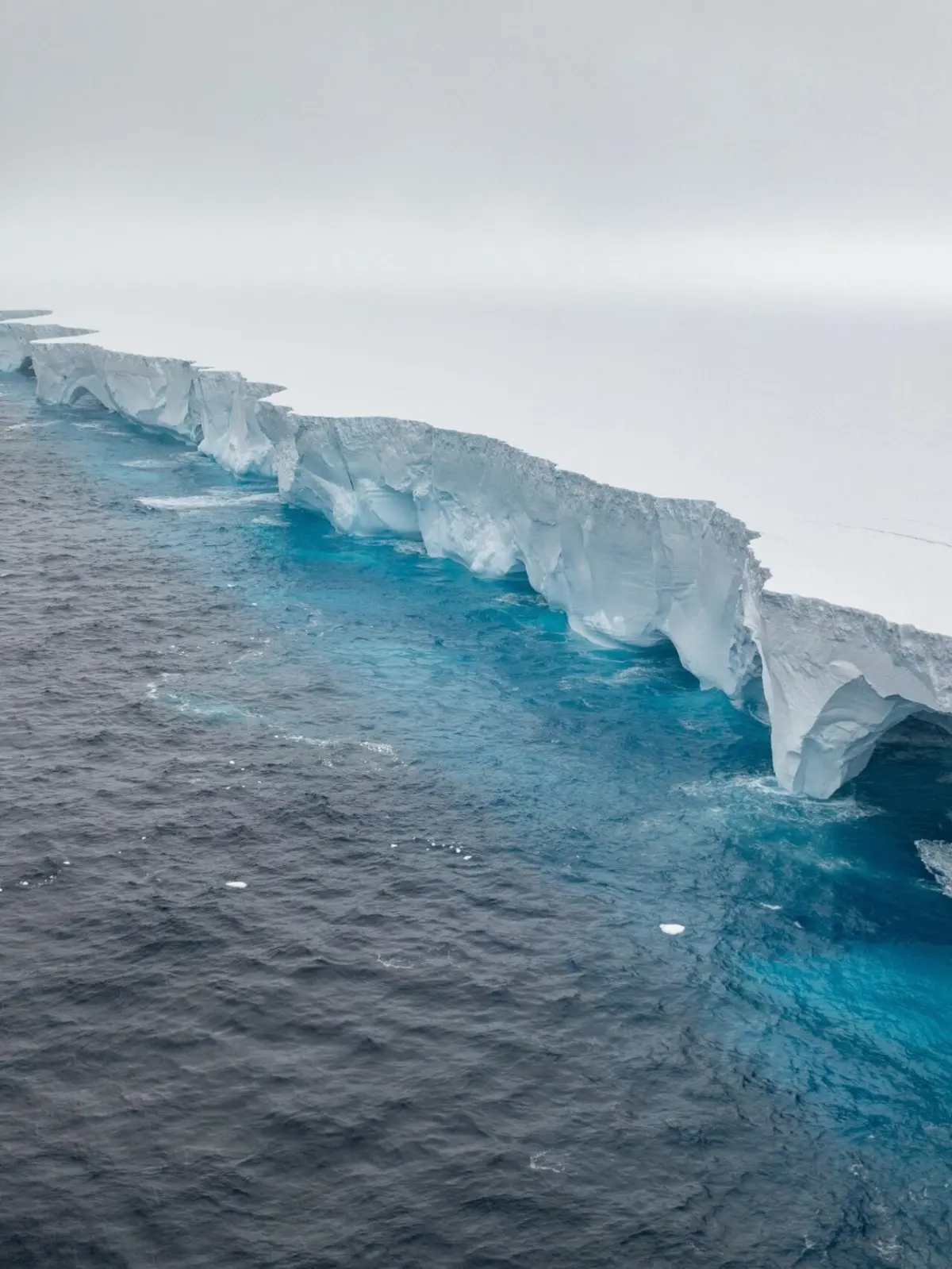
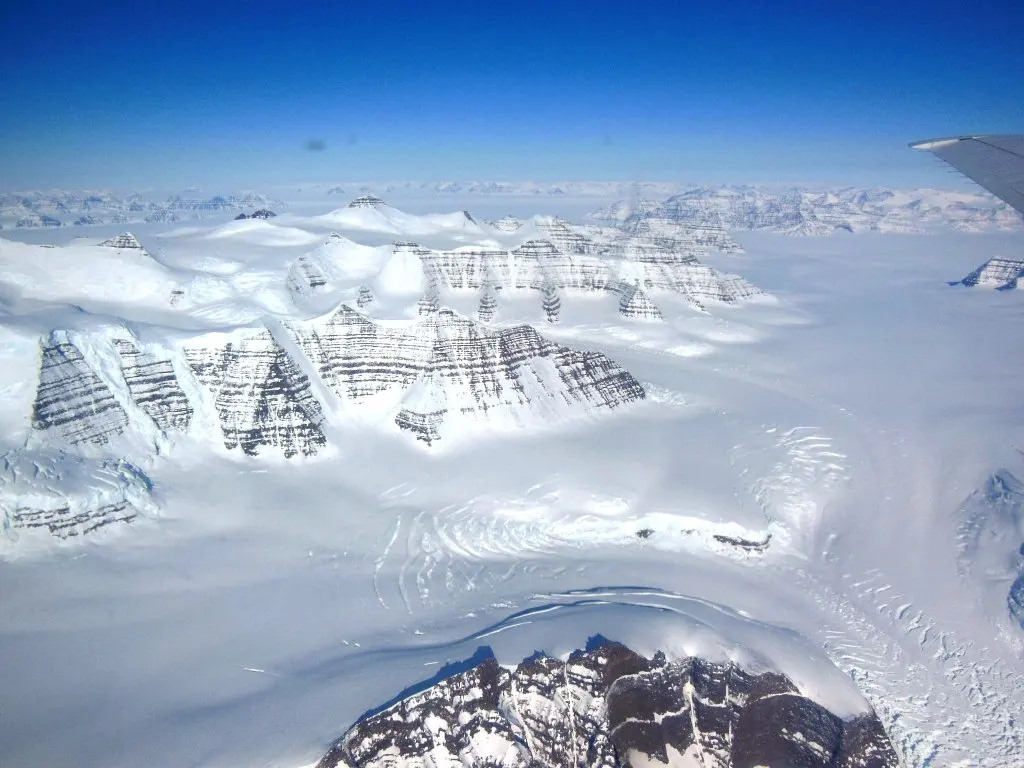
A glacier is a massive, long-lasting body of dense ice that moves under its own weight due to gravity. Formed over centuries where snowfall exceeds melting, these "rivers of ice" currently cover about 10 percent of Earth’s land area. They act as critical global reservoirs, storing roughly 69 percent of the world's freshwater.
On this page
How do glaciers form and grow
Glaciers originate in regions where temperatures remain low enough throughout the year to prevent complete snowmelt. As fresh snow accumulates, the weight of subsequent layers compresses the buried snow into a granular substance known as firn. Over several years, this firn densifies further, eventually transforming into solid glacial ice. This process can take anywhere from a few decades to several centuries, depending on local climate conditions and the rate of snowfall.
Once the ice reaches a critical thickness—typically around 50 meters—the pressure causes the base to become plastic, allowing the entire mass to flow slowly downslope. Glaciers grow through a process called accumulation, which includes snowfall, avalanches, and wind-blown snow. Conversely, they lose mass through ablation, which involves melting, evaporation, and "calving," where large chunks break off into the sea. The balance between these two processes determines whether a glacier advances, retreats, or remains stable over time.
Where are glaciers located today
Glaciers are found on every continent except Australia, though they are most concentrated in polar and high-altitude regions. The vast majority of the world's glacial ice is locked away in the massive ice sheets of Antarctica and Greenland. These two regions contain enough water to raise global sea levels by over 60 meters if they were to melt entirely. Outside of the poles, glaciers are primarily found in mountain ranges such as the Himalayas, the Andes, the Alps, and the Rocky Mountains.
Smaller glaciers, often called mountain or alpine glaciers, are highly sensitive to seasonal temperature fluctuations. These formations are essential for regional water security, as they act as natural "water towers." They capture precipitation in the winter and release it slowly as meltwater during the dry summer months, supporting agriculture and ecosystems downstream. Notable examples of these vital systems include:
- The Baltoro Glacier in the Karakoram range.
- The Perito Moreno Glacier in Argentina.
- The Jostedalsbreen Glacier in Norway.
- The Tasman Glacier in New Zealand.
How do glaciers move and change
Glaciers are not static; they are dynamic systems that constantly reshape the landscape beneath them. They move through two primary mechanisms: internal deformation and basal sliding. Internal deformation occurs when the weight of the ice causes individual ice crystals to slide past one another. Basal sliding happens when a thin layer of meltwater at the bottom of the glacier acts as a lubricant, allowing the entire ice mass to slip over the underlying bedrock.
The speed of this movement varies significantly depending on the slope, temperature, and the amount of meltwater present. While some glaciers move only a few centimeters per day, others, known as surging glaciers, can accelerate to several meters per day during brief, active periods. As they move, glaciers act as powerful geological agents. They carve deep U-shaped valleys, transport massive boulders, and grind bedrock into fine "rock flour." This process leaves behind distinct geological features, such as moraines, drumlins, and fjords, which provide scientists with a historical record of past climate cycles.
Common mistakes when identifying glaciers
Many people confuse glaciers with seasonal snowpacks or frozen lakes, leading to inaccurate observations. A common mistake is assuming that any large patch of white ice visible on a mountain is a glacier. To be classified as a glacier, the ice must show evidence of past or present flow and must persist through the summer months. If the ice disappears entirely during the warmer season, it is merely a seasonal snowfield rather than a true glacier.
Another frequent error is underestimating the danger of glacial environments. Visitors often approach the edges of glaciers without proper equipment or training, unaware of the hidden hazards present. To stay safe when observing these formations, follow these guidelines:
- Never walk on a glacier without professional guides and specialized gear like crampons and ice axes.
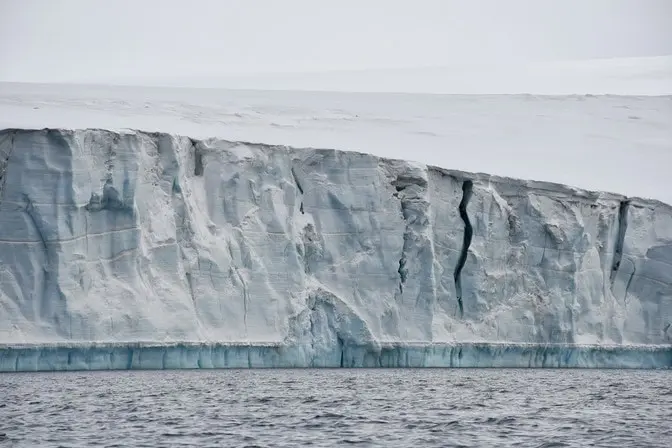
- Stay clear of the "snout" or terminus, as ice can calve or collapse without warning.
- Watch for crevasses, which are deep, often hidden cracks in the ice that can be fatal.
- Maintain a safe distance from meltwater streams, which can rise rapidly during warm afternoons.
Why glaciers matter to our climate
Glaciers serve as the world’s most accurate indicators of climate change. Because they respond directly to shifts in temperature and precipitation, their retreat is a visible signal of a warming planet. When glaciers melt at an accelerated rate, they contribute significantly to rising sea levels, threatening coastal communities worldwide. Furthermore, the loss of glacial ice reduces the planet's albedo, or reflectivity. White ice reflects sunlight back into space; when it melts, it exposes darker land or water, which absorbs more heat and further accelerates the warming process.
Monitoring these changes is a priority for climatologists and hydrologists. By studying ice cores—cylindrical samples drilled from deep within glaciers—researchers can analyze trapped air bubbles to reconstruct atmospheric conditions from thousands of years ago. This data helps scientists understand how the Earth’s climate has shifted historically and provides context for the rapid changes observed in the modern era. Protecting these frozen reservoirs is essential for maintaining the global water cycle and ensuring a stable climate for future generations.
Key facts
- Glaciers cover roughly 10 percent of the Earth's total land area.
- The largest glacier in the world is the Lambert Glacier in Antarctica, measuring over 250 miles long.
- Glacial ice often appears blue because it is so dense that it absorbs all colors of the light spectrum except blue.
- A glacier's movement is measured in meters per day, though some surge forward much faster during specific events.
- Moraines are the ridges of rock, gravel, and debris left behind by a glacier as it retreats.
- Never approach the base of a glacier, as falling ice blocks can be as heavy as cars and travel significant distances.
The bottom line
Glaciers are dynamic, frozen landscapes that serve as critical indicators of the Earth’s climate health. By storing vast amounts of freshwater, they influence global sea levels and regional ecosystems. Understanding how these icy giants move and change provides essential insights into our environment. Whether you are observing them from afar or exploring their edges, always prioritize safety and respect the immense power of moving ice.
People also ask
What is the difference between an iceberg and a glacier?
A glacier is a body of ice on land, while an iceberg is a piece of a glacier that has broken off and is floating in water.
How do scientists track the movement of a glacier?
Researchers use GPS sensors, satellite imagery, and stakes placed in the ice to measure how far and how fast the glacier flows over time.
Why do glaciers retreat?
Glaciers retreat when the rate of melting and evaporation exceeds the amount of new snow accumulation, often due to rising global temperatures.
Are there glaciers at the equator?
Yes, glaciers can exist at the equator if the mountain is high enough to maintain temperatures cold enough for snow to persist year-round, such as on the Andes in Ecuador.
What is a crevasse?
A crevasse is a deep, open crack in the surface of a glacier caused by the stress of the ice moving over uneven terrain.
How long does it take for snow to turn into glacial ice?
It can take anywhere from a few decades to hundreds of years for layers of snow to compress into the dense, blue ice characteristic of a glacier.
This answer was created with the help of AI research tools and reference sources. Spotted an error? Let us know — we correct mistakes quickly. See our editorial policy.