What is Paul Gauguin known for?
Short answer
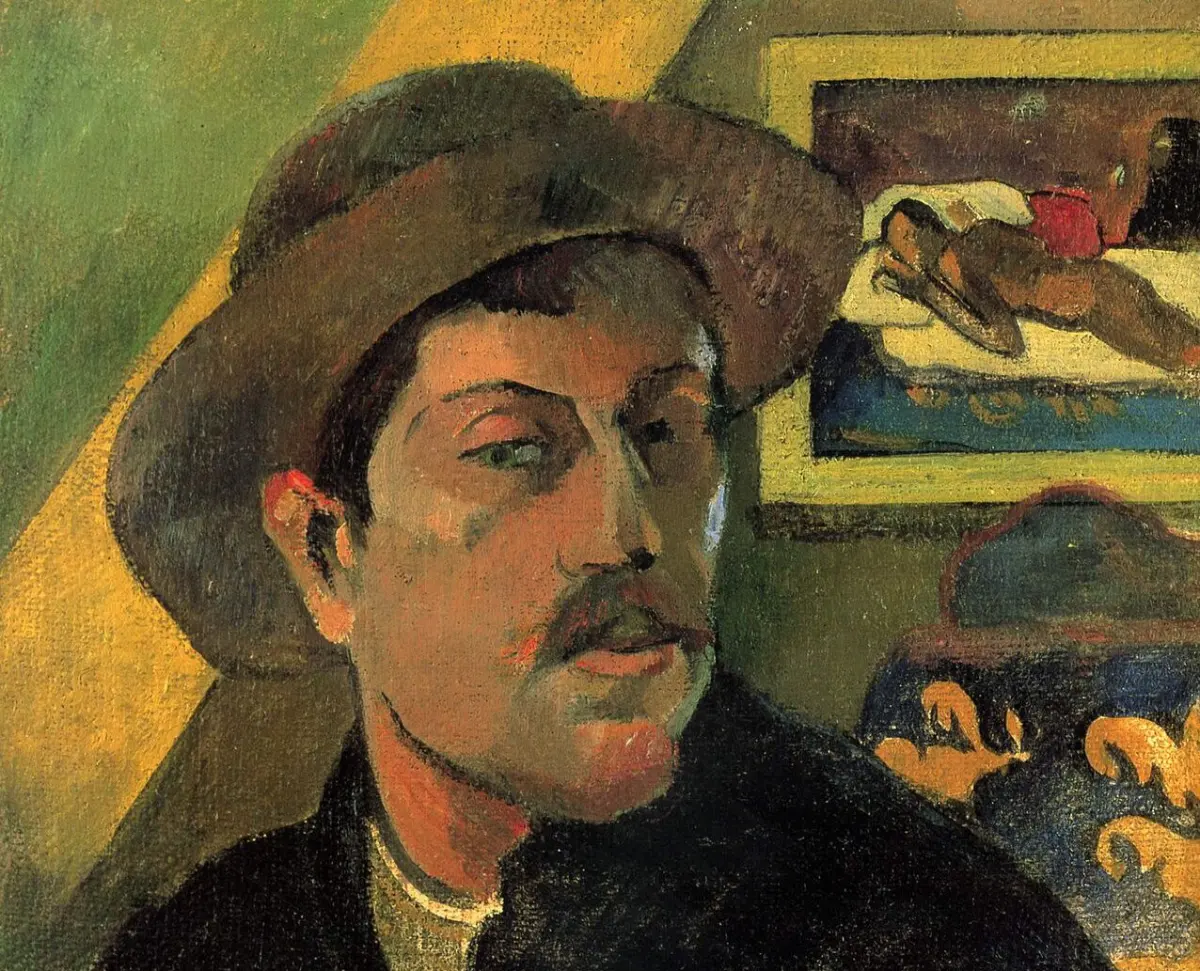
Paul Gauguin is renowned for his pioneering role in Post-Impressionism and his expressive use of bold, non-naturalistic color. He abandoned his career as a stockbroker to pursue painting, eventually moving to Tahiti. His work, characterized by flat planes and symbolic themes, profoundly influenced modern art movements like Fauvism and Expressionism.
On this page
Why did Paul Gauguin leave his life in France?
Gauguin began his adult life as a successful stockbroker in Paris, living a conventional middle-class existence with his wife and children. However, he became increasingly disillusioned with the materialism and rigid social structures of industrial Europe. By the 1880s, he began dedicating his spare time to painting, eventually abandoning his financial career entirely in 1883 to pursue art full-time. This decision led to profound personal hardship, as he struggled with poverty and social isolation while attempting to forge a new artistic identity.
Seeking an escape from what he perceived as the "artificiality" of Western civilization, Gauguin traveled to distant locations, including Panama, Martinique, and eventually French Polynesia. He believed that these environments offered a more authentic, primitive existence that would allow him to tap into deeper spiritual truths. His departure was not merely a change in location but a deliberate rejection of European artistic traditions. This radical lifestyle shift became as famous as his paintings, cementing his reputation as the quintessential "outsider" artist who sacrificed everything for his creative vision.
How did Gauguin change the use of color in art?
Gauguin was a central figure in the transition from Impressionism to more subjective styles. While Impressionists focused on capturing the fleeting effects of light on nature, Gauguin moved toward "Synthetism," a style that emphasized flat areas of bold, vibrant color and strong outlines. He believed that color should express the artist's internal emotions rather than accurately represent the physical world. By using arbitrary colors—such as painting a sky yellow or a tree red—he broke away from the constraints of realism.
This approach paved the way for the Fauvist movement, led by artists like Henri Matisse, who further explored the expressive power of color. Gauguin’s technique involved applying paint in broad, unmodulated strokes, which flattened the perspective and gave his canvases a decorative, almost tapestry-like quality. His influence on modern art is evident in the following ways:
- He prioritized symbolic meaning over literal observation.
- He utilized high-contrast color palettes to create emotional intensity.
- He rejected traditional modeling and shading in favor of graphic, two-dimensional forms.
- He encouraged other artists to paint from memory rather than directly from the subject.
Where can you see Gauguin’s most famous works?
Gauguin’s prolific output during his time in Tahiti and the Marquesas Islands produced some of the most recognizable images in art history. His masterpiece, Where Do We Come From? What Are We? Where Are We Going?, is a massive, complex composition that encapsulates his philosophical questions about human existence. Because he traveled extensively and his works were often sold to collectors across the globe, his paintings are housed in major institutions worldwide.
If you are planning to view his work in person, consider these major collections that hold significant pieces:
- The Museum of Fine Arts, Boston: Known for its extensive collection of his Tahitian paintings.
- The Musée d’Orsay, Paris: Houses a substantial number of his early works and sculptures.
- The Art Institute of Chicago: Features iconic canvases from his later, more stylized period.
- The Pushkin State Museum of Fine Arts, Moscow: Holds many of his most vibrant, color-saturated scenes.
- The Ny Carlsberg Glyptotek, Copenhagen: Contains a unique collection focusing on his formative years and family connections.
How to analyze a Gauguin painting for beginners
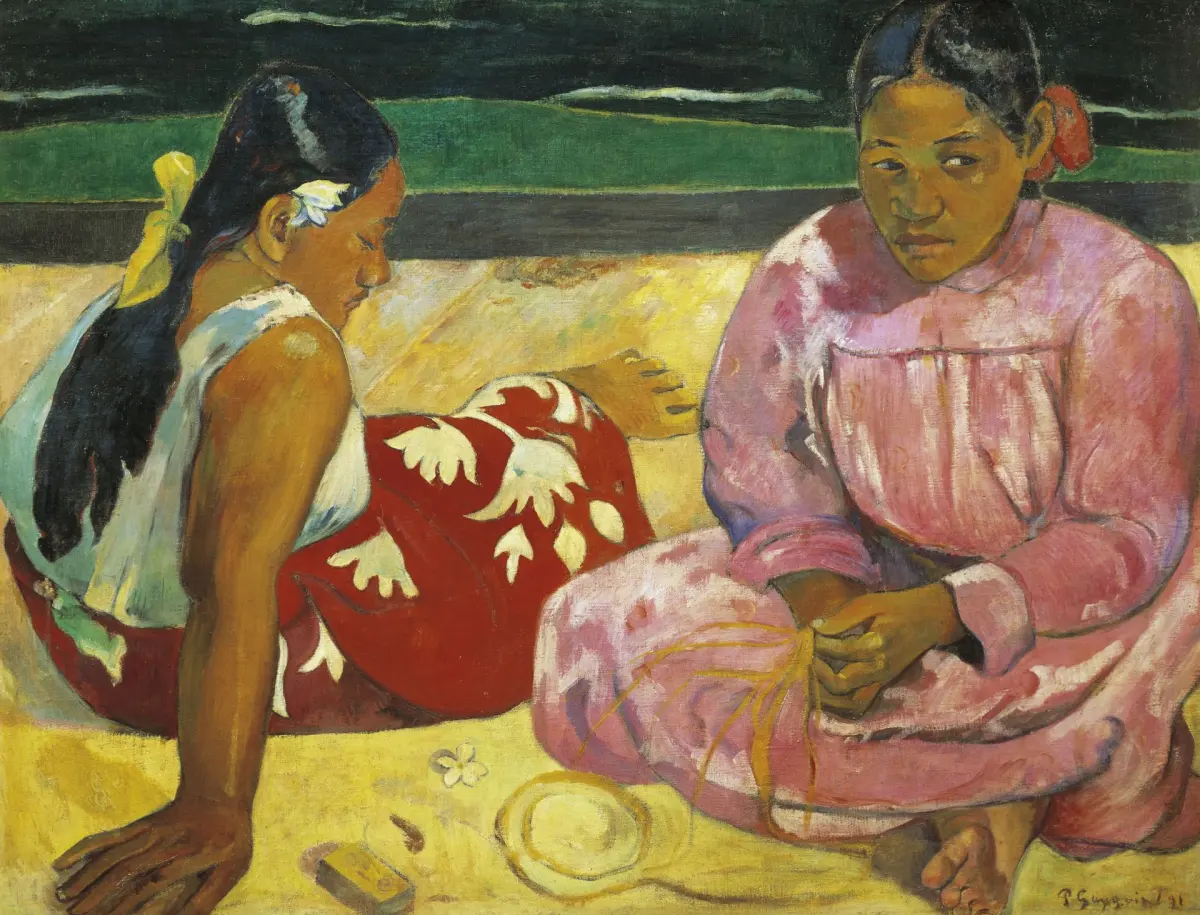
When looking at a Gauguin painting, it is helpful to look past the surface subject matter and focus on the composition. Beginners often make the mistake of looking for realistic proportions or accurate lighting. Instead, try to identify the "flatness" of the image. Notice how the figures are placed in the foreground with little depth, creating a sense of a dreamlike or mythical space. Ask yourself what emotion the specific color choices evoke, rather than whether the colors match the natural landscape.
Common mistakes when interpreting his work include:
- Assuming his depictions of Tahiti are accurate ethnographic records; they are often idealized or fictionalized.
- Overlooking his use of religious or mythological symbolism, which he frequently blended with local island culture.
- Ignoring his background in woodcarving and ceramics, which influenced the heavy, sculptural outlines in his paintings.
- Misinterpreting his aggressive color choices as mere decoration, when they were intended to be deeply psychological and spiritual.
What is the legacy of Paul Gauguin today?
Gauguin’s legacy remains a subject of intense academic and public debate. While his technical innovations profoundly shaped the trajectory of 20th-century art, his personal history—particularly his relationships with young women in French Polynesia—has drawn significant criticism. Modern viewers often grapple with the tension between his immense contributions to the development of modernism and the problematic nature of his colonial perspective. He is viewed today as a complex, contradictory figure whose work serves as a window into the colonial era's artistic and social dynamics.
Despite these controversies, his impact on the evolution of visual language is undeniable. He challenged artists to look inward, prioritize the imagination, and embrace the power of abstraction. By rejecting the academic standards of his time, he opened the door for future generations to experiment with form and color in ways that were previously considered impossible. His life and work continue to be studied, exhibited, and analyzed, ensuring his place as one of the most influential and provocative artists in the history of Western art.
Key facts
- Paul Gauguin was a leading figure in the Post-Impressionist movement, known for his bold use of color and symbolic style.
- He famously abandoned his career as a stockbroker in 1883 to pursue painting full-time, despite significant financial hardship.
- Gauguin spent his most productive years living in Tahiti and the Marquesas Islands, seeking an "untamed" lifestyle away from European industrialization.
- His technique, often called Synthetism, emphasized flat, decorative forms and heavy outlines rather than traditional perspective.
- He shared a tumultuous nine-week period in 1888 with Vincent van Gogh in Arles, which ended after the infamous incident involving Van Gogh’s ear.
- To study his work, visit the Musée d'Orsay in Paris, which holds many of his most iconic Tahitian-era canvases.
The bottom line
Paul Gauguin remains a pivotal figure in art history for his radical departure from realism and his pioneering role in Post-Impressionism. By prioritizing subjective emotion and bold, decorative color over naturalistic representation, he transformed the course of modern art. Although his life was marked by personal controversy and financial instability, his evocative depictions of life in the South Pacific continue to captivate global audiences today.
People also ask
Why did Paul Gauguin leave his family?
Gauguin became disillusioned with Western society and his conventional life in Paris, believing that European civilization was corrupt. He abandoned his wife and children to pursue a life he viewed as more primitive and authentic in the South Pacific.
What is the significance of the painting "Where Do We Come From? What Are We? Where Are We Going?"?
Painted in 1897, this large-scale work is considered his masterpiece and a visual summary of his philosophical views on life and death. It depicts the cycle of human existence from birth to old age across a dreamlike landscape.
Did Gauguin actually live with Vincent van Gogh?
Yes, the two artists lived together in the "Yellow House" in Arles, France, in late 1888. Their relationship was volatile, characterized by intense artistic debates and personality clashes that eventually led to their permanent separation.
What is Synthetism in art?
Synthetism is a style Gauguin developed that prioritized the artist's memory and emotions over direct observation of nature. It is characterized by bright, non-naturalistic colors, bold outlines, and a lack of depth, moving away from Impressionist realism.
How did Gauguin's work influence modern art?
His rejection of traditional perspective and his focus on expressive, symbolic color paved the way for movements like Fauvism and Expressionism. Artists such as Henri Matisse and Pablo Picasso were heavily inspired by his bold, non-Western aesthetic.
Was Gauguin successful during his lifetime?
Gauguin struggled with poverty and poor health for most of his life and received little critical acclaim while he was alive. It was only after his death in 1903 that his work gained significant recognition and high market value.
This answer was created with the help of AI research tools and reference sources. Spotted an error? Let us know — we correct mistakes quickly. See our editorial policy.