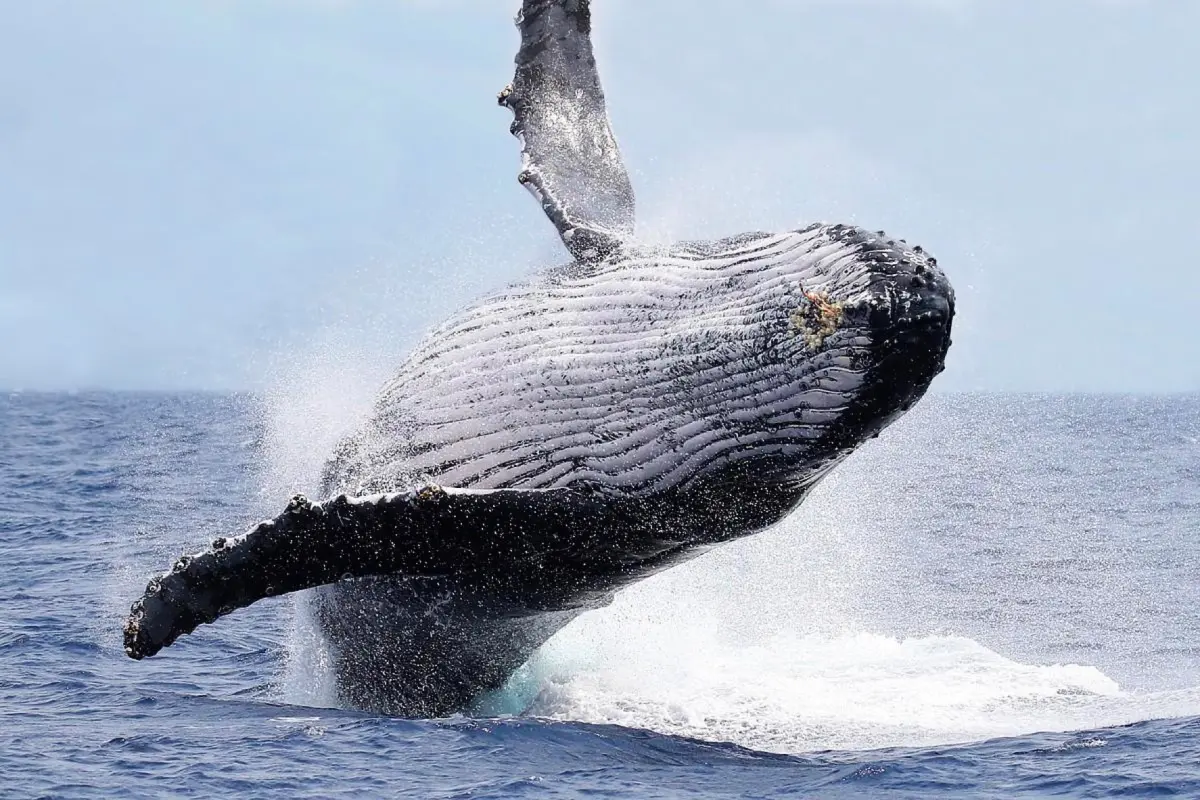
What do humpback whales eat?
Short answer
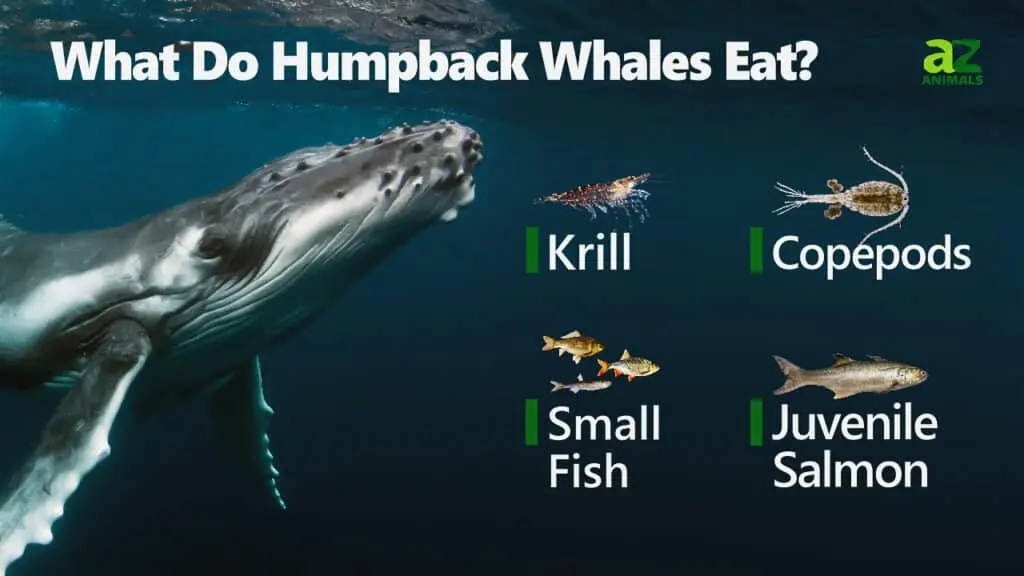
Humpback whales are opportunistic carnivores that primarily consume small schooling fish and tiny crustaceans known as krill. They are filter feeders, using baleen plates to strain massive quantities of prey from seawater. These whales typically consume between 1,500 and 2,500 pounds of food daily during their peak summer feeding seasons.
On this page
What do humpback whales eat in the wild?
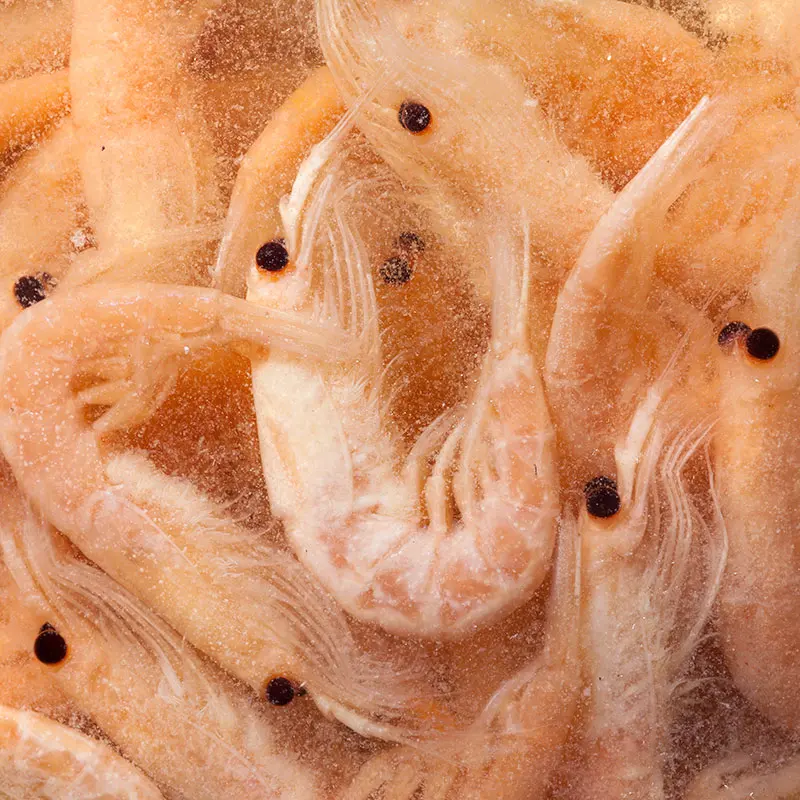
Humpback whales maintain a diverse diet that shifts based on their geographic location and the seasonal availability of prey. Their primary food sources consist of krill, which are small, shrimp-like crustaceans, and various species of schooling fish. Common fish species include herring, mackerel, capelin, sand lance, and sardines. Because these whales migrate thousands of miles annually, they must adapt their feeding habits to the specific ecosystems they encounter in both polar and tropical waters.
The composition of their diet is heavily influenced by the whale's life cycle. During the summer months, humpbacks spend their time in high-latitude, nutrient-rich waters—such as those near Alaska, Antarctica, or Norway—to gorge on massive swarms of krill and small fish. This intense feeding period allows them to build up significant blubber reserves. When they migrate to warmer, lower-latitude breeding grounds in the winter, they often fast for months, relying almost exclusively on these stored energy reserves until they return to productive feeding zones.
How do humpback whales hunt for food?
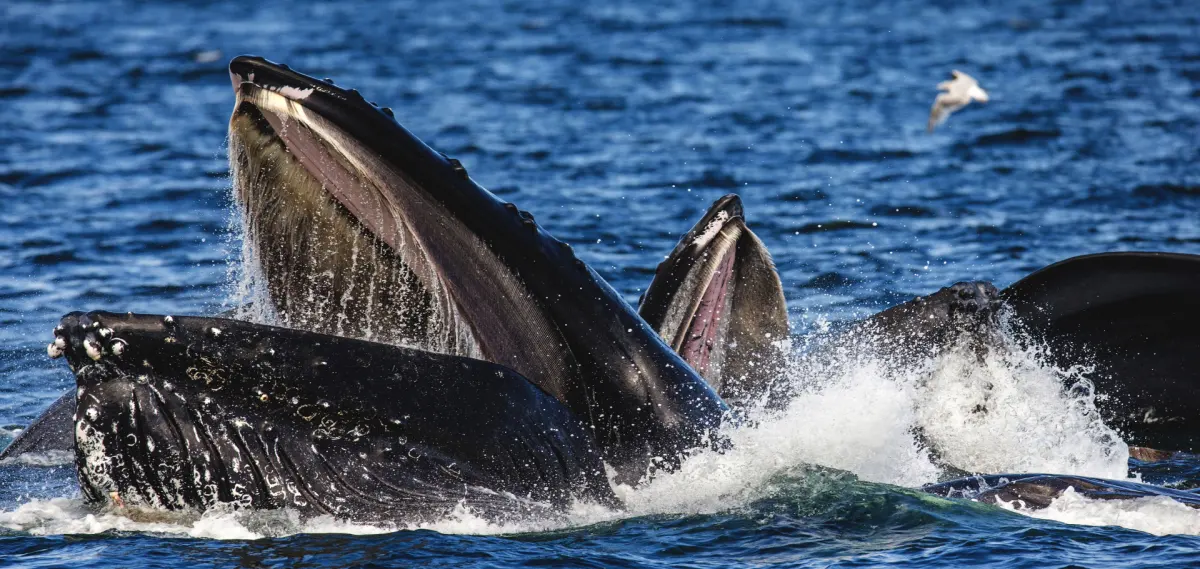
Humpback whales utilize a variety of sophisticated hunting techniques to capture their prey. The most iconic method is bubble-net feeding, a cooperative behavior where a group of whales swims in a shrinking circle below a school of fish. As they swim, they blow bubbles from their blowholes, creating a "net" that confuses and corrals the prey toward the surface. Once the fish are trapped in this concentrated column, the whales lunge upward with their mouths wide open to engulf the entire school in one massive gulp.
In addition to bubble-netting, humpbacks employ several other strategies to maximize their caloric intake:
- Lunge feeding: The whale accelerates toward a school of fish and opens its mouth, engulfing both water and prey in a single rapid motion.
- Flick feeding: The whale uses its pectoral fins or tail to strike the water, stunning or herding small fish into a tighter group before feeding.
- Bottom feeding: In some regions, whales have been observed dragging their lower jaws along the seafloor to scoop up sand eels or other bottom-dwelling organisms.
How much do humpback whales eat every day?
The caloric requirements of a humpback whale are immense, especially considering their massive body size, which can reach up to 50 feet in length and weigh 40 tons. During the peak summer feeding season, an adult humpback can consume upwards of 2,500 pounds of food in a single day. This intake is necessary to sustain their metabolic functions and provide the energy required for their long-distance migrations, which can span over 5,000 miles round-trip.
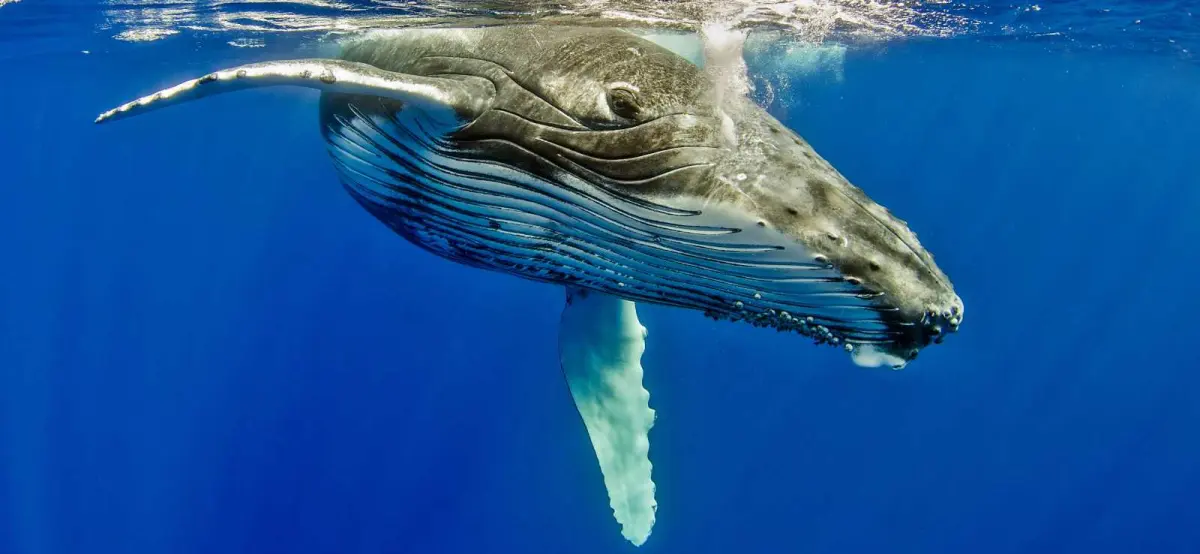
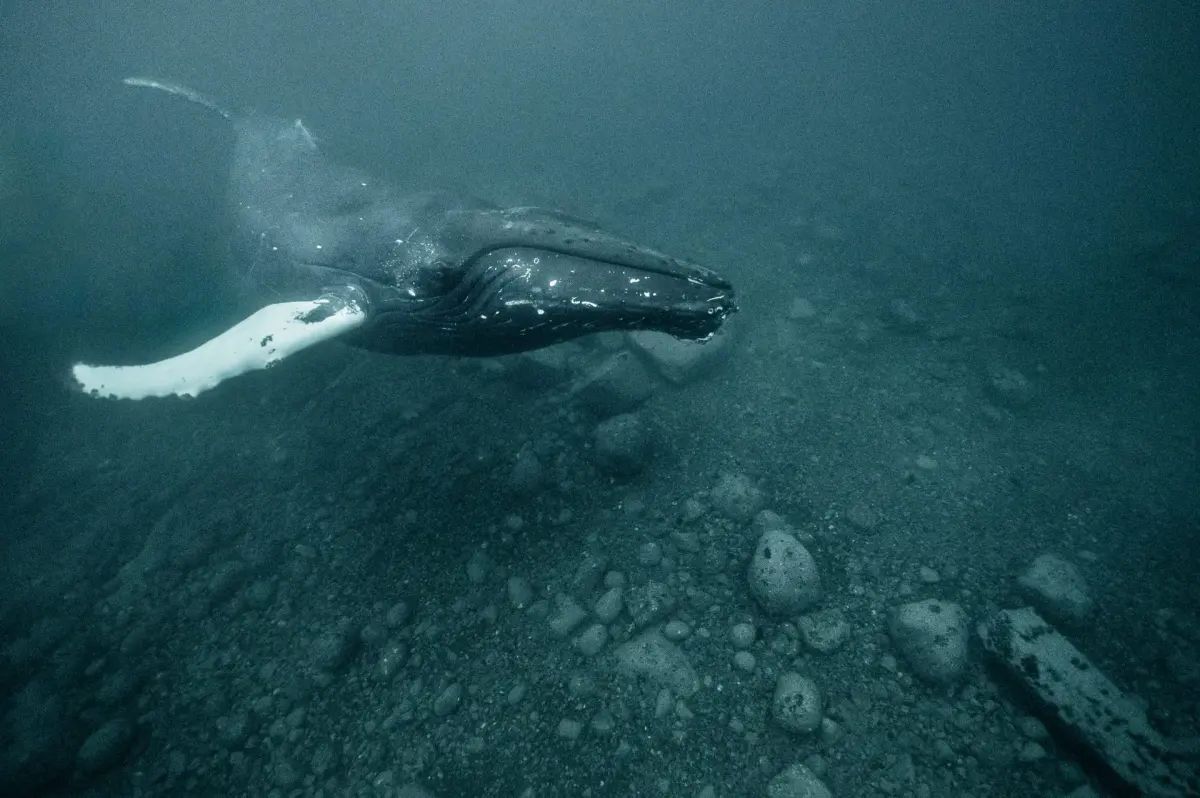
To process this volume of food, humpbacks rely on their baleen plates. These are comb-like structures made of keratin that hang from the upper jaw. When a whale takes in a mouthful of water and prey, it uses its tongue to push the water out through the gaps between the baleen plates. The plates act as a sieve, trapping the krill and fish inside the mouth while allowing the water to escape. This efficient filtration system allows the whale to consume thousands of individual organisms in seconds without the need for teeth.
Common mistakes when observing whale feeding
When observing humpback whales in the wild, it is easy to misinterpret their behavior or inadvertently cause them stress. One common mistake is approaching a feeding group too closely with a boat. Humpbacks are highly focused when bubble-netting; a vessel entering their path can disrupt the delicate coordination required for the hunt, causing the whales to abandon their meal. This wastes precious energy that the whales need to survive their upcoming migration.
To ensure safe and responsible observation, follow these guidelines:
- Maintain a distance of at least 100 yards from any whale to avoid interfering with their natural movements.
- Watch for signs of bubble-netting, such as a ring of bubbles appearing on the surface, and stay well clear of that specific area.
- Keep your engine in neutral or move at a "no-wake" speed if whales are observed in the immediate vicinity.
- Never attempt to feed whales or attract them with bait, as this disrupts their natural foraging instincts and can lead to dangerous interactions with human equipment.
Why is humpback whale nutrition important for the ocean?
The feeding habits of humpback whales play a critical role in maintaining the health of marine ecosystems. As they feed at depth and surface to breathe and digest, they perform a process known as the "whale pump." They consume nutrients in deep waters and release them near the surface through their waste. This fecal matter is rich in iron and nitrogen, which acts as a natural fertilizer for phytoplankton. These tiny organisms are the foundation of the marine food web and are essential for absorbing carbon dioxide from the atmosphere.
By supporting the growth of phytoplankton, humpback whales indirectly contribute to the health of the entire ocean. A decline in whale populations can lead to a decrease in primary productivity, which affects everything from small fish to larger marine predators. Protecting the prey species that humpbacks rely on—such as krill and forage fish—is therefore a vital component of marine conservation. Ensuring that these food sources remain abundant is the most practical way to support the long-term survival of humpback whales and the stability of the global climate.
Key facts
- Humpback whales are filter feeders that primarily consume tiny crustaceans called krill and small schooling fish.
- An adult humpback whale can consume up to 3,000 pounds (1,360 kilograms) of food in a single day during peak feeding season.
- They utilize a unique hunting technique called "bubble-net feeding," where a group of whales circles a school of fish while blowing bubbles to trap them.
- Humpbacks generally feed in nutrient-rich, cold polar waters during the summer months to build up blubber reserves.
- During their migration to tropical breeding grounds in winter, these whales often fast, relying almost entirely on their stored fat for energy.
- A common mistake is assuming humpbacks eat large prey; their throats are actually quite narrow, making them physically unable to swallow anything larger than a small fish.
The bottom line
Humpback whales are specialized filter feeders that rely on massive quantities of krill and small schooling fish to sustain their enormous bodies. By utilizing sophisticated hunting methods like bubble-netting, they efficiently harvest nutrients in cold polar waters. Understanding their dietary habits highlights the importance of protecting marine ecosystems, as these whales depend on healthy, abundant prey populations to survive their long, energy-intensive migrations across the globe.
People also ask
How do humpback whales catch their prey?
They use baleen plates, which are comb-like structures made of keratin, to filter food from seawater. By taking a large gulp of water and pushing it out through the baleen, they trap the prey inside their mouths.
Do humpback whales drink water?
Like other marine mammals, they do not drink seawater directly. They obtain the necessary hydration for their bodies through the moisture contained in the fish and krill they consume.
How much do humpback whales weigh?
Adult humpbacks typically weigh between 25 and 40 tons. Their massive size requires a high-calorie diet of small organisms to maintain their metabolism and energy levels.
Do humpback whales have teeth?
No, they are baleen whales and lack teeth entirely. Instead, they have hundreds of overlapping plates hanging from their upper jaws that act as a sieve for their food.
Where do humpback whales find the most food?
They congregate in high-latitude regions such as the waters near Antarctica, Alaska, and the North Atlantic. These areas are rich in plankton, which supports the massive populations of krill and small fish they eat.
Are humpback whales dangerous to humans?
They are generally docile and do not view humans as prey. However, because of their immense size and unpredictable movements, it is illegal and dangerous to approach them closely in the water.
This answer was created with the help of AI research tools and reference sources. Spotted an error? Let us know — we correct mistakes quickly. See our editorial policy.