What is the difference between a glacier and an iceberg?
Short answer
A glacier is a massive, long-lasting body of compacted snow and ice that forms on land and moves slowly under its own weight. An iceberg is a large piece of freshwater ice that has broken off from a glacier or ice shelf and is floating in open saltwater, such as an ocean.
On this page
How do glaciers form and move
Glaciers originate in regions where annual snowfall exceeds the amount of snow that melts during the summer. Over decades or centuries, layers of snow accumulate, and the weight of the overlying snow compresses the bottom layers into dense, granular ice known as firn. Eventually, this firn transforms into solid glacial ice, which can reach hundreds or even thousands of meters in thickness.
Once the ice mass becomes sufficiently heavy, gravity causes it to flow slowly downhill or outward from its center. This movement is not like a liquid; instead, the ice deforms internally and slides over the underlying bedrock. Glaciers act as powerful geological agents, carving deep valleys, grinding rock into fine silt, and transporting massive boulders across vast distances. They are essentially frozen rivers of ice that remain on land for their entire existence.
What defines an iceberg
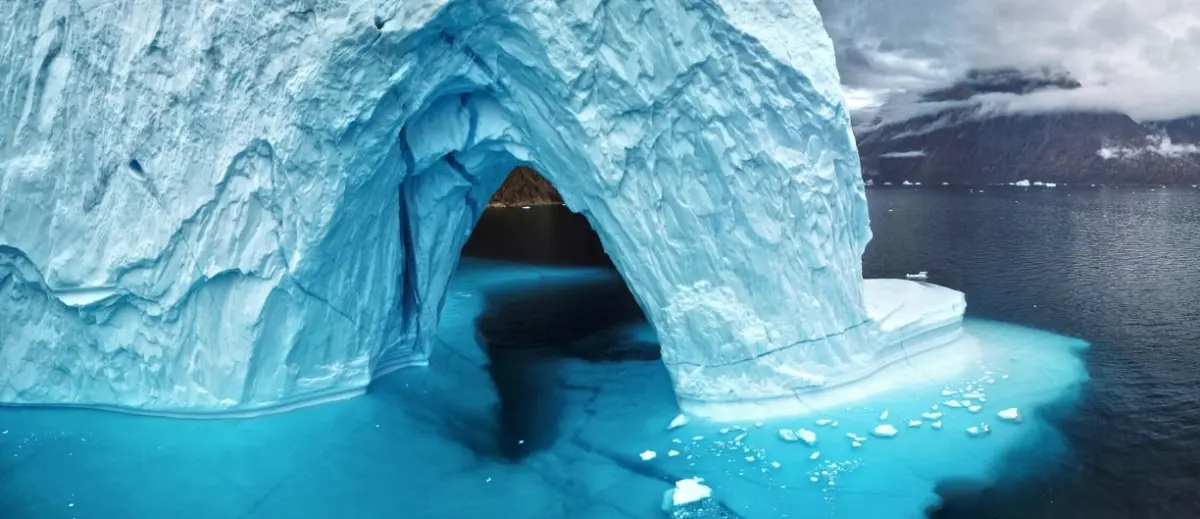
An iceberg is born through a process called calving, where chunks of ice break away from the terminus of a glacier or the edge of an ice shelf. Unlike glaciers, which are anchored to the earth, icebergs are buoyant and drift with ocean currents and winds. Because ice is less dense than liquid water, only about one-tenth of an iceberg’s total mass is visible above the surface, while the remaining ninety percent remains submerged.
The life cycle of an iceberg is relatively short compared to a glacier. As they drift into warmer waters, icebergs undergo constant melting and erosion. They may also roll over as their center of gravity shifts due to uneven melting, creating dramatic displays of blue, clear ice. Eventually, an iceberg will melt completely or break into smaller fragments known as bergy bits or growlers, which pose different levels of risk to maritime navigation.
Key differences between glaciers and icebergs
The primary distinction lies in their location and physical state. Glaciers are terrestrial features, meaning they are permanently attached to land masses such as mountains or polar continents like Antarctica and Greenland. Icebergs are marine features, existing as free-floating entities in saltwater environments. While both are composed of freshwater ice, their movement, lifespan, and interactions with the surrounding environment are governed by entirely different physical forces.
To help distinguish between these two icy formations, consider the following characteristics:
- Attachment: Glaciers are grounded on land; icebergs are buoyant in water.
- Movement: Glaciers move via gravitational flow; icebergs move via ocean currents.
- Composition: Both consist of compressed freshwater snow, but icebergs often contain trapped air bubbles and debris from the parent glacier.
- Lifespan: Glaciers can persist for thousands of years; icebergs typically last for months or a few years before melting away.
How to identify icebergs safely
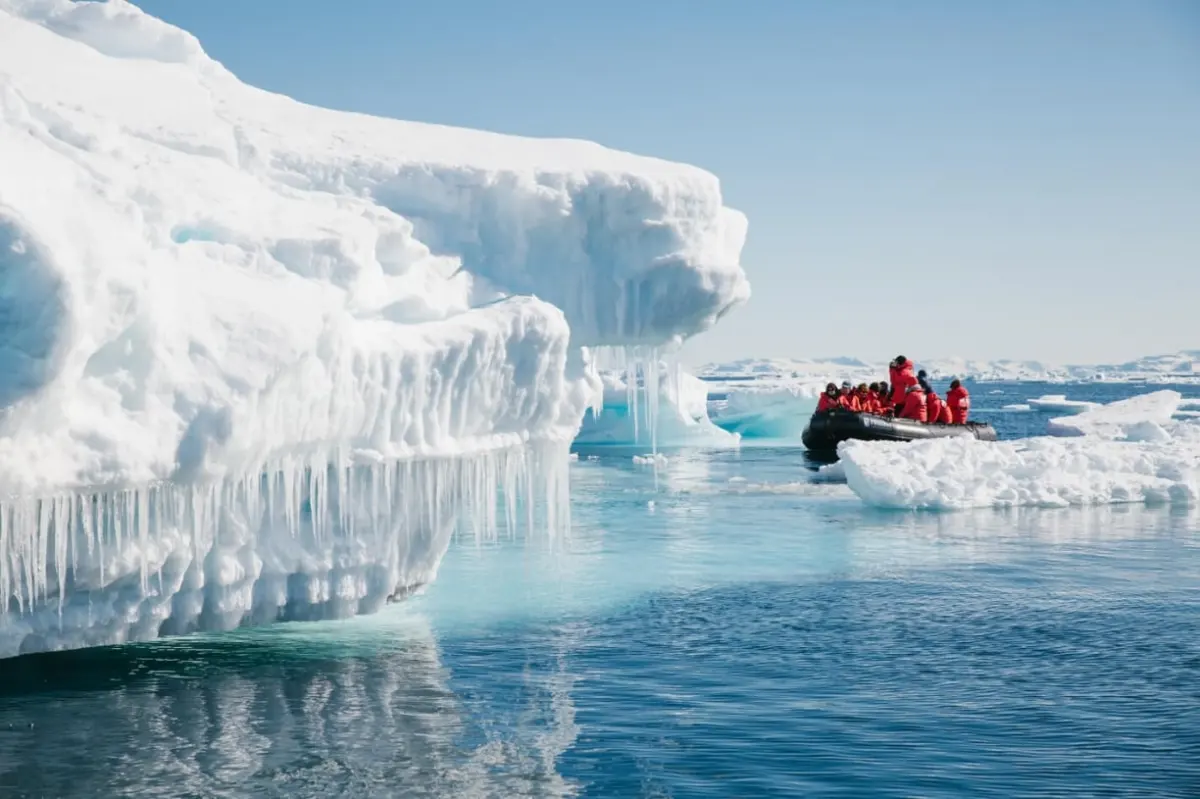
Observing icebergs requires caution because they are dynamic and unpredictable. If you are on a vessel near polar regions, you must maintain a significant distance from any floating ice. Large icebergs can collapse or roll over without warning, creating massive waves and displacing significant volumes of water. Never attempt to approach an iceberg to touch it or climb upon it, as the structural integrity of the ice is often compromised by internal fractures.
When navigating or observing in iceberg-prone areas, follow these safety protocols:
- Maintain a minimum distance of at least twice the height of the iceberg.
- Monitor local weather reports and ice charts provided by national coast guards.
- Use radar and visual lookouts to detect smaller, low-profile ice fragments.
- Never assume that the visible portion represents the entire mass of the object.
- Be aware that icebergs can ground themselves in shallow water, becoming stationary hazards.
Common mistakes when studying ice
A frequent error is confusing icebergs with sea ice. Sea ice forms when the surface of the ocean itself freezes, creating a thin, salty layer of ice that shifts with the wind. In contrast, icebergs are formed from freshwater snow that fell on land long ago. Mistaking the two can lead to misconceptions about how polar ecosystems function and how climate change impacts different types of ice.
Another common mistake is underestimating the size of an iceberg based on its visible profile. Because the submerged portion is so much larger, the underwater shape can extend far beyond the surface edges. Sailors often misjudge the clearance required to pass an iceberg safely because they cannot see the "foot" or underwater shelf extending from the main body. Always treat any floating ice with extreme caution, regardless of its apparent size or stability, as the submerged mass dictates the true danger to nearby vessels.
Key facts
- Glaciers are massive, slow-moving bodies of ice formed on land from compacted snow over centuries.
- Icebergs are large chunks of ice that have broken off, or "calved," from a glacier or ice shelf into the ocean.
- Glaciers are composed of freshwater, while icebergs float in saltwater, which makes them buoyant.
- Approximately 90 percent of an iceberg's total volume remains submerged beneath the water's surface.
- Glaciers act as long-term reservoirs, storing about 69 percent of the world's freshwater supply.
- Avoid confusing sea ice with icebergs; sea ice forms from the freezing of ocean water, not from land-based glaciers.
The bottom line
The fundamental difference between these two ice formations is their location and origin. Glaciers are permanent, land-based rivers of ice that accumulate over centuries, while icebergs are transient fragments that have detached from glaciers or ice shelves to float in the sea. Understanding this distinction helps clarify how frozen water cycles through the Earth’s climate system, moving from terrestrial storage into the global ocean.
People also ask
How much of an iceberg is actually visible above the water?
Only about 10 percent of an iceberg is visible above the waterline. The remaining 90 percent is hidden underwater, which is why icebergs are notoriously dangerous for ships.
Can you drink water from a glacier or an iceberg?
Yes, the ice is essentially frozen freshwater. However, you should always boil or treat it to remove potential bacteria or pollutants picked up from the environment.
Where do the largest glaciers in the world exist?
The largest glaciers are found in Antarctica and Greenland. These massive ice sheets cover millions of square miles and reach thicknesses of several kilometers.
Do icebergs melt faster in the ocean or on land?
Icebergs melt much faster in the ocean due to the constant movement of warmer saltwater against the ice. On land, glaciers melt primarily due to solar radiation and air temperature.
Why do icebergs sometimes appear blue?
Icebergs look blue when the ice is extremely dense and has been compressed over centuries. This density removes air bubbles, allowing the ice to absorb all colors of the light spectrum except for blue.
How do scientists track the movement of icebergs?
Researchers use satellite imagery and radar technology to monitor iceberg trajectories. This tracking is vital for maritime safety, especially in regions like the North Atlantic.
This answer was created with the help of AI research tools and reference sources. Spotted an error? Let us know — we correct mistakes quickly. See our editorial policy.