What do guinea pigs eat?
Short answer
Guinea pigs require a diet consisting primarily of high-quality grass hay, supplemented by fresh vegetables and a measured amount of vitamin C-fortified pellets. Because they cannot synthesize their own vitamin C, they must receive it daily through fresh produce to prevent scurvy and maintain optimal health throughout their lives.
On this page
Why is grass hay the most important food?
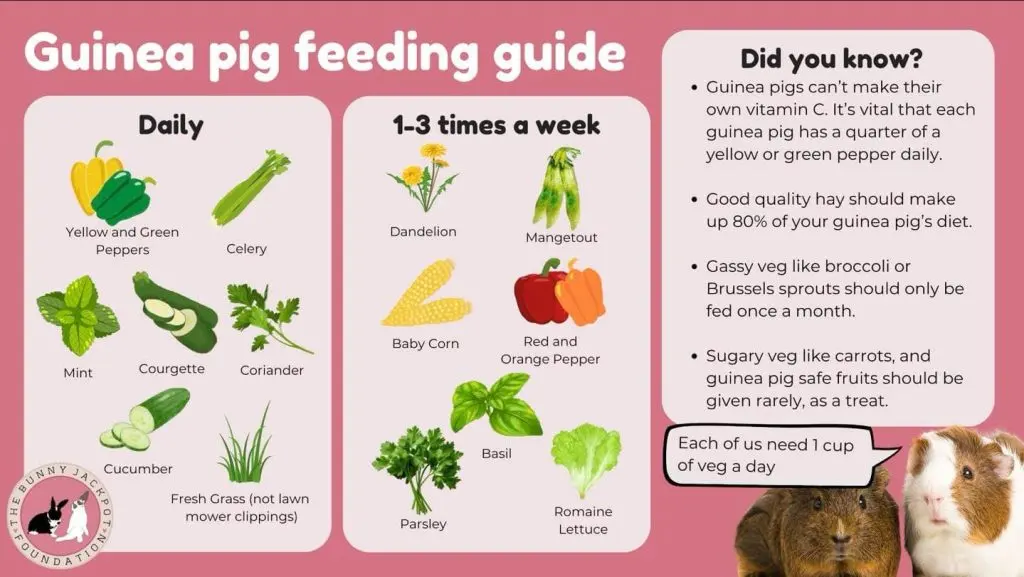
Timothy hay, orchard grass, or meadow hay should make up approximately 80 percent of a guinea pig's daily diet. These fibrous grasses are essential for maintaining healthy digestion and preventing gastrointestinal stasis. Furthermore, guinea pigs have teeth that grow continuously throughout their lives; the constant grinding motion required to chew tough hay fibers naturally wears down their molars and incisors, preventing painful dental overgrowth.
You should provide an unlimited supply of hay in a clean area of the enclosure at all times. If the hay becomes soiled or wet, it must be replaced immediately to prevent mold growth and bacterial contamination. Offering a variety of grass types can provide enrichment, but avoid alfalfa hay for adult guinea pigs. Alfalfa is too high in calcium and protein, which can lead to the development of bladder stones and obesity in mature animals.
What vegetables should guinea pigs eat?
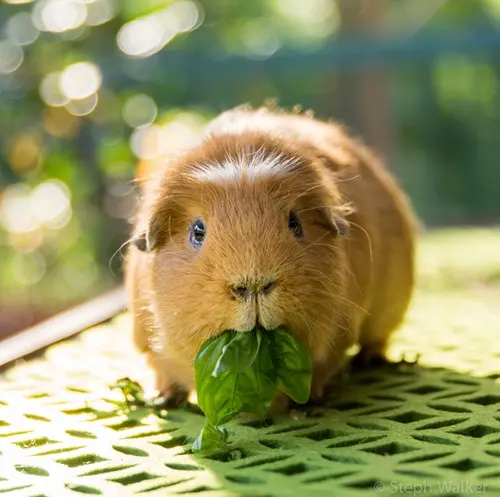
Fresh vegetables provide the necessary vitamins and minerals that hay and pellets may lack. You should offer a daily serving of fresh greens, roughly one cup per guinea pig, to ensure they receive adequate nutrition. Dark, leafy greens are the best choices, while root vegetables should be treated as occasional treats due to their high sugar content.
When selecting produce, prioritize items high in vitamin C. Bell peppers are an excellent staple because they offer a high concentration of this essential nutrient without excessive sugar. Other safe options include:
- Romaine lettuce (in moderation)
- Cilantro and parsley
- Cucumber slices
- Zucchini
- Green leaf lettuce
Avoid feeding iceberg lettuce, as it has very little nutritional value and can cause digestive upset due to its high water content. Always wash produce thoroughly to remove pesticides and chemicals before serving it to your pets.
How to choose the right pellets
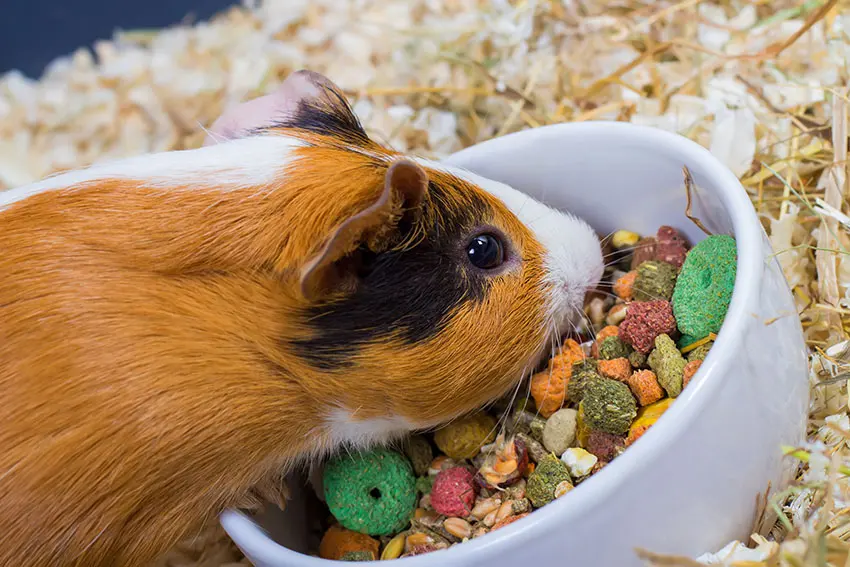
High-quality, plain timothy-based pellets are the best choice for adult guinea pigs. Unlike muesli-style mixes that contain seeds, nuts, or dried fruit, plain pellets prevent selective feeding. Selective feeding occurs when a guinea pig picks out the sugary or fatty bits and ignores the nutritious parts, which leads to nutritional imbalances and obesity.
When purchasing pellets, check the label to ensure they are fortified with vitamin C. However, keep in mind that vitamin C degrades quickly once the bag is opened or exposed to light and heat. To ensure your pet receives the required dosage, you should:
- Buy pellets in small quantities to ensure they remain fresh.
- Store the bag in a cool, dark, and airtight container.
- Check the expiration date on the packaging before every purchase.
- Replace any pellets that have been sitting in the bowl for more than 24 hours.
Common mistakes when feeding guinea pigs
One of the most frequent errors owners make is providing an improper balance of nutrients. Feeding too many fruits or starchy vegetables like carrots can lead to rapid weight gain and diabetes. Additionally, many owners mistakenly believe that guinea pigs can survive on pellets alone. Pellets are meant to be a supplement, not the primary source of nutrition, as they lack the long-strand fiber found in hay.
Another common mistake is failing to provide adequate vitamin C. A guinea pig suffering from a deficiency may show signs of lethargy, rough coat, or swollen joints. If you suspect your pet is not getting enough nutrients, consult a veterinarian immediately. Never offer human snacks, dairy products, or meat, as these can cause severe digestive distress and are toxic to the guinea pig’s sensitive system. Always introduce new vegetables slowly, one at a time, to monitor for any adverse reactions or loose stools.
How to provide water and treats safely
Fresh, clean water must be available 24 hours a day. Most owners prefer using a drip-style water bottle, but some guinea pigs find a shallow, heavy ceramic bowl easier to use. Regardless of the method, the container must be cleaned daily with hot water and mild soap to prevent the buildup of algae and bacteria. If you use a bottle, ensure the metal ball at the tip moves freely so your pet can drink without difficulty.
Treats should be kept to a minimum and used primarily for bonding or training purposes. While your pet might enjoy a small piece of fruit, such as a strawberry or a slice of apple, these should be limited to once or twice a week. Always remove any seeds or pits from fruits, as these can be choking hazards or contain toxic compounds. By sticking to a strict feeding schedule and monitoring your guinea pig's weight, you can ensure they live a long, healthy, and happy life.
Key facts
- Timothy hay must make up 80% of a guinea pig’s daily diet to support digestion and wear down constantly growing teeth.
- Guinea pigs cannot produce their own vitamin C and require a daily supplement of 10–30 mg to prevent scurvy.
- Fresh vegetables, such as bell peppers or romaine lettuce, should be provided in a one-cup serving daily.
- Avoid feeding iceberg lettuce, as it has low nutritional value and can cause diarrhea due to high water content.
- Pelleted food should be plain, timothy-based, and free of seeds, nuts, or colorful bits that pose choking hazards.
- Always provide unlimited access to clean, fresh water via a drip-style bottle or a heavy ceramic bowl.
The bottom line
A healthy guinea pig diet centers on unlimited timothy hay, which is vital for dental and digestive health. Supplement this base with a daily cup of fresh, vitamin C-rich vegetables and a small portion of plain, high-quality pellets. Avoid sugary treats, toxic plants, and processed snacks. By maintaining this consistent nutritional balance, you ensure your pet remains active, healthy, and free from common diet-related illnesses.
People also ask
Can guinea pigs eat fruit?
Yes, but only in small quantities as an occasional treat. Fruits like strawberries or apples are high in sugar, which can lead to obesity and dental issues if fed too frequently.
Are there any toxic foods for guinea pigs?
Never feed your pet onions, garlic, potatoes, rhubarb, or chocolate. These items contain compounds that are poisonous to guinea pigs and can cause severe illness or death.
How much should I feed my guinea pig daily?
Provide a constant supply of hay, one cup of fresh leafy greens, and about 1/8 cup of high-quality fortified pellets. Adjust the pellet portion if the animal shows signs of weight gain.
Do guinea pigs need salt licks or mineral wheels?
No, these are unnecessary and potentially harmful. A balanced diet of hay, fresh vegetables, and pellets provides all the essential minerals a healthy guinea pig requires.
Why is it important to wash vegetables before feeding?
Washing removes pesticide residues, dirt, and bacteria that could upset your guinea pig’s sensitive digestive system. Always pat the greens dry to prevent them from wilting too quickly in the cage.
Can I feed my guinea pig grass from the lawn?
Only if you are certain the lawn is free of pesticides, fertilizers, and pet waste. It is generally safer to stick to store-bought hay to avoid potential parasites or chemical contamination.
This answer was created with the help of AI research tools and reference sources. Spotted an error? Let us know — we correct mistakes quickly. See our editorial policy.