What colors make bronze?
Short answer
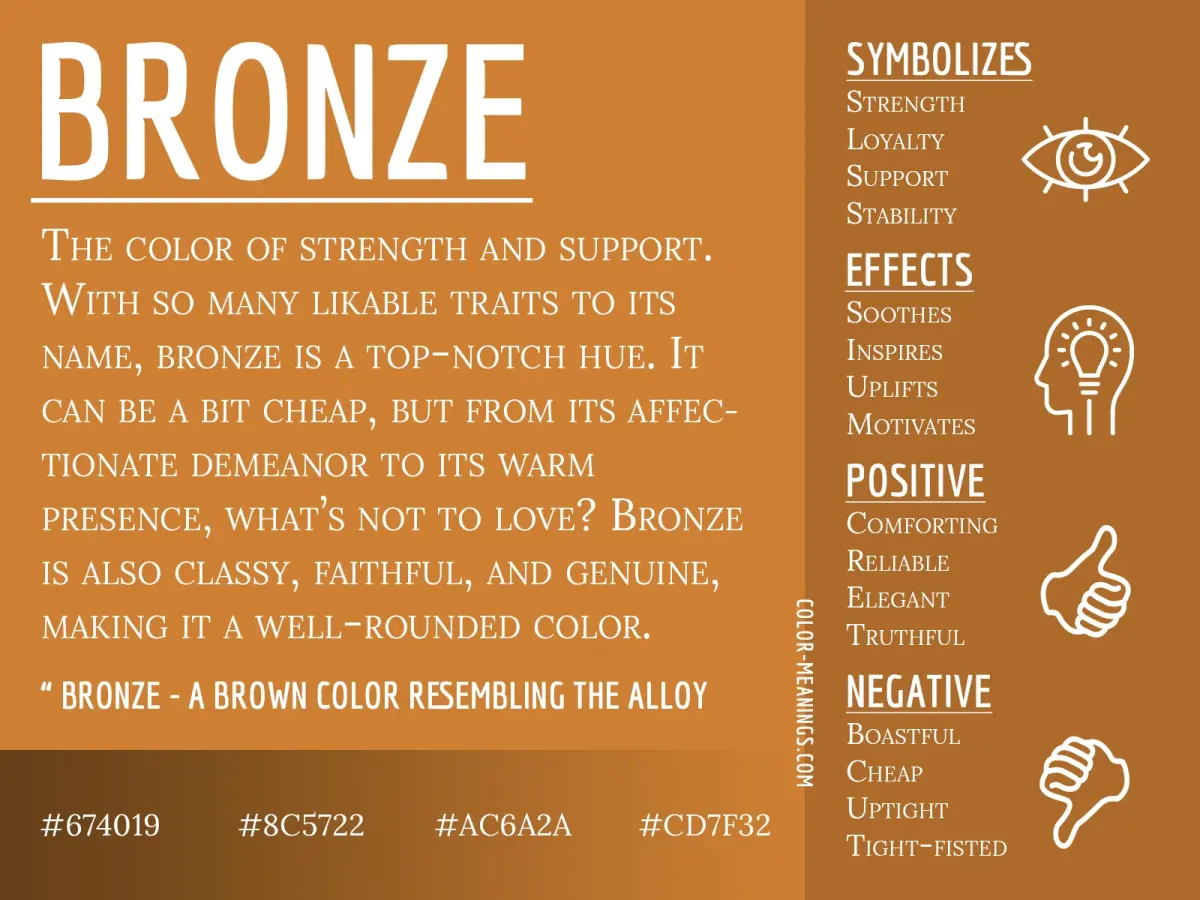
Bronze is an alloy primarily composed of copper and tin. While copper provides the base reddish-brown hue, the addition of tin alters the metal’s properties and color, typically resulting in a muted, golden-brown appearance. Other elements like zinc, lead, or aluminum may be added to adjust the final shade and durability.
On this page
What metals are in bronze?
Bronze is a metallic alloy defined by its chemical composition rather than a specific pigment. The fundamental components are copper, which usually makes up 88 percent of the mixture, and tin, which accounts for the remaining 12 percent. This specific ratio creates the classic, durable material that has been utilized by human civilizations for thousands of years.
The exact color of bronze depends heavily on the specific proportions of these base metals. When copper is mixed with tin, the resulting alloy loses the bright, salmon-pink luster of pure copper and takes on a deeper, more muted brownish-gold tone. Artisans often introduce small amounts of other elements to refine the physical characteristics of the metal. These secondary additions include:
- Zinc, which lightens the color and improves fluidity during casting.
- Lead, which makes the metal easier to machine or carve.
- Aluminum, which provides a bright, gold-like finish and high corrosion resistance.
- Nickel, which can add a silvery or white tint to the final alloy.
How is bronze made?
Creating bronze is a metallurgical process that requires precise temperature control and careful handling of molten materials. The process begins by melting copper in a crucible, as copper has a relatively high melting point of approximately 1,984 degrees Fahrenheit. Once the copper is fully liquefied, the tin is introduced into the molten pool.
Because tin melts at a much lower temperature—around 450 degrees Fahrenheit—it incorporates into the copper quickly. The mixture must be stirred thoroughly to ensure a homogenous alloy, preventing pockets of pure copper or tin from forming. Once the ingredients are fully integrated, the molten bronze is poured into molds to create sculptures, tools, or decorative objects. Common steps in the casting process include:
- Preparing a heat-resistant mold, often made of sand or ceramic.
- Heating the furnace to reach the necessary melting point for the copper base.
- Adding tin and any secondary metals while maintaining a consistent heat.
- Pouring the molten alloy into the mold and allowing it to cool slowly.
- Removing the hardened bronze and cleaning the surface of casting residue.

Why does bronze change color?
The color of bronze is not static; it evolves significantly over time due to a chemical process known as oxidation. When exposed to air and moisture, the surface of the bronze reacts to form a layer called a patina. This layer acts as a protective barrier, preventing further corrosion of the underlying metal while changing its appearance from a bright, metallic gold to a dark brown, green, or even black.
The specific color of the patina is determined by the environmental conditions and the chemical makeup of the alloy. In dry, indoor environments, bronze tends to darken into a rich, chocolate-brown color over several years. In outdoor settings, exposure to sulfur and moisture leads to the formation of copper carbonates, which result in the iconic blue-green or "verdigris" finish seen on historic monuments and statues. This transformation is a natural part of the metal's lifecycle and is often desired by artists for its aesthetic depth.

Common mistakes when working with bronze
One of the most frequent errors in bronze casting is failing to account for the cooling rate of the metal. If the alloy cools too rapidly, it can become brittle or develop internal cracks that compromise the structural integrity of the final piece. Maintaining a controlled environment during the cooling phase is essential for achieving a smooth, consistent finish that reflects the true color of the alloy.
Another common mistake involves the contamination of the molten mixture. Even small amounts of impurities, such as iron or excessive oxygen, can drastically alter the color and strength of the bronze. Using low-quality scrap metal without proper cleaning or failing to use a flux to remove impurities during the melting process will often lead to a dull, gray, or porous result. To ensure the best outcome, always use high-purity copper and tin ingots and perform the melting process in a well-ventilated, controlled workshop environment to avoid dangerous fumes and oxidation issues.
Best ways to maintain bronze color
To preserve the original appearance of a bronze object, regular maintenance is required to prevent unwanted oxidation or dirt accumulation. For indoor pieces, a light dusting with a soft, dry cloth is usually sufficient. If the surface begins to look dull, applying a thin, even coat of microcrystalline wax can seal the metal from moisture and oxygen, effectively locking in the current color and providing a soft, protective sheen.
If you wish to clean a piece that has developed an uneven patina, avoid using harsh abrasive cleaners or steel wool, as these will scratch the surface and permanently alter the texture of the metal. Instead, follow these professional maintenance guidelines:
- Use a mild, pH-neutral soap mixed with warm water for gentle cleaning.
- Rinse the surface thoroughly with distilled water to prevent mineral deposits.
- Dry the bronze completely with a clean microfiber cloth to avoid water spotting.
- Apply a high-quality museum-grade wax annually to maintain the desired finish.
By following these simple steps, you can ensure that your bronze items remain vibrant and structurally sound for generations to come.
Key facts
- Bronze is an alloy primarily composed of copper and tin, not a mixture of pigments.
- The standard composition for modern bronze is approximately 88% copper and 12% tin.
- Adding small amounts of zinc, manganese, aluminum, or silicon alters the final color and properties.
- Copper provides the reddish-orange base, while tin lightens the metal and increases its hardness.
- Oxidation over time creates a patina, turning the surface shades of brown, green, or black.
- You cannot create bronze by mixing paint colors; it requires metallurgical smelting of raw metals.
The bottom line
Bronze is a metallic alloy created by combining copper and tin, not a simple color blend. While copper provides a warm, reddish base, the addition of tin modifies its hue and increases structural strength. Because it is a metallurgical product, you cannot replicate it with paint. Instead, artists use chemical patinas to achieve specific surface colors, allowing bronze to transition from bright gold to deep, weathered green.
People also ask
Is bronze the same as brass?
No, bronze is an alloy of copper and tin, whereas brass is an alloy of copper and zinc. While they look similar, brass is generally more yellow and bronze is more reddish-brown.
Why does bronze turn green?
Bronze reacts with oxygen, moisture, and pollutants in the air to form a layer called a patina. This chemical process, known as oxidation, creates copper carbonates that result in the characteristic green color.
Can I make bronze at home?
Casting bronze requires high-temperature furnaces capable of reaching over 1,700 degrees Fahrenheit to melt the metals. It is dangerous for beginners and requires professional-grade safety equipment and proper ventilation.
How do artists change the color of bronze sculptures?
Artists use chemical patination, applying substances like ferric nitrate or cupric nitrate to the surface. These chemicals react with the metal to produce specific colors, ranging from deep browns to vibrant blues.
Does the amount of tin change the color?
Yes, increasing the tin content tends to make the bronze appear lighter and more silvery. Lower tin content results in a deeper, richer reddish-brown tone closer to pure copper.
Is bronze stronger than copper?
Bronze is significantly harder and more durable than pure copper. The addition of tin creates a crystalline structure that resists deformation, making it ideal for tools, weapons, and statues.
This answer was created with the help of AI research tools and reference sources. Spotted an error? Let us know — we correct mistakes quickly. See our editorial policy.