What brushes do you need for acrylic painting?
Short answer
You need a small selection of synthetic brushes to paint with acrylics effectively. Focus on acquiring a mix of flat, filbert, and round shapes made from nylon or polyester fibers. These durable materials handle the fast-drying, slightly abrasive nature of acrylic paint better than natural hair brushes, which quickly degrade and fray.
On this page
What brushes are best for acrylic painting?
Synthetic brushes are the industry standard for acrylic artists because they are engineered to withstand the chemical properties of acrylic polymers. Unlike natural hair brushes, which are porous and can become bloated or brittle when submerged in water-based media, synthetic filaments maintain their shape and spring. Look for brushes labeled as "synthetic sable" or "nylon blend," as these offer a balance of softness for smooth blending and firmness for pushing thick, heavy-body paints.
When selecting your initial set, prioritize quality over quantity. A few well-made brushes will perform better and last longer than a large set of cheap plastic bristles that shed during use. You should look for brushes with a comfortable handle length and a secure ferrule—the metal band connecting the bristles to the handle. A tight ferrule prevents water from seeping into the handle, which would otherwise cause the wood to expand and crack over time.
Which brush shapes do beginners need?
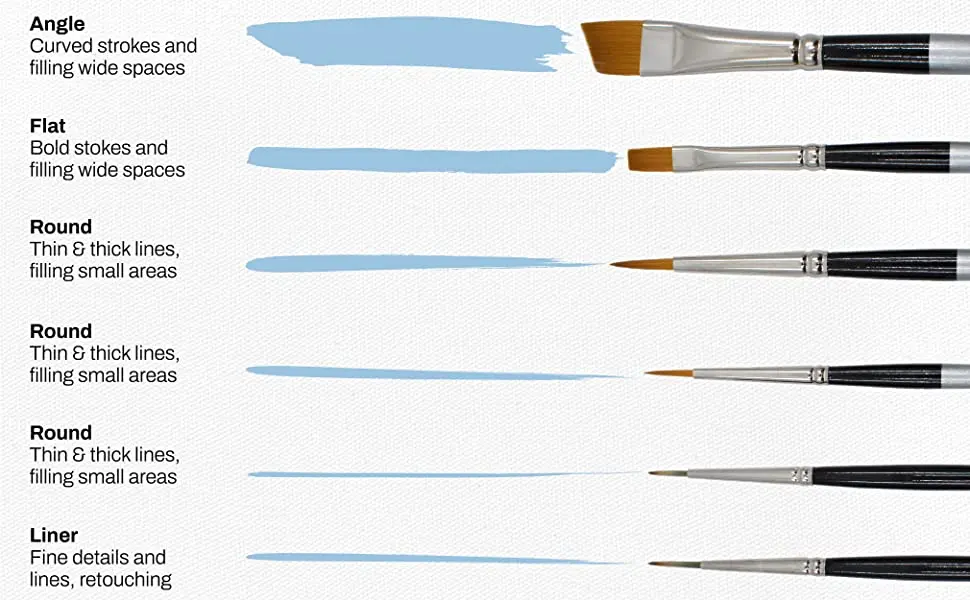
Beginners should focus on acquiring a versatile core kit rather than buying every specialty shape available. A basic set allows you to experiment with different textures and mark-making techniques without overwhelming your workspace. Most artists find that a combination of these three shapes covers 90% of painting needs:
- Flat brushes: These have a square edge and are ideal for bold, broad strokes and filling in large background areas.
- Round brushes: Featuring a pointed tip, these are essential for detailed work, fine lines, and controlled application of paint.
- Filbert brushes: These have an oval-shaped head, making them perfect for blending edges and creating soft, organic shapes like flower petals.
Start by purchasing one of each in small, medium, and large sizes. This range provides the necessary variety to transition from blocking in large shapes to adding intricate highlights. As you gain more experience, you can identify which shapes you use most frequently and invest in higher-end versions of those specific tools.
How to care for acrylic brushes?
Proper maintenance is the most effective way to extend the lifespan of your brushes. Because acrylic paint dries into a permanent plastic-like film within minutes, you must never allow paint to dry on your bristles. If paint hardens in the ferrule, the brush will lose its shape and become permanently damaged. Keep a jar of water nearby while you work and rinse your brushes frequently, especially when switching colors or taking breaks.
- Rinse the brush thoroughly in cool water immediately after use.
- Use a mild soap or a dedicated brush cleaner to gently massage the bristles, ensuring no pigment remains near the ferrule.
- Reshape the bristles with your fingers to their original form.
- Lay the brushes flat or hang them bristle-side down to dry completely.
Never leave a brush sitting in a jar of water for an extended period, as this will cause the bristles to bend and permanently deform. Always store your brushes in a dry, upright container or a flat roll once they are fully dehydrated.
Common mistakes when using acrylic brushes
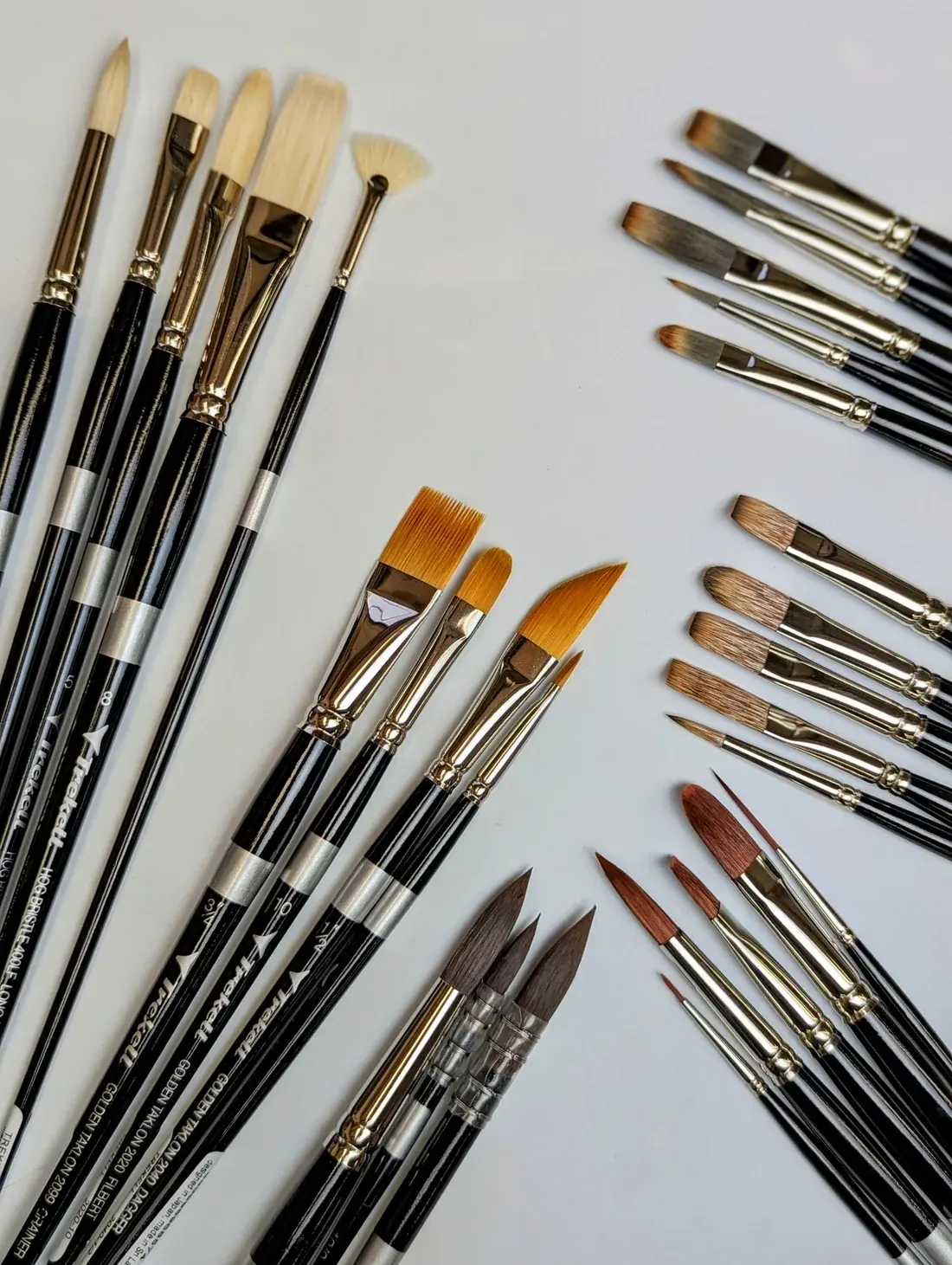
One frequent error is using natural hair brushes designed for oil painting with acrylics. Natural fibers like hog bristle are too stiff and porous for acrylics, leading to uneven paint distribution and rapid wear. Another common mistake is applying too much pressure, which can splay the bristles and ruin the brush’s ability to hold a sharp edge. Let the paint flow off the tip of the brush rather than scrubbing it into the canvas.
Avoid overloading the brush with paint, as excess material will migrate into the ferrule and harden. When working with heavy-body acrylics, use a palette knife to mix your colors rather than your brush. This prevents unnecessary wear on the bristles and keeps the paint from getting trapped deep within the brush head. By treating your tools with care and choosing the right material for the medium, you ensure that your brushes remain reliable partners in your creative process for years.
How to identify high-quality brushes?
When shopping, test the "spring" of the bristles by gently bending them with your finger. A high-quality brush should snap back to its original shape instantly without any stray hairs sticking out. The bristles should feel uniform and dense, not sparse or prone to falling out when you tug on them lightly. Check the handle for balance; it should feel comfortable in your hand, allowing you to maintain control during long painting sessions.
Reputable brands often provide information about the stiffness of the filament, which is crucial for acrylic work. If you are unsure, look for brushes labeled as "stiff" or "medium-stiff." Avoid extremely soft brushes, as they will struggle to move the heavy, viscous texture of acrylic paint across the surface of a canvas. By paying attention to these physical characteristics, you can build a professional-grade collection that supports your artistic growth and allows you to execute your creative vision with precision and confidence.
Key facts
- Synthetic brushes are essential for acrylics because natural hair bristles absorb too much water and become limp.
- Use a "bright" brush for short, controlled strokes and a "filbert" for blending and soft edges.
- A "flat" brush is ideal for covering large areas and creating bold, square-edged marks.
- Always keep a water container nearby to rinse brushes immediately, as acrylic paint becomes permanent once it dries.
- Never leave brushes resting on their bristles in water, as this permanently bends the shape and damages the ferrule.
- Look for brushes with a "long handle" to allow for a greater distance from the canvas, which improves perspective and stroke fluidity.
The bottom line
To succeed with acrylic painting, prioritize synthetic brushes that resist the rapid drying time and chemical properties of the medium. Start with a modest set of flats, filberts, and rounds to master various textures. Proper maintenance is critical; always clean your tools immediately to prevent permanent damage. By choosing durable synthetic fibers and keeping your brushes moist during use, you ensure a consistent and professional painting experience.
People also ask
How do I clean acrylic brushes effectively?
Rinse the bristles thoroughly in cool water immediately after use. Use a gentle soap or a dedicated brush cleaner to remove paint trapped near the ferrule, then reshape the bristles and lay the brush flat to dry.
Can I use watercolor brushes for acrylic painting?
It is generally not recommended because watercolor brushes are too soft to move the heavier viscosity of acrylic paint. They will wear out quickly and provide poor control over the paint application.
What is the difference between synthetic and natural hair brushes?
Synthetic brushes are made from nylon or polyester and are designed to withstand the alkaline nature of acrylics. Natural hair brushes are intended for oils and will swell or degrade when exposed to the water-based acrylic medium.
How many brushes do I need to start?
You can begin with a small set of four: a large flat brush, a medium filbert, a medium round, and a small detail liner. This selection covers most basic painting techniques and canvas sizes.
Why do my brushes get stiff while I am painting?
Acrylic paint dries very quickly, even on the bristles. Keep your brush damp by dipping it in water frequently and never let paint sit on the brush for more than a few minutes without being rinsed.
What does the number on the brush handle mean?
The number indicates the size of the brush head, but these are not standardized across brands. A size 6 from one manufacturer may be significantly larger or smaller than a size 6 from another.
This answer was created with the help of AI research tools and reference sources. Spotted an error? Let us know — we correct mistakes quickly. See our editorial policy.