How do you use a pencil sharpener for art?
Short answer
Using a pencil sharpener for art requires selecting the right tool for your specific medium, such as graphite, charcoal, or colored pencils. By maintaining a sharp blade and applying gentle, consistent pressure, you achieve precise points for fine detail or broader tips for shading, ensuring your artistic tools remain in peak condition.
On this page
How to choose the right pencil sharpener for art
Selecting the appropriate sharpener depends entirely on the type of pencil you are using. Graphite pencils are generally durable and work well with standard handheld sharpeners, while colored pencils contain wax-based or oil-based cores that are softer and more prone to breakage. For these delicate media, a high-quality manual sharpener with a sharp steel blade is often superior to electric models, which can spin too fast and snap the tip.
Artists often prefer specialized sharpeners that offer multiple settings for point length. Some professional-grade manual sharpeners feature a two-step process: the first stage removes the wood casing, and the second stage sharpens the core to a fine point. This prevents the lead from snapping inside the barrel. Always inspect the blade periodically; a dull blade will tear the wood and crush the core rather than cutting it cleanly.
How to sharpen pencils without breaking the lead
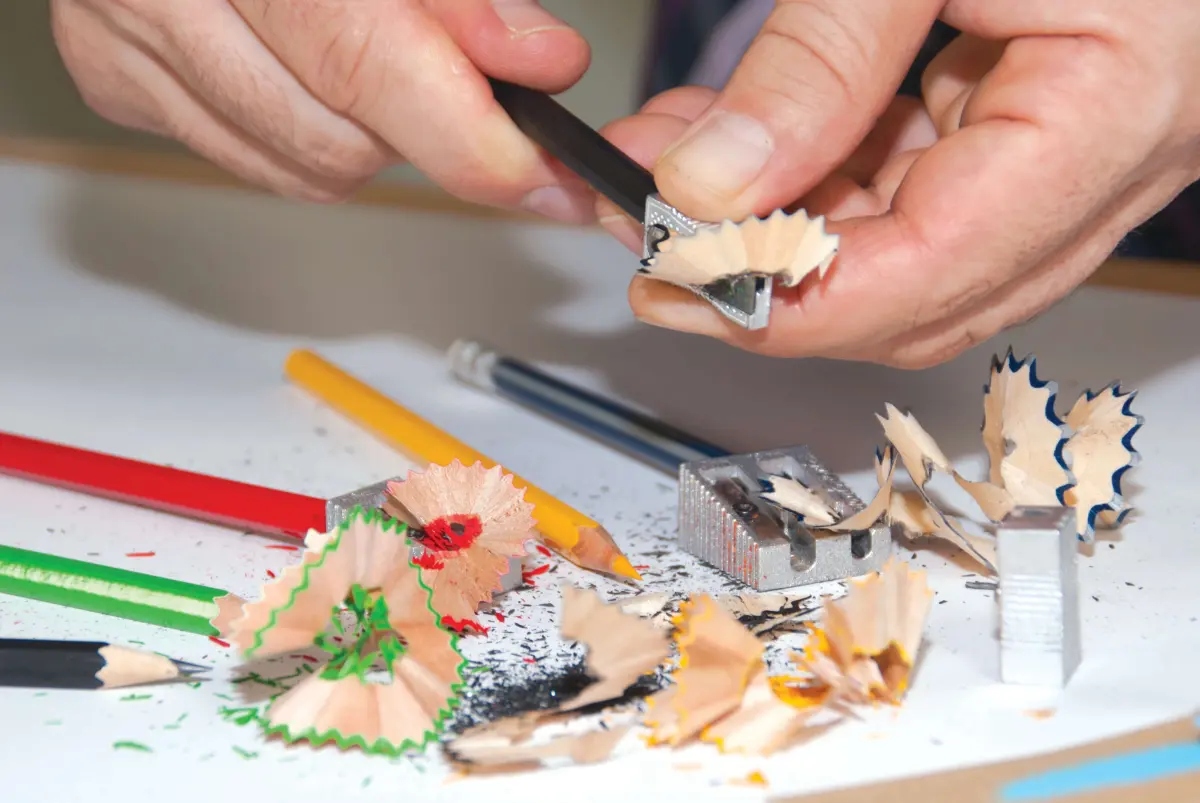
The primary goal is to achieve a sharp point without creating internal fractures in the core. When using a handheld sharpener, hold the pencil firmly and insert it straight into the opening. Rotate the pencil in a smooth, continuous motion rather than twisting it back and forth. This ensures an even cut around the circumference of the wood.
If you are using soft charcoal pencils or pastel pencils, manual sharpening with a hobby knife is often safer than using a mechanical sharpener. This method gives you complete control over the length of the exposed core. Follow these steps for manual sharpening:
- Hold the pencil at a slight angle against a cutting mat.
- Use a sharp craft knife to shave away the wood casing in small increments.
- Once the core is exposed, gently scrape the lead to your desired taper.
- Use a piece of fine-grit sandpaper to refine the tip for ultimate precision.
Why pencil breakage happens during sharpening
Breakage is usually caused by a dull blade, excessive force, or a pencil that has been dropped previously. When a blade becomes blunt, it exerts pressure on the core instead of slicing through it. This stress often causes the inner lead to snap deep inside the pencil, leading to a cycle of frustration where the tip breaks immediately after being sharpened.
Another common cause is the "clogged" sharpener. Wood shavings and wax residue can build up inside the chamber, preventing the pencil from seating correctly. Always empty your sharpener frequently to maintain airflow and visibility. If you notice your pencils consistently breaking, try rotating the pencil more slowly or checking if the pencil itself has warped wood, which can misalign the core with the blade.
Best practices for maintaining pencil tips
Consistent maintenance prolongs the life of your pencils and improves your drawing experience. If you use colored pencils, keep them in a cool, dry place; extreme heat can soften the wax core, making it gummy and difficult to sharpen. When sharpening, aim for a medium-length point for general sketching and a longer, more tapered point for fine detail work.
To keep your tools in top condition, consider these professional habits:
- Clean the sharpener blade with a small brush or a drop of rubbing alcohol to remove wax buildup.
- Replace manual blades every few months if you draw daily, as steel loses its edge quickly.
- Avoid using electric sharpeners on pastel pencils, as the dust can clog the internal motor.
- Store sharpened pencils flat or point-up to prevent the tips from snapping against the bottom of your storage case.
Common mistakes when sharpening art pencils
Many artists make the mistake of applying too much pressure when they feel resistance. If the pencil does not turn easily, stop immediately and check for a jammed shaving. Forcing the pencil will only drive the blade deeper into the core, causing it to snap. Additionally, using a sharpener designed for standard office pencils on professional art pencils is a frequent error, as the blade angles are often incompatible with artist-grade wood casings.
Another oversight is failing to sharpen the pencil to the correct geometry. A short, blunt point is excellent for broad, dark shading, while a long, needle-like point is necessary for cross-hatching and fine lines. By failing to adjust your sharpening technique to match your artistic intent, you limit your range of expression. Always test your pencil on a scrap piece of paper after sharpening to ensure the lead is stable and the point is shaped exactly as you need it for your next stroke.
Key facts
- A standard pencil sharpener uses a hardened steel blade set at a precise angle to shave wood and graphite.
- For professional drawing, a long-point sharpener creates a tapered lead that allows for broader shading strokes.
- Always rotate the pencil clockwise with steady, gentle pressure to prevent the lead from snapping inside the barrel.
- Empty the shavings reservoir frequently to prevent graphite dust from clogging the blade and dulling the edge.
- If using a manual crank sharpener, avoid over-sharpening, which consumes the pencil unnecessarily and weakens the tip.
- Artists often use a utility knife or sandpaper block to create custom chisel tips that a mechanical sharpener cannot produce.
The bottom line
Mastering the pencil sharpener is a foundational skill for any artist, directly influencing the quality of your lines and shading. By choosing the right tool for your specific medium and maintaining the blade’s sharpness, you minimize waste and prevent frustrating lead breakage. Whether you prefer a simple manual handheld device or a professional long-point sharpener, consistent technique ensures your pencils are always ready for creative expression.
People also ask
Why does my pencil lead keep breaking inside the sharpener?
This usually happens because the blade is dull or the pencil has been dropped, causing internal fractures in the graphite core. Try sharpening more slowly or replacing the blade if the sharpener is detachable.
Is it better to use a manual or electric sharpener for art?
Manual sharpeners offer more control and portability, making them ideal for field sketching. Electric models are more efficient for studio work but can be aggressive and waste precious drawing material.
How do I sharpen charcoal pencils without them crumbling?
Charcoal is softer and more brittle than graphite, so avoid mechanical sharpeners entirely. Use a sandpaper block or a sharp hobby knife to carefully shave the wood away from the core.
What is the benefit of a "long-point" sharpener?
A long-point sharpener exposes more of the graphite core, allowing artists to hold the pencil at a shallow angle. This is essential for creating wide, smooth gradients and soft shading in detailed drawings.
How can I tell if my sharpener blade needs replacing?
If the wood casing appears chewed or jagged rather than smooth, the blade has lost its edge. A dull blade puts excessive stress on the lead, leading to frequent breakage during use.
Can I sharpen colored pencils in the same sharpener as graphite pencils?
Yes, but colored pencil wax can build up on the blade and cause it to stick. Clean the blade with a small amount of rubbing alcohol periodically to maintain a smooth cutting action.
This answer was created with the help of AI research tools and reference sources. Spotted an error? Let us know — we correct mistakes quickly. See our editorial policy.