What pencils do professional artists use for sketching?
Short answer
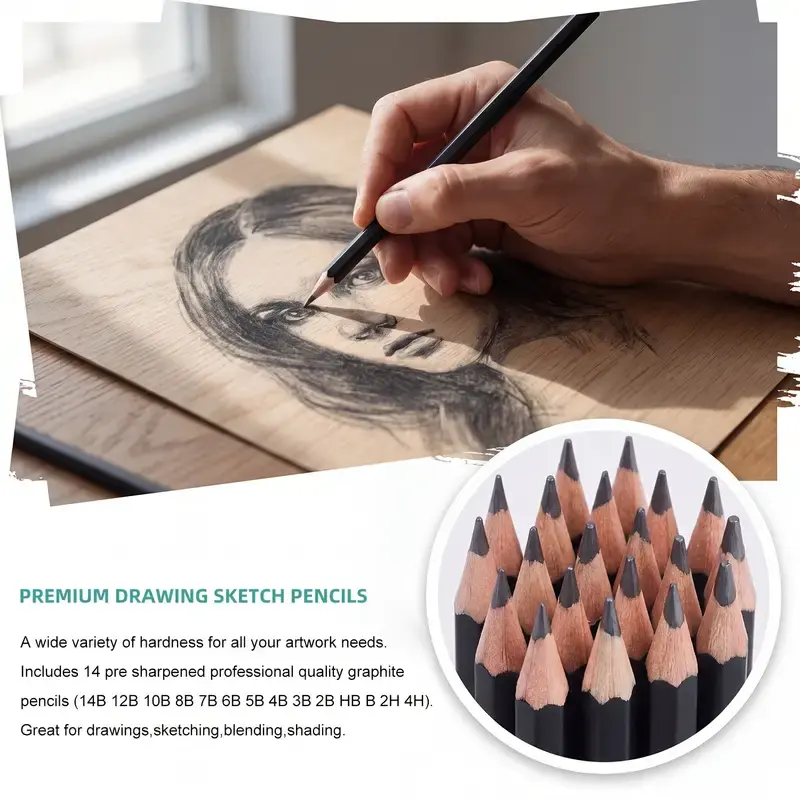
Professional artists use a range of graphite pencils, typically graded from 4H to 6B, to achieve varied tonal depth and texture. Popular choices include high-quality brands like Staedtler Mars Lumograph, Faber-Castell 9000, and Tombow Mono. These tools allow for precise technical drafting, expressive shading, and subtle layering in professional sketching workflows.
On this page
Which graphite grades do artists use for sketching?
Professional artists utilize the international graphite grading scale to select the right tool for specific tasks. The scale ranges from H (Hard) to B (Black/Soft), with HB representing the middle ground. Harder leads, such as 2H or 4H, contain more clay and less graphite, resulting in lighter, crisper lines that are ideal for initial construction lines or technical drafting. These pencils hold a sharp point longer and are less likely to smudge, making them indispensable for precise underdrawings.
Conversely, softer leads like 4B, 6B, and 8B contain more graphite, which produces dark, velvety marks and allows for rich tonal ranges. Artists often carry a curated set to manage different stages of a drawing. A common professional kit includes:
- 2H for light, structural layout lines.
- HB or B for mid-tone development and initial shading.
- 4B and 6B for deep shadows and bold, expressive accents.
- 2B as a versatile workhorse for general sketching.
How to choose the best pencil brands for professionals
While many pencils look similar, the quality of the graphite core and the cedar casing distinguishes professional-grade tools from student supplies. Professional pencils feature high-density, break-resistant leads that do not contain grit or impurities, which can scratch the paper surface. Brands like Faber-Castell and Staedtler are industry standards because they provide consistent grading across their entire range, ensuring that a 2B pencil from one box performs identically to one from another.
When evaluating brands, consider the bonding process used to secure the lead to the wood. Superior manufacturing prevents the core from snapping during sharpening, which is a frequent frustration with cheaper alternatives. Many professionals also prefer pencils with a matte finish or a hexagonal shape to prevent them from rolling off drawing tables. Investing in reputable brands ensures that the artist can focus on technique rather than fighting with the structural integrity of their tools.
Why artists use different sketching techniques
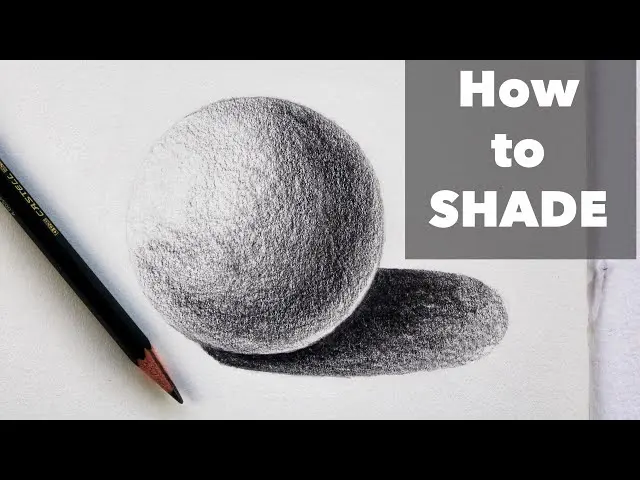
Effective sketching relies on understanding how to manipulate different pencil grades to create the illusion of three-dimensional form. Artists often begin with a light touch using a hard pencil to establish proportions, gradually transitioning to softer pencils as they build up value and contrast. This layering process prevents the paper fibers from becoming overly compressed too early, which allows for deeper, more luminous shadows in the final stages of the work.
To master professional sketching, follow these foundational steps:
- Hold the pencil further back from the tip to encourage loose, gestural marks rather than tight, controlled lines.
- Apply light pressure initially to keep the paper surface receptive to subsequent layers of graphite.
- Use a kneaded eraser to lift graphite gently, creating highlights and adjusting values without damaging the paper tooth.
- Rotate the pencil while shading to maintain a consistent edge and prevent the lead from wearing down into a flat, blunt chisel.
Common mistakes when sketching with pencils
A frequent error among developing artists is applying too much pressure, which creates "burnishing." This happens when the graphite fills the paper's texture so completely that it becomes shiny and reflective, making it impossible to add further layers or darken the area. Once the paper is burnished, the artist cannot easily correct the value, often leading to a muddy or overworked appearance. It is better to build darkness through multiple light layers rather than force the graphite into the paper with a single heavy stroke.
Another mistake is using the wrong grade of pencil for the wrong phase of the drawing. Attempting to create deep, dark shadows with an H-grade pencil will leave indentations in the paper, while using a 6B pencil for fine details will result in a blurry, messy look. Always test your pencil on a scrap piece of paper before applying it to your final surface. Furthermore, failing to sharpen pencils correctly can lead to broken leads; always use a sharp blade or a high-quality manual sharpener to preserve the integrity of the pencil point.
How to maintain and store professional pencils
Proper maintenance of professional sketching tools extends their lifespan and improves the quality of every mark. Artists should store their pencils in a flat case or a dedicated roll to prevent the lead from snapping inside the wood casing. If a pencil is dropped, the internal core can shatter, causing the lead to fall out in pieces every time it is sharpened. Keeping a clean, organized workspace also prevents graphite dust from smearing across finished artwork, which is a common hazard in studio environments.
To maintain your kit, perform these simple tasks regularly:
- Sharpen pencils to a long, tapered point to allow for both broad shading and fine-line work.
- Clean your sharpeners frequently to remove accumulated graphite dust that can dull blades.
- Use a fixative spray if you are working with very soft, dark pencils like 6B or 8B to prevent smudging during storage.
- Organize your pencils by grade to ensure you can quickly access the exact tool needed for every stage of your creative process.
Key facts
- Graphite pencils are graded on a scale from 9H (hardest, lightest) to 9B (softest, darkest), with HB representing the middle ground.
- Professional artists often utilize a range of pencils, typically starting with a 2H for light structural outlines and moving to 4B or 6B for shading.
- Mechanical pencils with 0.5mm or 0.7mm leads are preferred for precise technical details and consistent line width without the need for sharpening.
- Woodless graphite pencils allow for broad, expressive strokes by using the side of the lead, making them ideal for large-scale sketching.
- High-quality artist-grade pencils use a consistent graphite-to-clay ratio, preventing scratchy marks or hard spots that can damage paper fibers.
- Brands such as Staedtler Mars Lumograph, Faber-Castell 9000, and Tombow Mono are industry standards favored for their reliable grading and smooth application.
The bottom line
To elevate your sketching, invest in a small set of artist-grade pencils ranging from 2H to 6B. Use hard pencils for light layouts and soft pencils for depth and shadow. Always use a kneaded eraser to correct mistakes without damaging your paper. By mastering the graphite scale and maintaining your tools, you will gain the control necessary to create professional-quality drawings with consistent, expressive results.
People also ask
Do professional artists prefer wood-cased or mechanical pencils?
Most professionals use both; wood-cased pencils are favored for shading and expressive sketching, while mechanical pencils are essential for fine, uniform details.
How often should I sharpen my sketching pencil?
Sharpen your pencil whenever the tip loses its precision, but avoid over-sharpening, which wastes material and can weaken the lead. Use a high-quality manual sharpener for the best results.
What is the purpose of the "H" and "B" letters on pencils?
The "H" stands for hardness, indicating a high clay content that creates light, crisp lines, while "B" stands for blackness, indicating a high graphite content that creates dark, soft marks.
Can I use standard office pencils for professional sketching?
While possible, standard office pencils often have inconsistent graphite quality and limited grading, which can lead to uneven shading and difficulty achieving deep, dark tones.
Should I use a kneaded eraser or a standard rubber eraser?
A kneaded eraser is superior for sketching because it can be molded into shapes to lift graphite gently without damaging the paper surface or leaving crumbs.
Why do my drawings look smudged after I finish them?
Smudging usually occurs when the hand drags across graphite or when soft lead is applied too heavily; use a fixative spray or a sheet of paper under your hand to protect the work.
This answer was created with the help of AI research tools and reference sources. Spotted an error? Let us know — we correct mistakes quickly. See our editorial policy.