How do you draw with a dip pen?
Short answer
Drawing with a dip pen involves selecting a compatible nib and holder, dipping the nib into ink, and applying controlled pressure to the paper. By varying the angle and force of your strokes, you can manipulate line thickness and texture, creating expressive illustrations through precise, manual ink flow and careful technique.
On this page
What equipment do I need to start?
To begin drawing with a dip pen, you must acquire three essential components: a nib, a pen holder, and specialized drawing ink. Nibs are metal tips that come in various shapes and flexibilities, ranging from stiff, needle-like points for fine detailing to flexible, broad edges for calligraphy and expressive sketching. The pen holder, often made of wood or plastic, acts as the handle; universal holders are best for beginners as they accommodate most standard nib sizes.
You should also invest in high-quality, smooth-surfaced paper. Rough or textured paper can catch the nib’s tines, causing ink splatters or paper fibers to clog the tip. For ink, choose a waterproof India ink or a dedicated drawing ink that does not contain shellac, which can harden and permanently damage your nibs. Keep a small jar of water and a lint-free cloth nearby to clean your nibs frequently during your drawing sessions.
How to prepare a new nib for use
New nibs are often coated with a thin layer of protective oil from the manufacturing process, which prevents ink from adhering to the metal. If you attempt to draw with a fresh, untreated nib, the ink will bead up and roll off the tip rather than flowing smoothly onto the paper. To remove this residue, you can gently scrub the nib with a soft toothbrush and mild dish soap, or briefly pass the nib through a flame for a second.
Alternatively, you can simply lick the nib or stick it into a raw potato for a few minutes. The mild acidity in the potato or the enzymes in your saliva effectively strip away the factory oil. Once cleaned, rinse the nib thoroughly with water and dry it completely with a soft cloth. You will know the nib is ready when the ink coats the metal evenly, forming a consistent, thin film across the surface of the tines.
How to draw with a dip pen
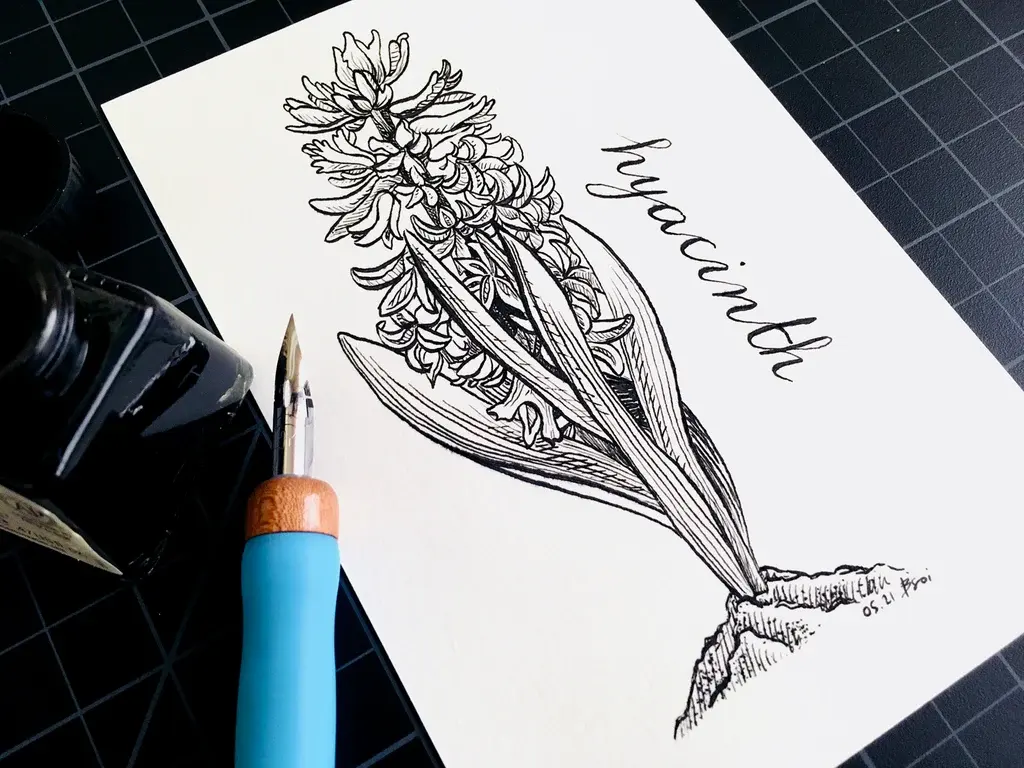
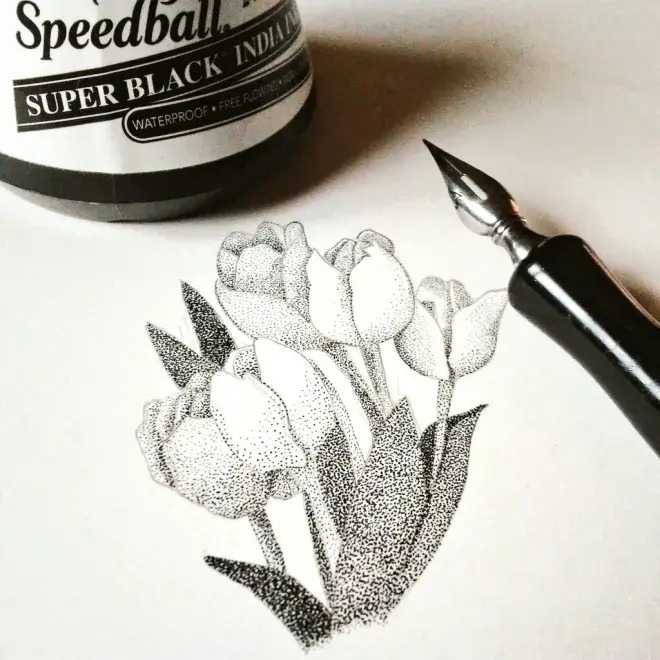
Mastering the dip pen requires a balance between pressure and ink management. Follow these steps to achieve consistent lines:
- Dip the nib into the ink bottle only up to the breather hole, which is the small circular opening located in the center of the nib.
- Tap the nib gently against the inner neck of the bottle to remove excess ink, preventing large droplets from falling onto your artwork.
- Hold the pen at a 45-degree angle to the paper, ensuring both tines of the nib touch the surface simultaneously.
- Pull the pen toward you rather than pushing it, as pushing can cause the tines to catch and tear the paper.
- Vary your pressure to change line width: press harder to spread the tines for thicker lines, and use a light touch for delicate, thin strokes.
Common mistakes when using a dip pen
Many beginners struggle with ink flow and paper damage due to improper handling. One frequent error is dipping the pen too deep, which causes ink to pool on the back of the nib and drop unexpectedly onto the drawing. Another common mistake is failing to clean the nib during long sessions; dried ink buildup acts as a barrier, preventing fresh ink from reaching the paper and leading to scratchy, inconsistent marks.
Avoid these pitfalls to maintain better control:
- Pressing too hard, which can permanently spring or misalign the tines, ruining the nib's precision.
- Leaving the pen sitting in ink, which causes corrosion and rust to develop on the metal.
- Using standard printer paper, which is too porous and will cause the ink to bleed or feather at the edges.
- Forgetting to wipe the nib clean after every use, which leads to permanent clogs that are difficult to remove.
How to maintain your dip pen tools
Proper maintenance ensures that your nibs remain functional for years. After every drawing session, remove the nib from the holder and wash it with lukewarm water. If you have used waterproof ink, use a specialized pen cleaner or a very mild soap solution to ensure no residue remains in the crevices of the tines. Once clean, dry the nib thoroughly with a lint-free cloth or paper towel to prevent oxidation and rust.
Store your nibs in a dry, cool environment, ideally in a small container or a dedicated nib box. If you notice a nib becoming scratchy or failing to hold ink despite cleaning, it may be worn out and should be replaced. The pen holder itself requires little maintenance, but you should occasionally wipe it down to remove any stray ink stains. By treating your tools with care, you preserve the reliability and responsiveness of your equipment, allowing for a much more enjoyable and productive drawing experience.
Key facts
- A dip pen consists of a metal nib inserted into a holder, which must be manually dipped into ink before each use.
- The slit in the center of the nib acts as a reservoir, holding ink through capillary action until it touches the paper.
- Use smooth, non-absorbent paper like Bristol board or high-quality calligraphy paper to prevent ink from "feathering" or spreading.
- Always wipe the nib clean with a soft cloth immediately after use to prevent dried ink from clogging the delicate slit.
- Varying the pressure applied to the nib allows you to create thicker lines by spreading the tines and thinner lines with a light touch.
- New nibs are often coated in a thin layer of protective oil from the factory; scrub them gently with a toothbrush or mild soap before the first use.
The bottom line
Mastering the dip pen requires patience and a gentle touch. By maintaining a clean nib, selecting appropriate paper, and practicing pressure control, you can achieve a level of line variation and expressive detail that modern pens cannot replicate. Focus on consistent, fluid motions and always prioritize cleaning your tools to ensure longevity. With these fundamental techniques, you will quickly gain confidence in this classic artistic medium.
People also ask
What is the difference between a dip pen and a fountain pen?
A dip pen lacks an internal ink reservoir and must be replenished frequently, whereas a fountain pen uses an internal cartridge or converter. Dip pens allow for easier switching between different ink colors and types.
Why does my dip pen scratch the paper?
Scratching usually occurs if you are holding the pen at too steep an angle or applying too much downward pressure. Try lowering the angle of the pen holder relative to the paper to allow the nib to glide smoothly.
Can I use any type of ink with a dip pen?
Most drawing inks, such as India ink, work well because they are waterproof when dry. Avoid using fountain pen ink, as it is often too thin and may run off the nib too quickly.
How do I prevent ink blobs on my drawing?
Blobs happen when you overload the nib or touch the paper too hard. Gently tap the nib against the side of the ink bottle after dipping to remove excess liquid before beginning your stroke.
What should I do if my nib stops flowing?
Dried ink may be blocking the slit, or the nib might be oily. Clean the nib thoroughly with water and ensure the ink is not too thick or old.
How long does a nib last?
Nibs are consumable items that eventually wear down or lose their flexibility. With regular use and proper cleaning, a high-quality steel nib can last for several weeks or months of frequent drawing.
This answer was created with the help of AI research tools and reference sources. Spotted an error? Let us know — we correct mistakes quickly. See our editorial policy.