How do you use technical pens?
Short answer
Technical pens are precision instruments used for consistent line widths in drafting, illustration, and calligraphy. To use one, hold the pen vertically, maintain a steady flow of ink, and move across the surface without applying pressure. Regular cleaning and proper storage are essential to prevent the delicate internal wire from clogging.
On this page
How to use technical pens for drawing
Using a technical pen requires a different technique than a standard ballpoint or fountain pen. Because these tools rely on a weighted wire inside a narrow tube to regulate ink flow, you must hold the pen as close to a 90-degree angle as possible. If you tilt the pen too far, the ink will skip or stop flowing entirely because the wire cannot move freely to pull ink from the reservoir.
When drawing, let the weight of the pen do the work. Unlike pencils, which require varying degrees of pressure to achieve line weight, technical pens produce a uniform line regardless of how hard you press. Apply minimal pressure to avoid damaging the delicate tip, which can easily bend or splay. Move your hand in a smooth, continuous motion to ensure the ink line remains consistent and crisp throughout your stroke.
How to clean technical pens properly
Maintenance is the most critical aspect of owning a technical pen. If ink dries inside the narrow metal tube, the pen will become permanently clogged and unusable. To keep your tools in top condition, follow these maintenance steps:
- Unscrew the nib unit from the pen body.
- Flush the nib with lukewarm water or a dedicated technical pen cleaning solution.
- Use a bulb syringe to force liquid through the tube until the output runs clear.
- Allow the components to air dry completely on a lint-free cloth before reassembling.
Never leave a technical pen uncapped for more than a few minutes, as the ink is designed to dry quickly upon contact with air. If you do not plan to use the pen for several days, empty the reservoir and perform a deep cleaning to remove all traces of pigment.
Best technical pens for beginners
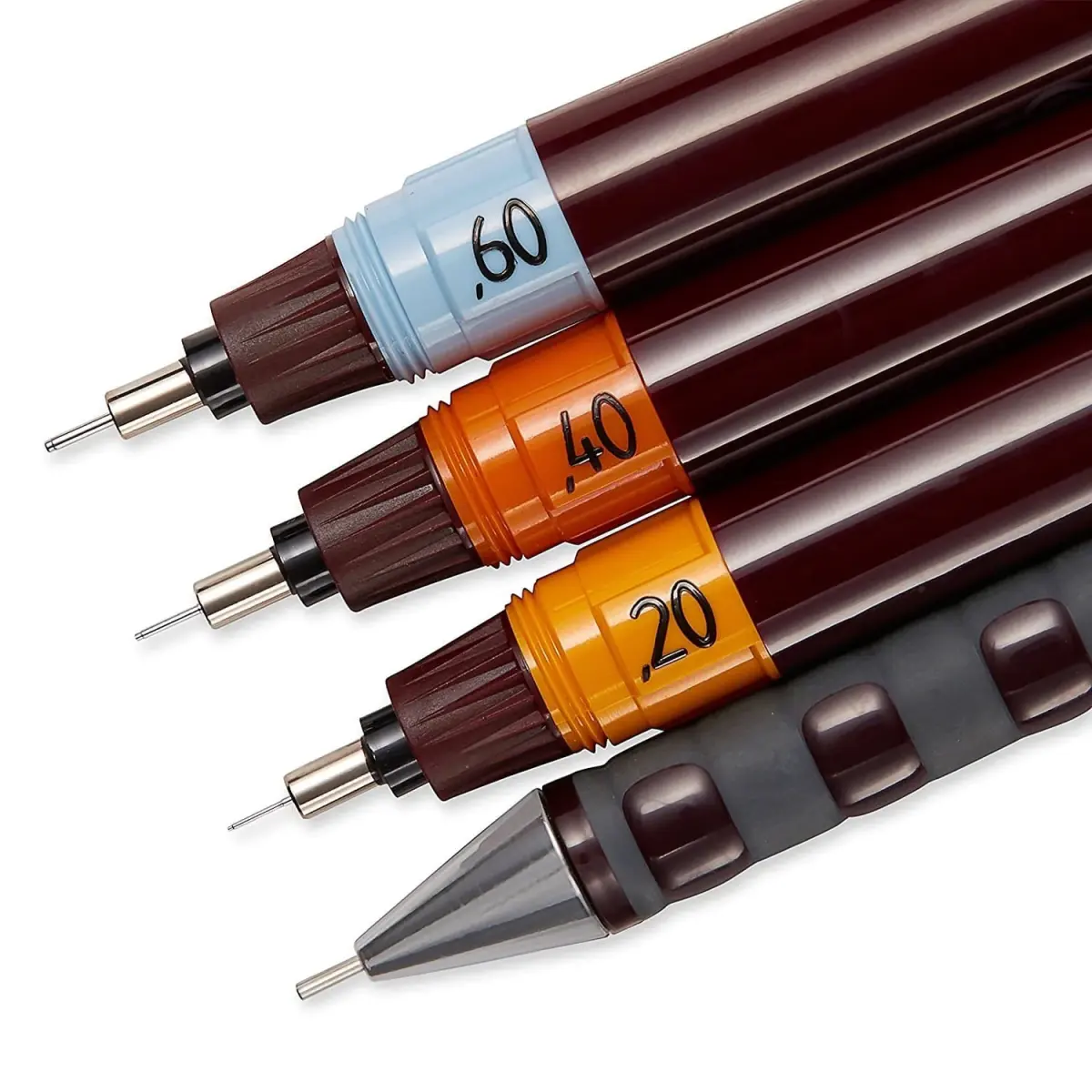
For those new to technical drawing, selecting the right equipment can be overwhelming. High-quality pens from established manufacturers like Rotring, Staedtler, and Koh-I-Noor are the industry standards. Beginners should start with a single pen size—typically a 0.35mm or 0.5mm—to master the flow and handling before investing in a full set of varying widths.
When purchasing your first pen, consider the type of ink you intend to use. Most technical pens are designed for waterproof, archival-quality India ink, which is highly pigmented and prone to clogging. Beginners should avoid using fountain pen inks or calligraphy inks, as these are often too thin or contain additives that can corrode the internal components of a precision drafting pen. Start with the manufacturer’s recommended ink to ensure the best performance and longevity for your instrument.
Why technical pens stop working
The most common reason a technical pen stops working is a clog caused by dried ink or paper fibers. When you draw, the nib can pick up microscopic dust or paper particles, which then get pulled into the tube. If the ink dries around these particles, it creates a blockage that prevents the internal wire from moving. This is why using high-quality, smooth-surfaced drafting paper is recommended over textured or fibrous drawing paper.
Another frequent cause of failure is improper storage. Always store your pens horizontally when not in use. Storing a pen vertically with the nib facing up can cause ink to drain away from the tip, leading to dry starts, while storing it with the nib down can cause the ink to pool and leak into the cap. Always replace the cap securely to create an airtight seal, which prevents the ink at the very tip of the nib from evaporating and forming a crust.
Common mistakes when using technical pens
One of the most frequent errors is applying too much pressure, which can permanently deform the nib. Because the metal tube is very thin, even slight force can cause the tip to bend or the internal wire to become misaligned. Another common mistake is using the pen on a surface that is too soft. A soft surface, such as a thick pad of paper or a fabric-covered desk, can cause the tip to sink slightly, leading to uneven ink flow or damage to the nib.
- Using a ruler with a flat edge, which can cause ink to bleed under the edge and smudge.
- Failing to shake the pen gently before use to ensure the ink is well-mixed.
- Attempting to repair a bent nib with pliers, which almost always results in total failure.
- Shaking the pen too violently, which can cause ink to splatter inside the cap or onto your work.
By avoiding these habits and maintaining a disciplined cleaning schedule, you can ensure your technical pens remain reliable tools for years of precise, professional-grade drafting and creative work.
Key facts
- Technical pens use a tubular nib to produce a consistent, uniform line width regardless of the angle of the pen.
- Always hold the pen perpendicular to the paper to ensure a continuous flow of ink through the narrow nib.
- Use only specialized technical drawing ink, as standard fountain pen or India ink will clog the fine internal wire.
- Clean the pen frequently by flushing the nib unit with distilled water or a dedicated cleaning solution to prevent dried ink buildup.
- Store pens horizontally when not in use to maintain an even distribution of ink and prevent the nib from drying out.
- Sizes are standardized by the ISO system, ranging from 0.13mm to 2.00mm, allowing for precise technical documentation and architectural drafting.
The bottom line
Technical pens are essential tools for precision drafting, requiring disciplined maintenance to function correctly. By keeping the pen perpendicular to the surface, using only compatible inks, and cleaning the nib unit regularly, you ensure a consistent line width. These instruments reward careful handling with unmatched accuracy, making them the gold standard for architects and illustrators who demand professional-grade results in their detailed technical drawings and diagrams.
People also ask
Can I use technical pens on any type of paper?
Technical pens perform best on smooth, non-porous surfaces like vellum, drafting film, or high-quality hot-press illustration board. Rough or fibrous paper can snag the delicate nib and cause ink to bleed or feather.
Why is my technical pen skipping or failing to produce a line?
Skipping is usually caused by dried ink clogging the internal capillary system or the thin wire inside the nib. Try flushing the nib with warm water or a specialized ultrasonic cleaner to clear the obstruction.
How often should I disassemble my technical pen for cleaning?
You should perform a deep cleaning whenever the pen will be stored for more than a few days or if the ink flow becomes sluggish. Daily use requires only a quick rinse of the nib unit every few weeks.
Are technical pens refillable or disposable?
Most professional-grade technical pens are refillable, featuring a reservoir that you fill with bottled ink. Some entry-level versions use disposable cartridges, though these are less common in professional drafting environments.
What is the purpose of the thin wire inside the nib?
The wire acts as a weight that moves slightly as you draw, which helps break the surface tension of the ink. This movement ensures a steady, consistent flow of ink through the narrow tube onto the paper.
Can I use colored inks in my technical pen?
You can use colored technical drawing inks, but you must ensure they are specifically formulated for these pens. Never mix different brands of ink, as chemical reactions can create precipitates that permanently clog the nib.
This answer was created with the help of AI research tools and reference sources. Spotted an error? Let us know — we correct mistakes quickly. See our editorial policy.