How do you draw a cute panda?
Short answer
Drawing a cute panda involves using simple, rounded shapes to emphasize the animal's iconic features. Start with a large circle for the head and smaller ovals for the limbs. Focus on creating oversized, dark eye patches and a small, soft nose to achieve the characteristic "cuddly" aesthetic that defines the panda’s charm.
On this page
How to draw a panda step by step
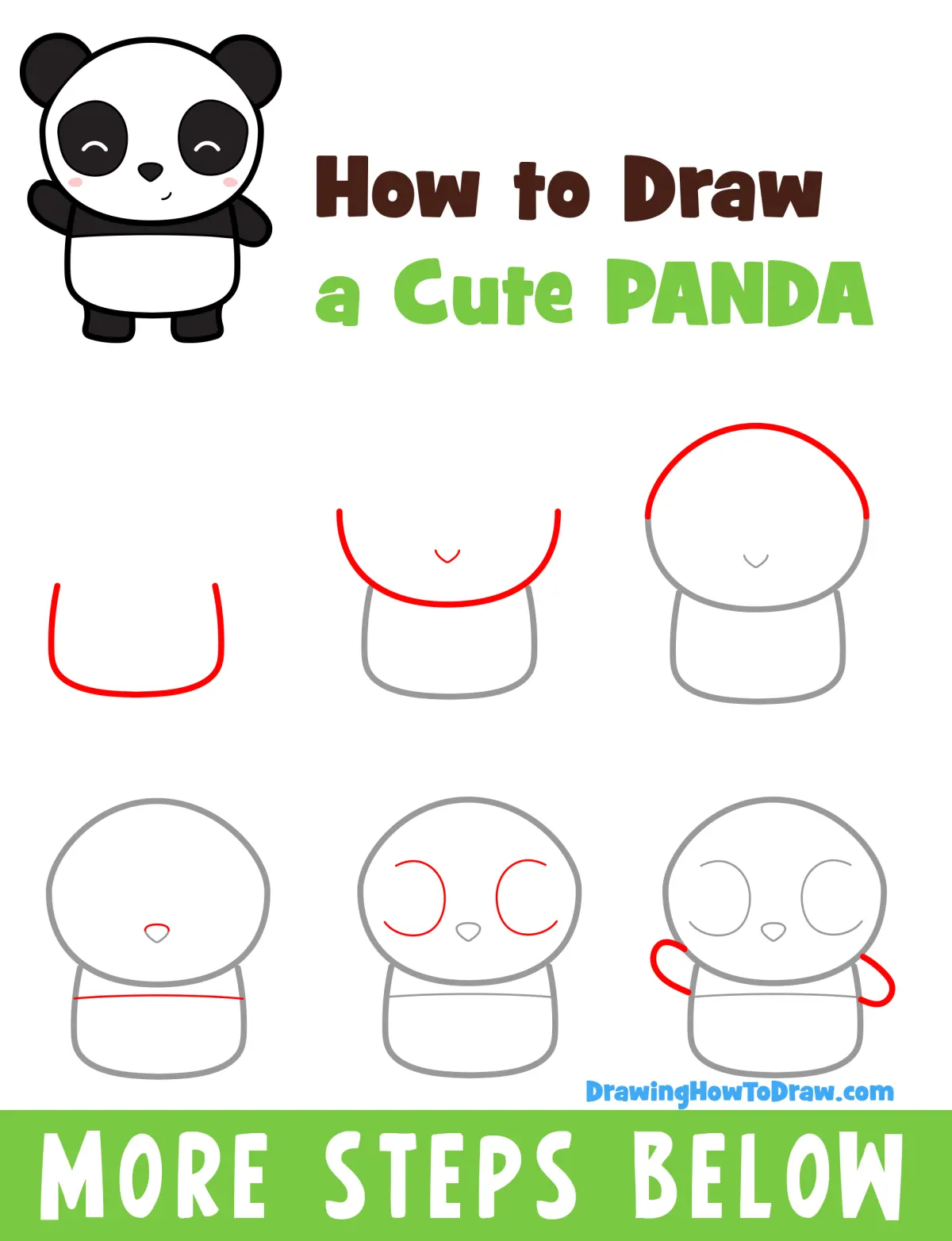
To begin your drawing, focus on the basic geometry that forms the panda’s body. Start by sketching a large, slightly flattened circle for the head and a larger, egg-shaped oval beneath it for the torso. These foundational shapes provide the structure needed to maintain the correct proportions of a giant panda. Once the main body is mapped out, add smaller ovals for the arms and legs, positioning them close to the body to give the panda a compact, huggable appearance.
Follow these steps to refine your sketch:
- Draw two large, horizontal ovals around the eye area to create the signature panda patches.
- Place two small, rounded semicircles on top of the head to represent the ears.
- Sketch a small, inverted triangle for the nose and a gentle "w" shape for the mouth.
- Add soft, curved lines to indicate the paws and the transition between the black fur patches and the white body.
Best drawing tools for beginners
For those just starting, using a graphite pencil with a medium hardness, such as an HB or 2B, is ideal. These pencils allow for light initial sketching that can be easily erased or adjusted before you commit to final lines. A high-quality kneaded eraser is also essential, as it lifts graphite gently without damaging the paper surface, allowing you to clean up your outlines as you refine the panda's features.
When you are ready to add detail or color, consider using felt-tip pens or fine-liner markers to define the black areas. The contrast between the white paper and deep black ink creates the most striking visual representation of a panda. If you prefer a softer look, charcoal or soft pastels can be used to blend the edges of the fur patches, giving the drawing a more organic and textured appearance. Always keep a sharpener nearby to ensure your lines remain crisp and controlled.
Why panda drawings look cute
The "cuteness" of a panda drawing is largely derived from the biological concept of baby schema, or kindchenschema. This term, coined by ethologist Konrad Lorenz in 1943, describes physical traits that trigger a nurturing response in humans, such as large eyes, a rounded head, and soft, chubby limbs. By exaggerating these features in your drawing—specifically by making the eyes appear larger and the head rounder than they are in reality—you tap into these innate psychological triggers.
Furthermore, the high-contrast color scheme of the panda simplifies the visual information for the viewer. Because the black patches around the eyes and ears are so distinct, they act as focal points that draw the eye immediately to the face. Keeping the body proportions slightly stout and the limbs short reinforces the perception of the animal as a gentle, non-threatening creature. When you combine these rounded shapes with a simple, minimalist expression, the resulting image is naturally perceived as endearing and approachable.

Common mistakes when drawing pandas
One frequent error is making the eye patches too angular or symmetrical. In nature, panda eye patches are slightly irregular and follow the contours of the skull, so drawing them as perfect circles can make the panda look robotic or unnatural. Aim for a slightly organic, bean-like shape that sits comfortably around the eyes. Another common mistake is placing the ears too far down on the sides of the head; they should be positioned near the top to maintain the classic panda silhouette.
Avoid these pitfalls to improve your results:
- Do not draw the limbs too thin, as pandas are naturally bulky and robust animals.
- Avoid using harsh, jagged lines for the fur, which can make the panda look aggressive.
- Ensure the nose is placed low on the face to leave plenty of room for the eyes, which enhances the "baby-like" proportions.
- Do not overlook the importance of negative space; keep the white areas clean to ensure the black patches stand out vividly.
How to add personality to your drawing
Once you have mastered the basic form, you can add personality by adjusting the panda’s expression or posture. A slight tilt of the head, achieved by angling the ears and eyes, can make the panda appear curious or playful. You might also draw the panda interacting with an object, such as a bamboo stalk, which provides context and creates a narrative for the character. Placing the panda in a seated position with its paws tucked inward creates a sense of comfort and relaxation.
Experimenting with the eyes is the most effective way to change the mood of your drawing. Adding tiny white highlights within the black eye patches creates a "glint" that makes the eyes look bright and lively. You can also vary the mouth shape; a slightly curved line suggests a content smile, while a small, open mouth can make the panda look like it is munching on a snack. These subtle adjustments transform a standard anatomical study into a unique, expressive character that feels alive and distinct on the page.
Key facts
- Pandas are defined by their distinctive black-and-white patches, which serve as the primary focus for any drawing.
- Start with a large circle for the head and an oval for the body to establish the panda's rounded, "cute" proportions.
- Use a soft graphite pencil first to sketch light guidelines that can be easily erased after you ink the final lines.
- Keep the ears small and circular, placing them near the top corners of the head to emphasize a youthful, teddy-bear-like appearance.
- Position the eyes low on the face and close together to create a gentle, endearing expression.
- Add a small, inverted triangle for the nose and a curved "W" shape for the mouth to complete the facial features.
The bottom line
Drawing a cute panda relies on emphasizing rounded shapes and soft, compact proportions. By focusing on the iconic eye patches, a small nose, and a gentle expression, you can capture the essence of this beloved bear. Remember to use light initial sketches and add texture through short, varied strokes. With practice, these simple geometric foundations will help you create a charming and recognizable illustration every time.
People also ask
What is the best way to make a panda look fluffy?
Use short, jagged pencil strokes around the edges of the body instead of one solid, smooth line. This technique mimics the texture of fur and adds volume to the drawing.
Should I use pure black for the panda's patches?
It is better to use a dark grey or charcoal color for the patches rather than pure black. This allows you to add subtle shading and highlights, which makes the drawing look more three-dimensional.
How do I draw the panda's eyes correctly?
Draw two ovals inside the large black eye patches, leaving a small white circle inside each for a reflection. This "catchlight" makes the eyes look bright, lively, and much cuter.
Why does my panda look like a regular bear?
You likely forgot the iconic eye patches or made the limbs too long. Pandas have stout, rounded bodies and specific dark markings around their eyes, ears, and shoulders that distinguish them from other bear species.
What is a common mistake when drawing panda limbs?
Beginners often draw the legs too thin or too long. Keep the arms and legs short and thick, ending in rounded paws, to maintain the animal's characteristic chubby and compact silhouette.
Can I use colored pencils for this drawing?
Yes, colored pencils work well, but stick to a limited palette of black, white, and grey. You can add a small splash of green by drawing a bamboo stalk for the panda to hold.
This answer was created with the help of AI research tools and reference sources. Spotted an error? Let us know — we correct mistakes quickly. See our editorial policy.