How do you draw an ostrich step by step?
Short answer
Drawing an ostrich requires capturing its distinct anatomy: a long, slender neck, a small head with large eyes, and a bulky, feathered body. By utilizing basic geometric shapes like ovals and lines to establish the frame, you can build the bird’s proportions before adding the final details of its plumage and legs.
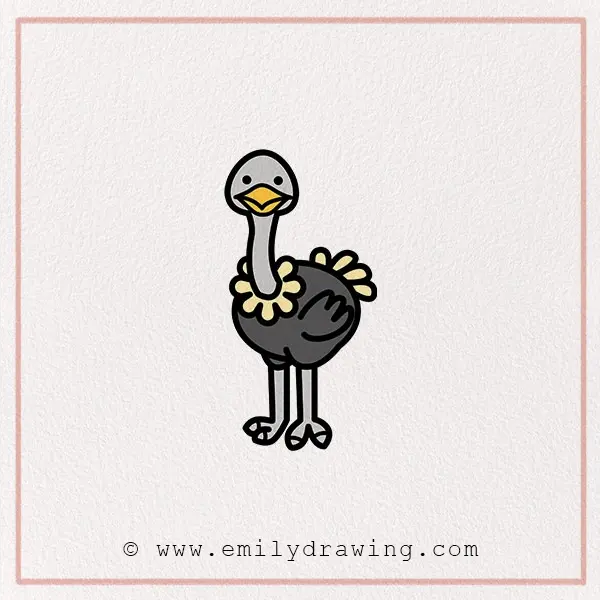
On this page
How to draw an ostrich step by step
To begin your drawing, start by sketching a large, horizontal oval for the body and a smaller, circular shape for the head. Connect these two forms with a long, slightly curved "S" shape to represent the neck, which is the most defining feature of the bird. Ensure the neck is thin compared to the body, as ostriches possess a very slender spinal structure relative to their massive frame.
Once the basic skeleton is in place, add two long, sturdy lines extending downward from the bottom of the body oval to serve as the legs. Ostriches are known for their powerful, two-toed feet, so draw small, triangular shapes at the base of these lines to represent the feet. Keep your initial pencil strokes light so you can easily erase or adjust the proportions before finalizing the outline of the feathers and facial features.
Best drawing techniques for beginners
When approaching the details, focus on the ostrich's expressive face, which is characterized by large, dark eyes and a flat, wide beak. Draw a small circle for the eye and place it high on the head, then add a short, horizontal line for the mouth. Using a reference photo is highly recommended for beginners to understand how the feathers drape over the body, as they often appear ruffled or shaggy rather than smooth.
For those practicing, follow these tips to improve your accuracy:
- Use a light touch with your pencil to allow for easy blending and shading.
- Focus on the "knee" joints, which are actually the ankles of the bird, positioned high up on the leg.
- Keep the wings tucked close to the body, as they are relatively small and often obscured by the long, soft plumage.
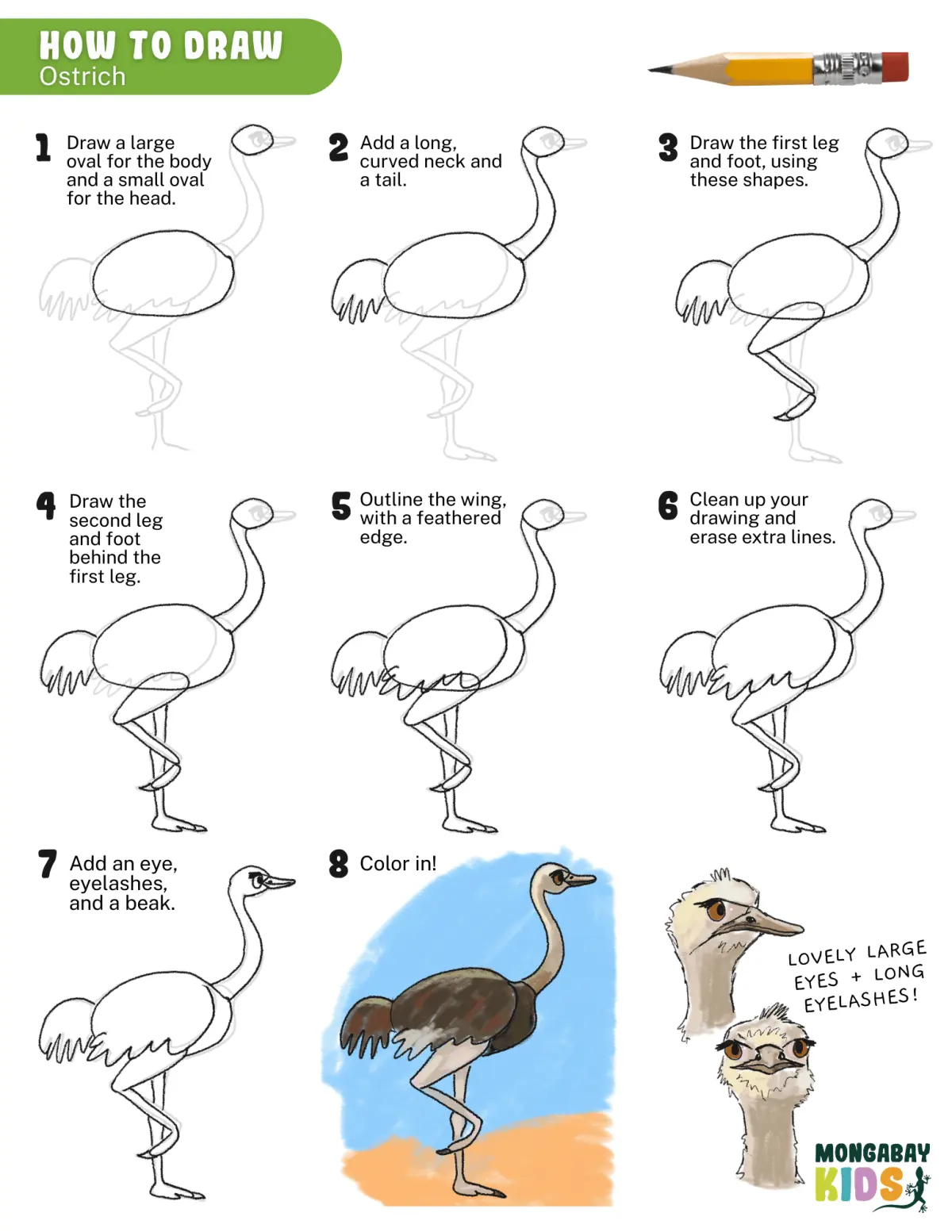
How to capture ostrich anatomy accurately
The anatomy of an ostrich is specialized for speed, and capturing this requires attention to the transition between the neck and the torso. The neck should appear flexible, while the body should look solid and heavy. Avoid drawing the neck as a perfectly straight tube; instead, emphasize the subtle curves that allow the bird to reach the ground and scan the horizon.
When refining the legs, remember that they are remarkably muscular. Use these steps to achieve a realistic look:
- Draw the upper thigh as a thick, rounded muscle that tapers significantly as it moves toward the lower leg.
- Add small, overlapping scales to the lower portion of the legs to provide texture.
- Define the two toes clearly, showing the larger, main toe and the smaller, secondary toe that helps with balance during high-speed running.
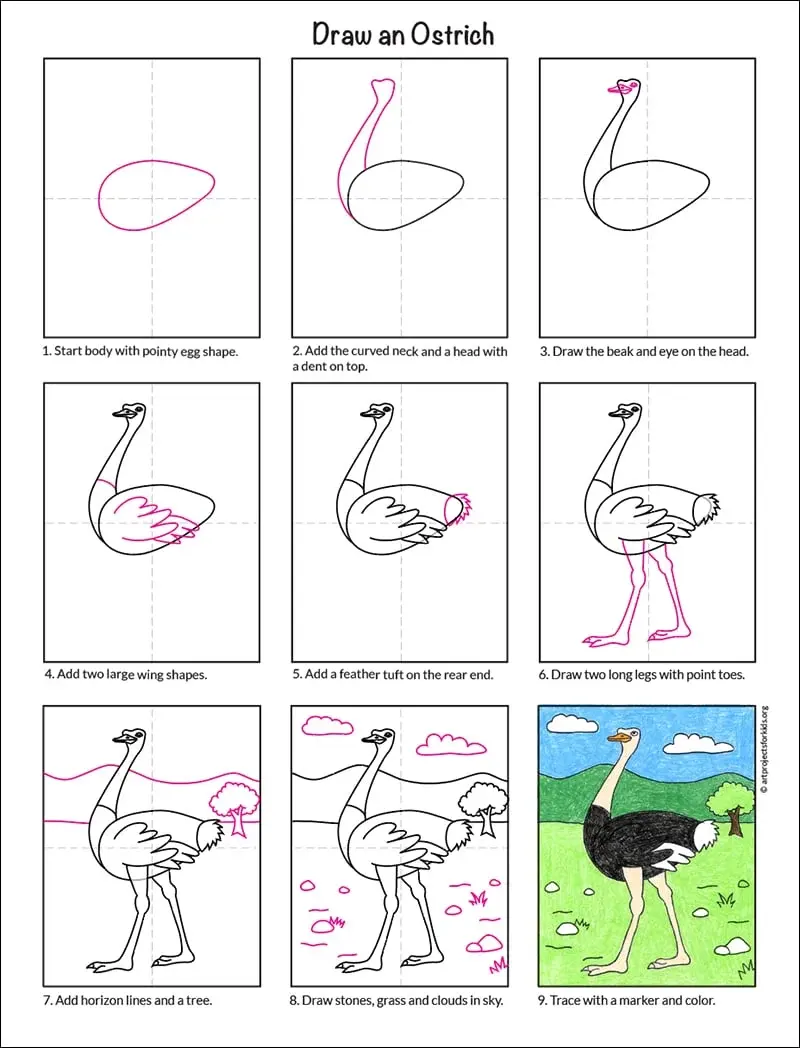
Why ostrich proportions are challenging
The primary difficulty in drawing an ostrich lies in the extreme contrast between the tiny head and the massive, voluminous body. Many beginners accidentally draw the head too large, which ruins the sense of scale and makes the bird look cartoonish. Always check that the head is roughly one-fifth the size of the body to maintain a realistic silhouette.
Another challenge is the distribution of feathers. Ostriches do not have a uniform coat; their wings and tail are covered in long, loose plumes, while the neck is covered in fine, downy hair. To show this difference, use short, quick strokes for the neck to suggest fuzz, and longer, sweeping lines for the wings to suggest the weight and texture of the feathers. This contrast in line work adds depth and visual interest to your final piece.
Common mistakes when drawing ostriches
One frequent error is failing to account for the bird's center of gravity. Because the ostrich is a flightless bird designed for running, its body should be balanced directly over its legs. If you draw the body leaning too far forward or backward, the drawing will look unstable or anatomically impossible. Always ensure the legs are positioned near the middle of the torso to support the weight.
Avoid these common pitfalls to keep your work professional:
- Neglecting the eyelids, which are thick and prominent, giving the ostrich its signature "lashed" look.
- Making the beak too sharp or pointed; it should be blunt and slightly rounded at the tip.
- Drawing the feathers as individual lines; instead, group them into clusters to create a more natural, layered appearance.
- Forgetting to add shadows beneath the bird, which anchors it to the ground and provides a sense of scale and presence in your composition.
Key facts
- Ostriches are the world’s largest birds, standing up to 9 feet tall and weighing up to 350 pounds.
- Their bodies are oval-shaped, while their long, slender necks account for about one-third of their total height.
- An ostrich has only two toes on each foot, which is unique among all living bird species.
- When drawing, focus on the small, flat head and the large, expressive eyes that help them spot predators.
- Use long, sweeping lines for the legs to emphasize their ability to run at speeds up to 45 miles per hour.
- Avoid drawing feathers as individual lines; instead, use soft, rounded clusters to suggest the texture of their plumage.
The bottom line
To draw an ostrich effectively, prioritize capturing its unique anatomy: a small head, an elongated neck, and powerful, two-toed legs. Start with basic geometric shapes to establish the correct proportions before refining the details. By focusing on the bird's distinct silhouette rather than intricate feather patterns, you will create a recognizable and dynamic representation of the world's largest flightless bird in its natural, running posture.
People also ask
How do I make an ostrich look realistic?
Focus on the proportions of the neck and legs, which are disproportionately long compared to the body. Use light shading around the eyes to give them depth and add fine, wispy lines at the base of the neck to suggest feathers.
Should I draw the wings open or closed?
Ostriches often use their wings for balance while running or for display. Drawing them slightly spread adds a sense of movement, while keeping them tucked close to the body emphasizes their massive, oval-shaped frame.
What is the most common mistake when drawing an ostrich?
Many beginners draw the neck too thick or the head too large. Remember that the ostrich has a very small, delicate head in comparison to its powerful, muscular legs.
How do I draw the ostrich's feet?
Keep the feet simple by drawing two distinct, thick toes with large, blunt claws. The feet should look sturdy and ground-heavy, as they are designed for walking on arid terrain.
What colors are best for an ostrich?
Adult males are primarily black with white wing and tail feathers, while females and juveniles are grayish-brown. Use neutral tones to maintain a naturalistic appearance.
Do I need to draw individual feathers?
No, drawing every feather will make the bird look cluttered. Focus on the overall silhouette and use texture shading only on the edges of the wings and tail.
This answer was created with the help of AI research tools and reference sources. Spotted an error? Let us know — we correct mistakes quickly. See our editorial policy.