Are orcas dangerous to humans?
Short answer
Orcas are not considered dangerous to humans in the wild. While they are apex predators capable of hunting large marine mammals, there are no verified records of wild orcas killing a human. Interactions are rare, and the species generally displays a lack of predatory interest in people swimming or boating nearby.
On this page
Why do orcas avoid attacking humans?
Orcas, or killer whales, are highly intelligent, socially complex animals that rely on cultural transmission to learn hunting behaviors. Their diet is typically specialized, with specific pods focusing on particular prey like salmon, seals, or rays. Because humans are not part of their natural food chain, orcas do not recognize us as a viable source of nutrition.
Marine biologists suggest that orcas are naturally curious but cautious when encountering unknown objects in the water. They possess sophisticated echolocation and vision, allowing them to distinguish between a human and their usual prey. Unlike sharks, which may occasionally mistake a human for a seal due to visual similarities, orcas appear to have no such confusion. Their social structures and long lifespans suggest that they prioritize learning through observation rather than aggressive experimentation with unfamiliar species.
Are there any records of orca attacks?
There have been no documented cases of wild orcas killing a human in recorded history. While there have been a few isolated reports of orcas bumping into surfers or investigating boats, these incidents are generally interpreted as curiosity or play rather than aggression. The term "killer whale" is a misnomer derived from early whalers who observed them hunting other whales, not humans.
In contrast, captive orcas have been involved in several high-profile incidents resulting in human fatalities. These events are widely attributed by experts to the immense psychological and physical stress caused by confinement. When kept in tanks, orcas are deprived of their natural social groups and vast migratory ranges, which can lead to unpredictable and aggressive behavior. These incidents are specific to captive environments and do not reflect the behavior of orcas in their natural ocean habitats.
How should you behave if you see an orca?
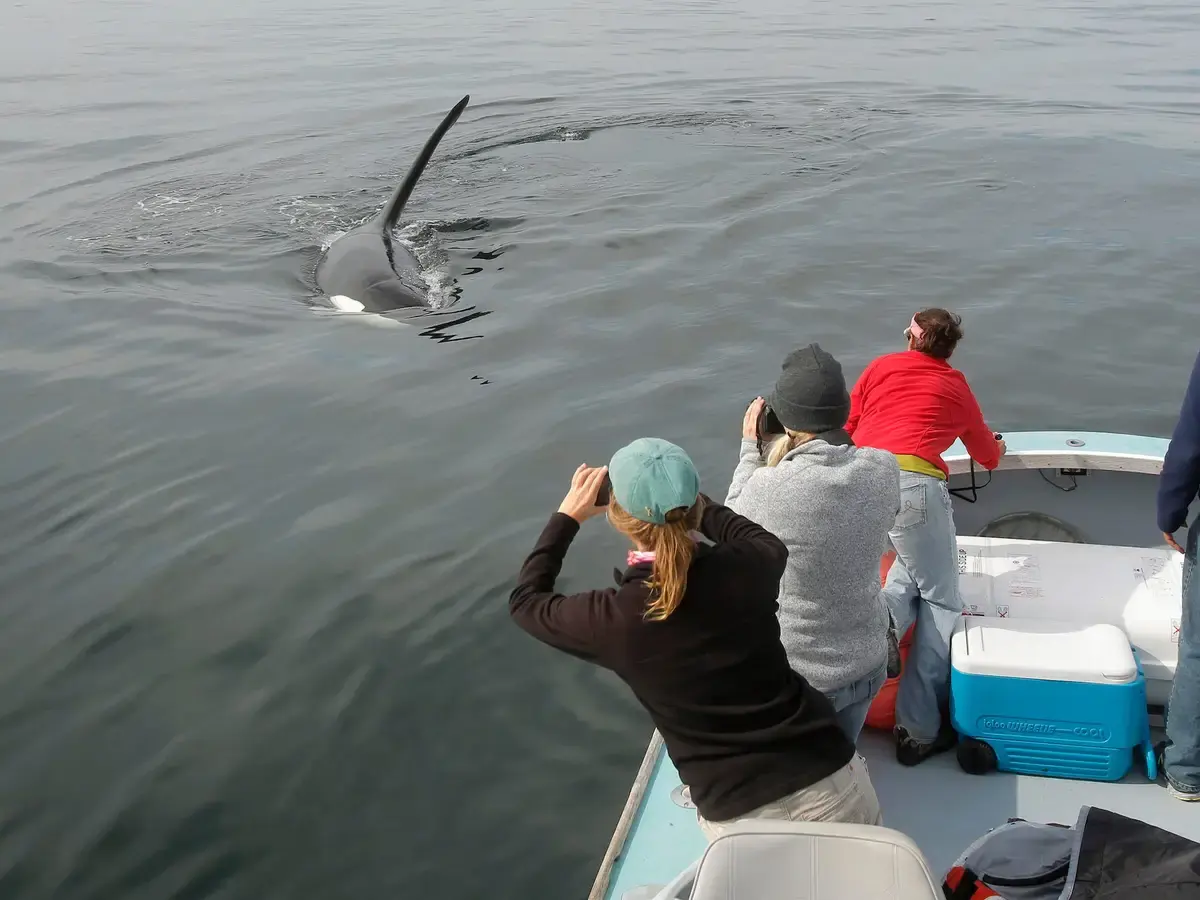
If you encounter an orca while swimming, kayaking, or boating, maintaining a respectful distance is the most important safety measure. Orcas are powerful animals, and their sheer size can create dangerous wakes or accidental collisions. Following established wildlife viewing guidelines ensures that you remain safe while avoiding any disruption to the animals' natural behaviors.
- Keep a distance of at least 100 to 200 yards from the pod at all times.
- Maintain a slow, steady speed if you are operating a motorized vessel.
- Never attempt to feed, touch, or swim directly toward the animals.
- Turn off your engine if the orcas approach your boat to minimize noise disturbance.
- Avoid blocking the path of the pod or separating mothers from their calves.
Common mistakes when observing orcas
One of the most frequent mistakes people make is underestimating the speed and agility of these marine mammals. Even if an orca appears to be moving slowly, they can cover vast distances in seconds. Attempting to get closer for a better photograph or video often leads to accidental harassment, which is illegal in many jurisdictions and can cause the animals to change their behavior or flee the area.
Another common error is assuming that orcas are as predictable as domesticated animals. People often mistake a "spy-hop"—where an orca lifts its head out of the water to look around—as an invitation for interaction. In reality, this is simply the animal gathering information about its surroundings. Treating wild orcas like pets or performers is a dangerous mindset that ignores their status as apex predators. Always prioritize the animal's space and observe them from a distance using binoculars or zoom lenses rather than trying to get physically close.
What to do if an orca approaches your boat
If an orca approaches your vessel, the primary goal is to remain calm and minimize your impact on their environment. Sudden movements or loud noises can startle the animals, which may cause them to react defensively or exhibit erratic behavior. By remaining predictable, you ensure that the encounter remains a peaceful observation rather than a stressful event for both the humans and the whales.
- Shift your boat into neutral to prevent the propeller from harming the animals.
- Keep all passengers inside the boat and avoid leaning over the sides.
- Do not make sudden turns or accelerate rapidly until the orcas have moved well away from your vessel.
- If you are in a kayak, stay close to the shoreline and avoid paddling directly toward the pod.
- Keep your camera equipment secure and avoid using flash photography, which can be disorienting.
By following these simple guidelines, you can safely enjoy the presence of these magnificent creatures without risking your safety or disturbing their natural way of life in the open ocean.
Key facts
- There are no documented cases of wild orcas killing a human in recorded history.
- Orcas are apex predators, but they do not view humans as a natural food source.
- Most aggressive orca encounters with humans have occurred exclusively in captivity.
- Orcas are highly intelligent, social mammals that often exhibit curiosity rather than malice.
- If you encounter an orca in the wild, maintain a distance of at least 100 yards.
- Never attempt to feed or swim with wild orcas, as this disrupts their natural behavior.
The bottom line
While orcas are formidable apex predators, they pose virtually no threat to humans in the wild. The perception of danger is largely fueled by incidents involving captive animals kept in unnatural environments. By maintaining a respectful distance and observing them from a boat or shore, you can safely appreciate these intelligent marine mammals without fear, as they have no evolutionary interest in interacting with humans as prey.
People also ask
Why do orcas attack humans in captivity?
Captive orcas often experience extreme stress, physical confinement, and social frustration that do not exist in the wild. These unnatural conditions have led to several high-profile incidents where trainers were injured or killed by frustrated animals.
Are orcas actually whales or dolphins?
Despite being called "killer whales," orcas are the largest members of the dolphin family. They share many behavioral traits with other dolphins, including complex communication and cooperative hunting strategies.
Do orcas eat people?
No, orcas have no biological drive to hunt humans. Their diets are highly specialized and culturally transmitted within pods, focusing on specific prey like salmon, seals, or rays.
How should I react if I see an orca while swimming?
You should calmly and slowly exit the water without splashing or making sudden movements. It is critical to avoid panicking, as erratic behavior could inadvertently trigger the animal's curiosity or predatory instincts.
Can orcas distinguish between humans and their prey?
Yes, orcas possess sophisticated echolocation and visual capabilities that allow them to identify objects in the water. They are capable of discerning that a human is not a seal or a fish.
Are there different types of orcas?
Yes, orcas are categorized into distinct "ecotypes" that differ in genetics, diet, and social structure. Some groups are mammal-eaters, while others focus strictly on fish, further proving that they do not target humans.
This answer was created with the help of AI research tools and reference sources. Spotted an error? Let us know — we correct mistakes quickly. See our editorial policy.