Why do giraffes have long necks?
Short answer
Giraffes evolved long necks primarily to gain a competitive advantage in foraging, allowing them to reach nutrient-rich leaves in the high canopy that are inaccessible to other herbivores. Additionally, these long necks play a critical role in sexual selection, as males engage in "necking" contests to establish dominance and secure mating opportunities.
On this page
Why do giraffes have long necks for feeding?
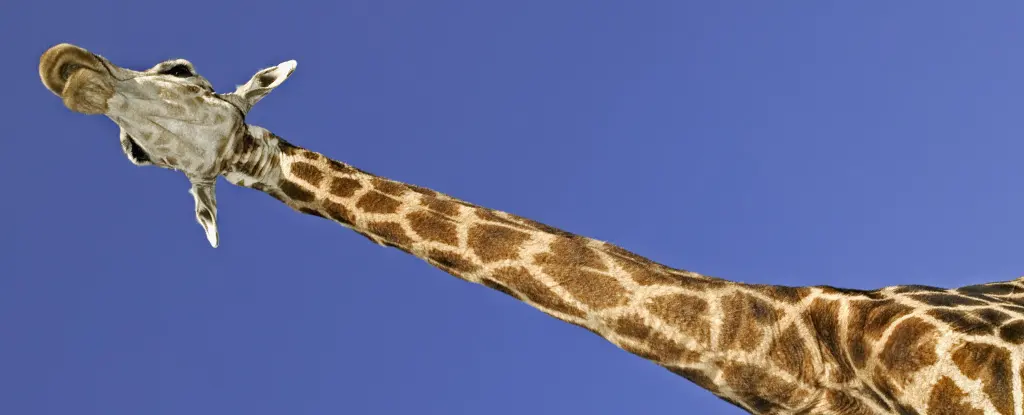
The primary evolutionary driver for the giraffe’s extreme neck length is the ability to access food sources located high above the ground. In the competitive environment of the African savanna, many herbivores such as impalas, zebras, and wildebeests compete for grasses and low-lying shrubs. By evolving a neck that can reach heights of up to 18 feet, giraffes exploit a vertical niche that remains largely untapped by other species. This allows them to feed on the foliage of acacia trees, which are often protected by thorns that shorter animals cannot easily navigate.
Beyond simple reach, the giraffe’s anatomy is uniquely specialized for this feeding strategy. Their long, prehensile tongues, which can measure up to 20 inches in length, are tough and muscular, allowing them to strip leaves from thorny branches with precision. This specialized diet provides a consistent source of moisture and nutrients, even during the dry season when ground-level vegetation becomes scarce. By occupying this high-altitude feeding zone, giraffes maximize their caloric intake while minimizing direct competition with the diverse array of grazers found on the savanna floor.
How do giraffes use their necks for mating?
While foraging is essential for survival, sexual selection has played a significant, if not equal, role in the evolution of the giraffe's neck. Male giraffes, known as bulls, engage in a ritualized combat behavior called "necking." During these encounters, two males stand side-by-side and swing their heavy necks at each other, using their ossicones—the horn-like structures on their heads—to strike their opponent’s body. The neck acts as a powerful lever, and the force generated by a swinging neck can be immense, sometimes resulting in serious injury or even death.
The evolutionary logic here is clear: larger, stronger males with longer and thicker necks are generally more successful in these physical contests. Dominance in necking rituals grants the victor greater access to receptive females, ensuring that the genes for larger body size and longer necks are passed down to the next generation. This process of sexual selection has likely pushed the evolution of neck length beyond what would be required for feeding alone. The following factors influence the outcome of these battles:
- Neck thickness and muscle mass, which provide stability and force.
- The size and density of the ossicones used for striking.
- The overall height of the individual, which provides a leverage advantage.
What are the biological costs of a long neck?
Maintaining a neck that can reach six feet in length requires significant biological investment and complex physiological adaptations. The most significant challenge is blood pressure; a giraffe’s heart must be exceptionally powerful to pump blood vertically against gravity to reach the brain. A giraffe’s heart weighs approximately 25 pounds and generates blood pressure twice as high as that of a human. To prevent blood from rushing to the head too quickly when the animal lowers its neck to drink, giraffes have evolved a sophisticated system of valves and a specialized network of blood vessels called the rete mirabile.
These adaptations ensure that the brain receives a steady supply of oxygenated blood regardless of the animal's posture. However, this comes with metabolic costs, as the giraffe must consume large amounts of food to support the energy-intensive process of circulation and the growth of such a massive skeletal structure. Furthermore, the sheer length of the neck makes drinking at a water hole a vulnerable moment. To mitigate this risk, giraffes must splay their front legs awkwardly to lower their heads, a position that makes it difficult to detect or flee from predators like lions.

How do giraffes grow their long necks?
The growth of a giraffe’s neck is a remarkable feat of developmental biology that begins at birth. Despite their final size, giraffes are born with necks that are proportional to their bodies, though they grow rapidly during the first few years of life. Interestingly, a giraffe has exactly seven cervical vertebrae, the same number as a human and most other mammals. To achieve their length, each individual vertebra grows to an incredible size, measuring up to 10 inches long. This skeletal structure provides the necessary support for the heavy muscles and connective tissues required to hold the neck upright.
- During the first year, a calf's neck grows significantly to keep pace with its rapidly developing body.
- The ossification of the vertebrae continues throughout the juvenile stage, hardening the structure for the physical demands of adulthood.
- Muscle development follows the skeletal growth, providing the strength needed for both foraging and the intense physical exertion of mating displays.
- By the time a giraffe reaches sexual maturity, the neck has achieved the full, iconic proportions that define the species.
Common mistakes when studying giraffe anatomy
One common misconception is the belief that giraffes evolved long necks solely to reach high leaves, ignoring the influence of sexual selection. While the "browsing hypothesis" is a foundational theory, modern research suggests that the neck length is a result of multiple evolutionary pressures working in tandem. Another frequent error is assuming that the giraffe's neck is rigid; in reality, it is highly flexible, allowing the animal to reach around its own body for grooming or to navigate dense tree branches. Failing to account for the role of the heart and circulatory system often leads to an incomplete understanding of how these animals survive.
When observing giraffes in the wild or in research settings, avoid these common analytical pitfalls:
- Overlooking the importance of the giraffe's tongue and lips in feeding efficiency.
- Ignoring the social hierarchy established through necking rituals when analyzing population dynamics.
- Underestimating the energy requirements needed to maintain such a specialized body plan.
- Assuming that all giraffes have the same neck proportions, despite variations between the different subspecies found across the African continent.
Key facts
- A giraffe's neck can reach lengths of up to 6 feet (1.8 meters).
- Despite their extreme length, giraffes have only seven neck vertebrae, the same number as humans.
- The primary evolutionary driver is likely sexual selection, where males use their heavy necks to compete for dominance.
- Long necks allow giraffes to browse foliage in the upper canopy, reaching leaves that shorter herbivores cannot access.
- Giraffes possess specialized valves in their neck veins to prevent blood from rushing to their head when they bend down to drink.
- A giraffe's heart must be exceptionally large and powerful to pump blood vertically up the long neck to the brain.
The bottom line
The giraffe's extraordinary neck is a marvel of evolutionary adaptation, serving both as a tool for accessing high-canopy nutrition and a weapon for male social competition. While the height provides a clear survival advantage in competitive environments, the physiological demands of such a structure required the development of specialized cardiovascular systems to maintain blood pressure, proving that nature prioritizes both functional utility and complex biological efficiency.
People also ask
Do giraffes have more neck bones than other mammals?
No, giraffes have exactly seven cervical vertebrae, just like humans and most other mammals. Their bones are simply much larger and elongated to accommodate their massive stature.
How do giraffes sleep with such long necks?
They often sleep while standing up for short bursts, but they can also lie down by tucking their long necks back against their bodies. This position allows them to rest their heads on their hindquarters.
Why do giraffes have purple tongues?
Their tongues are dark blue, purple, or black to protect them from sunburn while they constantly reach for leaves. This pigmentation acts as a natural sunscreen during long hours of feeding.
Can a giraffe's neck be broken easily?
While their necks are thick and muscular, they are susceptible to injury during aggressive combat between males. However, their dense bone structure and heavy muscles provide significant protection.
How do giraffes drink water without getting dizzy?
They spread their front legs wide apart to lower their heads to the ground. A complex system of valves and elastic blood vessels maintains steady blood pressure to the brain.
Are giraffes the only animals with long necks?
While many animals have elongated necks, giraffes possess the longest necks of any living land animal. Other creatures, such as ostriches or herons, have long necks but lack the massive skeletal structure of a giraffe.
This answer was created with the help of AI research tools and reference sources. Spotted an error? Let us know — we correct mistakes quickly. See our editorial policy.