How do you draw a giraffe step by step?
Short answer
Drawing a giraffe requires breaking its complex anatomy into simple geometric shapes. Start by sketching a small circle for the head and a large oval for the body, connected by a long, slender neck. Add long, rectangular legs and distinctive patches to capture the animal's iconic silhouette and unique physical proportions.
On this page
How to sketch the basic giraffe anatomy
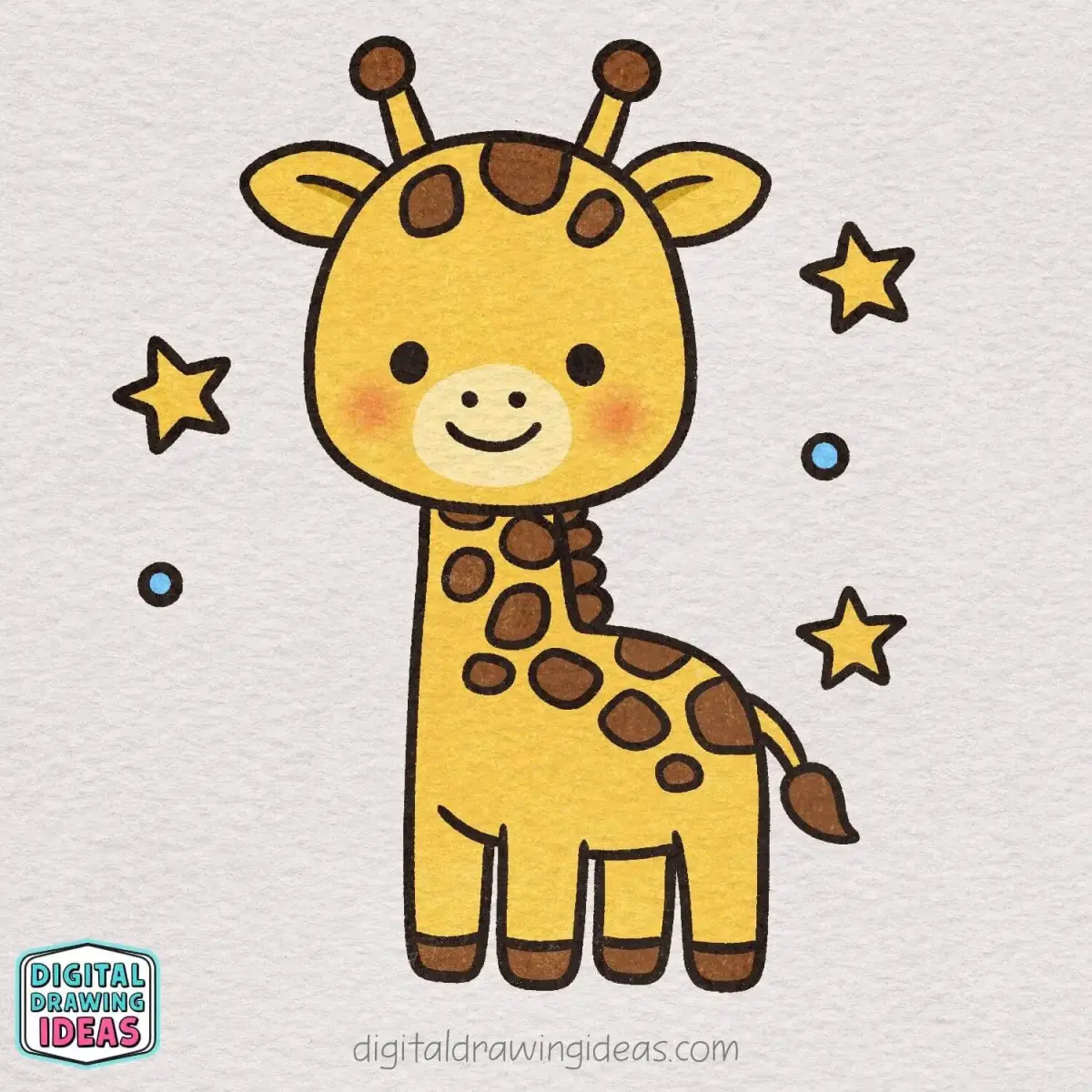
To begin your drawing, focus on the giraffe’s unique proportions rather than fine details. Start by placing a small circle near the top of your paper for the head and a large, horizontal oval for the main torso. Connect these two shapes with two parallel lines that curve slightly, representing the long, muscular neck. Keep these initial lines very light so they can be easily erased later.
Once the frame is established, add four long, thin rectangles for the legs. Remember that a giraffe’s front legs are typically longer than the back ones, which creates a slight downward slope toward the hindquarters. Add two smaller ovals at the bottom of the front legs for hooves. By establishing these simple shapes first, you ensure the final drawing maintains the correct anatomical scale and balance required for a realistic representation.
How to add detail to the head and neck
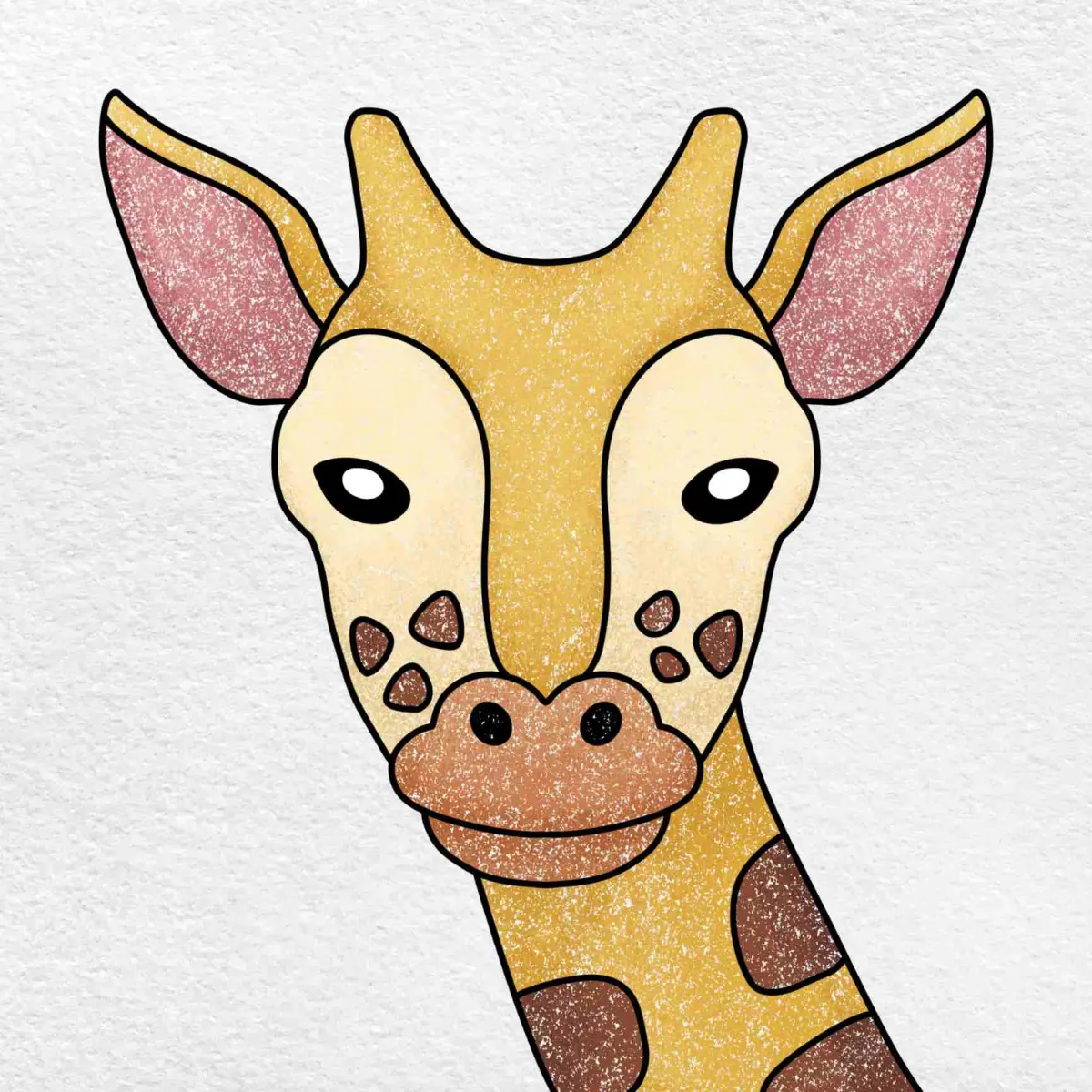
The head of a giraffe is narrow and elongated, featuring distinct sensory organs. Start by refining the circle into a slightly tapered shape, adding two small, horn-like structures called ossicones on top of the head. Place large, almond-shaped eyes on the sides of the face and add two small, leaf-shaped ears protruding from the sides. Use a soft curve for the snout, ending in a wide, flat nose.
When detailing the neck, add a mane of short, stiff hair running along the dorsal side. This mane should follow the curve of the neck, starting from the base of the skull and ending near the shoulders. Ensure the neck remains slender; a common error is making it too thick, which strips the giraffe of its elegant, towering appearance. Use these steps to refine the facial structure:
- Draw the ossicones as small cylinders with rounded tops.
- Sketch the eyes with heavy, thick lashes to provide a realistic look.
- Define the jawline with a soft, angular stroke leading toward the neck.
Best shading techniques for giraffe patterns
Giraffes are famous for their irregular, polygon-shaped patches that cover their bodies. These spots are not uniform circles; they are jagged, varying in size and shape across the coat. To achieve a natural look, draw the spots larger on the torso and smaller as they reach the legs and face. Leave thin, light-colored gaps between the patches to represent the giraffe’s base coat color.
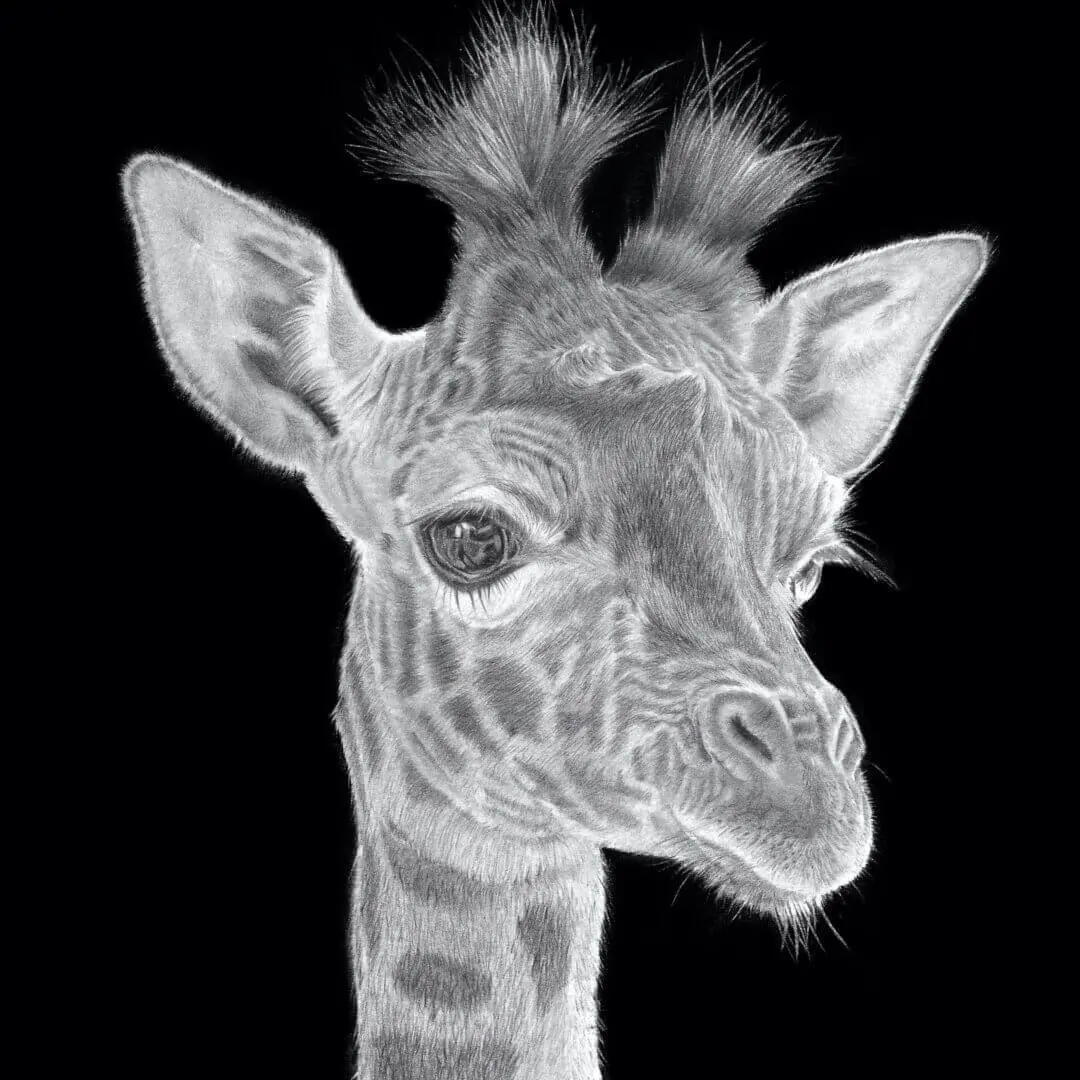
When shading, use a cross-hatching technique to give the spots depth. Focus your darker tones toward the center of each patch while keeping the edges slightly softer. If you are using colored pencils or markers, use shades of burnt orange, brown, and cream to replicate the natural hues found in the wild. Avoid making the spots perfectly symmetrical, as nature is inherently irregular. The contrast between the dark spots and the lighter background is essential for capturing the authentic texture of the animal's hide.
Common mistakes when drawing giraffes
One of the most frequent errors is miscalculating the length of the neck relative to the body. Beginners often draw the neck too short, which makes the animal look like a horse rather than a giraffe. Always measure the neck against the torso; in a mature giraffe, the neck is roughly equal in length to the body’s height. Another mistake is drawing the legs with joints that bend in the wrong direction, so ensure the knees are positioned correctly.
Additionally, many artists neglect the tail, which is thin and ends in a long, dark tuft of hair. Failing to include the tail can make the rear of the animal look unfinished. Watch out for these specific issues:
- Drawing the legs as perfectly straight lines without defined joints.
- Making the ossicones too large, which distracts from the head.
- Placing the eyes too far forward on the face instead of the sides.
- Forgetting the slight hump at the base of the neck where it meets the shoulders.
How to refine your giraffe drawing
The final stage of your drawing involves cleaning up your construction lines and adding texture. Use a soft eraser to remove the initial circles and rectangles, leaving only the clean outline of the giraffe. If you want to add a sense of environment, draw a few acacia tree branches near the head to emphasize the creature's height. This context helps the viewer understand the scale of the animal compared to its natural habitat.
Finally, add subtle shading under the belly and along the inner legs to create a three-dimensional effect. Use short, light strokes to suggest the texture of fur, particularly around the chest and neck area. By smoothing out the transitions between the patches and the background, you create a cohesive image. Step back frequently to look at your work from a distance, as this helps you identify any imbalances in the overall composition before you finalize your shading and details.
Key facts
- Giraffes have a unique body shape characterized by a long neck and sloping back, which should be the focus of your initial sketch.
- Start by drawing a large oval for the body and a smaller, elongated oval for the head to establish correct proportions.
- Connect the head to the body with two parallel lines to represent the neck, ensuring it is thicker at the base than at the top.
- The legs are exceptionally long and thin; draw them with distinct joints for the knees and ankles to add realism.
- Giraffes possess ossicones, which are horn-like structures on their heads; include these as two small, rounded protrusions on top of the skull.
- Use a pattern of irregular, polygon-shaped spots to define the coat, as these markings are unique to every individual giraffe.
The bottom line
Drawing a giraffe requires balancing its exaggerated proportions with its distinct anatomical features. By establishing the body's slope and the neck's length early, you create a solid foundation for the finer details like ossicones and spot patterns. Remember that the legs are long and jointed, which provides the necessary stability for the animal's frame. Focus on these structural elements to capture the giraffe's majestic and unique form.
People also ask
Why do giraffes have such long necks?
Their long necks allow them to reach high foliage in acacia trees that other herbivores cannot access. This evolutionary adaptation helps them thrive in competitive savanna environments.
How many vertebrae does a giraffe have in its neck?
Despite their extreme length, giraffes have seven cervical vertebrae, the same number found in humans and most other mammals. Each individual vertebra can measure up to 10 inches long.
What is the best way to draw a giraffe's spots?
Start by sketching irregular, blocky shapes across the body rather than perfect circles. Leave small gaps between the spots to represent the lighter fur color underneath.
How do you make a giraffe look like it is standing naturally?
Ensure the front legs are slightly longer than the back legs, which creates the giraffe's signature sloping back profile. Adding a slight bend to the knees prevents the drawing from looking stiff.
Are there different patterns for different giraffe species?
Yes, different subspecies exhibit distinct coat patterns, ranging from large, blotchy patches to smaller, more intricate, net-like designs. Researching specific species like the Reticulated or Masai giraffe can help you refine your drawing.
What is the most common mistake when drawing a giraffe?
Many beginners draw the neck too thin or too short, which ruins the animal's iconic silhouette. Always ensure the neck is wide enough to support the head and makes up about one-third of the total height.
This answer was created with the help of AI research tools and reference sources. Spotted an error? Let us know — we correct mistakes quickly. See our editorial policy.