Who invented the smiley face?
Short answer
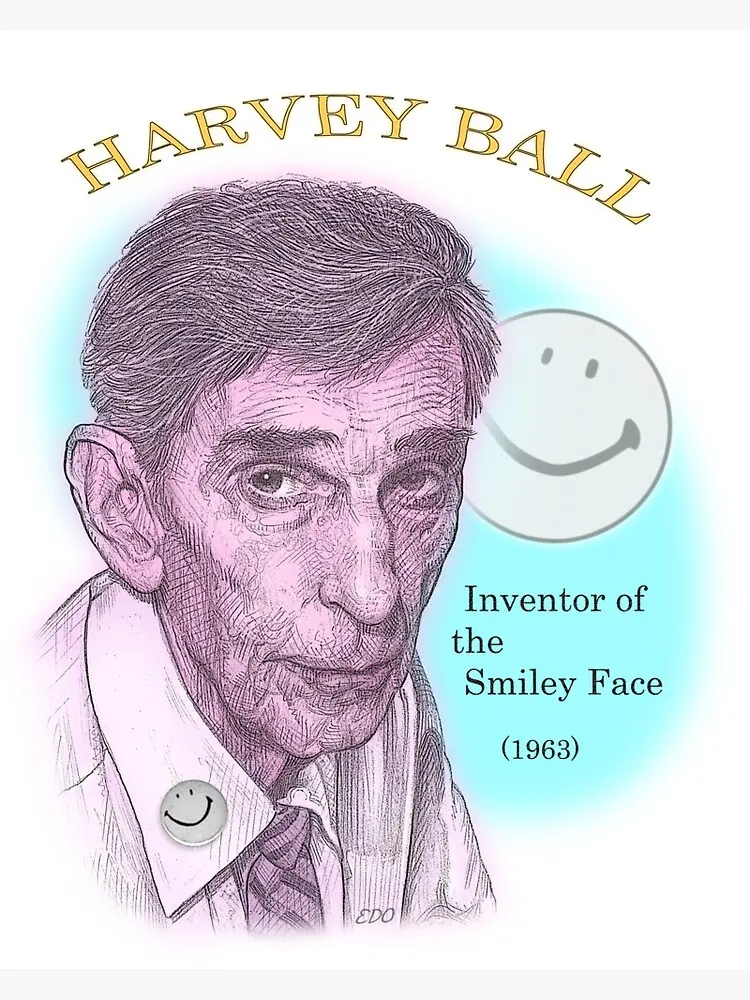
Harvey Ball, a freelance graphic artist from Worcester, Massachusetts, invented the iconic yellow smiley face in 1963. He was commissioned by an insurance company to create a morale-boosting image for their employees. Ball completed the design in ten minutes, receiving only $45 for his work, and never trademarked the famous symbol.
On this page
Who created the smiley face?
The original smiley face was created by Harvey Ball in 1963 for the State Mutual Life Assurance Company of Worcester, Massachusetts. The company was undergoing a difficult merger and sought a way to improve employee morale. They hired Ball to design a simple graphic that could be used on buttons, desk cards, and posters to encourage staff to smile during their interactions with clients.
Ball sketched the now-famous design—a yellow circle with two black oval eyes and a curved, upturned mouth—in less than ten minutes. He chose the bright yellow background because he felt it provided a cheerful, optimistic contrast to the dark, stressful atmosphere the company wanted to overcome. Although the design became a global cultural phenomenon, neither Ball nor the insurance company sought to trademark or copyright the image at the time, allowing it to enter the public domain.
How did the smiley face become famous?
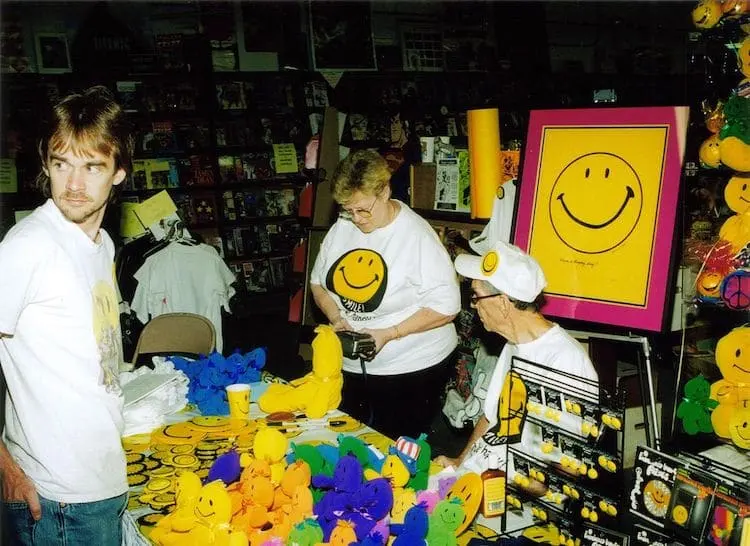
While Harvey Ball created the original version, the symbol gained mass popularity in the early 1970s through the efforts of two brothers, Bernard and Murray Spain. They encountered the design and recognized its potential as a commercial product. The brothers began mass-producing buttons, mugs, and bumper stickers featuring the smiley face, often adding the slogan "Have a Happy Day."
The design quickly became a symbol of the counterculture movement and a staple of 1970s fashion. By 1972, the Spain brothers had sold more than 50 million smiley face buttons. As the symbol spread, it transcended its original corporate purpose and became a universal icon of positivity and friendliness. Its simplicity allowed it to be reproduced easily, which helped it become one of the most recognizable graphic designs in modern history.
What are the legal disputes over the smiley face?
Because the original design was never copyrighted, many individuals and corporations have attempted to claim ownership over the years. The most notable legal battle involved French journalist Franklin Loufrani. In 1971, Loufrani registered the smiley face as a trademark in France for his company, The Smiley Company. He eventually expanded his trademark rights to over 100 countries.
This legal maneuvering led to significant controversy, particularly in the United States, where the image was widely considered to be in the public domain. The Smiley Company has aggressively protected its trademark, leading to various lawsuits against companies using similar yellow-face designs. Despite these efforts, the original design by Harvey Ball remains a foundational piece of visual culture that is frequently used by artists and the public without legal restriction.
- Research the specific trademark laws in your jurisdiction before claiming ownership of a design.
- Recognize that public domain works are generally free for anyone to use, modify, or distribute.
- Consult with intellectual property experts if you intend to commercialize a design that resembles a famous icon.
How to use the smiley face effectively?
Using the smiley face in modern communication requires an understanding of its visual impact and emotional resonance. Whether you are using it for graphic design, marketing, or personal messaging, the symbol is most effective when it remains simple and clear. Overcomplicating the design often dilutes the immediate, friendly recognition that made the original so successful.
When incorporating the smiley face into your own projects, consider these best practices to ensure your message is received as intended:
- Keep the proportions consistent: A perfect circle with symmetrical eyes is the most recognizable form.
- Use high-contrast colors: Bright yellow against black or white remains the most effective color palette.
- Avoid excessive detail: Adding shading, textures, or complex facial features often detracts from the universal appeal.
- Context matters: Ensure the symbol aligns with the tone of your message to avoid appearing sarcastic or insincere.
Common mistakes when using the smiley face
One of the most frequent mistakes people make is assuming that the smiley face is universally perceived as positive. In professional settings, using the symbol can sometimes be interpreted as unprofessional or patronizing, depending on the recipient. It is essential to gauge your audience before using such an informal visual shorthand in business correspondence or official branding.
Another common error involves failing to account for cultural differences in how the symbol is interpreted. In some regions, the smiley face is viewed as a standard sign of happiness, while in others, it may be associated with irony or even mockery. To avoid these pitfalls, follow these steps:
- Assess the formality of your environment before using the symbol.
- Test your graphic on a small, diverse group to see how they interpret the emotion.
- Be aware of the specific legal status of the version you are using to avoid potential trademark infringement.
- Always prioritize clarity over decoration to ensure your intended meaning is conveyed without ambiguity.
Key facts
- Harvey Ball, a graphic artist from Worcester, Massachusetts, created the original yellow smiley face in 1963.
- State Mutual Life Assurance Company commissioned the design to boost employee morale during a corporate merger.
- Ball completed the design in just 10 minutes and was paid a flat fee of $45 for his work.
- The design features a bright yellow background, two oval eyes, and a wide, slightly uneven smile.
- Ball never trademarked or copyrighted the image, meaning he never profited from its massive global popularity.
- In the 1970s, brothers Bernard and Murray Spain popularized the icon further by adding the slogan "Have a Happy Day."
The bottom line
The iconic yellow smiley face was born from a simple corporate request in 1963, designed by Harvey Ball to improve office morale. Despite its global status as a symbol of happiness and digital communication, Ball never sought to own or monetize the design. Today, the image serves as the foundation for modern digital expression, reminding us of the power of simple, universal visual communication tools.
People also ask
Did Harvey Ball ever try to regain control of the image?
Ball did not attempt to reclaim rights, but he later founded the World Smile Corporation to promote "World Smile Day." He focused on using the icon to spread goodwill rather than seeking financial compensation for its commercial use.
Who is credited with the modern digital emoji?
Shigetaka Kurita is widely credited with creating the first set of 176 digital emojis for a Japanese mobile carrier in 1999. These icons were designed to facilitate simple communication within the character limits of early mobile technology.
Is the smiley face in the public domain?
The original 1963 design by Harvey Ball is considered to be in the public domain in the United States. Because it was not properly registered at the time of its creation, the design is free for public use.
How did the smiley face become a symbol of rave culture?
In the late 1980s, the smiley face was adopted by the British acid house music scene. It became an unofficial emblem for the subculture, often appearing on posters, flyers, and clothing associated with underground dance parties.
Are there different versions of the smiley face?
Yes, there are thousands of variations, including those with different expressions, colors, and accessories. While the classic yellow circle remains the standard, digital platforms often customize the icon to fit their specific design languages.
What is the most common mistake when using smiley faces in professional settings?
The most common mistake is overusing them in formal correspondence, which can undermine the perceived seriousness of a message. It is generally best to limit their use to casual interactions or internal team communications where a friendly tone is appropriate.
This answer was created with the help of AI research tools and reference sources. Spotted an error? Let us know — we correct mistakes quickly. See our editorial policy.