Who invented the microwave?
Short answer
Percy Spencer, an American self-taught engineer working for the Raytheon Corporation, invented the microwave oven. In 1945, he discovered that radar waves could cook food after a candy bar melted in his pocket while he stood near an active magnetron. He subsequently filed a patent for the first microwave cooking device.
On this page
How did Percy Spencer invent the microwave?
Percy Spencer was a brilliant engineer at Raytheon, a company heavily involved in developing radar technology for the military during World War II. While testing a high-powered magnetron, a vacuum tube that generates microwave radiation, he noticed that a chocolate bar in his pocket had completely melted. Intrigued by this phenomenon, he conducted further experiments by placing popcorn kernels and raw eggs near the device. The kernels popped instantly, and the egg exploded, proving that concentrated electromagnetic waves could heat food rapidly.
Spencer’s discovery was a result of his keen observation and curiosity. He realized that the energy emitted by the magnetron could be harnessed for culinary purposes. By 1945, he had filed a patent for a "method and apparatus for treating foodstuffs," marking the birth of the microwave oven. Raytheon quickly recognized the potential of this technology and began developing a commercial version for the general public, forever changing the landscape of modern kitchens.
How do microwave ovens work?
A microwave oven works by emitting electromagnetic waves that cause water molecules in food to vibrate rapidly. This vibration creates friction, which generates the heat necessary to cook the food from the inside out. The magnetron is the core component, converting electricity into high-frequency radio waves. These waves bounce off the metal walls of the oven and are absorbed by the food, specifically targeting moisture, fat, and sugar content.
Because microwaves target water molecules, they are exceptionally efficient at heating items with high liquid content. However, they do not brown or crisp food like a conventional oven because they do not rely on radiant heat or hot air circulation. To understand the process, consider these key internal components:
- The magnetron: Generates the microwave energy.
- The waveguide: Channels the waves into the cooking chamber.
- The stirrer or turntable: Ensures the waves are distributed evenly to avoid cold spots.
Why do microwave ovens have safety features?
Microwave ovens are designed with multiple safety layers to contain radiation and prevent accidental exposure. The metal mesh screen visible on the glass door is a Faraday cage, designed to reflect microwaves back into the chamber so they cannot escape into the room. Additionally, interlock switches are integrated into the door mechanism to cut power immediately if the door is opened during operation. These features ensure that the high-frequency radiation remains confined to the cooking cavity.
Despite these protections, users should be aware of potential hazards when using the appliance. Never run a microwave while empty, as the waves have nowhere to be absorbed and can damage the magnetron. Furthermore, certain materials should never be placed inside the unit:
- Metal or aluminum foil, which can cause electrical arcing and fires.
- Sealed containers, which may explode due to pressure buildup from steam.
- Certain plastics that are not labeled as microwave-safe, as they may leach chemicals into food.
Best practices for microwave cooking
To achieve the best results, it is important to understand how to arrange and prepare food. Because microwaves can cook unevenly, placing food in a circular pattern with the thickest parts toward the outer edge of the plate helps ensure consistent heating. Covering food with a microwave-safe lid or paper towel helps retain moisture and prevents splattering, which keeps the interior of the oven clean and prevents cross-contamination.
Stirring or flipping food halfway through the cooking cycle is essential for dishes like soups, stews, or casseroles. This redistributes the heat and eliminates the "cold spots" that often occur in microwave cooking. If you are heating multiple items, try to keep them similar in size and density so they reach the desired temperature at the same time. Always allow food to stand for a minute or two after the timer goes off, as this "carry-over" cooking allows the heat to distribute evenly throughout the dish.
Common mistakes when using a microwave
One of the most frequent mistakes users make is overcooking food, which often leads to rubbery textures or burnt edges. Because microwaves cook very quickly, it is better to set a shorter time and check the progress frequently rather than guessing a long duration. Another common error is failing to pierce food with skins, such as potatoes or sausages, which can trap steam and cause the item to burst violently inside the oven.
Avoid these common pitfalls to keep your appliance functioning well and your food tasting better:
- Using metal containers or utensils, which can damage the magnetron.
- Overcrowding the oven, which prevents waves from reaching all food surfaces.
- Neglecting to clean the interior, as food splatters can harden and absorb energy during future uses.
- Ignoring the "stand time," which is critical for finishing the cooking process safely and effectively.
By following these simple guidelines, you can ensure your microwave remains a safe and reliable tool for many years.
Key facts
- Percy Spencer, an engineer at the Raytheon Corporation, invented the microwave oven in 1945.
- The invention occurred accidentally when Spencer noticed a candy bar melted in his pocket while standing near an active magnetron.
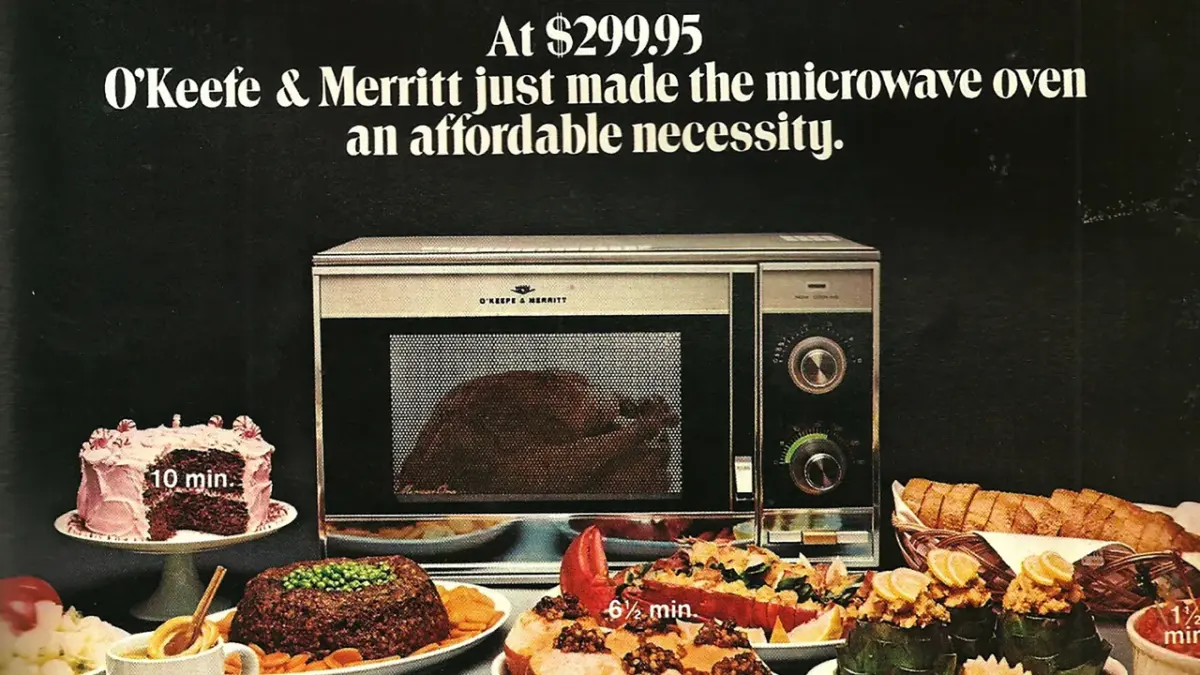
- The first commercial microwave, the Radarange, was released in 1947 and stood nearly six feet tall.
- Microwaves work by using electromagnetic waves to cause water molecules in food to vibrate, creating heat through friction.
- Never place metal objects like aluminum foil or silverware inside the microwave, as they can cause electrical arcing and fires.
- To heat food evenly, stir liquids or rotate solid foods halfway through the cooking process.
The bottom line
Percy Spencer’s accidental discovery in 1945 revolutionized modern cooking by harnessing electromagnetic waves for rapid heating. While early models were massive and expensive, today’s compact appliances are household staples. By understanding how microwaves interact with water molecules and avoiding common hazards like metal or sealed containers, users can safely enjoy the convenience of this efficient technology for everyday meal preparation and reheating tasks.
People also ask
Can microwaves cause cancer?
No, microwaves use non-ionizing radiation, which lacks the energy to damage DNA or cause cancer. They are designed to heat food safely without leaving any radioactive residue behind.
Why do some foods explode in the microwave?
Foods with skins or shells, such as potatoes or eggs, trap steam inside as they heat up. The pressure builds until the casing ruptures, causing the food to burst or explode.
Is it safe to use plastic containers in the microwave?
Only containers labeled "microwave-safe" should be used, as other plastics may melt or leach chemicals into your food. Always check the bottom of the container for the appropriate symbol before heating.
Do microwaves destroy the nutrients in food?
Microwaves often preserve nutrients better than boiling or frying because they cook food quickly with little to no added water. The shorter cooking time helps retain heat-sensitive vitamins.
Why does food sometimes stay cold in the middle?
Microwaves have "cold spots" where the electromagnetic waves do not reach effectively. Stirring food or using a turntable helps distribute the energy more evenly throughout the dish.
Can I run a microwave while it is empty?
Running an empty microwave is dangerous because the magnetron will absorb its own waves, which can damage the machine. Always ensure there is at least a small amount of food or water inside to absorb the energy.
This answer was created with the help of AI research tools and reference sources. Spotted an error? Let us know — we correct mistakes quickly. See our editorial policy.