Where do salamanders live?
Short answer
Salamanders live primarily in the Northern Hemisphere, inhabiting diverse environments ranging from temperate forests and wetlands to underground caves. While they thrive in moist, cool climates, they are found on every continent except Antarctica and Australia. Most species require access to freshwater or high-humidity terrestrial habitats to maintain their permeable skin.
On this page
Where do salamanders live in the wild?
Salamanders are amphibians that occupy a wide array of ecosystems, though they are most densely concentrated in North America. The Appalachian Mountains are considered the global hotspot for salamander diversity, hosting more species than almost any other region on Earth. These animals generally prefer cool, damp environments because their skin must remain moist to facilitate respiration and prevent dehydration.
You will typically find them in the following types of habitats:
- Deciduous and coniferous forests, often hiding beneath damp leaf litter or rotting logs.
- Riparian zones, which include the banks of streams, rivers, and vernal pools.
- Subterranean environments, such as limestone caves or deep rock crevices.
- High-altitude mountain slopes where moisture remains consistent throughout the summer months.
Because they are ectothermic, their distribution is heavily dictated by temperature and humidity levels. They avoid arid deserts and extreme heat, preferring the shaded microclimates provided by dense forest canopies and thick vegetation.
How do salamanders survive in different climates?
Survival for salamanders depends on their ability to regulate body moisture. In temperate zones, many species undergo a period of dormancy during the coldest winter months, retreating deep underground or into mud to avoid freezing. Conversely, in warmer regions, they may enter a state called estivation during dry spells to conserve energy and prevent their skin from drying out.
To manage these environmental challenges, salamanders utilize specific behavioral adaptations:
- Nocturnal activity: Most species emerge only at night to hunt, reducing exposure to the sun.
- Mucus production: They secrete a protective slime layer that keeps their skin moist and provides a defense against predators.
- Habitat selection: They choose sites with high humidity, such as mossy rocks or saturated soil, to ensure they remain hydrated.
These strategies allow them to inhabit diverse niches, from the forest floor to the edges of alpine lakes. Their reliance on specific moisture levels makes them excellent indicators of environmental health.
Why do salamanders need freshwater habitats?
Water is essential for the life cycle of most salamanders, particularly during the breeding season. Many species begin their lives as aquatic larvae, possessing external gills that allow them to breathe underwater. Even as adults, many salamanders, such as the North American hellbender or the Japanese giant salamander, remain entirely aquatic, spending their entire lives in fast-flowing, oxygen-rich streams.
For those that transition to land, freshwater pools remain critical for reproduction. Females often deposit their eggs in vernal pools—temporary ponds that form in spring—because these sites lack fish predators that would otherwise consume the larvae. The health of these aquatic habitats is vital for the survival of the species. If a stream becomes polluted or a vernal pool dries up too early in the season, the local population can suffer a total reproductive failure for that year.
Common mistakes when looking for salamanders
Many enthusiasts fail to find salamanders because they search in the wrong locations or at the wrong times. A common mistake is looking during the heat of the day when these animals are safely tucked away in deep burrows or under heavy cover. To increase your chances of success, you should target periods immediately following rainfall or during humid, overcast nights when they are most active on the surface.
Avoid the following behaviors to protect both yourself and the animals:
- Flipping rocks or logs and leaving them overturned, which destroys the microhabitat.
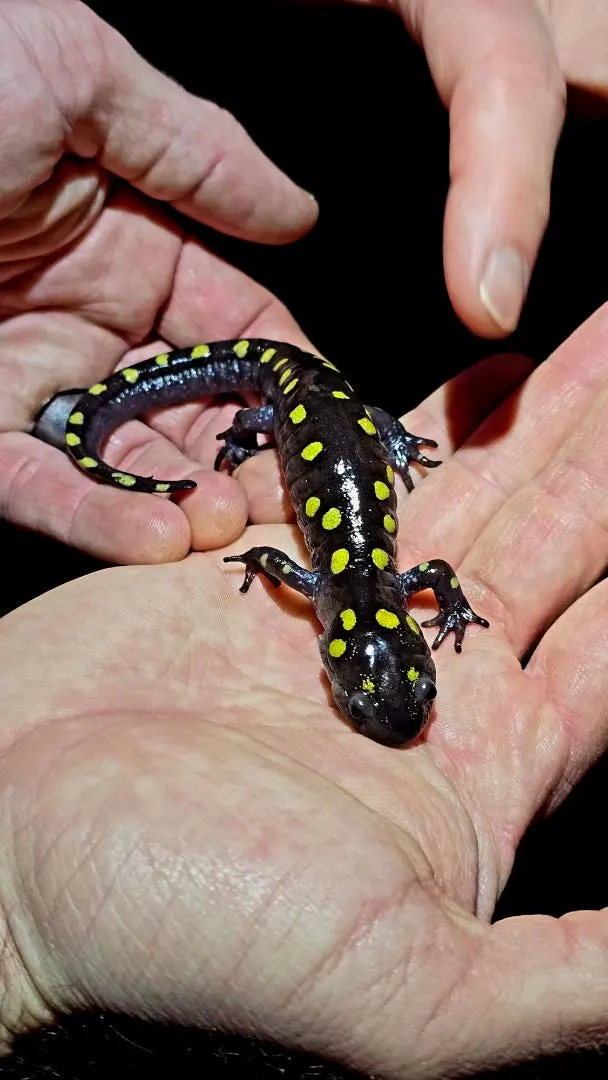
- Handling salamanders with dry, dirty, or lotion-covered hands, as their skin absorbs chemicals easily.
- Searching in areas with heavy pesticide or fertilizer runoff, which can be toxic to amphibians.
- Using bright, direct artificial lights that may startle or disorient the animals during their nocturnal foraging.
Always replace any cover objects exactly as you found them to ensure the habitat remains stable for the next inhabitant.
How to create a salamander-friendly backyard
You can encourage salamanders to take up residence in your garden by mimicking their natural forest environment. The primary goal is to provide consistent moisture and safe hiding spots. Start by designating a "wild" corner of your yard where you do not mow or rake, allowing leaf litter to accumulate. This organic matter creates a humid microclimate and attracts the small invertebrates that salamanders eat.
Follow these steps to improve your garden habitat:
- Install a small, shallow pond or a water feature with rocks to provide a moisture source.
- Place flat stones or untreated wooden boards in shaded areas to serve as artificial cover.
- Plant native shrubs and ground cover to provide shade and reduce soil evaporation.
- Eliminate the use of chemical pesticides, as these eliminate the insect population that salamanders rely on for food.
By providing these simple resources, you create a sanctuary that supports local biodiversity and allows you to observe these fascinating creatures in their natural behavior.
Key facts
- Salamanders are amphibians found on every continent except Antarctica, with the highest diversity in North America.
- Most salamanders require moist environments because they breathe partly or entirely through their skin.
- Many species live in or near freshwater sources like streams, ponds, and vernal pools to facilitate breeding.
- Terrestrial salamanders, such as the red-backed salamander, prefer damp forest floors under logs, rocks, or leaf litter.
- Avoid handling salamanders with dry hands or chemical-laden skin, as their porous bodies absorb toxins easily.
- If you find a salamander in your garden, keep the area moist and leave natural debris like rotting wood to provide essential shelter.
The bottom line
Salamanders are diverse amphibians that thrive in environments providing consistent moisture and protection from the sun. Whether residing in aquatic habitats or hidden beneath the damp forest floor, they play a vital role in maintaining ecological balance. To support these sensitive creatures, protect local wetlands and maintain natural garden debris, ensuring you handle them with care to preserve their delicate and porous skin health.
People also ask
Do all salamanders live in water?
No, while many species start their lives in water, many adults are fully terrestrial. They often live in moist soil or under forest debris, returning to water only to lay eggs.
How can I tell if a salamander is nearby?
Look under damp logs, large rocks, or thick layers of decaying leaves during or after a rainstorm. These creatures are nocturnal and seek dark, humid hiding spots to prevent dehydration.
Can salamanders survive in urban areas?
They can survive in urban environments if there is access to undisturbed, moist soil and native vegetation. However, they are highly sensitive to pollution and habitat fragmentation caused by urban development.
Why are salamanders important to their ecosystems?
They act as both predators and prey, helping to control insect populations like mosquitoes and slugs. Their presence is also a key indicator of a healthy, non-polluted environment.
What should I do if I find a salamander in my house?
Gently scoop it up using a damp paper towel or a container and release it into a nearby shaded, moist outdoor area. Do not keep it as a pet, as they have specific environmental requirements that are difficult to replicate.
Are salamanders the same as lizards?
No, salamanders are amphibians with smooth, moist skin and no claws, whereas lizards are reptiles with dry, scaly skin and claws. They belong to entirely different biological classes.
This answer was created with the help of AI research tools and reference sources. Spotted an error? Let us know — we correct mistakes quickly. See our editorial policy.