When did humans first land on the Moon?
Short answer
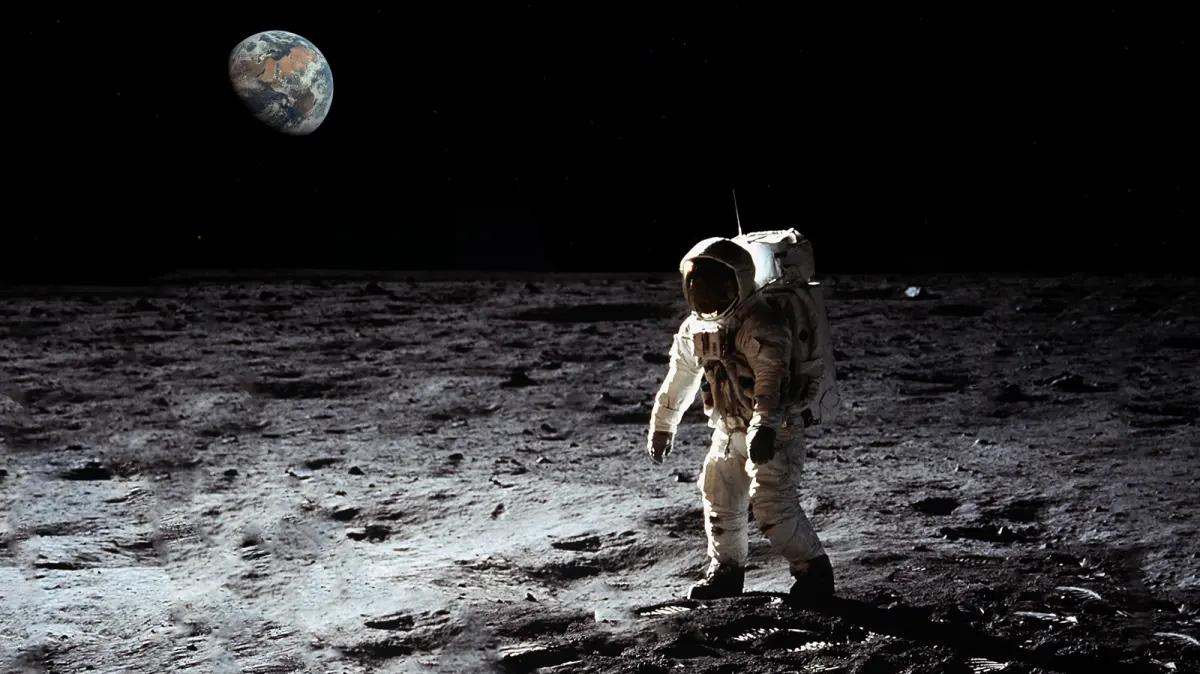
Humans first landed on the Moon on July 20, 1969. The Apollo 11 lunar module, named Eagle, touched down at 20:17 UTC. Astronauts Neil Armstrong and Buzz Aldrin became the first people to walk on the lunar surface, marking a pivotal achievement in human space exploration and the culmination of the Space Race.
On this page
When did the Apollo 11 mission happen?
The Apollo 11 mission launched from Kennedy Space Center in Florida on July 16, 1969, atop a Saturn V rocket. It carried three astronauts: Neil Armstrong, Buzz Aldrin, and Michael Collins. After traveling for three days through space, the spacecraft entered lunar orbit on July 19. The following day, Armstrong and Aldrin detached the lunar module Eagle from the command module Columbia to begin their descent to the surface.
The landing occurred in the Sea of Tranquility, a flat lunar plain chosen for its relative safety. After touchdown, Armstrong famously radioed, "The Eagle has landed." The astronauts spent several hours preparing for their extravehicular activity. On July 21, 1969, at 02:56 UTC, Armstrong stepped onto the lunar surface, followed shortly by Aldrin. The mission successfully returned the crew to Earth on July 24, splashing down in the Pacific Ocean.
How do you track lunar landing history?
To understand the timeline of human lunar exploration, it is helpful to view the missions in chronological order. While Apollo 11 was the first, NASA conducted several subsequent missions to expand scientific research. Understanding the progression of these flights provides context for the technological advancements required to sustain human life in space.
- Apollo 11: First human landing (July 1969).
- Apollo 12: Precision landing near Surveyor 3 (November 1969).
- Apollo 14: Exploration of the Fra Mauro highlands (February 1971).
- Apollo 15: Introduction of the Lunar Roving Vehicle (July 1971).
- Apollo 16: Exploration of the Descartes Highlands (April 1972).
- Apollo 17: Final lunar mission involving a geologist (December 1972).
Each mission improved upon the last, increasing the time spent on the surface and the amount of lunar material collected for study.
Why did the Moon landing happen then?
The lunar landing was the primary goal of the United States' Apollo program, initiated by President John F. Kennedy in 1961. During the Cold War, the United States and the Soviet Union were engaged in a competitive "Space Race" to demonstrate technological and ideological superiority. Achieving a crewed lunar landing was seen as the ultimate symbol of national capability and scientific prowess.
The program required unprecedented investment and innovation, involving over 400,000 engineers, scientists, and technicians. Massive infrastructure was developed, including the Vehicle Assembly Building and the Saturn V launch vehicle, which remains the most powerful rocket ever successfully flown. The success of Apollo 11 effectively fulfilled the national goal set at the beginning of the decade, shifting the focus of space exploration toward long-term scientific objectives and international cooperation in the years that followed.
Common mistakes when studying the Moon landing
Many people mistakenly believe that the Moon landing was a singular event rather than a series of six successful missions. Another common error is confusing the date of the landing with the date of the first steps, which occurred several hours apart due to safety protocols and equipment checks. It is also a frequent misconception that the astronauts stayed on the surface for days; in reality, the longest stay was under three days.
- Believing only one mission landed on the Moon.
- Confusing the lunar module with the command module.
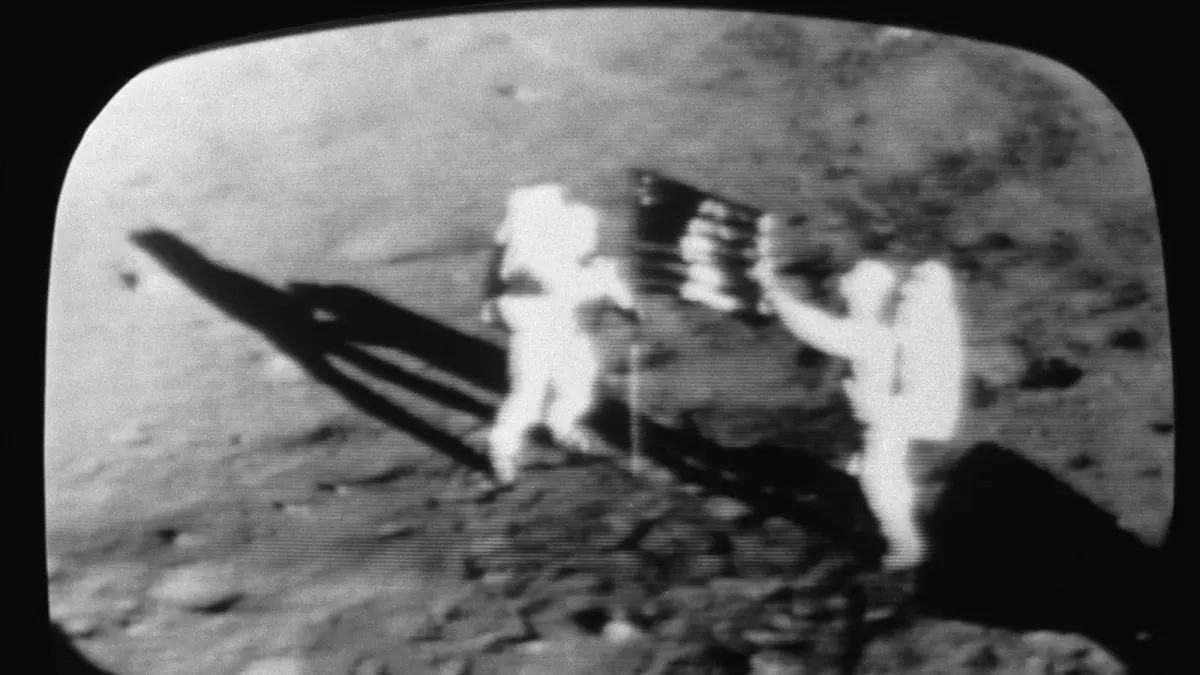
- Assuming the flag was waving due to wind in a vacuum.
- Overlooking the role of the command module pilot who remained in orbit.
Avoiding these errors requires focusing on the specific technical details of the Apollo program. Always verify the mission number, as each flight had distinct objectives, landing sites, and scientific goals that contributed to our modern understanding of lunar geology.
How to learn more about lunar exploration
For those interested in the details of the Apollo missions, NASA maintains an extensive digital archive. You can access original mission transcripts, high-resolution photographs, and video footage of the lunar surface. These primary sources offer the most accurate account of the events, allowing you to see the mission data as it was recorded by the flight controllers and the astronauts themselves during their historic journey.
- Visit the official NASA Apollo mission pages to view interactive maps of landing sites.
- Search the Lunar and Planetary Institute database for scientific analysis of returned moon rocks.
- Watch digitized mission control audio to hear the real-time communication between Houston and the lunar module.
- Read contemporary reports from the Smithsonian National Air and Space Museum for historical context.
By utilizing these resources, you can gain a deeper appreciation for the engineering challenges overcome during the 1960s. The data remains a cornerstone of planetary science and continues to inspire future missions to the Moon and beyond.
Key facts
- The first human Moon landing occurred on July 20, 1969, as part of the NASA Apollo 11 mission.
- Neil Armstrong was the first human to step onto the lunar surface, followed shortly by Buzz Aldrin.
- The Lunar Module, named Eagle, touched down in the Sea of Tranquility at 20:17 UTC.
- Michael Collins remained in lunar orbit aboard the Command Module Columbia while his crewmates descended.
- To view historical footage, ensure you are accessing official NASA archives to avoid digitally altered or conspiracy-themed recreations.
- When researching the event, verify dates using the Coordinated Universal Time (UTC) standard to maintain consistency across international records.
The bottom line
The Apollo 11 mission stands as a monumental achievement in human exploration, marking the first time humanity stepped onto another celestial body. By successfully landing Neil Armstrong and Buzz Aldrin on the Moon in 1969, NASA demonstrated unprecedented technological prowess. This historic event expanded our scientific understanding of the lunar environment and remains a defining milestone in the history of space flight and global human cooperation.
People also ask
How long did the astronauts stay on the Moon?
The Apollo 11 astronauts spent approximately 21 hours and 36 minutes on the lunar surface. Of that time, they spent about 2.5 hours outside the Lunar Module conducting experiments and collecting samples.
Did anyone else walk on the Moon after Apollo 11?
Yes, a total of 12 men walked on the Moon between 1969 and 1972. These missions were part of the Apollo 12, 14, 15, 16, and 17 programs.
What was the purpose of the Apollo missions?
The primary goal was to fulfill the national objective set by President John F. Kennedy to land a man on the Moon and return him safely to Earth. Scientifically, the missions aimed to study lunar geology and the origins of the solar system.
How did the astronauts return to Earth?
After departing the lunar surface, the Lunar Module docked with the Command Module in orbit. The crew then transferred to the Command Module for the journey back, eventually splashing down in the Pacific Ocean.
What equipment did they leave behind on the Moon?
The astronauts left behind the descent stage of the Lunar Module, scientific instruments, an American flag, and various commemorative items. These artifacts remain on the lunar surface today as historical markers.
Is it possible to see the landing sites from Earth with a telescope?
No, the landing sites are too small to be resolved by even the most powerful amateur telescopes. You would need high-resolution imagery from lunar orbiters like the Lunar Reconnaissance Orbiter to see the equipment left behind.
This answer was created with the help of AI research tools and reference sources. Spotted an error? Let us know — we correct mistakes quickly. See our editorial policy.