Why do we decorate Easter eggs?
Short answer
Decorating eggs for Easter symbolizes new life and the resurrection of Jesus Christ. Historically, the practice emerged from Lenten fasting traditions where eggs were forbidden, leading people to decorate them to mark the end of the fast. Today, it remains a global cultural tradition blending ancient religious symbolism with modern springtime celebrations.

On this page
Why do we decorate Easter eggs?
The tradition of decorating eggs is deeply rooted in both religious observance and the celebration of the vernal equinox. In many ancient cultures, the egg served as a universal symbol of fertility, rebirth, and the awakening of nature after the harsh winter months. Early Christians adopted this imagery, viewing the egg as a metaphor for the tomb of Christ and his subsequent resurrection.
During the Middle Ages, the Lenten season required strict fasting, which included abstaining from animal products like eggs. To prevent waste, families would boil their surplus eggs to preserve them. By the time Easter Sunday arrived, these eggs were ready to be eaten. Decorating them with bright colors helped distinguish the hard-boiled eggs from fresh ones, eventually evolving into a festive activity that marked the joyous end of the Lenten period.
How to dye Easter eggs at home
Achieving vibrant, evenly colored eggs requires a few basic supplies and a systematic approach. You can use commercial dye kits or create natural pigments using common kitchen ingredients like turmeric for yellow, onion skins for orange, or red cabbage for blue. Regardless of the method, the process remains consistent for the best results.
Follow these steps to ensure professional-looking results:
- Hard-boil your eggs by placing them in a single layer in a pot and covering them with cold water.
- Bring the water to a boil, remove from heat, and let the eggs sit for 10 to 12 minutes.
- Prepare your dye baths in deep cups, adding one tablespoon of white vinegar to help the color adhere to the shell.
- Submerge the eggs completely using a slotted spoon or wire dipper.
- Let them soak for at least five minutes, adjusting the time based on your desired color intensity.
Best materials for decorating eggs
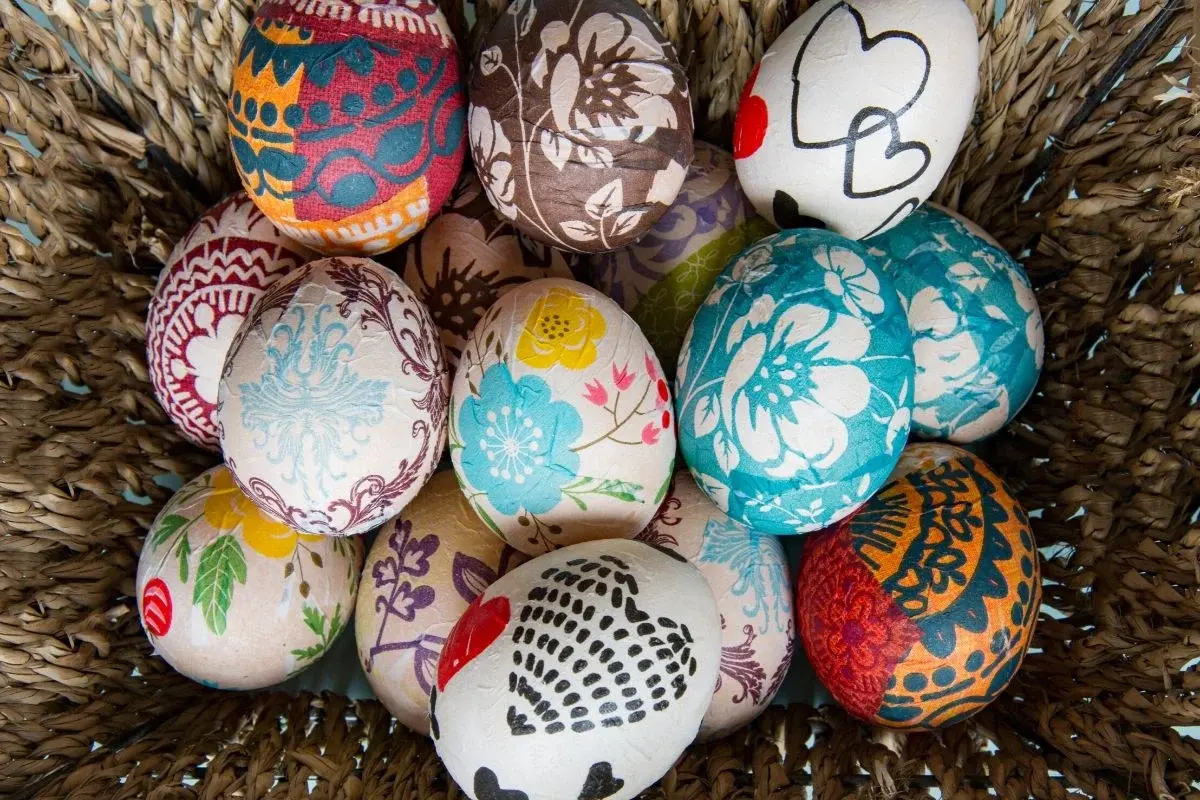
While liquid dyes are the standard, there are numerous ways to decorate eggs depending on your artistic goals. Wax crayons are excellent for creating resist patterns, as the wax prevents the dye from penetrating the shell. For more intricate designs, many people utilize heat-transfer decals, stickers, or specialized markers designed for non-porous surfaces.
If you are looking for a more tactile experience, consider these popular decorating techniques:
- Using rubber bands to create geometric stripes and patterns before dipping.
- Applying temporary tattoos to the surface of a dried, dyed egg for a crisp, graphic look.
- Using a white crayon to draw patterns before dyeing, which reveals the hidden design once submerged.
- Adding a small amount of vegetable oil to the dye bath to create marbled, multi-toned effects.
- Using acrylic paints for a more permanent, decorative finish that allows for fine detail work.

Common mistakes when dyeing eggs
One of the most frequent errors is failing to clean the eggshells before starting the process. Natural oils from your hands can create a barrier that prevents the dye from absorbing evenly, leading to splotchy or pale results. Always wash eggs gently with mild soap and water and dry them thoroughly before you begin your project.
Another common mistake involves the temperature of the water used for dyeing. If the dye bath is too cold, the color will be faint; if it is too hot, the egg may continue to cook or crack. Aim for room temperature liquids for the best consistency. Additionally, leaving eggs in the dye for too long can result in a rubbery texture, so keep a timer handy to ensure you remove them promptly once the desired hue is achieved.
How to store and eat Easter eggs
Safety is the most important factor when dealing with hard-boiled eggs that have been sitting out for decoration. If you plan to consume the eggs, they should not be left at room temperature for more than two hours. Once the decorating process is complete, move your eggs to the refrigerator immediately to prevent the growth of harmful bacteria.
To ensure your eggs remain safe and enjoyable, follow these practical storage guidelines:
- Keep the eggs in the coldest part of your refrigerator, rather than the door, to maintain a consistent temperature.
- If you intend to use the eggs for an outdoor hunt, consider using plastic eggs filled with treats instead of real eggs to avoid food safety risks.
- Consume your hard-boiled eggs within one week of the boiling date for the best quality and taste.
- If the eggs develop a strong sulfurous odor or an unusual texture, discard them immediately rather than attempting to eat them.
Key facts
- Ancient cultures, including Persians and Egyptians, decorated eggs to celebrate the spring equinox as a symbol of new life.
- Early Christians adopted the egg as a symbol of the empty tomb and the resurrection of Jesus Christ.
- Medieval Europeans often abstained from eating eggs during Lent, leading to a surplus that was boiled and decorated for Easter Sunday.
- Egg dyes were originally derived from natural sources like onion skins, beetroot, and turmeric before synthetic tablets became common.
- When dyeing eggs, use room-temperature hard-boiled eggs to prevent the shell from cracking due to thermal shock.
- Avoid leaving dyed eggs at room temperature for more than two hours to prevent the growth of harmful bacteria.
The bottom line
Decorating Easter eggs is a tradition that blends ancient seasonal celebrations with religious symbolism. By using simple techniques like natural dyes and proper boiling methods, you can safely participate in this historic custom. Whether you view the egg as a representation of the spring equinox or the resurrection, it remains a meaningful, creative way to mark the holiday while bringing friends and family together annually.
People also ask
Why are eggs associated with the Easter Bunny?
The Easter Bunny originated from German folklore as an "Easter Hare" that judged whether children were well-behaved. It eventually evolved into a figure that delivers colored eggs, blending pagan fertility symbols with Christian traditions.
How long can you keep hard-boiled eggs?
Hard-boiled eggs should be stored in the refrigerator and consumed within one week. If the shells are cracked, they should be eaten within a few days for the best quality and safety.
Can you eat eggs that have been hidden outside?
If eggs are hidden in a clean, dry area for less than two hours, they are generally safe to eat. However, if they are hidden in grass or dirt, it is safer to treat them as decorations rather than food.
What is the best way to boil an egg for dyeing?
Place eggs in a single layer in a pot and cover with cold water by one inch. Bring to a boil, remove from heat, cover, and let sit for 10 to 12 minutes before transferring to an ice bath.
Why do we use vinegar when dyeing eggs?
Vinegar is an acid that helps the dye adhere to the calcium carbonate shell of the egg. Without the acid, the color will often wipe off or appear very pale.
Are there natural alternatives to chemical egg dyes?
Yes, you can create vibrant colors by simmering eggs in water with natural ingredients. Red cabbage creates blue, turmeric makes yellow, and coffee produces a rich brown hue.
This answer was created with the help of AI research tools and reference sources. Spotted an error? Let us know — we correct mistakes quickly. See our editorial policy.