What is the difference between mechanical and wooden pencils?
Short answer
Mechanical pencils use a refillable internal mechanism to advance thin, consistent graphite leads, eliminating the need for sharpening. Traditional wooden pencils consist of a graphite core encased in a wood sleeve, requiring periodic sharpening to maintain a functional point. While mechanical versions offer precision, wooden pencils provide versatility in line weight and shading.
On this page
How do mechanical and wooden pencils work
Mechanical pencils function through a clutch mechanism that grips a thin lead—typically 0.5mm, 0.7mm, or 0.9mm—and advances it incrementally with a push-button or twist action. This design ensures the writing tip remains uniform in diameter, which is ideal for technical drawing, architectural drafting, and precise note-taking. Because the lead is stored internally, the user never needs to stop to sharpen the tool, allowing for a continuous, uninterrupted workflow during long writing sessions.
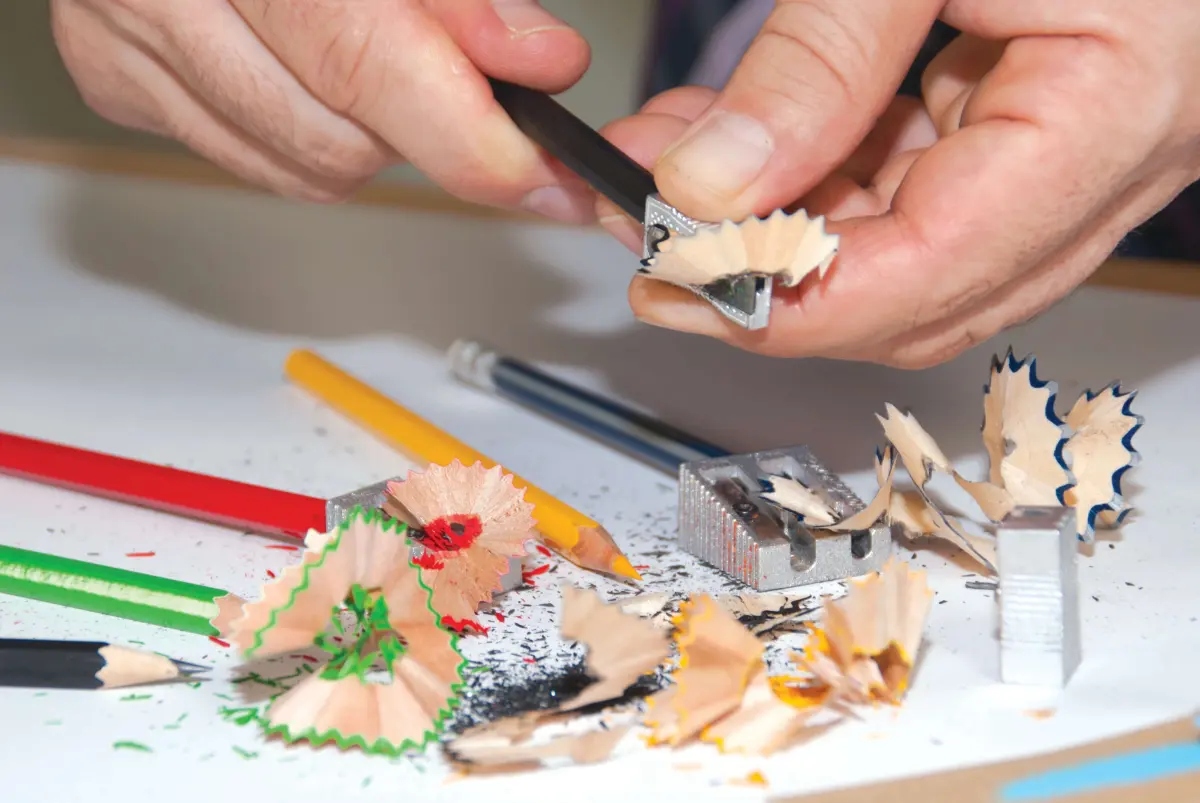
Wooden pencils, by contrast, rely on a solid core of graphite and clay that is permanently bonded inside a cedar or basswood casing. To expose the writing core, the user must remove the wood exterior using a manual or electric sharpener. This process changes the geometry of the tip over time, moving from a sharp point to a dull, broad surface. While this requires manual maintenance, many artists prefer the ability to customize the tip shape for specific shading or sketching techniques.
Why use a wooden pencil instead of a mechanical one
Wooden pencils are favored by artists and writers who value tactile feedback and the ability to vary line thickness. Because the graphite core is often thicker and softer, it responds to the angle of the hand, allowing for broad, expressive strokes that thin mechanical leads cannot replicate. The lack of a complex internal mechanism also makes them highly durable and resistant to the jamming issues that can plague cheaper mechanical models.
- Select a high-quality cedar casing, which sharpens more smoothly than cheaper synthetic materials.
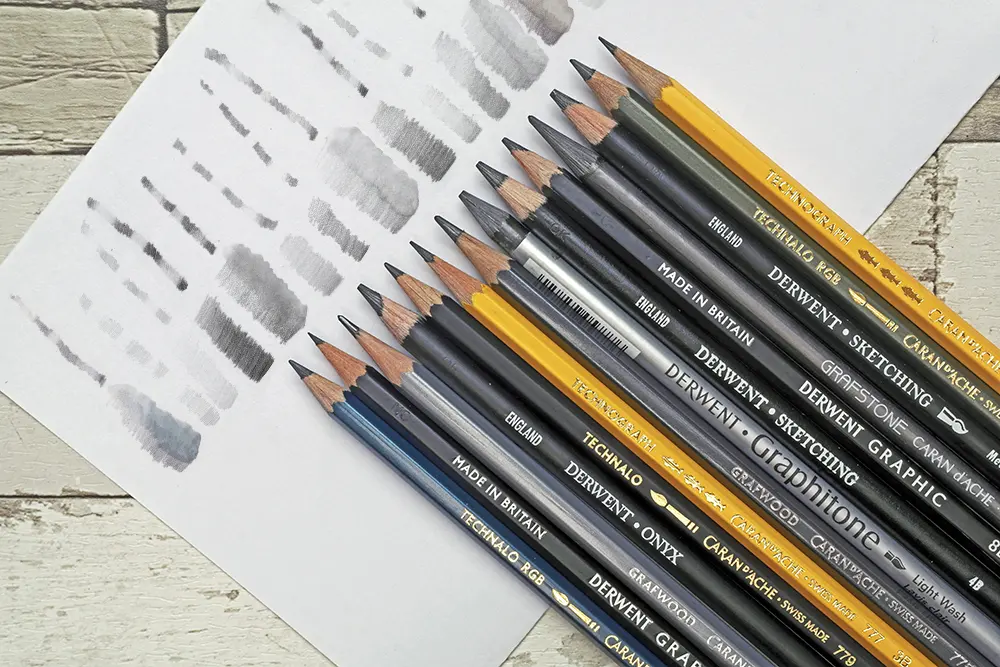
- Choose a graphite grade that suits your needs, ranging from hard 9H for light lines to soft 9B for deep, dark blacks.
- Keep a handheld sharpener nearby to maintain the point without damaging the wood grain.
- Rotate the pencil as you write to keep the tip wearing down evenly on all sides.
How to choose the right mechanical pencil
Mechanical pencils are categorized by their lead size and the type of internal clutch system they employ. For students and office workers, a 0.5mm lead provides a crisp, thin line suitable for small handwriting and mathematical equations. Those who press harder while writing may prefer a 0.7mm or 0.9mm lead, as these are significantly less prone to snapping under pressure. Some professional models also feature "auto-feed" mechanisms that advance the lead automatically as the tip touches the paper.
- Look for a knurled metal grip if you suffer from sweaty hands, as it provides superior traction.
- Check if the pencil has a retractable sleeve, which prevents the metal tip from piercing pockets or bags.
- Ensure the eraser is refillable, as mechanical pencil erasers are typically much smaller than those found on wooden pencils.
- Consider the weight distribution; a metal-bodied pencil often feels more balanced and premium than a lightweight plastic alternative.
Common mistakes when using pencils
A frequent error with mechanical pencils is over-extending the lead, which almost always results in a snapped tip. Users should only advance the lead by one or two clicks, keeping the exposed portion as short as possible to maintain structural integrity. Another common mistake is using the wrong lead hardness for the task; using a very soft lead in a mechanical pencil can lead to excessive smudging and frequent clogging of the internal feed mechanism.
When using wooden pencils, the most common mistake is over-sharpening, which wastes material and weakens the graphite core. If the core frequently breaks inside the wood, the sharpener blade is likely dull and needs replacement. Additionally, users often fail to store wooden pencils in a cool, dry place. Humidity can cause the wood to expand and contract, which may lead to the graphite core becoming loose or rattling inside the casing, making the pencil feel unstable during use.
Which pencil is best for your needs
The choice between these two tools ultimately depends on the intended application and personal preference for maintenance. For tasks requiring extreme precision, such as engineering diagrams or detailed accounting, the mechanical pencil is the superior choice due to its consistent line width. The convenience of never needing a sharpener makes it the industry standard for professional environments where speed and accuracy are paramount.
Conversely, the wooden pencil remains the preferred tool for creative endeavors, including sketching, drawing, and long-form journaling. There is a distinct psychological satisfaction in the friction of wood against paper and the ritual of sharpening. By understanding the mechanical limitations and artistic advantages of each, you can select the right tool to enhance your productivity and creative output. Whether you prioritize the clinical precision of a mechanical lead or the organic, versatile nature of a classic wooden pencil, both tools offer unique benefits that have kept them relevant for centuries of human expression.
Key facts
- Wooden pencils use a graphite core encased in wood, while mechanical pencils use a refillable, thin lead propelled by a spring mechanism.
- Standard wooden pencils require periodic sharpening with a blade, which gradually shortens the pencil until it becomes unusable.
- Mechanical pencils maintain a consistent line width because the lead diameter remains constant, unlike wooden pencils that dull as they write.
- Common lead sizes for mechanical pencils include 0.5mm, 0.7mm, and 0.9mm, offering precision that wooden pencils cannot achieve without frequent sharpening.
- Wooden pencils are generally more durable in rugged conditions, whereas the internal components of mechanical pencils can be damaged by heavy pressure.
- To avoid breakage in mechanical pencils, extend the lead only 1–2 millimeters; extending it further makes the thin graphite highly susceptible to snapping.
The bottom line
The choice between wooden and mechanical pencils depends on your specific needs. Wooden pencils offer a tactile, versatile experience ideal for sketching and shading, though they require constant sharpening. Mechanical pencils provide unmatched precision and consistent line thickness, making them perfect for writing, note-taking, and technical drawing. By understanding these mechanical differences, you can select the right tool to improve your efficiency and overall writing comfort.
People also ask
Which type of pencil is better for drawing?
Professional artists often prefer wooden pencils because they allow for a wider range of shading techniques by varying the angle of the tip. However, mechanical pencils are superior for technical drafting where precise, uniform lines are required.
Do mechanical pencils ever run out of lead?
Yes, mechanical pencils require refills once the internal reservoir is empty. You simply insert new leads into the chamber, usually by removing the eraser cap or the lead sleeve.
Can you erase marks from both types of pencils?
Both types use graphite, so they are generally erasable with standard rubber erasers. However, very hard leads (like 2H) in either type may leave faint indentations on the paper if pressed too firmly.
Why does my mechanical pencil lead keep breaking?
The most common cause is extending the lead too far, which creates a weak point. Keep the lead short, and ensure you are using the correct lead size for your specific pencil model.
Are wooden pencils more environmentally friendly?
Wooden pencils are biodegradable and made from renewable cedar or pine, making them a sustainable choice. Mechanical pencils are made of plastic or metal, which creates more long-term waste if the device is discarded.
What do the numbers like HB or 2B mean on a pencil?
These codes indicate the hardness and blackness of the graphite core. "H" stands for hard, producing lighter lines, while "B" stands for black, producing softer, darker marks; "HB" is the standard middle ground.
This answer was created with the help of AI research tools and reference sources. Spotted an error? Let us know — we correct mistakes quickly. See our editorial policy.