What is Piet Mondrian known for?
Short answer
Piet Mondrian was a Dutch painter celebrated as a pioneer of 20th-century abstract art. He is best known for his "Neo-Plasticism" style, characterized by grids of vertical and horizontal black lines and the use of the three primary colors—red, blue, and yellow—set against a white background to represent universal harmony.
On this page
What is the Neo-Plasticism art style?
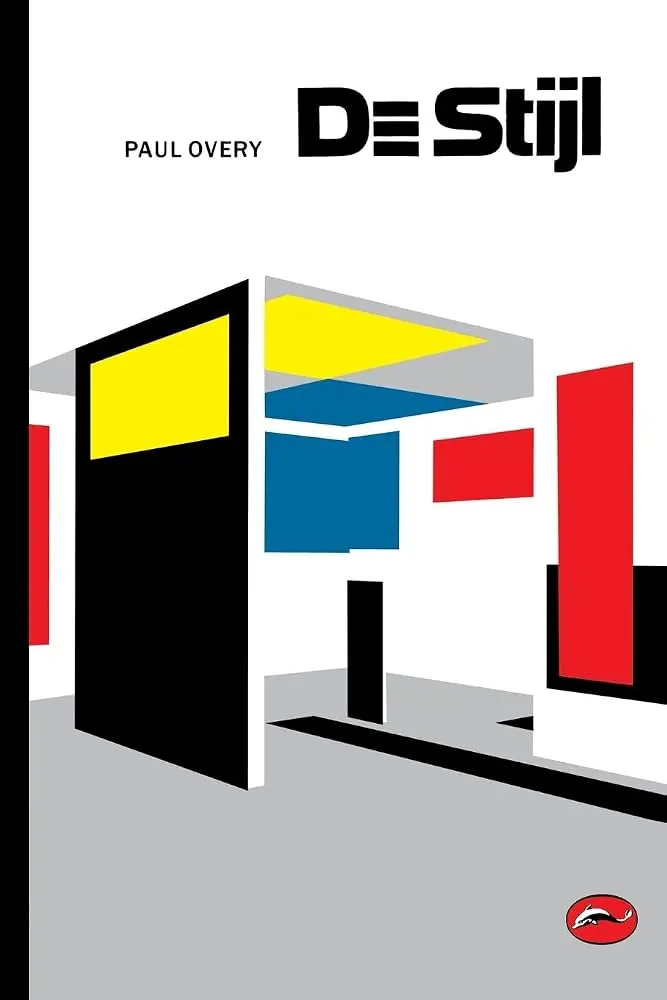
Neo-Plasticism, or De Stijl, was a movement founded by Mondrian and Theo van Doesburg in 1917. The philosophy behind this style was to strip art of all decorative or representational elements to reveal the underlying structure of reality. Mondrian believed that by reducing art to its most basic components, he could achieve a sense of spiritual balance and cosmic order.
This aesthetic is instantly recognizable for its strict geometric rigor and limited color palette. By avoiding diagonal lines, curves, or secondary colors, Mondrian sought to create a "pure" art form that transcended individual emotion. He viewed these compositions not as static images but as dynamic expressions of the fundamental forces of the universe. His work remains a cornerstone of modern art history because it successfully bridged the gap between painting and architectural design.
How to identify a Piet Mondrian painting
Identifying a classic Mondrian work is straightforward if you look for specific visual markers. His mature style, which fully emerged in the 1920s, relies on a consistent set of rules that he followed throughout his later career. If a painting features complex shading, realistic figures, or soft brushwork, it is likely from his early period before he adopted total abstraction.
When examining his iconic works, look for these defining characteristics:
- A grid structure composed of thick, black, non-intersecting lines.
- Rectangular planes filled with only red, blue, or yellow.
- Large sections of white or gray negative space.
- A complete absence of three-dimensional perspective or depth.
- Asymmetrical arrangements that create a sense of visual equilibrium.
These elements work together to ensure that no single part of the canvas dominates the viewer's attention, forcing the eye to move across the entire composition.
Why did Mondrian shift to abstract art?
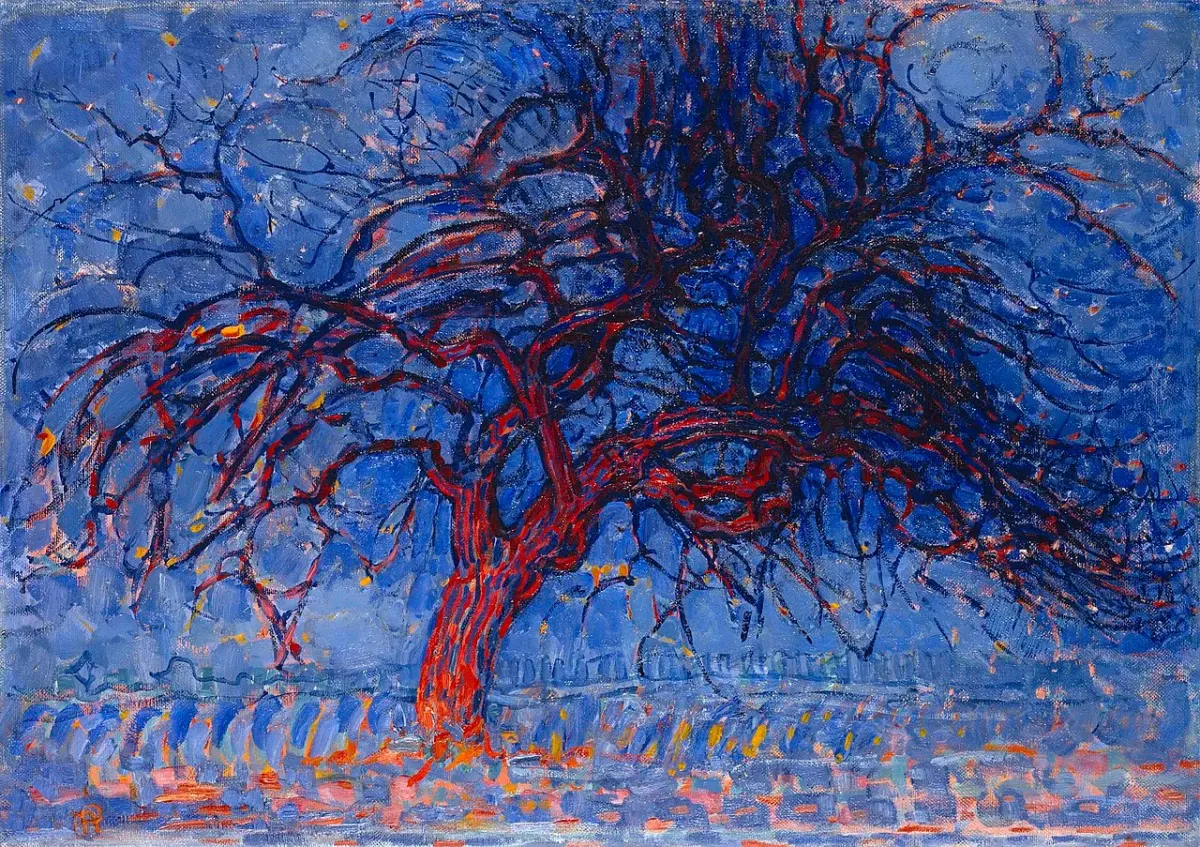
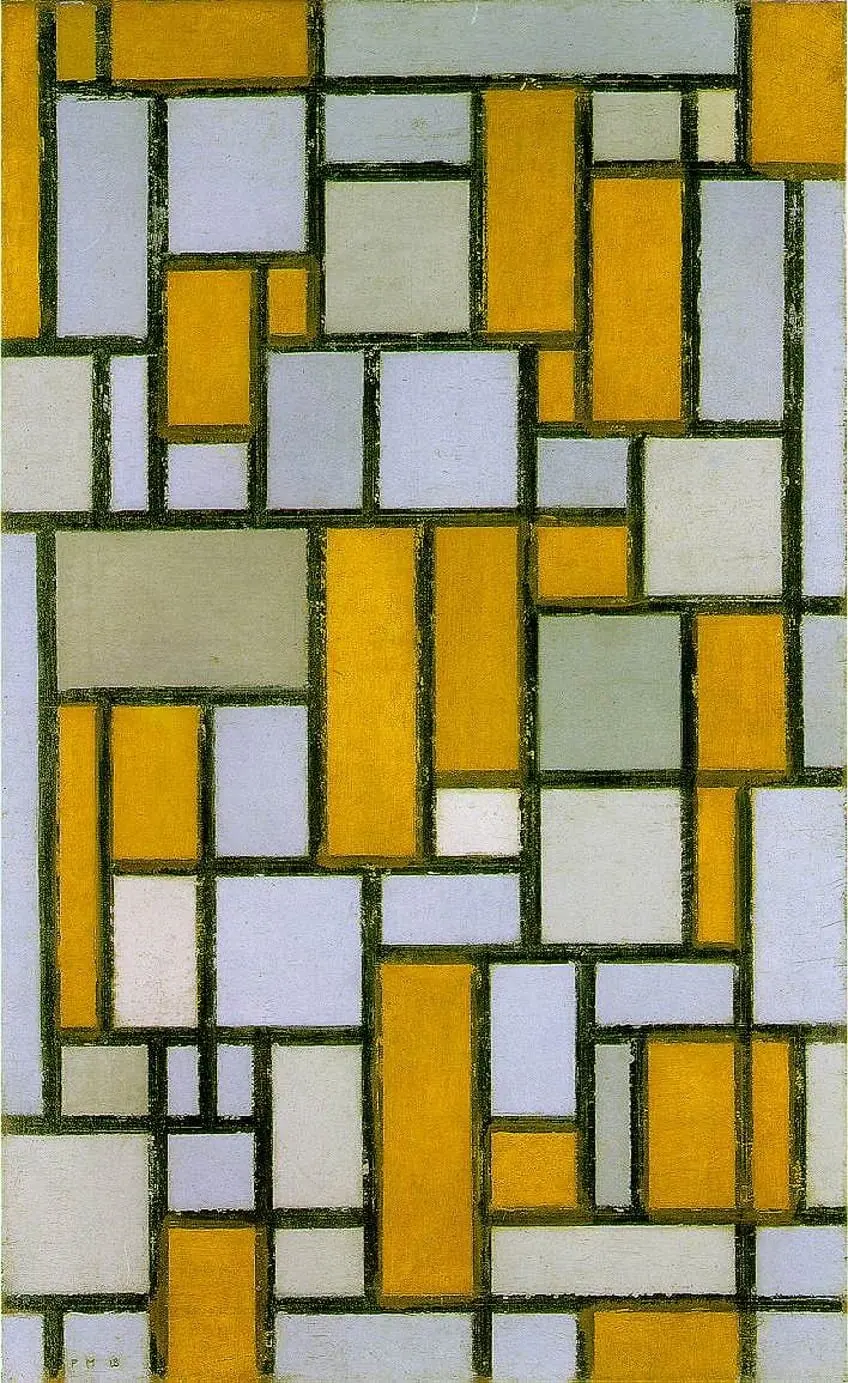
Mondrian’s evolution toward abstraction was a gradual process that began with traditional landscapes. In his early years in the Netherlands, he painted windmills, trees, and dunes in a realistic manner. However, he became increasingly fascinated by the influence of Cubism after moving to Paris in 1911. He began deconstructing natural forms into fragmented, overlapping planes, eventually realizing that he could represent the essence of a subject without depicting its physical appearance.
The shift was driven by a desire to move beyond the limitations of the material world. Mondrian was deeply influenced by Theosophy, a spiritual philosophy that emphasized the unity of all things. He believed that the chaos of the natural world could be resolved into a harmonious, balanced state through art. By removing the "distraction" of nature, he aimed to create a universal language that could be understood by anyone, regardless of their cultural background or personal experiences.
Common mistakes when analyzing Mondrian's work
A frequent error is assuming that Mondrian’s paintings were created quickly or without careful planning. In reality, he spent weeks or months adjusting the thickness of his lines and the placement of his colors to achieve perfect balance. Another common mistake is interpreting his colors as having specific symbolic meanings, such as red representing fire or blue representing water. Mondrian explicitly rejected such associations, insisting that his colors were merely tools to create equilibrium.
To properly appreciate his process, consider these steps:
- Observe the edges of the canvas to see if the black lines extend to the frame or stop just short.
- Focus on the weight of the colors; notice how a small square of red often balances a much larger area of white.
- Ignore the urge to find a hidden subject or narrative within the grid.
- Note the texture of the paint, as Mondrian often applied multiple layers to ensure a flat, matte finish.
How did Mondrian influence modern design?
Mondrian’s influence extends far beyond the walls of art museums and into the fabric of everyday life. His grid-based compositions provided a blueprint for modern graphic design, typography, and architecture. The Bauhaus school, in particular, adopted his principles of functionalism and geometric simplicity, which eventually shaped the look of modern cities and corporate branding. His work proved that art could be integrated into the environment to improve the quality of human life.
Today, his aesthetic remains a staple in fashion, interior design, and digital interfaces. From Yves Saint Laurent’s famous 1965 "Mondrian" dress to the clean, modular layouts of contemporary websites, his legacy is everywhere. By stripping away the unnecessary, he taught designers that simplicity is not the absence of complexity, but the ultimate expression of clarity. His work continues to challenge us to find order within the complexity of our modern world, proving that his vision of harmony is as relevant today as it was a century ago.
Key facts
- Piet Mondrian was a Dutch painter and a central figure in the De Stijl movement, which sought to express universal harmony through pure abstraction.
- His signature style, known as Neo-Plasticism, is characterized by the use of a strict grid of black lines and the three primary colors: red, blue, and yellow.
- To achieve balance in his work, Mondrian used white and gray as non-colors to create spatial tension against the primary color blocks.
- He began his career as a landscape painter in the late 19th century before transitioning to radical abstraction in the 1910s.
- When creating your own abstract compositions, avoid using diagonal lines, as Mondrian believed they disrupted the equilibrium of horizontal and vertical planes.
- A common mistake is to assume his work is purely decorative; rather, he intended his paintings to represent the underlying spiritual order of the universe.
The bottom line
Piet Mondrian remains a titan of 20th-century art, celebrated for his rigorous commitment to geometric abstraction. By distilling visual language into a precise grid of primary colors and black lines, he pioneered a style that transcended traditional representation. His work challenges viewers to find beauty in simplicity, proving that a disciplined, mathematical approach to composition can evoke a profound sense of universal harmony and order.
People also ask
Why did Mondrian only use three colors?
Mondrian believed that primary colors were the fundamental building blocks of visual reality. By limiting his palette to red, yellow, and blue, he aimed to strip away the distractions of nature and focus on the essence of form.
Did Mondrian influence modern design?
Yes, his aesthetic has had a profound impact on architecture, fashion, and graphic design. His grid-based compositions are frequently referenced in minimalist interior design and contemporary branding.
What does the term "De Stijl" mean?
De Stijl is Dutch for "The Style." It refers to a Dutch art movement founded in 1917 that advocated for pure abstraction and universality by a reduction to the essentials of form and color.
How did Mondrian's style change over time?
His early work consisted of traditional Dutch landscapes and still lifes. After moving to Paris in 1911, he was influenced by Cubism and gradually moved toward the geometric abstraction that defined his later career.
Are Mondrian's paintings symmetrical?
No, Mondrian intentionally avoided perfect symmetry. He used asymmetrical arrangements of lines and color blocks to create a dynamic sense of balance that feels alive rather than static.
Where can I see his original paintings?
Major collections of his work are held at the Gemeentemuseum in The Hague, the Museum of Modern Art in New York, and the Centre Pompidou in Paris. These institutions house the most significant examples of his evolution.
This answer was created with the help of AI research tools and reference sources. Spotted an error? Let us know — we correct mistakes quickly. See our editorial policy.