What is focal length?
Short answer
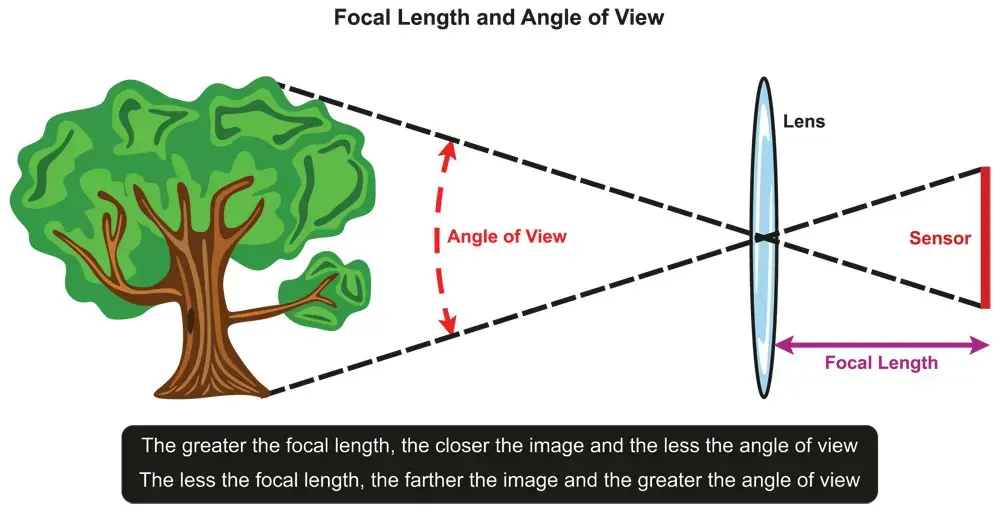
Focal length is the distance in millimeters between the optical center of a lens and the image sensor when the subject is in focus. It determines the angle of view, dictating how much of a scene is captured, and the magnification, which controls how large distant subjects appear within the frame.
On this page
What does focal length actually measure?
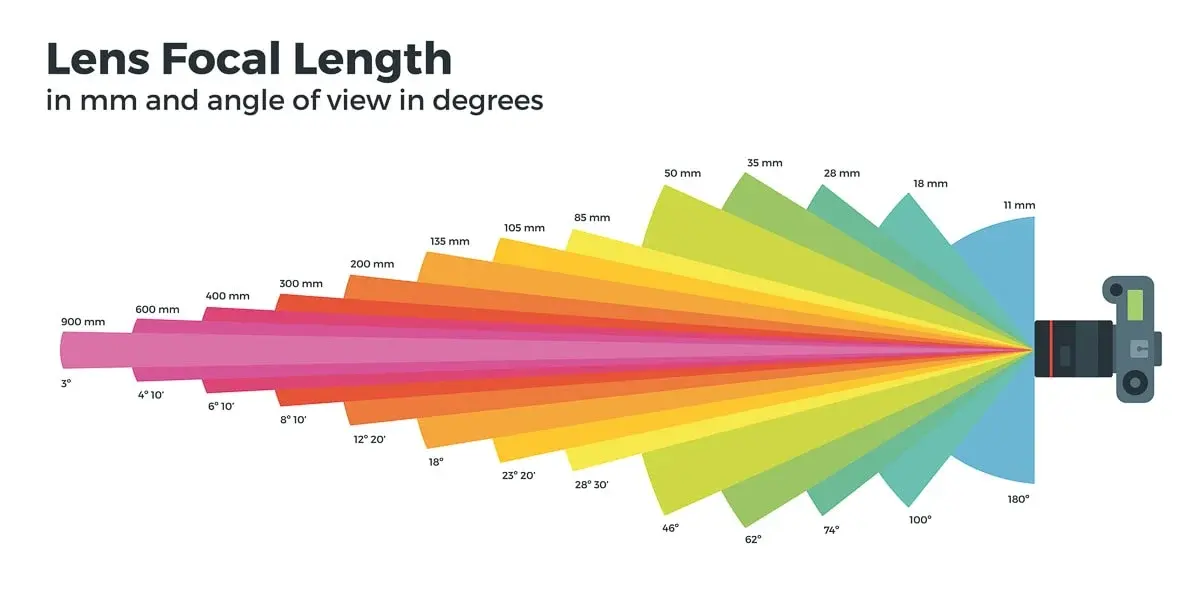
Focal length is a physical property of a lens, not a measure of its total length. It is measured in millimeters (mm) and defines the convergence point where light rays meet to form a sharp image on the sensor or film. A shorter focal length, such as 16mm, creates a wide angle of view that captures a broad perspective, while a longer focal length, such as 200mm, narrows the field of view to magnify distant objects.
This measurement is standardized based on a 35mm film frame, which serves as the industry benchmark for "full-frame" sensors. When you use a camera with a smaller sensor, such as an APS-C or Micro Four Thirds model, the effective field of view is cropped. This creates a "crop factor," meaning a 50mm lens on a smaller sensor will behave like a 75mm or 100mm lens, effectively increasing the magnification of the image.
How to choose the right focal length
Choosing the correct lens depends entirely on your subject matter and the desired composition. Wide-angle lenses are essential for landscapes or architecture, while telephoto lenses are preferred for wildlife, sports, and portraiture. Understanding these categories helps photographers select the right tool for the job.
- Ultra-wide (8mm–24mm): Best for expansive landscapes, real estate interiors, and dramatic perspectives.
- Standard (35mm–50mm): Mimics the natural human field of vision, making it ideal for street photography and general daily use.
- Telephoto (85mm–200mm+): Perfect for isolating subjects, blurring backgrounds in portraits, or capturing action from a distance.
When selecting a lens, consider how much physical space you have. If you are shooting in a cramped room, a wide-angle lens is necessary to fit the entire scene into the frame. Conversely, if you cannot get physically close to your subject, a telephoto lens is mandatory to achieve a detailed, tight composition.
Why focal length affects image perspective
Focal length does more than just zoom in or out; it fundamentally alters the spatial relationship between objects in your frame. Wide-angle lenses tend to exaggerate the distance between foreground and background elements, making nearby objects appear much larger than those only a few feet away. This is often used to create a sense of depth or to make small spaces appear larger than they are.
Telephoto lenses have the opposite effect, often described as "compression." By narrowing the field of view, these lenses make distant background elements appear closer to the subject than they actually are. This is highly desirable in portrait photography, as it creates a flattering, flattened look that minimizes facial distortions. Understanding these optical characteristics allows photographers to manipulate the viewer's perception of space intentionally, turning a two-dimensional image into a compelling visual narrative.
Common mistakes when using focal length
Many beginners assume that a higher focal length is always better for detail, but this is a frequent misconception. Using a long telephoto lens in tight quarters often leads to "camera shake," where even the slightest hand movement results in a blurry image. Because telephoto lenses magnify the scene, they also magnify the instability of your hands, making a tripod or image stabilization technology absolutely necessary for sharp results.
Another common error is choosing a focal length that distorts the subject's features. For instance, using a very wide-angle lens for a close-up portrait will often result in a bulbous nose or stretched facial features because the lens is too close to the subject. To avoid this, follow these simple guidelines:
- Use lenses 85mm or longer for portraits to maintain natural facial proportions.
- Always use a tripod if your focal length exceeds 100mm to ensure image clarity.
- Avoid using wide-angle lenses for close-up portraits unless you are intentionally seeking a distorted, artistic effect.
How to practice focal length control
The best way to master focal length is to experiment with a zoom lens, which allows you to change the focal length without switching equipment. Spend a day shooting at a single fixed focal length, such as 35mm, to force yourself to move your body and change your perspective. This exercise, often called "zooming with your feet," teaches you how different focal lengths interact with the environment and helps you develop an intuitive sense of framing.
- Set your zoom lens to 35mm and leave it there for two hours; observe how you must move to compose your shots.
- Switch to 85mm and practice isolating single subjects from their backgrounds.
- Compare the two sets of images to see how the background compression and subject-to-foreground relationship change.
By limiting your options, you learn the strengths and weaknesses of each focal length. Over time, you will develop the ability to visualize the final shot before you even lift the camera to your eye, allowing you to choose the perfect lens instinctively for any given situation.
Key facts
- Focal length is measured in millimeters (mm) and determines the magnification of a lens.
- A shorter focal length, such as 24mm, provides a wide field of view, while a longer one, like 200mm, provides a narrow, zoomed-in view.
- The measurement represents the distance in millimeters between the optical center of the lens and the image sensor when the subject is in focus.
- Smaller numbers indicate wide-angle lenses, whereas higher numbers indicate telephoto lenses.
- A 50mm lens is often called a "normal" or "prime" lens because it produces an angle of view similar to the human eye.
- To avoid blurry images, use a shutter speed at least as fast as your focal length (e.g., 1/200th of a second for a 200mm lens).
The bottom line
Focal length is the fundamental specification that defines how much of a scene a lens captures. By understanding that lower numbers offer wide perspectives and higher numbers provide magnification, you can choose the right tool for any subject. Whether shooting sweeping landscapes or intimate portraits, matching your focal length to your creative intent is the most effective way to improve your overall photographic composition and clarity.
People also ask
Does a higher focal length number mean the lens is physically longer?
Not necessarily. While telephoto lenses are often physically long, modern optical designs and mirrorless systems can significantly reduce the physical size of a lens regardless of its focal length.
What is the difference between prime and zoom lenses?
A prime lens has a fixed focal length, which often allows for better image quality and wider apertures. A zoom lens has a variable focal length, allowing you to adjust your framing without moving your feet.
How does focal length affect portrait photography?
Longer focal lengths, typically between 85mm and 135mm, are preferred for portraits because they compress facial features and create a flattering, shallow depth of field. Wide angles can distort faces if the camera is too close.
What is crop factor?
Crop factor is a multiplier used to calculate the "effective" focal length when using a lens on a camera with a sensor smaller than a standard 35mm frame. For example, a 50mm lens on an APS-C sensor often acts like a 75mm lens.
Why do my photos look blurry when I zoom in?
As focal length increases, camera shake becomes more apparent, magnifying any slight movement of your hands. Using a tripod or a lens with built-in image stabilization helps maintain sharpness at high zoom levels.
Can I use any focal length for landscape photography?
While wide-angle lenses are standard for capturing expansive vistas, telephoto lenses are excellent for isolating specific details or compressing layers of mountains in a landscape. The choice depends on the desired perspective.
This answer was created with the help of AI research tools and reference sources. Spotted an error? Let us know — we correct mistakes quickly. See our editorial policy.