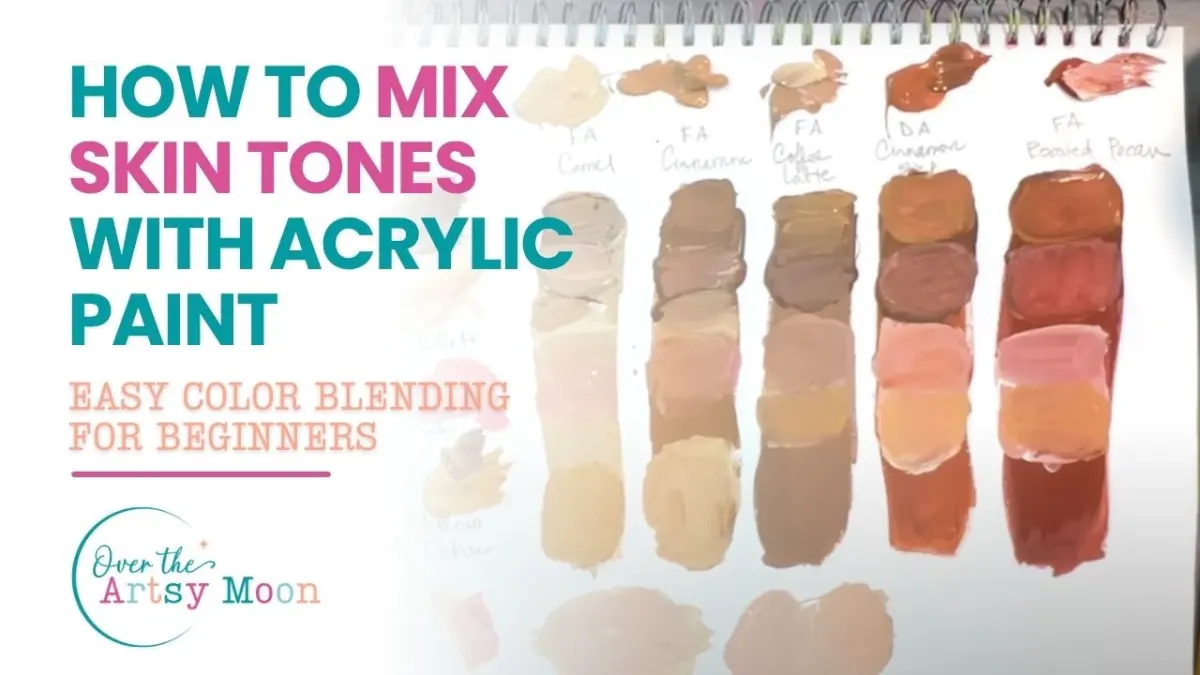
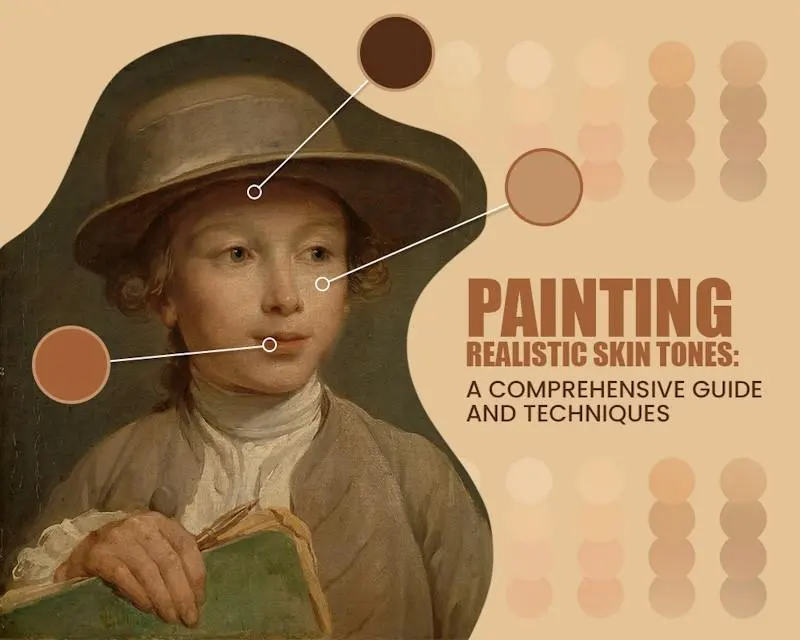
What colors make skin color?
Short answer
Skin tones are created by mixing primary colors—red, yellow, and blue—along with white to adjust value and brown or black to adjust depth. Because human skin contains diverse undertones, artists typically combine these pigments with complementary colors like green or violet to neutralize vibrancy and achieve a natural, realistic appearance.
On this page
What colors make skin tones?
To replicate human skin, you must understand that skin is never a single flat color. Artists start with a base of white and add small amounts of yellow, red, and blue. Yellow provides the primary warmth, while red introduces the necessary blood-flow undertones. Blue is used sparingly to cool the mixture and prevent it from looking like bright orange paint.
The secret to a realistic skin tone lies in the proportions. A standard starting point for a light complexion is a large amount of white mixed with a tiny dot of yellow and an even smaller amount of red. As you move toward deeper skin tones, you decrease the white and increase the amount of brown or burnt umber. Always remember that skin is translucent, meaning it reflects the colors of the environment around it.
How to mix skin colors for beginners
Mixing skin tones is a process of layering and adjusting rather than finding a single perfect tube of paint. Beginners often make the mistake of using too much color at once, which leads to muddy results. Start by creating a "neutral" base and then shift the temperature toward either warm or cool depending on the subject’s specific complexion.
Follow these steps to build a basic palette:
- Start with a generous dollop of white paint on your palette.
- Add a small amount of yellow ochre to create a warm foundation.
- Gradually introduce a touch of red or rose to mimic the flush of skin.
- Add a tiny amount of ultramarine blue or burnt umber to desaturate the mix.
- Test the color on a scrap piece of paper before applying it to your main work.
Why skin tones look muddy or grey
The most common issue when mixing skin tones is the "mud" effect, which occurs when you mix too many complementary colors together. When you combine red, yellow, and blue in equal parts, you naturally create a neutral grey or brown. If you continue adding more colors to fix a tone that feels "off," you quickly lose the clarity and vibrancy that skin requires.
To avoid this, keep your mixtures clean by using a separate brush for each color addition. If your mix starts to look grey, it usually means you have added too much blue or black. You can often correct this by adding a small amount of pure yellow or red to bring the warmth back into the mixture. Always work from light to dark, as it is much easier to darken a light skin tone than it is to lighten a dark one.
How to identify skin undertones
Skin undertones are the subtle colors underneath the surface that determine how a person's complexion appears. Even within the same racial or ethnic group, individuals possess vastly different undertones. These are generally categorized into three distinct groups: warm, cool, and neutral. Identifying these is essential for accurate color matching in both art and cosmetics.
- Warm undertones: These skins have hints of yellow, peach, or gold.
- Cool undertones: These skins feature subtle traces of blue, pink, or red.
- Neutral undertones: These skins are a mix of both, often appearing as an olive or muted beige.
To test for undertones, look at the veins on the inside of your wrist. If they appear blue or purple, you likely have cool undertones. If they look green, your undertones are warm. If you cannot tell, you are likely neutral.
Common mistakes when painting skin
Many artists fail to account for the "reflected light" that hits the skin. Skin is not a solid object; it absorbs and reflects light from the surrounding environment. If a person is standing in a room with blue walls, their skin will naturally pick up blue highlights. Ignoring these environmental factors makes a portrait look flat, plastic, or lifeless.
Another frequent error is using black paint to darken skin tones. Black paint is very dense and often contains cool blue pigments that can make skin look bruised or unnatural. Instead of black, use burnt umber, burnt sienna, or a mixture of blue and orange to create deep shadows. By using these chromatic darks, you maintain the richness and depth of the skin while ensuring the shadows remain transparent and vibrant rather than dull and opaque.
Key facts
- Human skin color is primarily determined by the concentration and type of melanin, a pigment produced by cells called melanocytes.
- To mix skin tones using paint, start with a base of white and add small amounts of red, yellow, and blue or burnt umber.
- Adding more yellow creates a warmer, golden undertone, while adding red increases the warmth and rosiness of the complexion.
- Blue is the essential "cooling" agent; adding a tiny amount of blue to a warm mixture will neutralize the intensity and create more realistic, muted shadows.
- A common mistake is using too much black, which often makes skin tones look muddy or gray instead of natural.
- Always test your mixture on a scrap piece of paper first, as paint often dries slightly darker than it appears when wet.
The bottom line
Mixing skin tones is an exercise in balancing primary colors rather than relying on a single "flesh" tube of paint. By starting with a white base and carefully introducing red, yellow, and blue, you can achieve a vast spectrum of complex, natural hues. Remember to avoid black for shading and always prioritize subtle adjustments to maintain the luminosity and life inherent in human skin.
People also ask
Why do skin tones look different in photographs compared to real life?
Cameras capture light based on white balance settings and environmental lighting conditions, which can shift the perceived hue. Real skin reflects ambient light, creating complex shifts in color that digital sensors may struggle to replicate accurately.
How do I identify if someone has cool or warm undertones?
Check the veins on the inside of your wrist; blue or purple veins typically indicate cool undertones, while green veins suggest warm undertones. You can also hold a piece of white paper next to your face to see if your skin appears more pink or yellow in comparison.
Can I use pure white to highlight skin?
Using pure, unmixed white for highlights often looks artificial because it lacks the subtle shifts in tone found in natural skin. It is better to use a very light tint of the base skin color to ensure the highlight integrates smoothly with the surrounding areas.
What is the role of burnt sienna in portrait painting?
Burnt sienna is a versatile, reddish-brown earth pigment that serves as an excellent foundation for mid-tones in many skin varieties. It provides a natural warmth that mimics the blood flow beneath the surface of the skin.
How do I paint darker skin tones without them looking flat?
Avoid using black to darken a color, as this kills the vibrancy of the pigment. Instead, mix complementary colors, such as purple and yellow or orange and blue, to create deep, rich shadows that retain depth.
Why does skin color change throughout the year?
Melanin production increases in response to ultraviolet radiation from the sun, leading to a tan. This biological process is a protective mechanism designed to shield DNA from damage, causing the skin to appear darker or more golden.
This answer was created with the help of AI research tools and reference sources. Spotted an error? Let us know — we correct mistakes quickly. See our editorial policy.