What are the best watercolor sets for beginners?
Short answer
The best watercolor sets for beginners are pan-based student-grade kits, such as those from Winsor & Newton Cotman or Sakura Koi. These sets offer a balance of affordability, portability, and reliable pigment quality. They provide a manageable color range, allowing novices to learn color mixing without the complexity of professional-grade tubes.
On this page
What makes a good beginner watercolor set
A quality beginner set should focus on "student-grade" paints rather than "artist-grade" or "craft-grade" options. Student-grade paints use slightly less pigment and more binders, making them affordable while still providing decent lightfastness and color intensity. Craft-grade paints, often found in children’s toy aisles, contain fillers that create chalky, inconsistent results, which can frustrate beginners trying to learn proper techniques. Look for sets that include a small range of colors—typically 12 to 24 half-pans—which encourages you to master the art of mixing secondary and tertiary colors from the primaries.
Portability is another essential feature for those starting out. Most beginner sets come in a plastic travel box that functions as a palette, allowing you to paint on the go. When selecting your first kit, prioritize brands with a long-standing reputation for quality control. Reliable options include:
- Winsor & Newton Cotman: Known for excellent consistency and transparency.
- Sakura Koi: Features a built-in water brush and a highly portable design.
- Van Gogh: Offers high-quality pigments that are easy to rewet.
How to choose between pans and tubes
Watercolor paints come in two primary forms: pans (dried, solid cakes) and tubes (moist, concentrated paste). For beginners, pans are almost always the superior choice. They are ready to use immediately; you simply touch a wet brush to the surface to pick up pigment. This format is ideal for learning water control, as it prevents the common mistake of squeezing too much paint onto a palette and wasting expensive material. Pans are also much easier to store and transport, making them the standard for field sketching and casual practice.
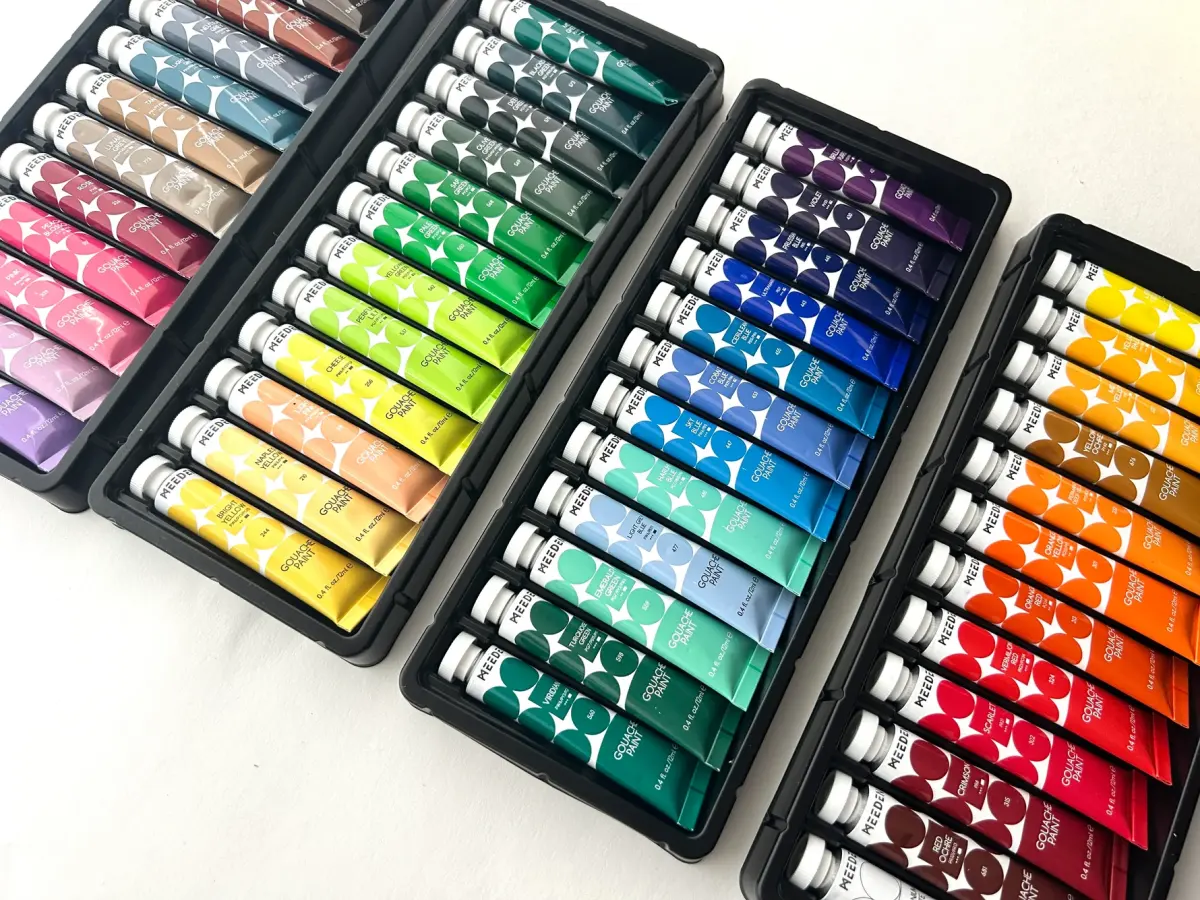
Tubes are better suited for artists who paint on a larger scale or need to mix large puddles of color. If you do choose tubes, you must purchase an empty plastic palette and wait for the paint to dry before it becomes truly convenient to use. To get started with tubes, follow these steps:
- Squeeze a small pea-sized amount of paint into the corner of each palette well.
- Allow the paint to dry completely for at least 24 hours before adding water.
- Use a damp brush to activate the dried paint as needed, just like a pan.
Essential supplies to pair with your paint
A watercolor set alone is not enough to begin painting; the quality of your paper is arguably more important than the paint itself. Watercolor paper is specially sized to absorb water without buckling or tearing. Beginners should look for "cold press" paper, which has a slight texture that helps hold the pigment in place. Avoid standard printer paper or thin drawing paper, as these will warp immediately upon contact with water. Aim for a weight of at least 140lb (300gsm) to ensure the paper can withstand multiple washes and layers of color.
You will also need a few reliable brushes to complement your set. You do not need an expensive collection of natural hair brushes; synthetic brushes are more durable and hold their shape well. A basic starter kit should include:
- A round brush (size 6 or 8) for general painting.
- A flat brush (1/2 inch) for covering large areas or creating washes.
- A small detail brush (size 2) for fine lines and finishing touches.
Always clean your brushes thoroughly with cool water after each session to prevent pigment buildup in the ferrule.
Common mistakes when starting with watercolors
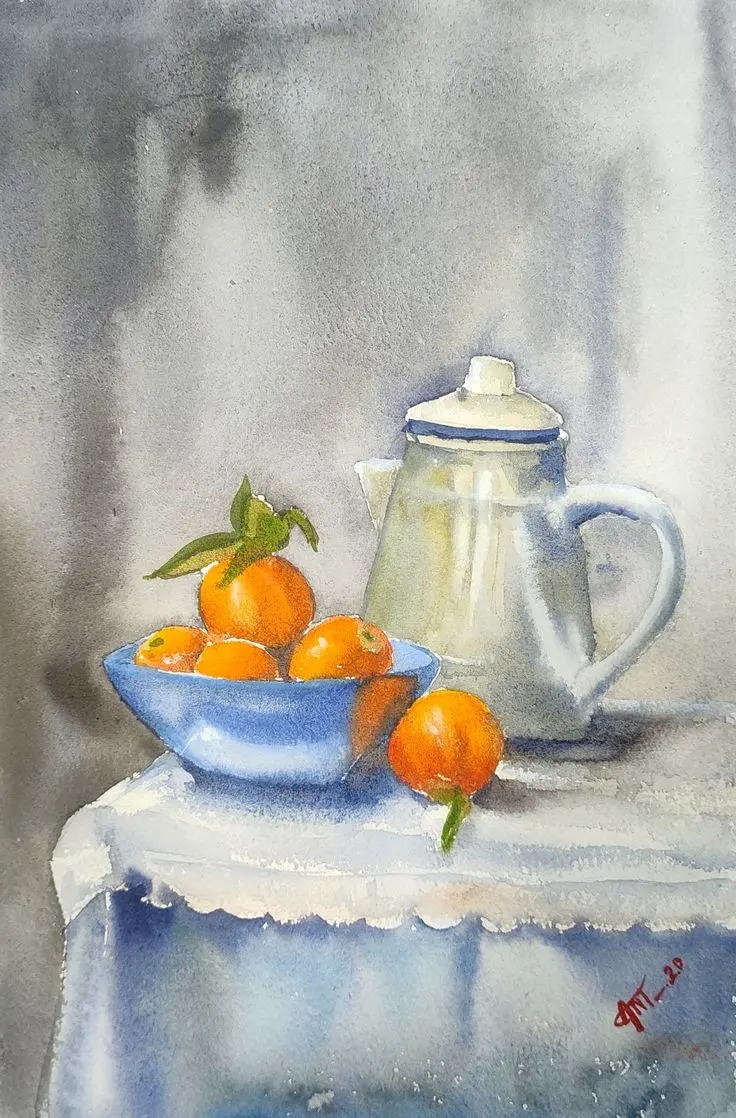
The most frequent error beginners make is using too much paint and not enough water. Watercolor is a transparent medium, meaning the white of the paper provides the brightness of your highlights. If you apply paint too thickly, the result will look muddy and opaque, losing the characteristic luminosity of the medium. Another common mistake is overworking the paper. Once you have applied a stroke, try to leave it alone while it is drying. Scrubbing or touching wet paint repeatedly will damage the paper fibers and create an uneven, patchy appearance known as "pilling."
Additionally, many beginners fail to manage their water supply properly. Always keep two jars of water on your desk: one for rinsing the dirty brush and one for picking up clean water to mix with fresh paint. If you use the same jar for both, your colors will quickly turn grey and dull. Avoid the temptation to use black paint to darken colors, as this often makes them look flat. Instead, mix complementary colors—such as blue and orange—to create deep, rich shadows that maintain their vibrancy and depth.
How to maintain your watercolor set
Taking care of your equipment ensures that your investment lasts for years. After every painting session, wipe the surface of your pans with a damp paper towel to remove any stray colors that may have bled into the wrong wells. Leave the lid of your paint box open for a few hours to allow the pans to dry completely before closing the case. Storing damp paints in a closed container can lead to mold growth, especially in humid environments. If you notice a film of dust on your pans, simply wipe it away with a clean, slightly moist brush.
When your pans eventually run low, you do not need to buy an entirely new set. Most reputable brands sell individual replacement pans, which are significantly cheaper than buying a new kit. Simply pop the empty plastic tray out of the box and slide in a new pan of the same color. By maintaining your set and replacing only what you use, you can focus entirely on developing your skills and exploring the nuances of color theory and brush control. Consistent practice is the most effective way to improve, so keep your kit accessible and ready for your next creative session.
Key facts
- Student-grade paints contain more binder and less pigment than professional-grade options, making them more affordable for beginners.
- Pan sets are compressed blocks of dried paint, while tubes contain moist paint that can be squeezed onto a palette.
- A basic palette of 12 colors is sufficient to learn color mixing and prevents beginners from becoming overwhelmed.
- Synthetic brushes are durable, cost-effective, and hold their shape better than natural hair brushes for new painters.
- Cold-press watercolor paper has a textured surface that is more forgiving and easier to control than smooth hot-press paper.
- Always clean your brushes immediately after use to prevent pigment from drying in the ferrule and damaging the bristles.
The bottom line
Selecting the right watercolor set is about balancing affordability with quality materials that won't hinder your progress. Start with a 12-pan student-grade set, 140lb cold-press paper, and a few synthetic brushes to learn the fundamentals. By focusing on color mixing and water control rather than buying excessive supplies, you will build the necessary skills to transition to professional-grade materials with confidence and artistic success.
People also ask
What is the difference between student-grade and professional-grade watercolors?
Student-grade paints use cheaper fillers and less concentrated pigments to lower costs. Professional paints offer higher lightfastness and more vibrant color intensity for long-term archival work.
Do I need a large set of colors to start painting?
No, a limited palette of 12 colors is actually better for learning. It forces you to master color mixing techniques rather than relying on pre-mixed tubes.
What weight of paper should I buy for watercolor?
You should look for paper that is at least 140lb (300gsm). Anything thinner will buckle and warp significantly when it comes into contact with water.
Should I buy pan sets or tubes?
Pan sets are more portable and convenient for quick sketches or small spaces. Tubes are better for larger paintings where you need to mix a significant amount of color at once.
How do I know if a brush is good for watercolor?
Look for brushes specifically labeled for watercolor, which are designed to hold a large volume of water. Synthetic sable or nylon blends are excellent, affordable choices for beginners.
What is the most common mistake beginners make?
Using too much water or not enough pigment is a frequent error that leads to washed-out, dull colors. Beginners should practice loading their brush with enough paint to achieve a rich, saturated look.
This answer was created with the help of AI research tools and reference sources. Spotted an error? Let us know — we correct mistakes quickly. See our editorial policy.