What are the best drawing pencils for beginners?
Short answer
Beginners should start with a versatile set of graphite pencils ranging from 2H to 6B. High-quality brands like Staedtler, Faber-Castell, and Tombow offer the best balance of lead consistency and durability. These tools allow artists to master light shading, deep shadows, and precise line work without the frustration of inferior materials.
On this page
Best drawing pencils for beginners
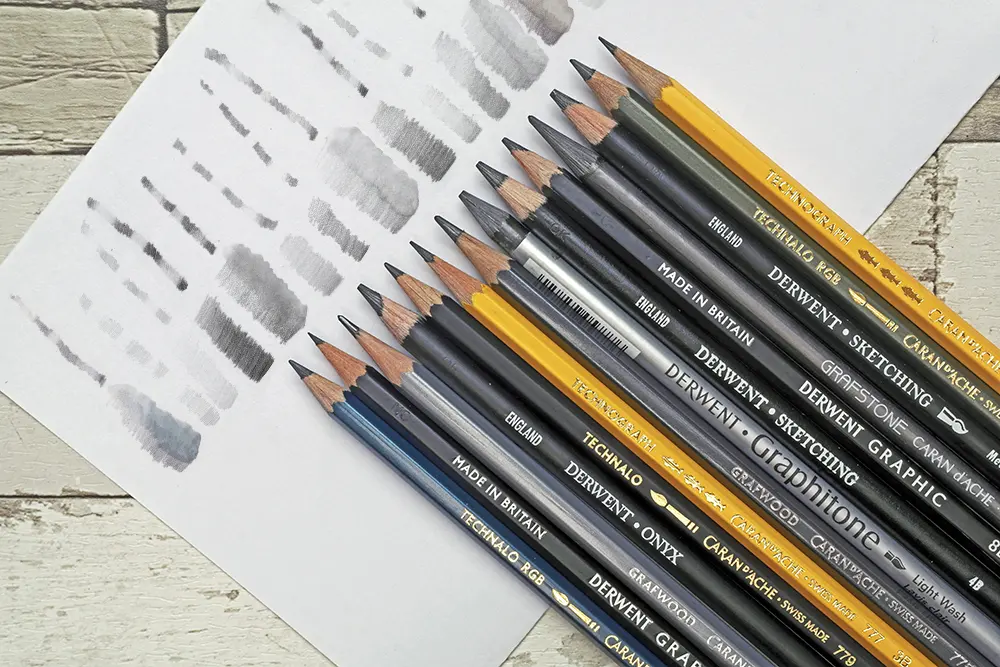
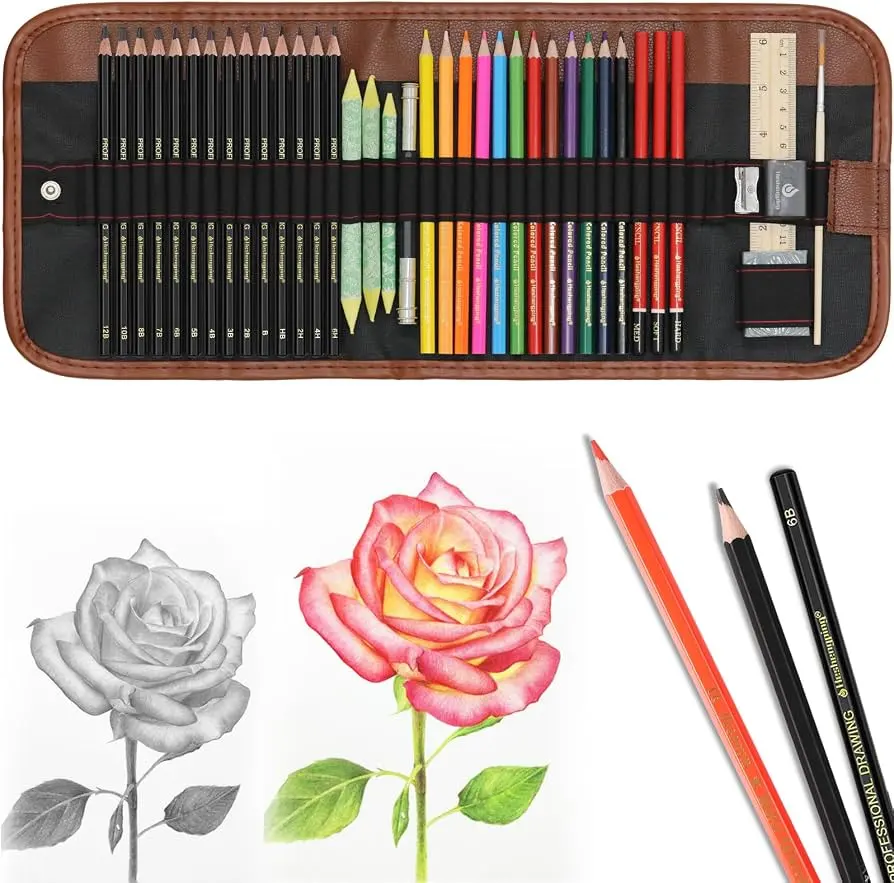
The foundation of any drawing practice begins with the graphite pencil, categorized by a grading scale that indicates hardness and blackness. Pencils marked with an "H" contain more clay, resulting in a harder, lighter mark, while those marked with "B" contain more graphite, producing a softer, darker stroke. For a beginner, purchasing a professional-grade set is more beneficial than buying cheap, mass-market alternatives that often contain gritty impurities or break frequently.
Reliable starter sets typically include a range of grades, such as 2H, HB, 2B, 4B, and 6B. This variety ensures you can execute both technical, light sketches and expressive, dark shading. Reputable brands like Faber-Castell’s 9000 series or Staedtler’s Mars Lumograph are industry standards because their lead cores are centered correctly and bonded to the wood, preventing the core from snapping during sharpening. Investing in these quality tools early on helps you develop a consistent touch and prevents the discouragement caused by poor equipment.
How to choose the right pencil grade
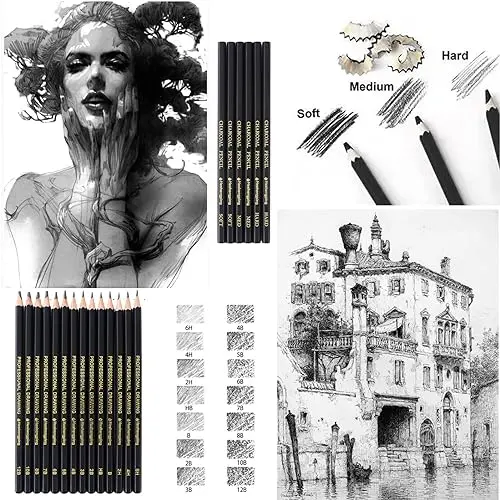
Understanding the graphite scale is essential for controlling the value and contrast in your drawings. The scale runs from 9H (the hardest and lightest) to 9B (the softest and darkest), with HB representing the middle ground. Beginners often struggle because they try to achieve dark values using only a hard pencil, which can damage the paper surface. Instead, you should select a pencil grade based on the specific stage of your drawing process.
- Use a 2H or H pencil for initial light outlines and structural guidelines.
- Use an HB or 2B pencil for mid-tone shading and defining shapes.
- Use a 4B or 6B pencil for final dark accents and deep shadows.
- Use a kneaded eraser to lift graphite gently if you apply too much pressure.
By following this progression, you maintain the "tooth" of the paper, which allows for multiple layers of graphite without the drawing becoming muddy or overly reflective.
Essential drawing supplies for beginners
Beyond the pencils themselves, a few key accessories are necessary to ensure your drawing sessions are productive. A high-quality sharpener is crucial; a metal-cased manual sharpener often provides a cleaner cut than plastic versions. Additionally, consider the type of paper you use, as smooth surfaces work best for fine detail, while textured or "toothier" paper is better for charcoal or softer graphite work.
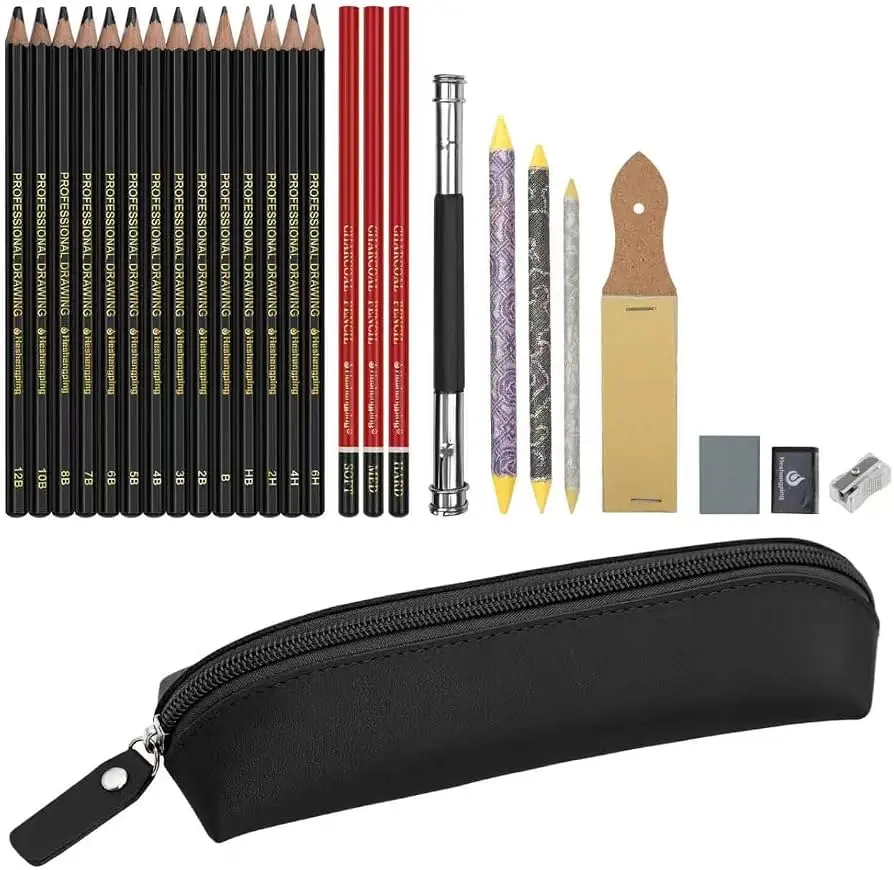
- Kneaded eraser: This is moldable and lifts graphite without damaging the paper fibers.
- Vinyl or plastic eraser: Use these for clean, sharp highlights and removing stubborn marks.
- Blending stump: A tightly rolled paper tool used to smooth out graphite transitions.
- Sketchbook: Choose one with acid-free, medium-weight paper to ensure your work lasts.
- Drawing board: Provides a stable, angled surface that improves posture and perspective.
Keep these items organized in a dedicated case to protect the delicate tips of your pencils from snapping during transport.
Common mistakes when drawing with pencils
A frequent error among novices is applying too much pressure, which creates a shiny, metallic finish that cannot be erased or layered over. Graphite is meant to be built up in light, translucent layers rather than pressed into the paper in a single heavy stroke. Another common issue is smudging the drawing with the side of the hand; you can avoid this by placing a clean piece of scrap paper under your palm while you work.
Another pitfall is relying on a single pencil for an entire drawing. This often results in a flat, lifeless image because the artist lacks the range of values necessary to create depth. Beginners should also avoid over-sharpening their pencils to a needle point for every task, as a slightly duller tip is often more effective for shading large areas. Learning to control your grip and pressure is a skill that develops over time, so be patient as your muscle memory improves.
How to maintain your drawing tools
Proper care of your pencils and accessories will extend their lifespan and improve the quality of your work. Always store your pencils horizontally or tip-up to prevent the lead from breaking inside the wood casing, which can happen if they are dropped or stored in a way that puts stress on the core. If you notice your pencil lead breaking repeatedly while sharpening, it is often a sign that the sharpener blade is dull and needs to be replaced.
Regularly clean your blending stumps by rubbing them on a piece of sandpaper to remove excess graphite buildup. This ensures that you are blending with a clean tool rather than accidentally adding unwanted dark marks to your drawing. Finally, keep your work area clean and free of graphite dust, as this can easily transfer to your hands and smear your progress. By treating your tools with care, you create a professional environment that encourages focus and allows your artistic skills to flourish consistently over time.
Key facts
- Graphite pencils use a scale from 9H (hardest) to 9B (softest), with HB representing the middle ground.
- Beginners should start with a basic set containing 2H, HB, 2B, 4B, and 6B pencils to cover a wide tonal range.
- Harder pencils (H grades) contain more clay, creating lighter, sharper lines ideal for technical drawing and initial sketches.
- Softer pencils (B grades) contain more graphite, producing dark, smudge-prone marks perfect for shading and depth.
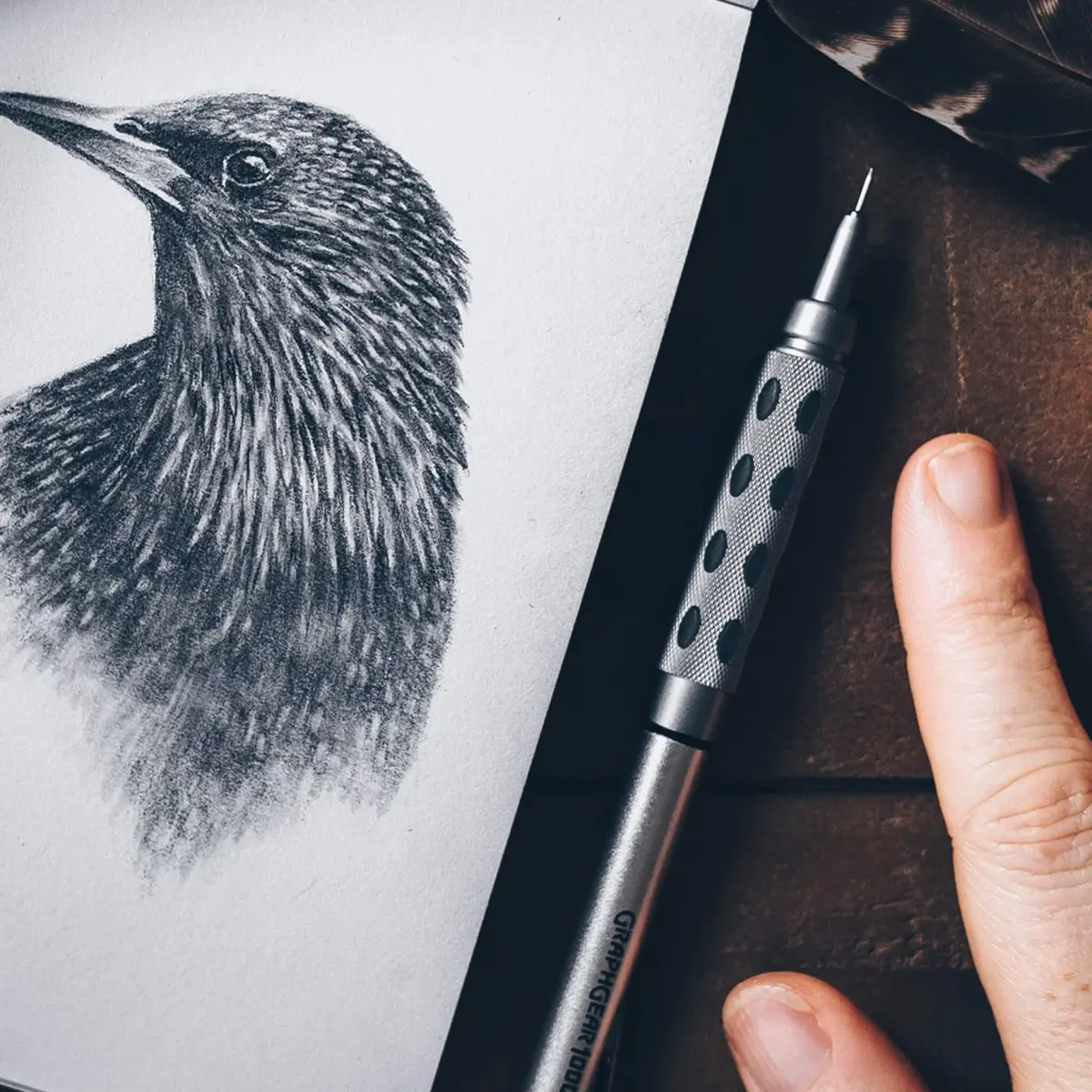
- Mechanical pencils offer consistent line width without sharpening but lack the expressive, variable stroke of a traditional wood-cased pencil.
- Always use a kneaded eraser, which can be molded into precise shapes to lift graphite off the page without damaging the paper.
The bottom line
For beginners, the best approach is to acquire a small, versatile set of graphite pencils ranging from 2H to 6B. Focus on understanding how varying pressure and pencil grades influence tone and texture. By avoiding common mistakes like over-blending or using improper paper, you can develop essential foundational skills. Start simple, practice daily, and prioritize consistency over expensive equipment to build your artistic confidence effectively.
People also ask
Do I need expensive professional-grade pencils to learn how to draw?
No, you do not need professional-grade tools to start. High-quality student-grade pencils from reputable brands like Staedtler or Faber-Castell provide excellent performance without the premium cost of artist-grade supplies.
How often should I sharpen my drawing pencils?
Sharpen your pencil whenever the tip loses its point or the line width becomes inconsistent. Use a manual metal sharpener rather than an electric one to maintain better control and prevent the lead from breaking inside the wood casing.
What is the purpose of the letters and numbers on the pencil barrel?
The letters indicate the core's hardness or softness, while the numbers denote the degree of that quality. For example, a 6B is much softer and darker than a 2B, while a 4H is harder and lighter than a 2H.
Is it better to use a sketchbook or loose paper?
A sketchbook is ideal for beginners because it keeps your progress organized and allows you to look back at your development. Choose a paper with a slight "tooth" or texture, as smooth printer paper often makes it difficult for graphite to adhere properly.
Should I use a blending stump for shading?
Blending stumps are useful for smoothing out transitions, but beginners often over-rely on them, which can make drawings look muddy. Try to master shading with pencil pressure and hatching techniques before using tools to smudge your graphite.
Why does my hand smudge the drawing while I work?
Smudging happens when your hand drags across loose graphite particles on the page. Place a clean sheet of scrap paper under your drawing hand to protect your work and keep your lines crisp.
This answer was created with the help of AI research tools and reference sources. Spotted an error? Let us know — we correct mistakes quickly. See our editorial policy.