How do you draw eyelashes?
Short answer
Drawing realistic eyelashes requires focusing on their natural growth pattern, which radiates from the center of the eyelid. Use a sharp, fine-tipped pencil to create tapered, curved strokes that vary in length and thickness. Avoid drawing uniform, spiky lines; instead, group lashes into small clusters to mimic the organic look of human eyes.
On this page
How to draw realistic eyelashes
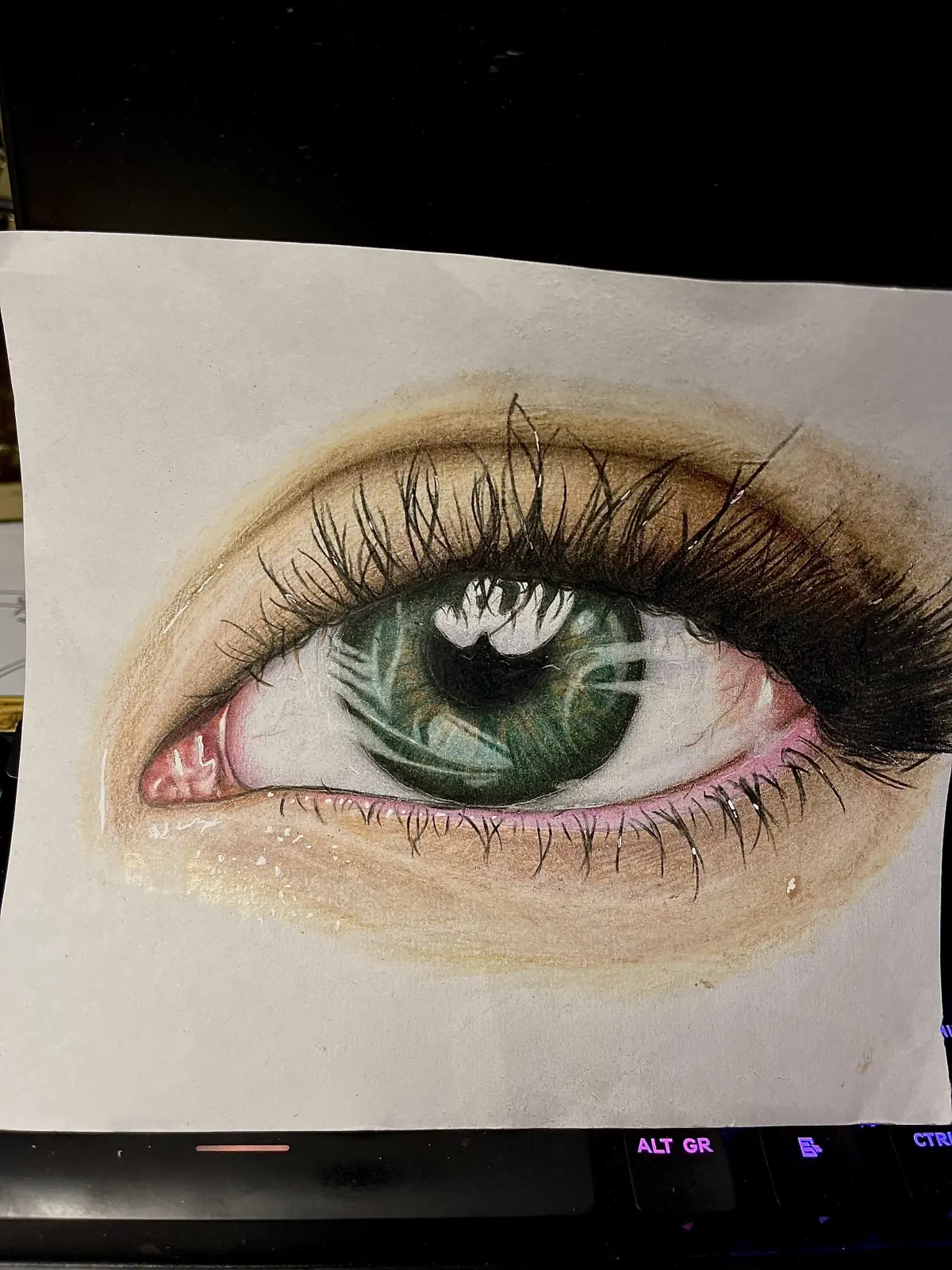
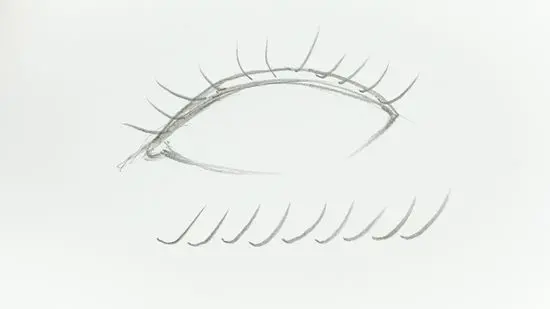
To draw realistic eyelashes, you must understand that they are not straight, uniform lines. They grow in a curved arc from the lash line, following the contour of the eyelid. When sketching, think of them as thin, tapered triangles that are thicker at the base and become needle-thin at the tip. They should never be perfectly parallel to one another.
Instead of drawing individual hairs across the entire lid, focus on creating small clusters. In nature, lashes often clump together slightly due to natural oils or mascara. By varying the length and the angle of each stroke, you create a sense of depth and realism. Always keep your pencil sharp, as dull lead will result in thick, blunt lines that look unnatural and heavy.
Best tools for drawing eyelashes
The quality of your drawing depends heavily on the tools you select. For fine detail work, a mechanical pencil with 0.3mm or 0.5mm lead is superior to a standard wooden pencil. The consistent diameter ensures that every stroke remains thin and sharp, which is essential for capturing the delicate structure of individual lashes.
For those who prefer traditional graphite, choose a harder lead grade, such as an H or 2H. These pencils hold a point longer and produce lighter, more controllable marks. If you are working with charcoal or soft graphite, use a kneaded eraser to lift out highlights. This technique allows you to refine the shape of the lashes by removing excess pigment, adding a polished, professional finish to your work.
- Select a sharp, hard-lead pencil (H or 2H) for precision.
- Use a mechanical pencil for consistent line thickness.
- Keep a kneaded eraser nearby to create highlights and clean up edges.
- Utilize a blending stump or tortillon only for the shadow on the eyelid, not the lashes themselves.
Step-by-step guide to drawing lashes
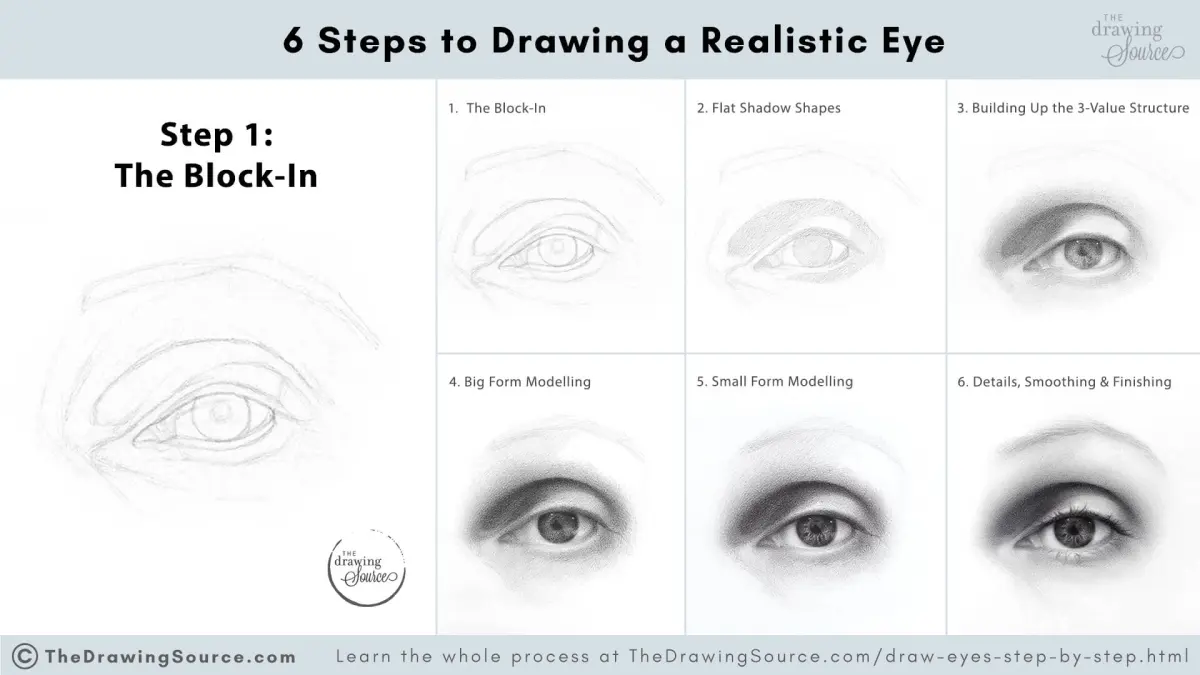
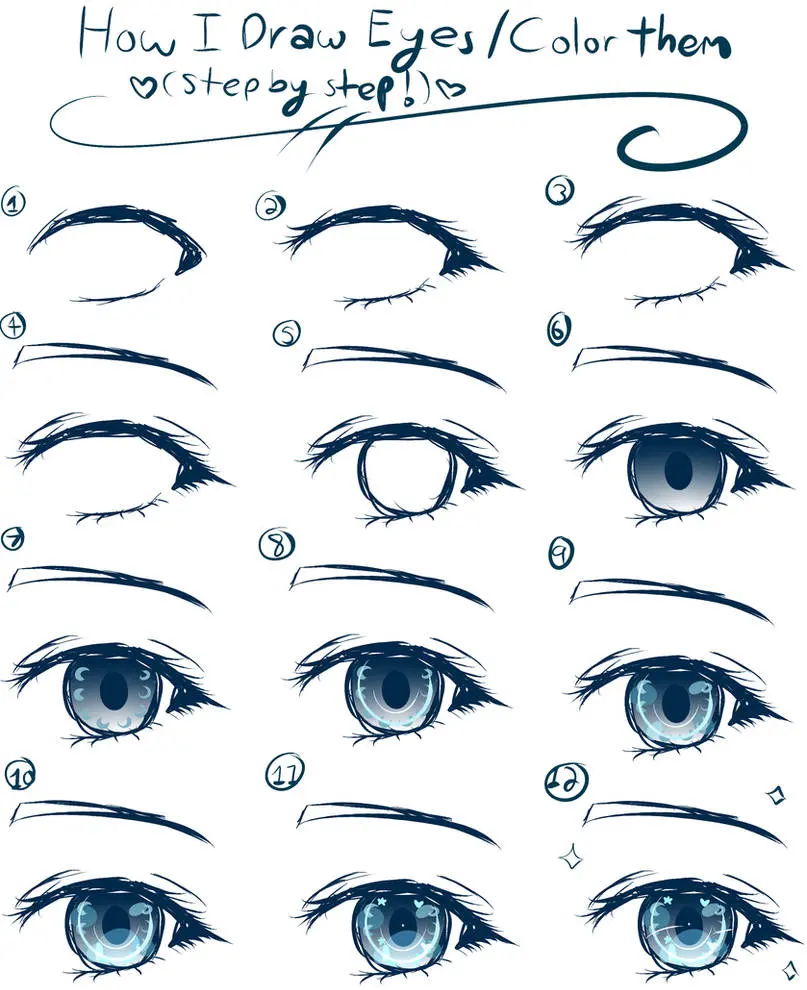
Start by lightly sketching the curve of the eyelid to establish the base. Once the lid is defined, begin placing your lash strokes along the upper edge. Remember that lashes on the outer corner of the eye are generally longer and more angled, while those near the tear duct are shorter and grow more vertically.
Follow these steps to build the lashes systematically:
- Draw a light guide line along the edge of the eyelid to mark the root placement.
- Add short, flicking strokes that start at the root and curve outward and upward.
- Vary the length of the strokes to create a natural, irregular fringe.
- Group two or three strokes together at the tips to simulate the look of clumping.
- Add a few smaller, thinner lashes in the gaps between the main clusters to fill the density.
Common mistakes when drawing eyelashes
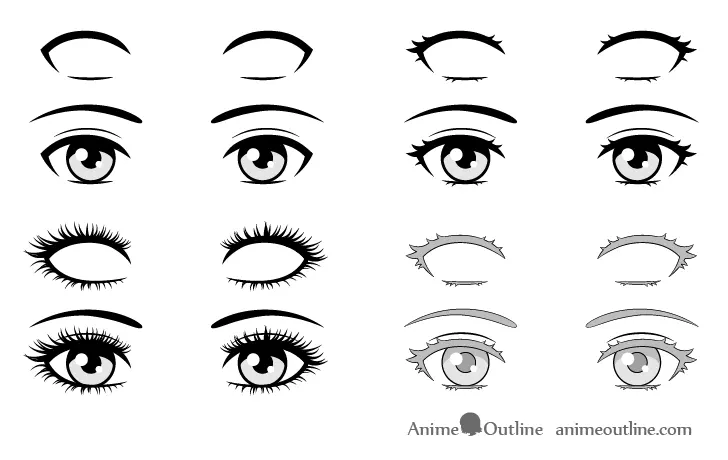
The most frequent error is drawing eyelashes as uniform, evenly spaced spikes. This creates a "cartoonish" appearance that lacks the complexity of real human anatomy. Another common mistake is drawing all lashes at the exact same angle. Real lashes fan out from the center, meaning the lashes on the left side of the eye tilt left, and those on the right tilt right.
Avoid pressing too hard with your pencil. Heavy, dark lines around the eye can make the lashes look like a solid block rather than individual hairs. If you find your lashes look too dark, you have likely used a pencil that is too soft, such as a 4B or 6B. Switch to a lighter grade to maintain the delicate, wispy quality that makes eyes look authentic and expressive.
Why eyelashes look unnatural in drawings
If your drawing still looks stiff, the issue is likely a lack of variation. Human eyelashes are not clones of one another; they have different lengths, thicknesses, and degrees of curl. When you draw them with perfect symmetry, the brain perceives them as artificial. You must introduce controlled chaos to the lash line to make the drawing feel organic.
Another factor is the shadow cast by the lashes onto the eyeball. If you draw the lashes but ignore the subtle shadow they create on the white of the eye, the lashes will appear to float. Use a light touch to shade the area directly beneath the lash line. This subtle addition grounds the lashes in the anatomy of the eye, providing the necessary depth and realism that separates amateur sketches from professional portraits. By observing the way light interacts with the lashes, you can create a lifelike, captivating gaze.
Key facts
- Eyelashes grow in a curved, tapered shape, meaning they are thickest at the base and thinnest at the tip.
- Always draw lashes in groups or clusters rather than as individual, evenly spaced lines to mimic natural growth.
- Follow the curvature of the eyelid; lashes on the outer corner should angle outward, while those near the center point straight up.
- Use a flicking motion with your pencil, starting at the lash line and lifting the pen quickly to create a sharp, tapered end.
- Vary the length and thickness of individual lashes to avoid a stiff, "spiky" appearance that looks artificial.
- Lashes do not grow in a straight row; they emerge from the lash line in multiple irregular layers.
The bottom line
Drawing realistic eyelashes requires observing how they cluster and taper rather than treating them as identical lines. By using a quick, flicking motion and varying the length and angle of each stroke, you create a natural, organic appearance. Remember to follow the curvature of the eyelid and avoid over-blending, as clean, sharp lines are essential for capturing the delicate texture of real human eyelashes.
People also ask
Should I draw eyelashes on the bottom lid?
Yes, but keep them shorter and sparser than the top lashes. The lower lashes provide balance to the eye structure without overwhelming the drawing.
How do I make eyelashes look realistic rather than like spider legs?
Avoid drawing thick, uniform lines that clump together. Focus on thin, tapered strokes that vary in direction and density to create a natural, soft look.
Do eyelashes follow the same shape on both eyes?
While they follow the same general anatomy, they should mirror each other's angle and volume. Pay attention to the perspective of the face to ensure they look consistent.
What tool is best for drawing fine eyelashes?
A sharp mechanical pencil or a finely pointed graphite pencil works best. These tools allow for the precision needed to create thin, delicate lines without smudging.
How do I draw lashes on a closed eye?
On a closed eye, the lashes curve downward and outward from the eyelid fold. They should appear to lie against the cheek or skin surface rather than pointing upward.
Can I use a blending stump to soften eyelashes?
It is generally better to avoid blending lashes, as this makes them look blurry or muddy. Keep the lines crisp and distinct to maintain the look of individual hairs.
This answer was created with the help of AI research tools and reference sources. Spotted an error? Let us know — we correct mistakes quickly. See our editorial policy.