How do you draw explosions?
Short answer
Drawing explosions requires capturing dynamic energy through irregular, overlapping shapes and high-contrast shading. You must focus on the core ignition point, the expanding fireball, and the trailing debris. By layering organic, cloud-like silhouettes and utilizing sharp, jagged lines for impact, you can effectively convey the chaotic motion and intensity of an blast.
On this page
How to structure an explosion drawing
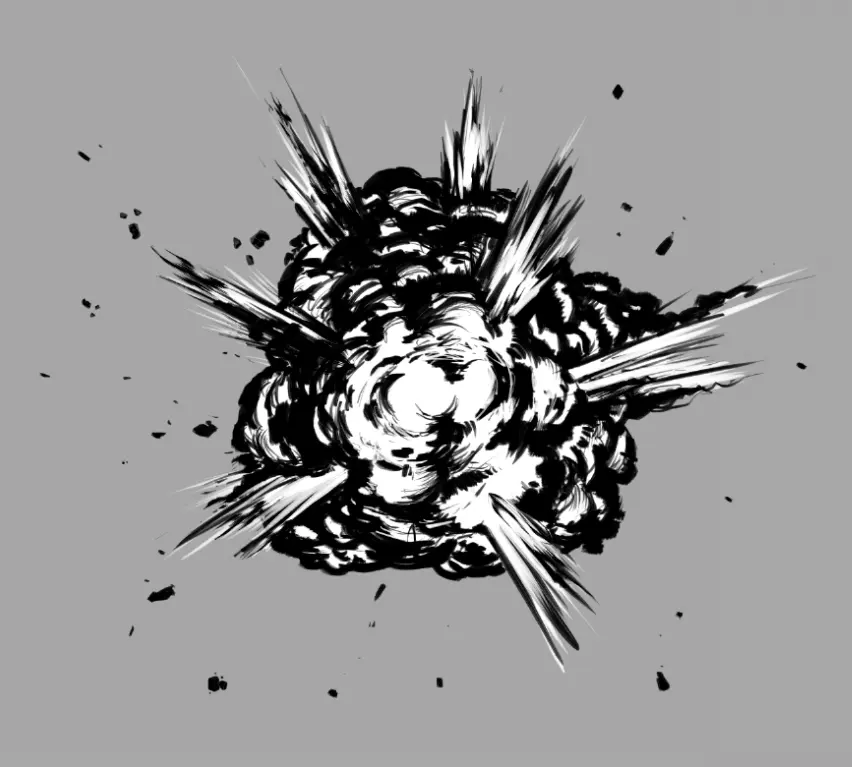
The fundamental structure of an explosion relies on a layered approach that mimics the physics of a blast. Begin by sketching a central, dense core where the ignition occurs, typically represented by a tight, circular cluster of shapes. From this center, radiate outward using larger, bulbous forms that suggest expanding gases and heat. These outer shapes should lose their density as they move away from the center, transitioning into thinner, wispy plumes of smoke and debris.
To maintain visual interest, avoid perfect geometry. Explosions are chaotic events, so your outlines should be jagged, uneven, and asymmetrical. Use a variety of sizes for your cloud clusters to create a sense of depth and volume. By layering these shapes, you create an illusion of three-dimensional space, which is essential for making the explosion feel like it is occupying the environment rather than just sitting flat on the page.
- Sketch a rough, circular core to establish the focal point.
- Add overlapping, irregular clouds radiating outward from the center.
- Incorporate sharp, angular shards near the base to represent flying debris.
- Refine the edges to ensure they look organic and energetic.
Best shading techniques for explosions
Shading is the primary tool for defining the intensity and light source of an explosion. Because an explosion produces its own light, the brightest values should be located at the core, gradually darkening toward the outer edges where smoke and soot accumulate. Use high-contrast transitions to emphasize the violent nature of the blast. A smooth gradient from white to deep gray or black helps suggest the rapid cooling of gases as they expand into the atmosphere.
When applying shadow, consider where the light hits the individual cloud clusters. Each puff of smoke should have its own highlight and shadow side, which helps define its spherical volume. Use cross-hatching or stippling to add texture to the smoke, making it appear gritty and dense. Avoid uniform shading across the entire explosion, as this will flatten the image and remove the sense of powerful, shifting energy that defines a real-world detonation.
How to add debris and shockwaves
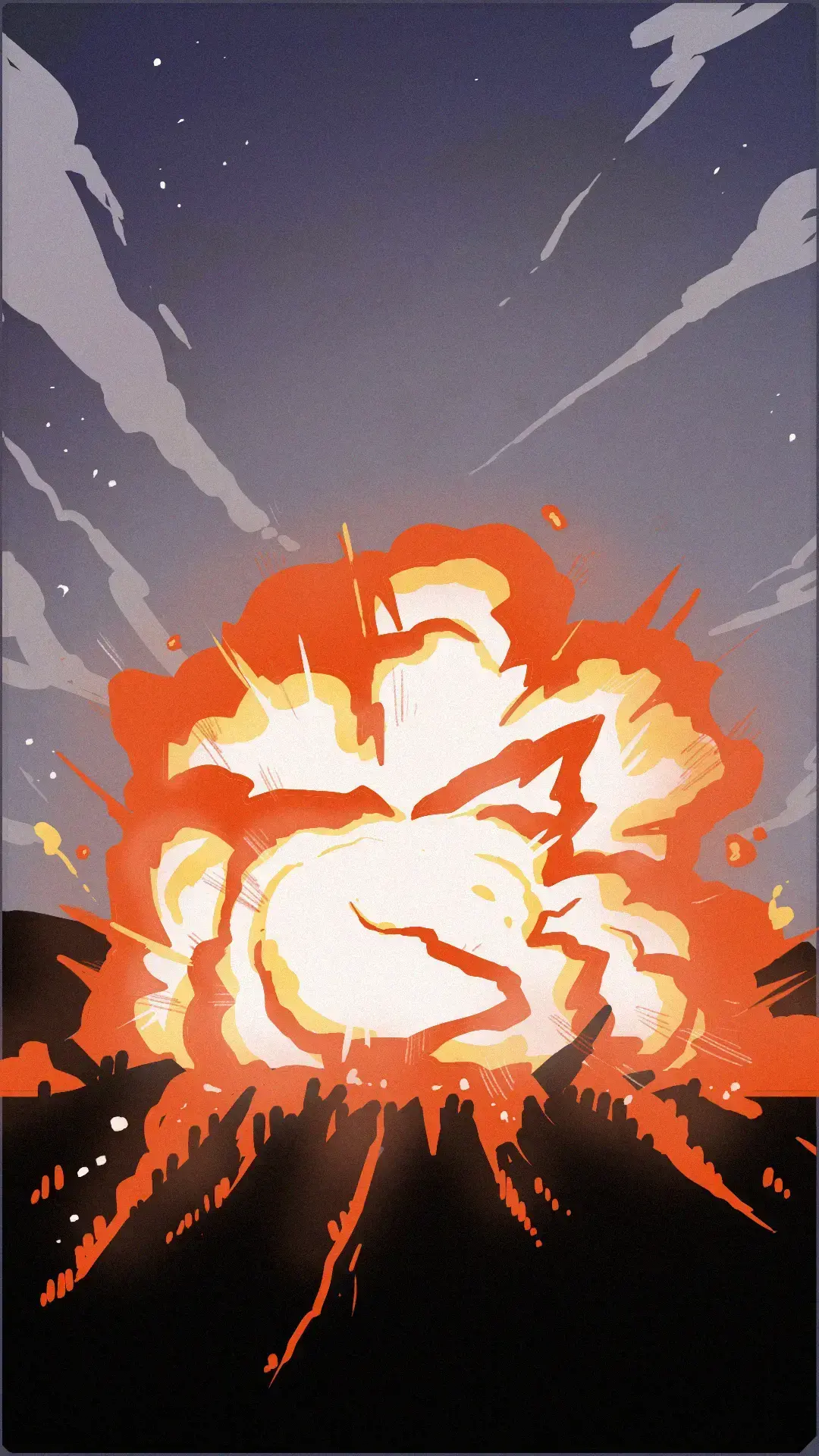
No explosion is complete without the surrounding environment reacting to the force. Debris adds a sense of scale and impact, grounding the explosion in reality. Draw jagged, irregular shapes—such as rocks, wood splinters, or metal fragments—flying away from the center of the blast. These objects should be smaller and more numerous the further they are from the core, following the trajectory of the shockwave.
Shockwaves can be depicted through subtle atmospheric effects, such as a slight distortion of the background or a thin, circular ripple line expanding outward. This effect, often called a "blast wave," suggests the displacement of air. To make the debris feel integrated, ensure that some pieces are obscured by the smoke while others are clearly visible in the foreground. This layering technique reinforces the chaotic, three-dimensional nature of the event and provides the viewer with a sense of the explosion’s destructive power.
Common mistakes when drawing explosions
One of the most frequent errors is creating shapes that are too uniform or symmetrical. Real explosions are unpredictable and influenced by wind, gravity, and the material being ignited. If your clouds look like perfect circles or spheres, the drawing will appear static and artificial. Always vary the size and curvature of your cloud clusters to break up the silhouette and introduce a sense of natural, turbulent movement.
Another common mistake is failing to establish a clear light source. Even though an explosion is a light source itself, it still requires consistent shading to look three-dimensional. If you shade randomly, the explosion will lose its sense of volume and density. Additionally, beginners often neglect the "smoke trail" effect, which occurs as the heat dissipates. Without these trailing wisps, the explosion will look like it is frozen in time rather than actively expanding through the air.
- Creating perfectly symmetrical cloud shapes.
- Neglecting the transition from bright core to dark smoke.
- Drawing debris that does not follow a logical trajectory.
- Using flat, uniform lines that lack energy.
Why explosions look different in art
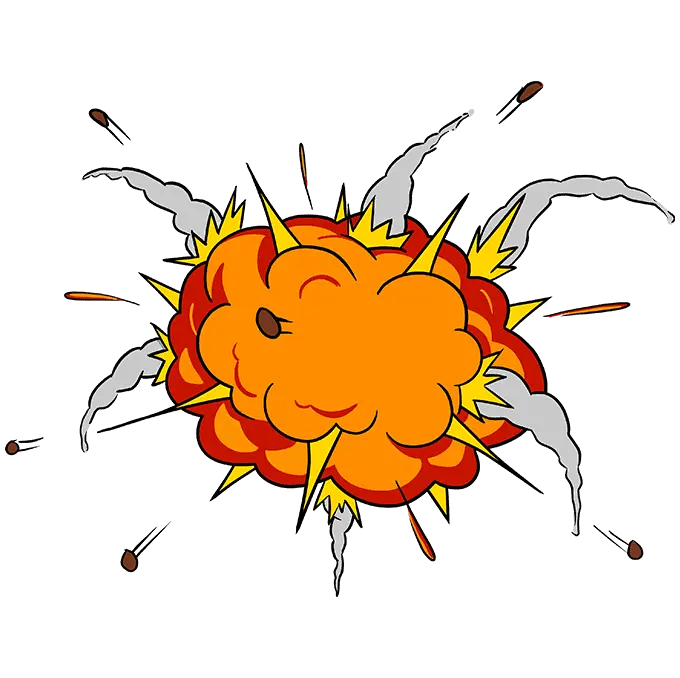
The visual representation of an explosion often depends on the artistic style, ranging from stylized comic book aesthetics to realistic cinematic depictions. In comic art, artists often use bold, thick outlines and high-contrast, flat colors to emphasize the impact. This style prioritizes readability and energy over physical accuracy. In contrast, realistic drawings focus on the textures of fire, smoke, and embers, using soft blending to mimic the way gases behave in the real world.
Regardless of the style, the goal is to communicate the speed and heat of the event. By studying reference photos of real-world pyrotechnics, you can observe how smoke behaves as it rises and how fire interacts with surrounding debris. Understanding these physical principles allows you to exaggerate or simplify the elements to suit your specific artistic vision. Whether you choose a minimalist approach or a highly detailed rendering, the key remains the effective use of contrast and irregular, dynamic shapes to convey the inherent power of the explosion.
Key facts
- Explosions are defined by their chaotic, irregular silhouettes rather than perfect circles.
- Use a "spiky" or "cloudy" outline to simulate the rapid expansion of gas and debris.
- Layer your colors, starting with a bright yellow core, transitioning to orange, and ending with dark grey smoke.
- Add "flying debris" like rocks, sparks, or shrapnel to provide a sense of scale and impact.
- Use high-contrast lighting to emphasize the intense brightness of the fireball against the surrounding environment.
- Vary the size of your smoke plumes to create a sense of depth and atmospheric movement.
The bottom line
Drawing a convincing explosion requires balancing chaotic, jagged shapes with a logical color progression from the intense, bright core to the murky, dissipating smoke. By focusing on asymmetry and adding environmental context like flying debris, you create a dynamic scene that conveys raw power. Remember that light and shadow are your primary tools for defining the volume and intensity of the blast in your artwork.
People also ask
How do I make an explosion look realistic?
Focus on the physics of the blast by creating a bright, concentrated center that fades into darker, billowing smoke. Adding motion lines and scattered debris helps convey the force of the impact.
What colors should I use for a fire-based explosion?
Start with pure white or pale yellow for the hottest part of the core. Transition outward through vibrant oranges and deep reds before blending into the dark greys and browns of the smoke.
Should I use sharp or soft edges when drawing an blast?
Use sharp, jagged edges for the initial shockwave and debris. Use softer, blurred edges for the rising smoke and embers to show how the gas dissipates into the air.
How do I draw the smoke after the explosion?
Draw large, overlapping circular shapes that get progressively looser and more transparent as they rise. Keep the base of the smoke cloud dense and dark to anchor it to the explosion site.
What is the most common mistake when drawing explosions?
The most common error is making the explosion a perfect, symmetrical circle. Explosions are erratic, so ensure your shapes are asymmetrical and unpredictable to capture the destructive energy.
How do I show the impact of an explosion on the environment?
Draw cracks in the ground, bent metal, or flying dust particles radiating away from the center. These environmental reactions tell the viewer how powerful the blast is without needing to draw more fire.
This answer was created with the help of AI research tools and reference sources. Spotted an error? Let us know — we correct mistakes quickly. See our editorial policy.