How do you draw a tank?
Short answer
Drawing a tank requires breaking the complex machinery into simple geometric forms like rectangles, cylinders, and circles. Start by sketching the chassis as a long box, then add the turret as a smaller trapezoid on top. Connect these with a barrel cylinder and define the tracks to complete the structure.
On this page
How to structure a tank drawing
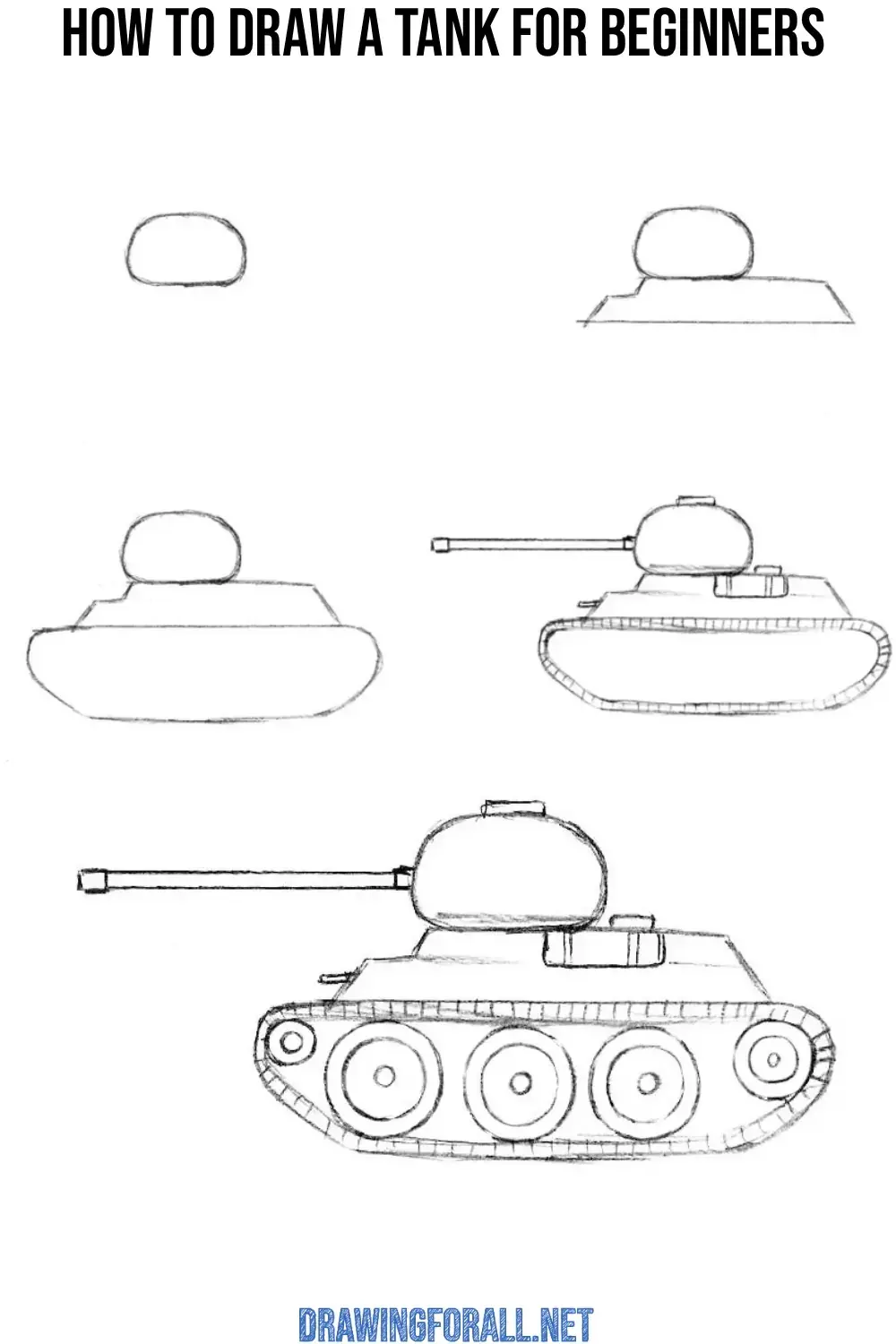
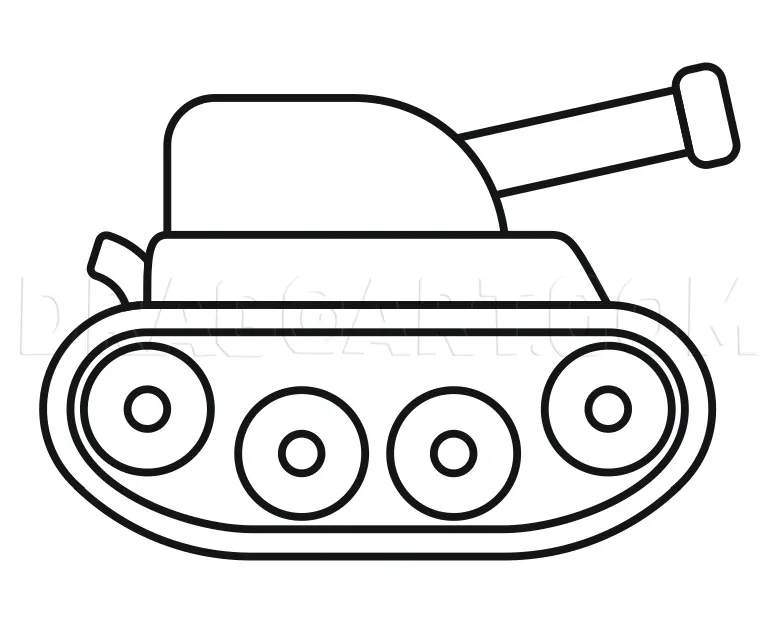
To begin drawing a tank, focus on the fundamental silhouette before adding technical details. Most tanks consist of three main parts: the hull, the turret, and the road wheels. Start by drawing a long, low rectangle for the hull, which serves as the base for the vehicle. Place a smaller, slightly angled trapezoid on the top center of the hull to represent the turret. This shape provides the necessary perspective for the gun housing.
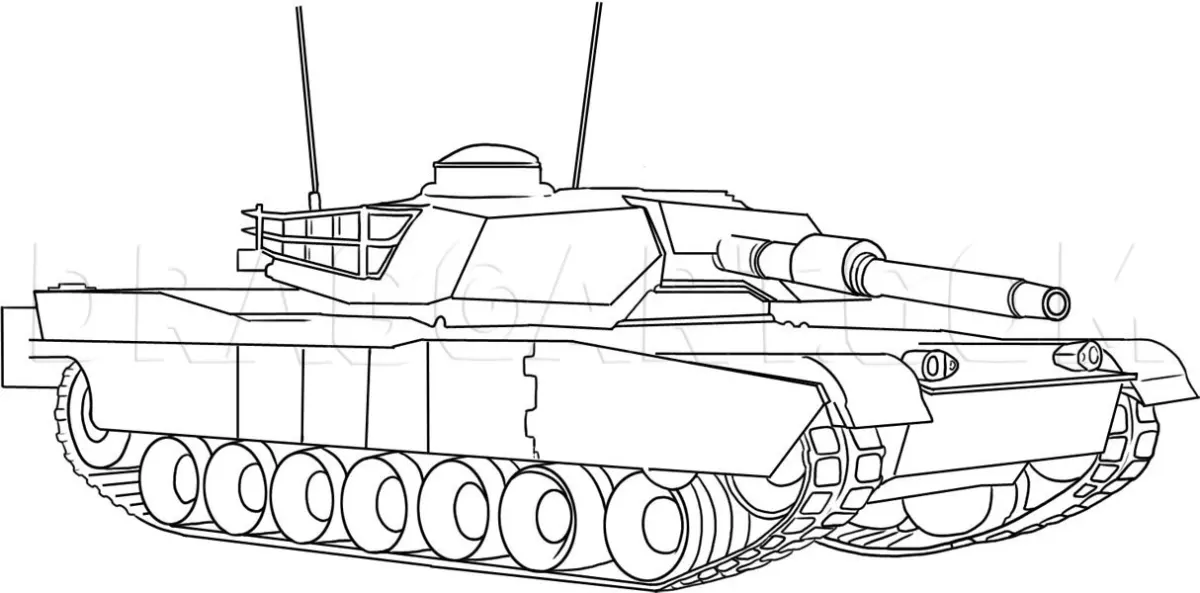
Once the primary shapes are set, you can refine the proportions to match specific historical models. For instance, a World War II-era Sherman tank has a taller, more rounded profile compared to the sleek, low-slung design of a modern M1 Abrams. Use light pencil strokes initially so you can adjust the angles of the turret and the slope of the hull armor. Keeping your lines thin allows for easier corrections as you transition from basic geometry to mechanical details.
Best drawing techniques for beginners
When approaching a technical subject like a tank, beginners should prioritize structural accuracy over intricate surface detail. Start by using a light graphite pencil to sketch your guidelines, as these are easier to erase once the final lines are inked. Focus on establishing a clear horizon line to ensure the tank looks grounded rather than floating on the page.
- Sketch a long rectangle for the chassis and a smaller trapezoid for the turret.
- Draw a series of small, evenly spaced circles along the bottom of the hull to represent the road wheels.
- Add a long, thin cylinder extending from the front of the turret to serve as the main gun barrel.
- Connect the wheels with a continuous, slightly sagging line to represent the track assembly.
By following these steps, you create a skeletal framework that supports the more complex features of the vehicle. Do not worry about rivets or hatches until the basic proportions are perfectly aligned with your reference image.
How to add realistic tank details
Once the base structure is solid, you can begin adding the mechanical components that give the tank its identity. Focus on the track assembly, which is often the most complex part of the drawing. Add small, rectangular treads along the track line to show the texture of the metal. Ensure these treads follow the curve of the wheels to maintain a sense of physical weight and tension.
Next, add the smaller features that define the tank's utility. These include the commander's cupola on top of the turret, external fuel tanks, and storage bins along the sides of the hull. Adding these elements provides a sense of scale and realism. Use a darker pencil or an ink pen to outline the final edges, making sure to highlight areas where panels overlap. These subtle shadows help the viewer understand the three-dimensional nature of the armored plating.
Common mistakes when drawing tanks
One of the most frequent errors is neglecting the perspective of the gun barrel. If the barrel is drawn perfectly straight without accounting for the angle of the turret, the tank will look flat and two-dimensional. Always ensure the barrel originates from the center of the turret’s mantlet and follows the same vanishing point as the rest of the body. Another common issue is making the wheels too small or too few in number.
- Drawing the tracks as a perfectly straight line, which ignores the natural sag between the top rollers.
- Forgetting to include the thickness of the armor plating, which makes the tank appear paper-thin.
- Misaligning the turret so that it looks like it is floating off the hull rather than sitting on a rotating ring.
- Using overly complex shading before the structural lines are finalized, which obscures mistakes in proportion.
Avoiding these pitfalls requires constant checking of your reference material. If the tracks look stiff, add a slight curve to the top run to simulate the weight of the metal links.
Why shading improves tank drawings
Shading is essential for communicating the heavy, metallic nature of a tank. Because tanks are composed of flat, angled plates, they create distinct areas of light and shadow. Identify your light source early in the process and keep it consistent across the entire vehicle. Areas facing the light should remain bright, while the underside of the hull and the side of the turret opposite the light source should be heavily shadowed.
Use cross-hatching to create depth on the armor plates, which mimics the texture of cast or rolled steel. Pay special attention to the shadows cast by the turret onto the hull, as this creates a strong sense of depth. By applying darker tones to the wheels and the space between the tracks, you emphasize the mechanical complexity of the undercarriage. A well-shaded drawing transforms a simple geometric sketch into a formidable, heavy machine that appears to occupy real space on the paper.
Key facts
- Start by drawing a long, low rectangle for the hull to establish the tank's heavy, grounded profile.
- Add a smaller, centered rectangle or trapezoid on top of the hull to serve as the turret base.
- Draw a series of small, evenly spaced circles along the bottom of the hull to represent the road wheels.
- Connect the wheels with two parallel lines to form the track, ensuring they loop around the front and back drive sprockets.
- Place a long, thin cylinder extending from the front of the turret to act as the main gun barrel.
- Use thick, bold lines for the tracks and thinner lines for the hull details to create visual depth and weight.
The bottom line
Drawing a tank effectively relies on breaking down its complex machinery into basic geometric forms like rectangles, cylinders, and circles. By focusing on the heavy, armored silhouette and adding mechanical details like tread links and rivets, you can create a convincing military vehicle. Practice maintaining consistent proportions between the hull and the turret to ensure the final drawing looks balanced, sturdy, and structurally sound throughout.
People also ask
Should I draw the tank from a side view or a three-quarter angle?
A side view is the easiest for beginners because it uses simple geometric shapes. A three-quarter angle adds complexity but makes the tank look more dynamic and three-dimensional.
How do I make the tank look like it is made of heavy metal?
Use sharp, angular lines rather than rounded curves to suggest armored plating. Adding small hatch lines, rivets, and antennae will increase the mechanical realism of the drawing.
What is the most common mistake when drawing tank tracks?
The most common error is drawing the tracks as a single solid block. Always draw the individual tread segments or "links" to show the texture and mechanical nature of the track.
How long should the main gun barrel be?
The barrel should typically be about half the length of the tank's hull. Making it too short makes the tank look stubby, while making it too long can ruin the overall balance.
Do I need to add shading to my drawing?
Shading is essential for giving the tank volume. Determine where your light source is coming from and shade the opposite side of the hull and turret to create a 3D effect.
What tools are best for drawing tanks?
A mechanical pencil is ideal for precise, sharp lines. Use a fine-liner pen to go over your final outlines to make the tank stand out clearly against the page.
This answer was created with the help of AI research tools and reference sources. Spotted an error? Let us know — we correct mistakes quickly. See our editorial policy.