How do you draw a rainbow?
Short answer
Drawing a rainbow requires layering seven distinct arcs in a specific order: red, orange, yellow, green, blue, indigo, and violet. By using a compass or a circular template, you can create concentric semicircles. Once outlined, fill each band with vibrant pigment, ensuring the colors transition smoothly to mimic natural light refraction.
On this page
How to draw a rainbow step by step
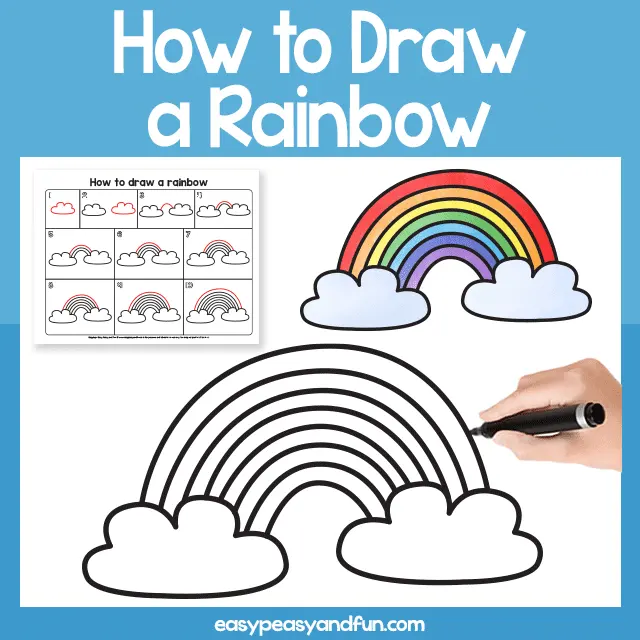
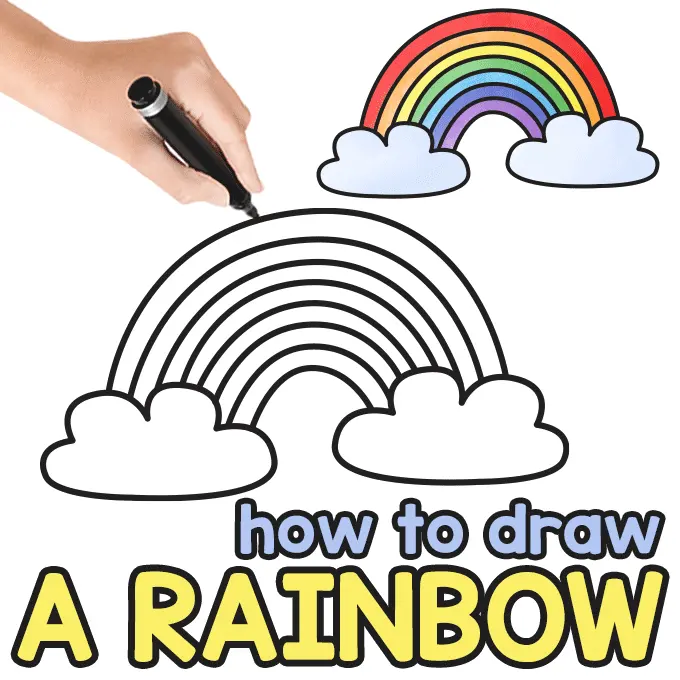
To draw a classic rainbow, begin by establishing your base shape. Using a compass, draw a large semicircle on your paper to serve as the outer edge. Then, draw six smaller, concentric semicircles inside the first one, leaving enough space between each line for the color bands. If you do not have a compass, you can use circular household objects like bowls or plates of varying sizes to trace the arcs.
Once the structure is set, apply your colors in the correct sequence. Starting from the outermost arc and working inward, the order is:
- Red
- Orange
- Yellow
- Green
- Blue
- Indigo
- Violet
Following this order is essential for accuracy, as it reflects the actual spectrum of visible light. Using high-quality colored pencils or markers will help you achieve the vibrant, saturated look characteristic of a rainbow.
Best tools for drawing rainbows
The choice of medium significantly impacts the final appearance of your rainbow. For beginners, wax-based colored pencils are ideal because they allow for easy layering and blending. If you prefer a more painterly effect, watercolors are excellent for creating soft, diffused edges where colors bleed slightly into one another, mimicking the ethereal nature of an atmospheric rainbow.
If you are working on a digital canvas, use a circular selection tool to create perfect, uniform arcs. This method allows you to adjust the opacity of each color band, which is useful for creating a gradient effect. Regardless of the medium, consider the following tools to improve your precision:
- A metal compass for consistent arc radius.
- A blending stump or tortillon to smooth out harsh transitions.
- High-quality artist paper to prevent pigment from bleeding or tearing.
- A kneaded eraser to lift excess graphite before coloring.
Why rainbows have seven colors
The seven-color model of the rainbow was popularized by Sir Isaac Newton in 1666. While studying the refraction of white light through a glass prism, Newton identified these specific hues as the primary components of the visible spectrum. He included indigo to align the number of colors with the seven notes in a musical scale and the seven known celestial bodies of the time.
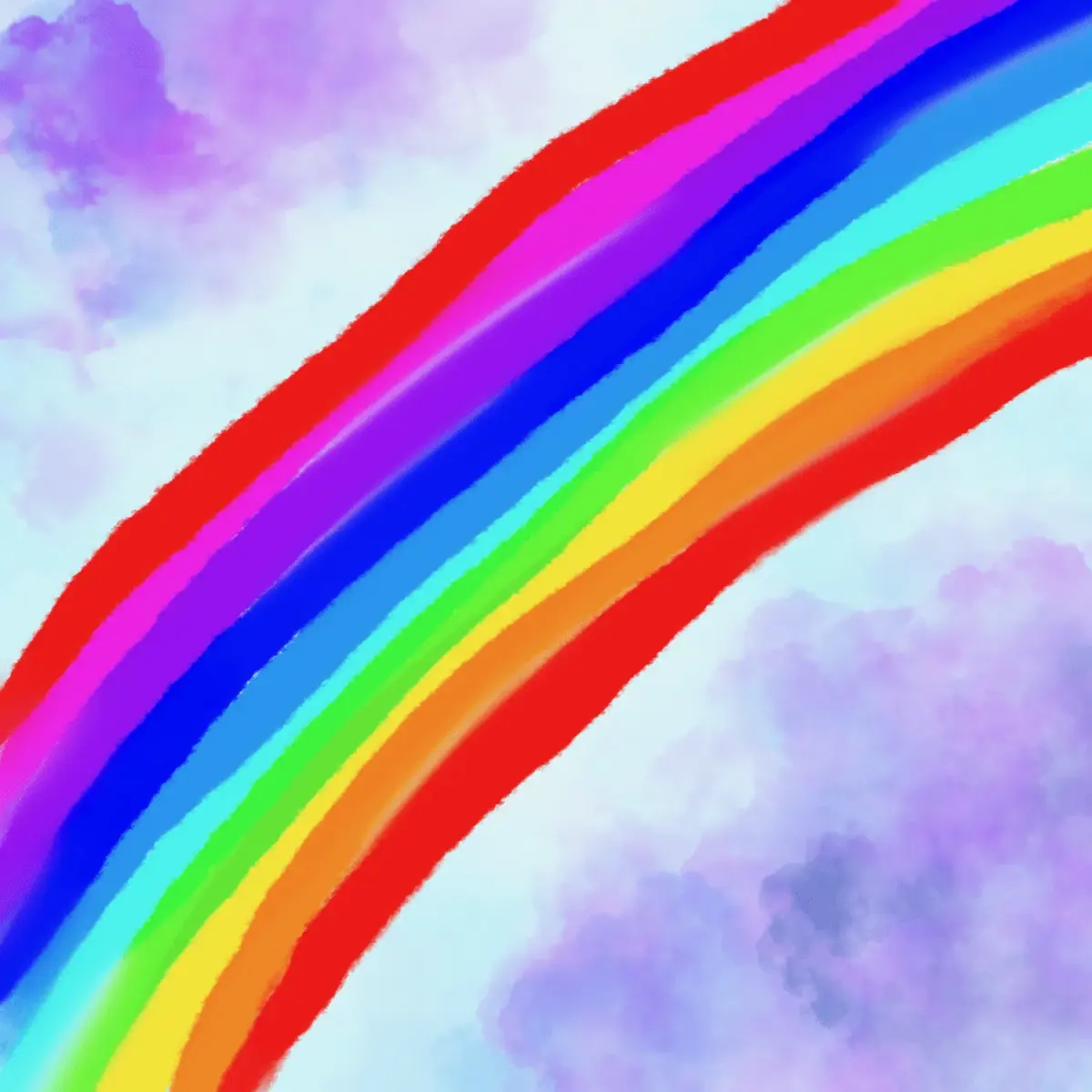
In reality, a rainbow is a continuous spectrum of light, meaning there are no distinct lines separating one color from the next. The transition is a smooth gradient where wavelengths shift gradually from approximately 700 nanometers for red to 400 nanometers for violet. When drawing, you can choose to either keep the bands distinct or blend them at the edges to better represent the physics of light.
Common mistakes when drawing rainbows
One of the most frequent errors is placing the colors in the wrong order. A common mnemonic device to remember the sequence is the name "ROY G. BIV," which stands for Red, Orange, Yellow, Green, Blue, Indigo, and Violet. Reversing this order or skipping a color will make the drawing appear unnatural to the viewer. Another mistake is making the bands of color uneven in width.
To avoid these pitfalls, keep these tips in mind:
- Measure the width of each band before you start coloring to ensure symmetry.
- Apply light pressure initially to map out the colors before darkening them.
- Avoid using black to outline the bands, as it can make the rainbow look like a cartoon rather than a natural phenomenon.
- Ensure your workspace is clean to prevent graphite smudges from muddying the bright colors.
How to add realistic effects
To elevate your drawing, consider adding elements that contextualize the rainbow. A rainbow only appears when sunlight interacts with water droplets, so adding a soft, light-blue background or subtle clouds can provide necessary contrast. You might also add a slight "secondary rainbow" outside the main arc, which is a common optical phenomenon caused by double reflection within raindrops.
For a more professional finish, use a white gel pen to add tiny highlights on the edges, suggesting the shimmer of moisture. If you are using watercolors, try the "wet-on-wet" technique to allow the colors to merge seamlessly, creating a misty, atmospheric quality. By focusing on these subtle details, you transform a simple diagram into a compelling piece of art that captures the fleeting beauty of a real-world rainbow.
Key facts
- A rainbow is an optical phenomenon caused by the refraction, reflection, and dispersion of light in water droplets.
- The spectral order of a rainbow is always red, orange, yellow, green, blue, indigo, and violet.
- To draw a rainbow accurately, use a compass or a circular object to create concentric arcs.
- Red is always the outermost color, while violet is the innermost color of the arc.
- Sunlight must be behind the observer and rain must be in front for a rainbow to appear in nature.
- Use a blending technique or light pressure with colored pencils to create a smooth transition between colors.
The bottom line
Drawing a rainbow requires careful attention to the specific order of the spectrum. By starting with a red outer arc and progressing inward through orange, yellow, green, blue, indigo, and violet, you capture the natural phenomenon accurately. Use blending tools to soften the transitions between these hues, ensuring the colors appear as a unified arc rather than distinct, disconnected bands of solid, harsh pigment.
People also ask
Why is indigo included in the traditional rainbow sequence?
Isaac Newton included indigo in his color theory in 1672 because he believed the number of colors should match the seven notes of a musical scale. Modern color science often groups indigo with blue or violet.
Can a rainbow form a full circle?
Yes, rainbows are technically full circles, but the ground usually obscures the bottom half. Pilots at high altitudes can sometimes see the complete circular shape.
What is the difference between a primary and secondary rainbow?
A primary rainbow is formed by a single internal reflection of light. A secondary rainbow is fainter, appears outside the primary arc, and has its colors reversed.
Why do rainbows look like they are moving?
Rainbows are optical illusions that depend entirely on the observer's position relative to the light source. As you move, the angle of light hitting the droplets changes, making the rainbow appear to shift.
Can you see a rainbow at night?
Yes, a moonbow is a rare phenomenon caused by moonlight reflecting off water droplets. These are typically much fainter than solar rainbows and often appear white to the human eye.
What is the best medium for drawing a realistic rainbow?
Soft pastels or watercolor paints are ideal because they allow for easy blending. These mediums mimic the translucent, ethereal quality of light better than opaque markers or crayons.
This answer was created with the help of AI research tools and reference sources. Spotted an error? Let us know — we correct mistakes quickly. See our editorial policy.