What is Lawren Harris known for?
Short answer
Lawren Harris was a foundational figure in Canadian art, best known as the driving force behind the Group of Seven. He is celebrated for his iconic, stylized landscapes of the Canadian North and Rocky Mountains. His transition from detailed representational painting to bold, spiritual abstraction remains a landmark in twentieth-century modernism.
On this page
Why is Lawren Harris famous?
Lawren Harris (1885–1970) holds a singular place in Canadian art history as a visionary painter and a tireless patron of the arts. He was the primary financier and organizer of the Group of Seven, a collective formed in 1920 that sought to establish a distinct national identity through landscape painting. By encouraging his colleagues to venture into the rugged wilderness of Ontario and the Arctic, Harris helped shift the focus of Canadian art away from European traditions toward the raw, untamed reality of the northern geography.
His fame is also linked to his unique aesthetic evolution, which favored simplified forms, rhythmic compositions, and a luminous, almost ethereal color palette. Harris viewed the landscape not merely as a physical place, but as a spiritual entity. This philosophical approach allowed him to distill complex mountain ranges and icebergs into monumental, iconic shapes. His work became the visual shorthand for the Canadian wilderness, cementing his reputation as the most influential modernist in the country’s history.
How to identify a Lawren Harris painting
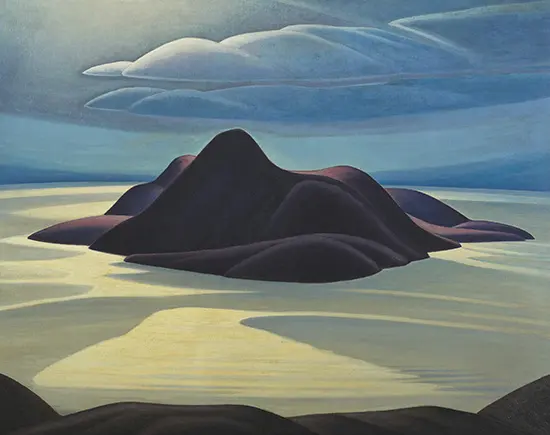
Identifying a Harris work requires looking for his signature transition from early, dark-toned urban scenes to his later, highly recognizable "Northern" style. In his most famous works, he abandoned the cluttered details of traditional landscape painting in favor of a stark, sculptural clarity. He often utilized a palette dominated by cool blues, stark whites, and deep, resonant blacks to convey the stillness of the high Arctic or the grandeur of the Rockies.
To distinguish his work, look for these specific stylistic markers:
- A deliberate simplification of natural forms, often making mountains appear as smooth, geometric cones or pyramids.
- The use of strong, dramatic light sources that cast long, sharp shadows across snow or rock faces.
- A sense of profound silence and isolation, achieved by removing signs of human habitation or wildlife.
- A compositional focus on the "cosmic" or spiritual, often centering a single, powerful subject like a solitary tree or a towering peak.
Where to see his art in person
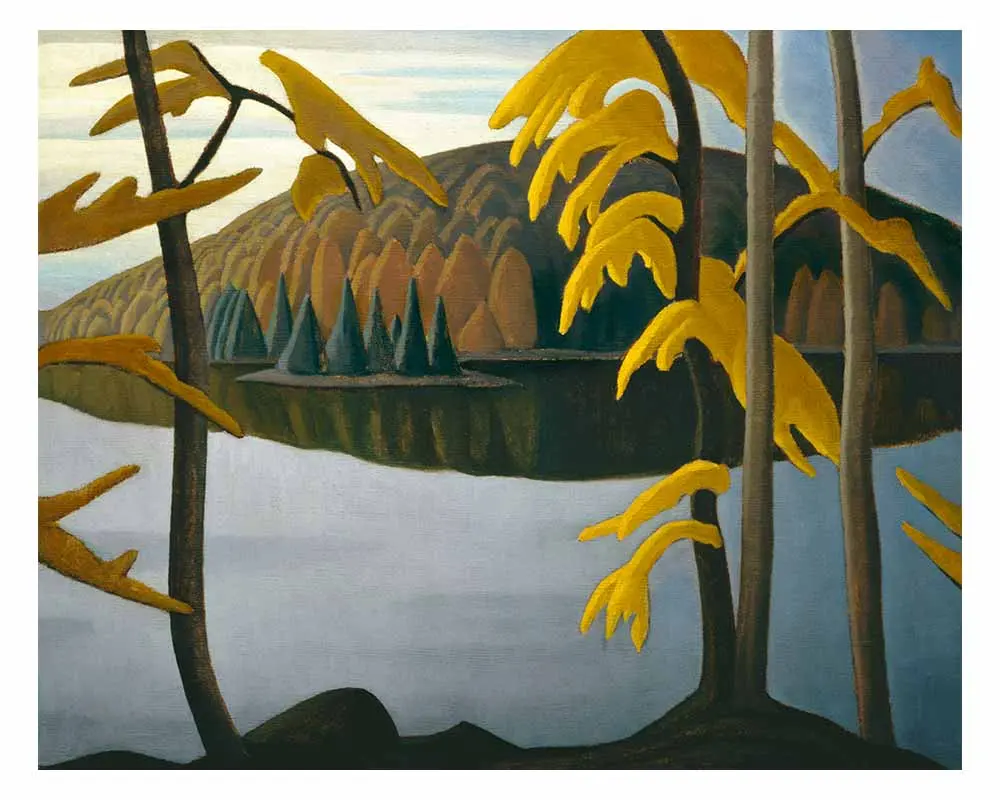
For those interested in viewing his work firsthand, several major institutions hold extensive collections. The Art Gallery of Ontario (AGO) in Toronto and the National Gallery of Canada in Ottawa are the most comprehensive repositories of his career, housing both his early sketches and his massive, finished canvases. These galleries frequently rotate their displays to showcase his progression from the vibrant, textured paintings of the Algoma region to his later, minimalist abstractions.
If you are planning a visit to see his work, keep these tips in mind:
- Check the gallery websites in advance to see if a specific "Group of Seven" exhibition is currently active.
- Visit during weekday mornings to avoid crowds, allowing for a more contemplative experience with his large-scale works.
- Look for the "sketches" on display, as these small oil-on-board pieces often capture the immediate energy and color choices that defined his larger studio paintings.
- Utilize audio guides if available, as they often provide context regarding his spiritual beliefs and the specific locations he visited.
Common mistakes when studying Lawren Harris
A frequent error among new viewers is assuming that Harris’s paintings are literal, photographic representations of the landscape. In reality, Harris frequently rearranged elements of the scenery—moving a mountain or changing the angle of a glacier—to achieve a more balanced or "spiritual" composition. He was not a documentarian; he was an interpreter who prioritized the emotional impact of the scene over geographical accuracy.
Another mistake is overlooking his later career as an abstract painter. While his landscapes from the 1920s and 1930s are his most famous, Harris spent the latter half of his life in the United States and Canada producing purely abstract, non-representational art. Ignoring this period limits the understanding of his trajectory as a modernist. He did not stop painting when he left the mountains; he simply moved from representing the physical world to expressing universal, non-objective truths through color and shape alone.
How to learn more about his legacy
To deepen your understanding of Harris, it is helpful to look into his personal correspondence and the manifestos he helped write for the Group of Seven. His writings reveal a man deeply influenced by Theosophy, a spiritual philosophy that emphasized the interconnectedness of all things. Understanding this intellectual background clarifies why his paintings look the way they do; he was attempting to paint the "essence" of the earth rather than just its surface.
You can further your appreciation by exploring these resources:
- Read biographies that detail his role as a patron, specifically how he funded the travels of his fellow Group of Seven members.
- Compare his work with that of his contemporaries, such as A.Y. Jackson or J.E.H. MacDonald, to see how his approach to light and form differed.
- Examine the influence of his time in New Mexico and the United States, which pushed him further toward the abstract style that defined his final decades.
- Watch documentary films that feature high-resolution close-ups of his brushwork, which reveal the deliberate, smooth application of paint that creates his signature "luminous" effect.
Key facts
- Lawren Harris (1885–1970) was the only founding member of the Group of Seven who was independently wealthy, allowing him to fund the group's early expeditions.
- He is best known for his iconic, stylized paintings of the Canadian Arctic, particularly his depictions of icebergs and mountains in Baffin Island.
- Harris evolved from painting realistic landscapes to creating highly abstract, geometric compositions toward the end of his career.
- He was a key figure in the development of the "Beaver Hall Group" and helped establish the National Gallery of Canada as a major institution.
- When viewing his work, look for his signature use of light, which often creates a spiritual or "otherworldly" atmosphere in his landscapes.
- Avoid mistaking his later abstract works for landscapes; while they retain his signature color palette, they represent pure form rather than specific geography.
The bottom line
Lawren Harris remains the most influential figure in Canadian modernism, recognized for his transformative journey from depicting rugged northern landscapes to pursuing pure abstraction. By blending spiritual idealism with a rigorous, simplified visual language, he redefined how Canadians perceived their own wilderness. His legacy persists not only in his iconic canvases but also in his role as the primary catalyst for Canada’s national art identity.
People also ask
Why did Lawren Harris stop painting landscapes?
Harris shifted toward abstraction in the 1930s because he believed that non-objective painting could better express universal spiritual truths. He felt that representational art limited his ability to communicate the essence of nature rather than just its outward appearance.
What is the most expensive Lawren Harris painting ever sold?
His 1930 painting, Mountain Forms, set a record for a Canadian work of art when it sold for $11.2 million CAD in 2016. This sale underscored his status as the most commercially significant artist of the Group of Seven.
Was Lawren Harris a member of any other art movements?
Yes, he was involved with the Transcendental Painting Group in New Mexico during the late 1930s. This group focused on creating art that explored spiritual and metaphysical concepts through abstract shapes and colors.
How did Lawren Harris influence Canadian art history?
He was a central organizer who used his financial resources to provide studio spaces and travel opportunities for his peers. His vision helped define a distinctively Canadian aesthetic that moved away from European academic traditions.
Where can I see his paintings in person?
The McMichael Canadian Art Collection in Kleinburg, Ontario, holds the largest permanent collection of his works. Many other major Canadian institutions, such as the Art Gallery of Ontario and the National Gallery of Canada, also feature his paintings prominently.
Did Lawren Harris paint anything other than landscapes?
Early in his career, he painted urban scenes and houses in Toronto, often capturing the grit of city life. These works are highly regarded for their social commentary and unique, bold color choices.
This answer was created with the help of AI research tools and reference sources. Spotted an error? Let us know — we correct mistakes quickly. See our editorial policy.