Who were the members of the Group of Seven?
Short answer
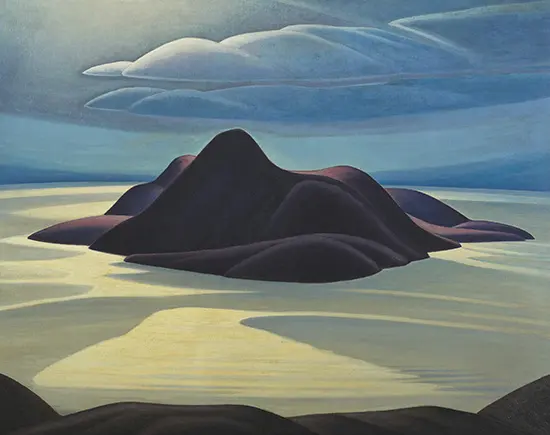
The Group of Seven consisted of Canadian landscape painters Franklin Carmichael, Lawren Harris, A.Y. Jackson, Frank Johnston, Arthur Lismer, J.E.H. MacDonald, and F.H. Varley. Formed in 1920, the group sought to develop a distinct Canadian artistic identity by depicting the rugged northern wilderness through bold colors and expressive, stylized brushwork.

On this page
Who were the members of the Group of Seven?
The Group of Seven was a collective of Canadian landscape painters who officially formed in 1920. While the group is defined by seven core members, the roster evolved over time as artists joined or transitioned to other pursuits. The original seven members were Franklin Carmichael, Lawren Harris, A.Y. Jackson, Frank Johnston, Arthur Lismer, J.E.H. MacDonald, and F.H. Varley.
These men shared a common vision of creating a national art style that moved away from European traditions. By focusing on the raw, untamed beauty of the Canadian Shield and the northern wilderness, they established a visual language that remains central to Canadian identity. Their work is characterized by thick paint application, vivid color palettes, and a decorative approach to form.
- Franklin Carmichael: Known for his watercolors and later landscape oils.
- Lawren Harris: The group’s primary financier and a pioneer of abstraction.
- A.Y. Jackson: Famous for his extensive travels and depictions of rural Quebec.
- Frank Johnston: Left the group early to pursue a more commercial style.
- Arthur Lismer: A dedicated educator who influenced generations of Canadian artists.
- J.E.H. MacDonald: The group’s intellectual leader and a skilled poet.
- F.H. Varley: Distinguished by his focus on portraiture alongside landscapes.
How did the Group of Seven begin?
The origins of the group date back to the years preceding World War I in Toronto. Several of the artists worked as commercial designers at the firm Grip Ltd., where they bonded over their shared desire to paint the Canadian landscape. They frequently traveled together to regions like Algonquin Park, which served as their primary creative laboratory.
The group officially coalesced after the war, holding their first exhibition at the Art Gallery of Toronto in May 1920. This event was a turning point in Canadian art history, as it challenged the conservative tastes of the era. Critics were initially divided, but the group’s bold, modern aesthetic eventually gained widespread public acceptance and national prestige.
- Meet at Grip Ltd. to share artistic ideas and techniques.
- Embark on sketching trips to Algonquin Park and Georgian Bay.
- Organize the first official exhibition at the Art Gallery of Toronto.
- Expand the movement to include more artists and broader geographic regions.
Why did the Group of Seven change over time?
The membership of the group was never static, reflecting the personal and professional shifts of the artists involved. Frank Johnston, for instance, resigned from the group in 1924 to focus on his own career and a more decorative style of painting. His departure paved the way for the inclusion of new perspectives within the movement.
Following Johnston's exit, A.J. Casson was invited to join in 1926. Later, in 1930, Edwin Holgate and LeMoine FitzGerald were added to the roster, expanding the group's reach beyond Ontario. By 1933, the original members decided to disband the Group of Seven to make room for a larger, more inclusive organization known as the Canadian Group of Painters.
This transition allowed the artists to move beyond the rigid structure of a seven-member collective. It invited a wider range of Canadian talent to participate in the national dialogue about art, ensuring that the movement remained relevant during the changing social and political landscapes of the 1930s.

Common mistakes when identifying the Group of Seven
A frequent error is assuming that the group was the only collective of artists working in Canada during the early 20th century. While they were the most famous, other artists like Emily Carr were closely associated with them but were never official members. Carr’s work, particularly her depictions of British Columbia’s forests and Indigenous totem poles, shares thematic similarities with the group.
Another common mistake is conflating the Group of Seven with the Beaver Hall Group or the Canadian Group of Painters. While these organizations overlapped in membership and philosophy, they were distinct entities with different goals. It is also a mistake to assume that the group only painted in the wilderness; they frequently engaged with urban subjects and portraiture, though their landscapes remain their most iconic contribution to art history.
- Do not confuse the Group of Seven with the Group of Eight.
- Remember that membership changed throughout the 1920s and 1930s.
- Recognize that the group’s influence extended far beyond the original seven members.
- Avoid assuming that all Canadian landscape art of the period was produced by this specific collective.
Best ways to study the Group of Seven today
To truly understand the legacy of these artists, the best approach is to visit major Canadian institutions that house their works. The Art Gallery of Ontario in Toronto and the National Gallery of Canada in Ottawa hold the most significant collections. These galleries provide the context necessary to appreciate the scale and texture of the original canvases.
Beyond physical galleries, digital archives and documentaries offer deep dives into the lives of the individual members. Reading the personal letters and journals of artists like Lawren Harris or J.E.H. MacDonald can provide insight into their motivations and the challenges they faced in the early 20th century. By combining visual study with historical research, you can better understand how these seven men fundamentally reshaped the way the world perceives the Canadian landscape.
Key facts
- The Group of Seven was a collective of Canadian landscape painters active between 1920 and 1933.
- The original members were Franklin Carmichael, Lawren Harris, A.Y. Jackson, Frank Johnston, Arthur Lismer, J.E.H. MacDonald, and F.H. Varley.
- Tom Thomson was a major influence on the group but died in 1917, three years before the group officially formed.
- The artists aimed to develop a distinct Canadian style by painting the rugged wilderness of Northern Ontario.
- Frank Johnston left the group in 1921, and A.J. Casson was invited to join in 1926.
- The group officially disbanded in 1933 to form the larger Canadian Group of Painters.
The bottom line
The Group of Seven revolutionized Canadian art by moving away from European traditions to capture the untamed beauty of the northern landscape. Through their bold colors and expressive brushwork, these artists defined a national visual identity that remains iconic today. By visiting major Canadian galleries, you can experience how their collective vision transformed the way the world perceives the rugged, expansive wilderness of the Canadian north.
People also ask
Did the Group of Seven only paint in Ontario?
While they gained fame for their depictions of the Algoma and Muskoka regions in Ontario, they traveled extensively across Canada. Their subjects included the Rocky Mountains, the Quebec countryside, and the Arctic.
Why are they called the Group of Seven?
They chose the name to signify their collective identity as a unified force in Canadian art. It also helped distinguish their modern, bold approach from the more traditional European styles popular at the time.
Was Emily Carr a member of the Group of Seven?
Emily Carr was not an official member, though she was closely associated with them. The group encouraged her work, and she exhibited with them during the later years of their existence.
How did the group influence Canadian identity?
By focusing on the raw, untamed Canadian landscape, they helped shift the national perception of the country. Their work fostered a sense of pride in Canada's unique geography and wilderness.
Where can I see their paintings today?
The largest collection of their work is held at the Art Gallery of Ontario in Toronto and the National Gallery of Canada in Ottawa. Many smaller regional galleries across Canada also feature their pieces.
What was the "Beaver Hall Group"?
The Beaver Hall Group was a Montreal-based collective that shared similar modern artistic goals. Several members of the Group of Seven were also involved with this organization during the early 1920s.
This answer was created with the help of AI research tools and reference sources. Spotted an error? Let us know — we correct mistakes quickly. See our editorial policy.