How do you draw a person walking step by step?
Short answer
Drawing a person walking requires capturing the shift in weight and the rhythmic opposition of limbs. By establishing a balanced center of gravity and utilizing a "stride line," you create a sense of forward momentum. Focus on the angles of the shoulders and hips to realistically convey the body's natural movement.
On this page
How to structure the human body for movement
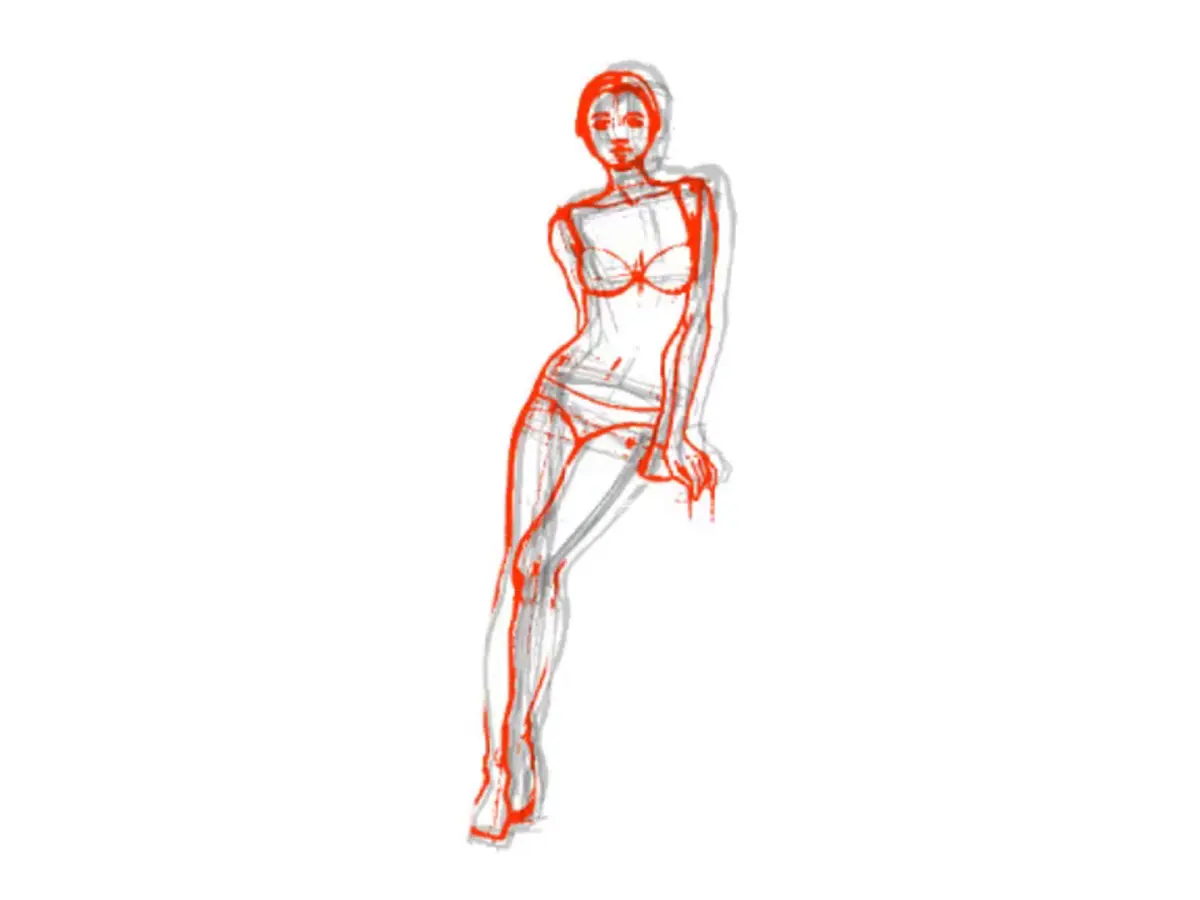
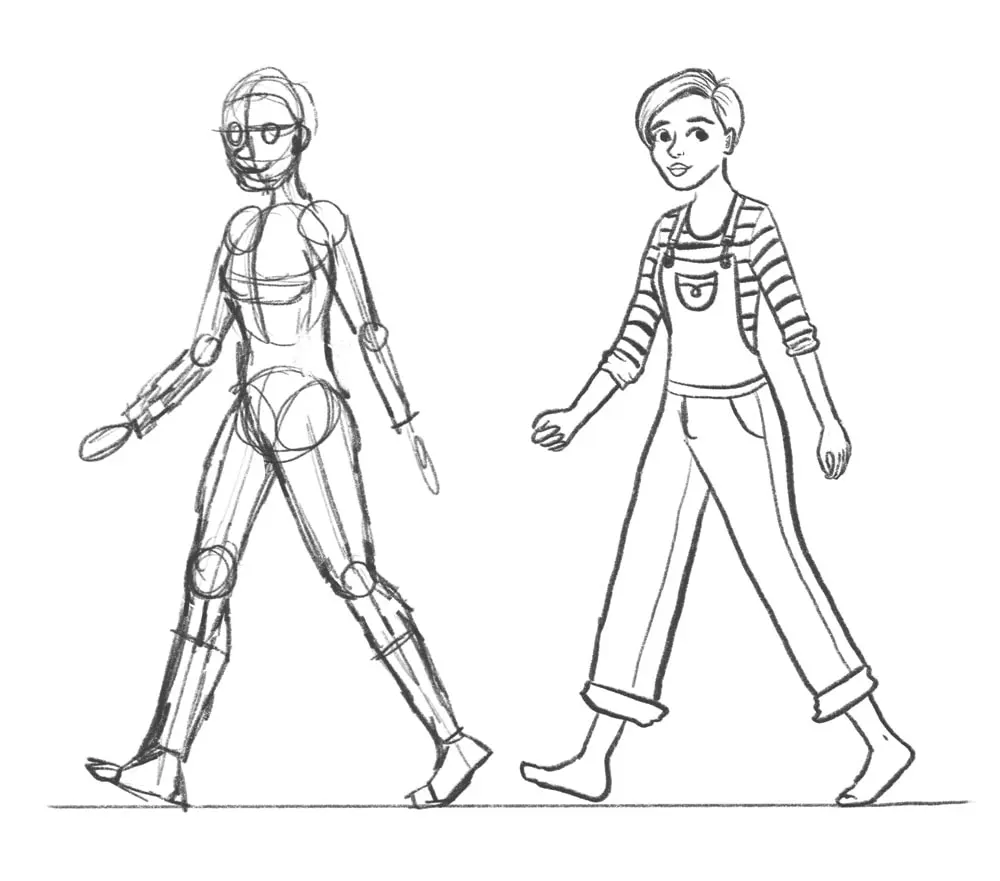
To draw a walking figure, you must first establish a solid foundation using a gesture drawing. Start by drawing a vertical line of action that represents the spine, but curve it slightly to show the weight shifting from one leg to the other. Place the head, rib cage, and pelvis as three distinct masses along this line. The rib cage and pelvis should tilt in opposite directions; if the right hip rises, the left shoulder should drop to maintain balance. This counter-rotation is the fundamental secret to making a figure look like it is actually moving rather than standing still.
Once the torso masses are set, add the limbs using simple lines to represent the bones. The key to a walk cycle is the "contact point," where one foot is flat on the ground while the other is pushing off. Keep the joints simple at this stage, focusing on the length of the limbs rather than muscle definition. By mapping the skeleton first, you ensure the proportions remain consistent regardless of the pose.
How to create a realistic stride
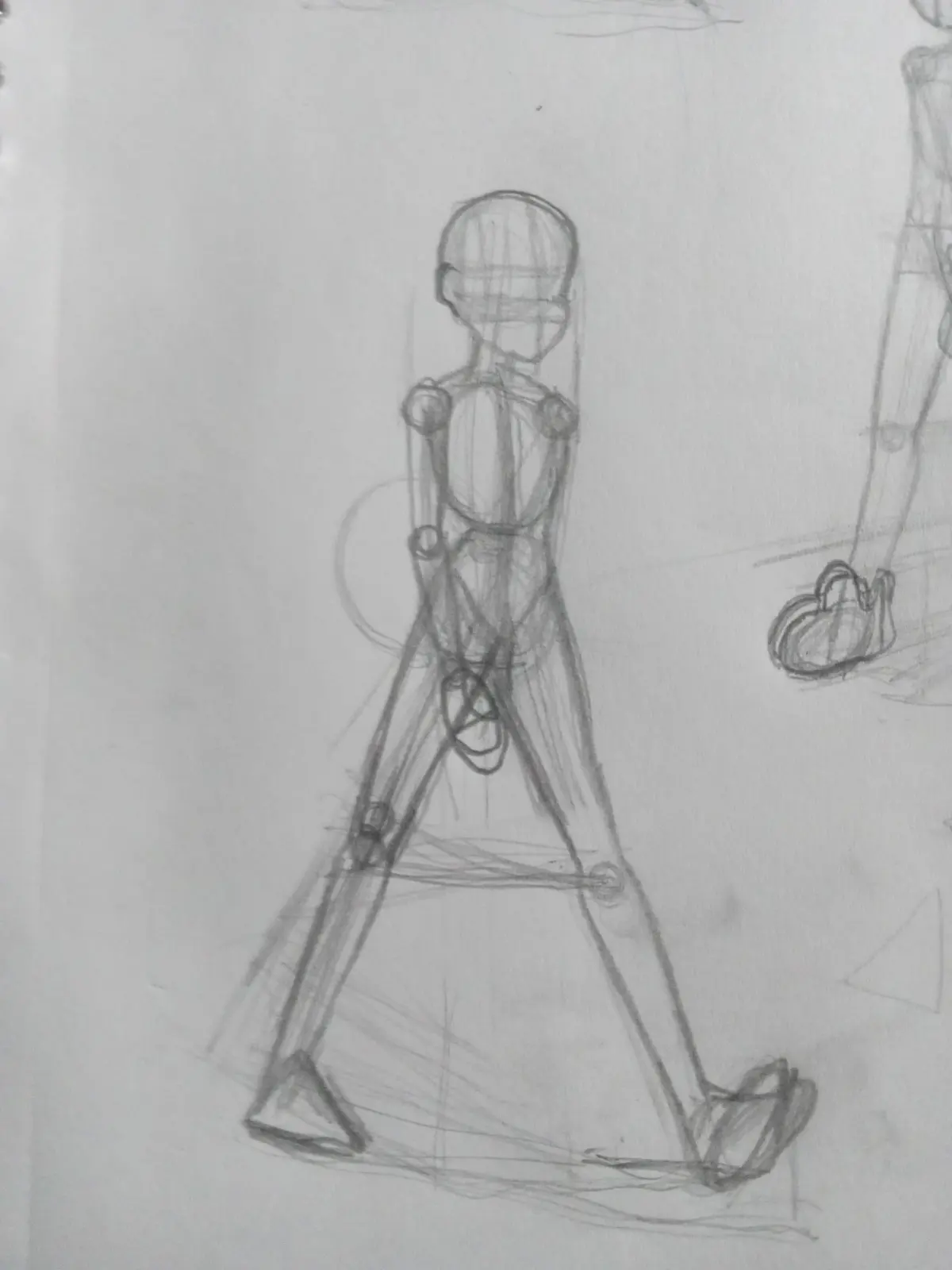
The stride is defined by the distance between the two feet and the angle of the legs. When a person walks, the legs form a wide V-shape at the peak of the stride, with the front leg reaching forward and the back leg extending behind. To draw this accurately, use a "stride line" on your paper to keep the feet grounded on the same plane. The length of the stride should be roughly equal to the length of one of the person's legs.
- Draw the front leg bent slightly at the knee to absorb the impact of the step.
- Extend the back leg fully, with the heel lifted off the ground as it prepares to push off.
- Position the arms in opposition to the legs; if the right leg is forward, the left arm should swing forward.
- Ensure the feet are angled correctly to support the weight, with the front foot flat and the back foot on its toes.
Best tools and techniques for beginners
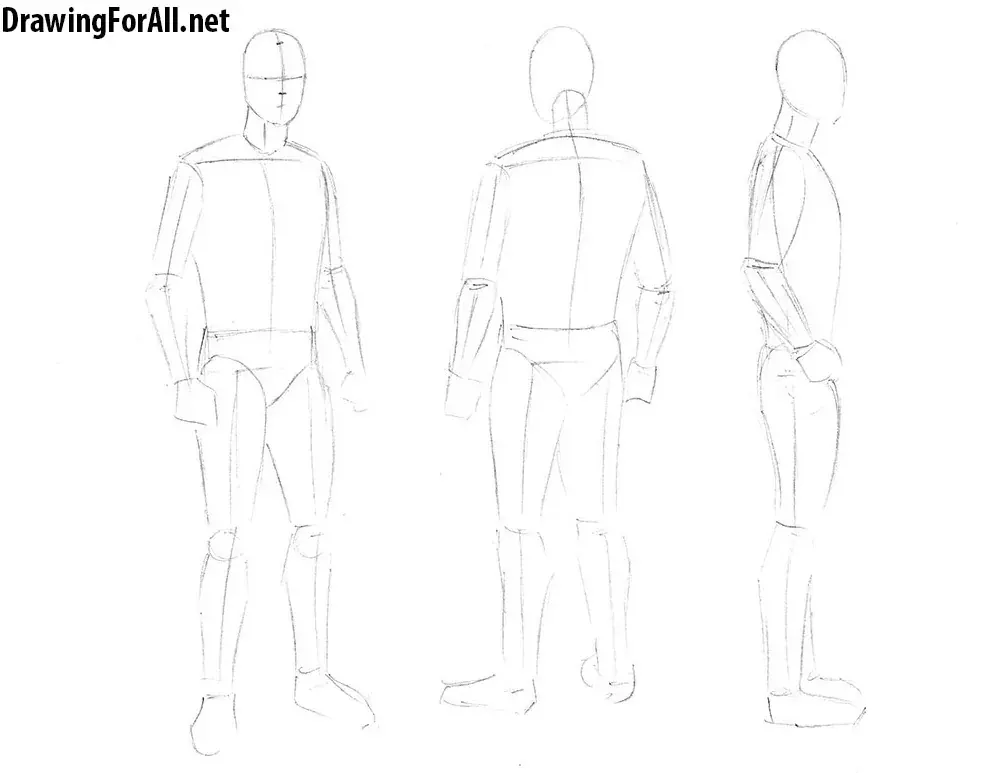
Beginners should utilize graphite pencils, specifically a 2B or HB, to allow for light initial sketches that are easy to erase. Start by drawing "mannequin" figures, which replace complex anatomy with cylinders and spheres. This technique helps you understand how limbs rotate in three-dimensional space without getting distracted by clothing or facial features. Using a light touch is essential because you will need to adjust the angles of the limbs repeatedly until the balance feels natural.
Another effective method involves using reference photos or video stills of people walking. Break down these images into simple geometric shapes to see how the joints align. By tracing over your own reference photos with a piece of tracing paper, you can internalize the rhythm of the gait. Practice drawing these shapes at different angles, such as from the side or a three-quarter view, to build confidence in your spatial reasoning.
Why the center of gravity matters
The center of gravity is the point where the body's weight is balanced. When walking, the center of gravity constantly shifts, moving outside the body's base of support, which is why we must constantly step forward to catch ourselves. If you draw a figure whose weight is not properly centered over the supporting leg, the drawing will look as though the person is falling over. Always check that the pit of the neck is aligned vertically over the foot that is bearing the weight.
When the figure is in mid-stride, the center of gravity is usually located between the two feet. If you are drawing a fast walk or a run, the body leans further forward, moving the center of gravity ahead of the feet. This forward lean creates a sense of urgency and speed. Conversely, a casual stroll features a more upright posture, with the center of gravity staying closer to the center of the body.
Common mistakes when drawing walking figures
One of the most frequent errors is failing to synchronize the arm and leg movements. If the right arm and right leg move forward together, the figure will look stiff and unnatural, as this movement pattern is biomechanically incorrect. Always remember that the limbs move in a cross-pattern: the left arm swings with the right leg, and vice versa. Another common mistake is ignoring the tilt of the pelvis, which causes the figure to look like a flat cardboard cutout.
- Forgetting to tilt the shoulders and hips, which leads to a static, robotic appearance.
- Making the legs the same length in the drawing, even when one is further away due to perspective.
- Drawing the feet at different ground levels, which makes the person look like they are walking on stairs.
- Neglecting the weight of the clothing, which should swing or fold in the direction opposite to the movement.
- Over-detailing the muscles before the gesture is correct, leading to a cluttered and confusing final image.
Key facts
- The human body is roughly seven to eight heads tall, a proportion that remains consistent even when walking.
- A walking pose involves an "opposing" movement where the right arm swings forward as the left leg steps forward.
- The center of gravity shifts over the supporting leg, causing a slight tilt in the hips and shoulders.
- Use a "line of action" to establish the spine's curve, which helps maintain a sense of fluid motion.
- Keep the head level to suggest a steady, purposeful gait rather than a bouncing or erratic movement.
- Draw the legs in a "V" shape, with one leg straight to support weight and the other bent at the knee.
The bottom line
To draw a convincing walking person, focus on the principle of opposition, where opposite limbs move in synchronization. Establish a clear center of gravity by tilting the hips and keeping the weight-bearing leg straight. By maintaining consistent body proportions and using a subtle forward lean, you create a sense of momentum. Practice these foundational mechanics to capture the natural rhythm and balance inherent in human movement.
People also ask
How do I make a walking figure look like it is moving forward?
Lean the torso slightly forward to suggest momentum. Placing the back foot on its toes, known as the "push-off" phase, further emphasizes forward motion.
Should the arms be bent or straight while walking?
Arms should be slightly bent at the elbows to appear natural. They swing in rhythm with the legs, acting as a counterbalance to the body's weight.
How do I position the feet correctly?
One foot should be flat on the ground supporting the weight, while the other is mid-stride. Ensure the toes of the back foot are pointing toward the ground.
What is the most common mistake when drawing a walk cycle?
Beginners often move the same arm and leg on the same side forward simultaneously. Always ensure the limbs on opposite sides move in tandem to maintain balance.
How do I draw the hips during a stride?
The hip on the side of the weight-bearing leg should be higher than the other. This subtle tilt is essential for creating a realistic, dynamic walking posture.
Does the head move while walking?
The head stays relatively stable to keep the eyes focused. Avoid drawing the head bobbing too much, as this often makes the character look like they are jumping.
This answer was created with the help of AI research tools and reference sources. Spotted an error? Let us know — we correct mistakes quickly. See our editorial policy.