How do owls turn their heads?
Short answer
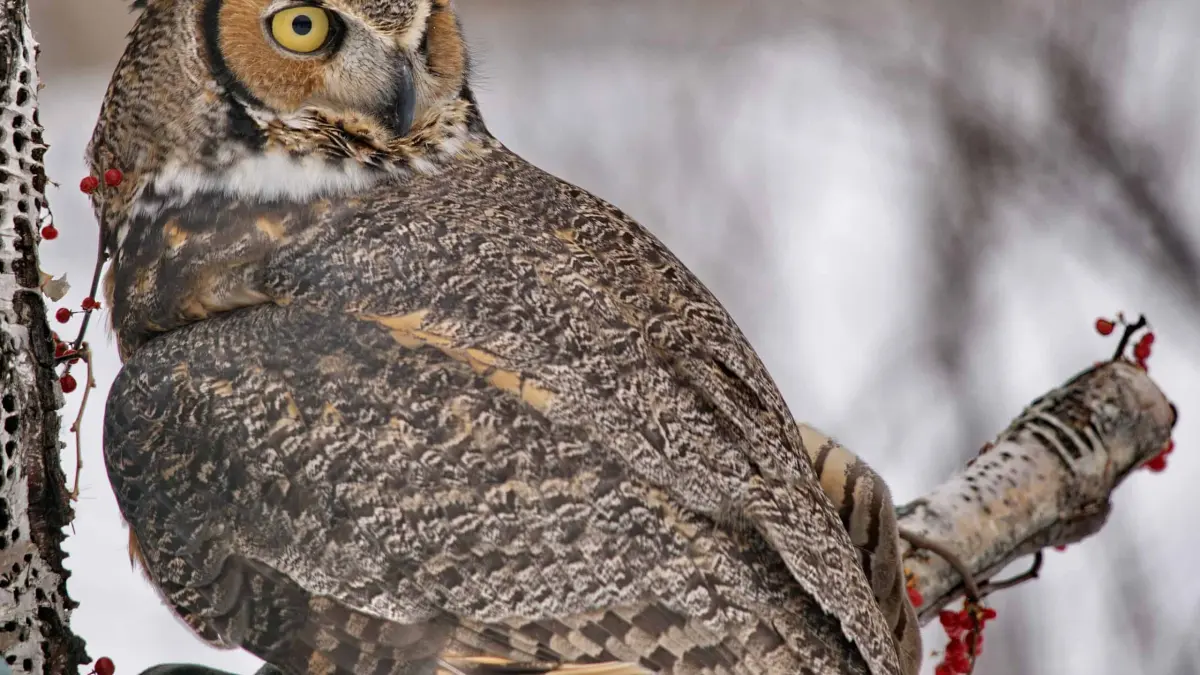
Owls turn their heads up to 270 degrees in either direction thanks to specialized skeletal and vascular adaptations. Their necks contain 14 cervical vertebrae, double the number found in humans, allowing for extreme flexibility. Additionally, they possess widened blood vessel reservoirs that prevent circulation from being cut off during these sharp rotations.
On this page
Why can owls turn their heads so far?
The primary reason owls can achieve such extreme rotation lies in their unique skeletal structure. While humans have seven cervical vertebrae, owls possess 14, which provides the necessary range of motion to pivot their heads without damaging the spinal cord. These vertebrae are designed with extra space in the transverse foramina, which are the holes through which blood vessels and nerves pass. This anatomical clearance ensures that the vessels are not pinched or stretched to the point of rupture when the owl twists its neck.
Furthermore, the connection between the skull and the neck is highly specialized. Owls have a single pivot point, known as the occipital condyle, which acts as a ball-and-socket joint. This allows for fluid movement that would be impossible for mammals, whose two-jointed skull connections limit rotation significantly. By combining these skeletal features with highly flexible neck muscles, owls can scan their surroundings with minimal movement of their bodies, which helps them remain camouflaged from both prey and predators.
How do owls maintain blood flow during rotation?
One of the most remarkable aspects of owl physiology is how they prevent blood flow disruption during extreme head turns. Researchers have discovered that owls possess "backup" circulatory systems located at the base of the skull. When an owl rotates its head, the primary arteries can become compressed, but the bird utilizes a series of enlarged, reservoir-like blood vessels that maintain a steady supply of oxygenated blood to the brain.
These reservoirs are essentially widened channels that act as a buffer. In addition to these vessels, the carotid arteries are positioned closer to the center of the neck's rotation rather than along the outer edges. This placement minimizes the amount of stretching the vessels must undergo during a 270-degree turn. These adaptations are essential for survival, as they allow the owl to remain alert and reactive even while its body is completely stationary.
What is the role of vision in head rotation?
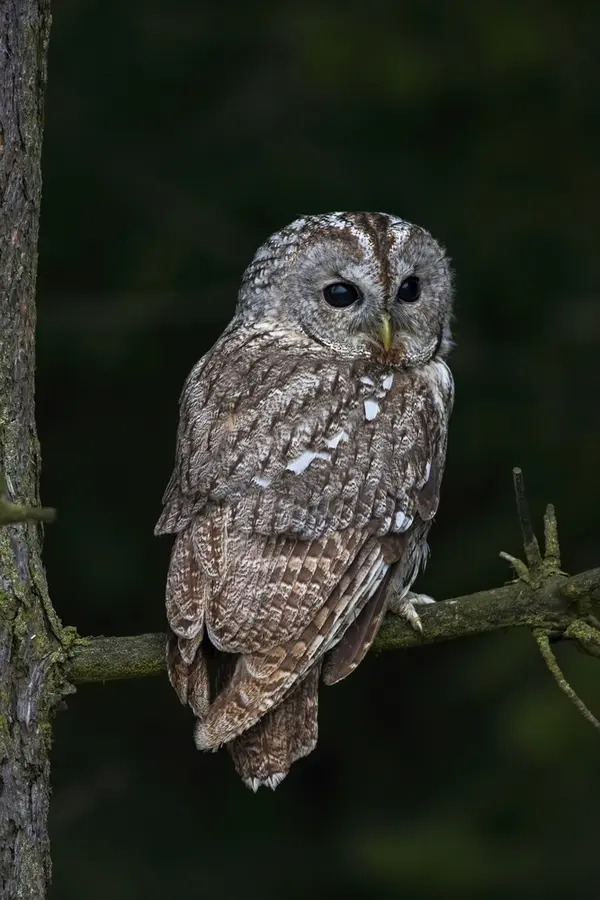
Owls have evolved to rely on head rotation because their eyes are physically incapable of independent movement. Unlike humans, who can shift their gaze by moving their eyeballs within their sockets, an owl’s eyes are tubular and fixed in place by bony structures called sclerotic rings. Because their eyes are locked forward, the bird must physically move its entire head to track movement or focus on a specific object in its field of vision.
To compensate for this lack of ocular mobility, owls have developed a sophisticated visual strategy that involves:
- Rapid, jerky head movements to scan the environment.
- Precise tracking of prey through constant head adjustments.
- Utilizing binocular vision to gauge depth and distance accurately.
- Maintaining a steady gaze once a target is locked, even if the body is swaying.
This reliance on head movement is a trade-off for the superior light-gathering capabilities of their large, forward-facing eyes, which are essential for nocturnal hunting.
Common mistakes when observing owl behavior
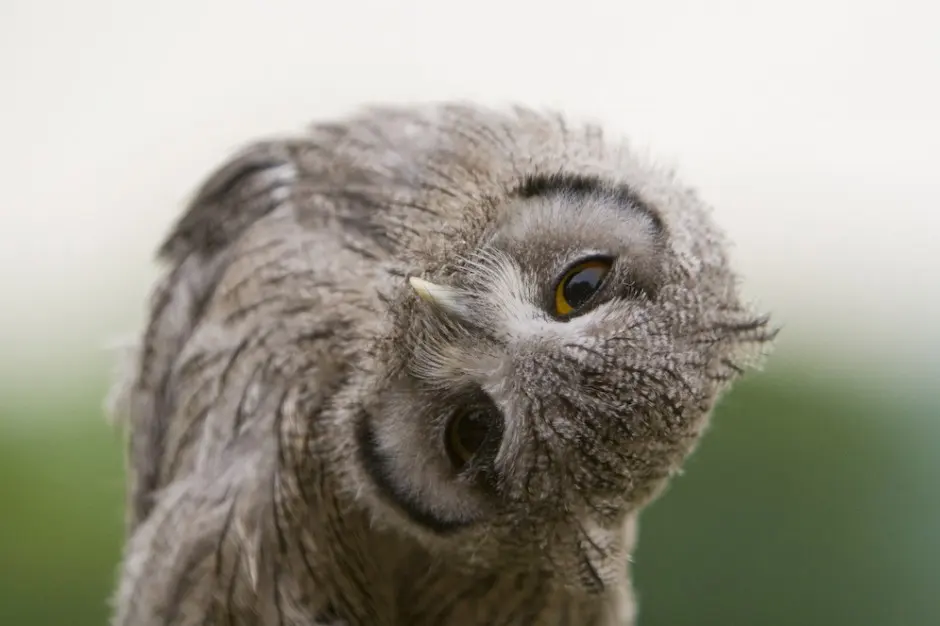
When watching owls in the wild or in captivity, observers often make assumptions that misinterpret the bird's natural movements. A common error is assuming that an owl is "stuck" or in pain when its head is turned at an extreme angle. In reality, this is a comfortable and efficient posture for the bird. Another mistake is approaching an owl too quickly while expecting it to turn its head to track you; owls are sensitive to movement and may fly away if they feel threatened, regardless of their ability to see behind them.
To observe owls safely and effectively, follow these guidelines:
- Maintain a significant distance to avoid triggering the owl's flight response.
- Use binoculars or a camera with a long lens to see details without disturbing the bird.
- Remain as still as possible, as owls are highly attuned to sudden changes in their surroundings.
- Avoid using flash photography, as it can temporarily blind the bird and disrupt its hunting rhythm.
How do owls use head turns for hunting?
Head rotation is a critical tool for the owl's hunting success, serving as a way to triangulate the position of prey. By turning its head, the owl can compare the timing and intensity of sounds reaching its ears, which are often asymmetrically placed on the skull. This asymmetry allows the bird to pinpoint the exact location of a rustling mouse or a flying insect in total darkness. The ability to rotate the head 270 degrees means an owl can effectively cover a massive area of its environment without revealing its presence through body movement.
Once the owl has identified the prey's location through sound and head positioning, it initiates a silent strike. The head rotation is not just about vision; it is a vital part of the auditory processing required to navigate complex environments. By keeping the head steady or adjusting it in small, rapid increments, the owl ensures that its sensory input remains precise. This specialized behavior is a testament to the evolutionary pressures that have made the owl one of the most efficient predators in the avian world.
Key facts
- Owls can rotate their heads up to 270 degrees in either direction, allowing them to look behind themselves without moving their bodies.
- This extreme mobility is possible because owls have 14 neck vertebrae, compared to the seven found in humans.
- Specialized blood vessels in the neck have wide, reservoir-like structures that prevent blood flow from being cut off during rotation.
- The owl's carotid arteries are positioned near the center of the neck's rotation axis, which minimizes stretching of the vessel walls.
- Bone cavities in the owl's skull are approximately 10 times larger than the arteries that pass through them, providing extra space for movement.
- When observing an owl, avoid startling it; if the bird feels threatened, it may stop turning its head to fixate on you as a potential predator.
The bottom line
Owls possess an extraordinary skeletal and vascular anatomy that allows them to rotate their heads up to 270 degrees. By utilizing 14 neck vertebrae and specialized blood reservoirs, they compensate for eyes that are fixed in their sockets. This evolutionary adaptation enables these predators to maintain a constant, steady gaze on their environment, ensuring they remain highly effective hunters despite their limited peripheral eye movement.
People also ask
Why do owls need to turn their heads so far?
Owls have tubular-shaped eyes that are fixed in their sockets by bony structures called sclerotic rings. Because they cannot move their eyes to look around, they must rotate their entire heads to track movement or scan their surroundings.
Do owls ever get dizzy from spinning their heads?
There is no evidence that owls experience dizziness, as their unique vascular system ensures that blood flow to the brain and eyes remains constant. Their anatomy is specifically adapted to prevent the neurological issues that would occur in other animals during such rapid, extreme rotations.
Can owls rotate their heads 360 degrees?
No, the 360-degree rotation is a common myth. While their range of 270 degrees is impressive, they are physically limited by the tendons and blood vessels connecting their head to their torso.
How do owls keep their balance while moving their heads?
Owls possess a highly developed vestibular system that works in tandem with their neck muscles to maintain stability. This allows them to keep their gaze locked on a target even while their body is in motion or perched on a swaying branch.
Do all owl species have the same range of neck motion?
Most owl species share similar anatomical adaptations for head rotation, though the degree of flexibility can vary slightly. Larger owls often exhibit the full 270-degree range, while smaller species may have slightly more restricted movement.
Is it painful for an owl to turn its head that far?
It is not painful because their anatomy is evolved specifically for this range of motion. Their neck muscles are arranged to support these rotations without straining the underlying skeletal or vascular structures.
This answer was created with the help of AI research tools and reference sources. Spotted an error? Let us know — we correct mistakes quickly. See our editorial policy.