How can I draw braids easily?
Short answer
Drawing braids is easiest when you simplify the structure into repeating, interlocking shapes. By visualizing the braid as a series of overlapping "V" or "U" patterns, you can build the volume systematically. Focus on maintaining consistent spacing and depth to create a realistic, three-dimensional effect that mimics woven hair strands.
On this page
How to draw a basic braid for beginners
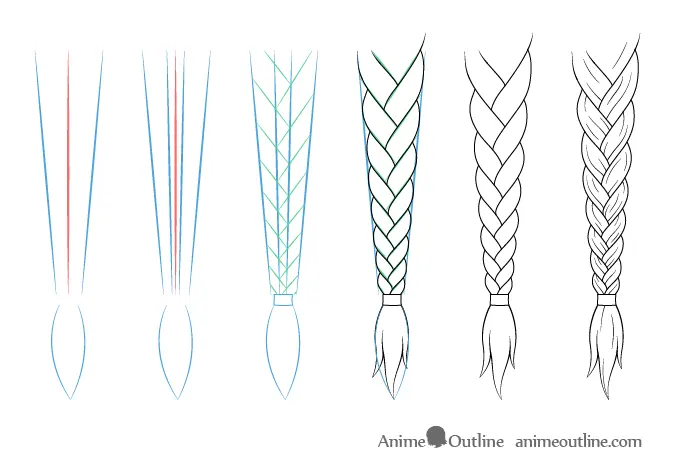
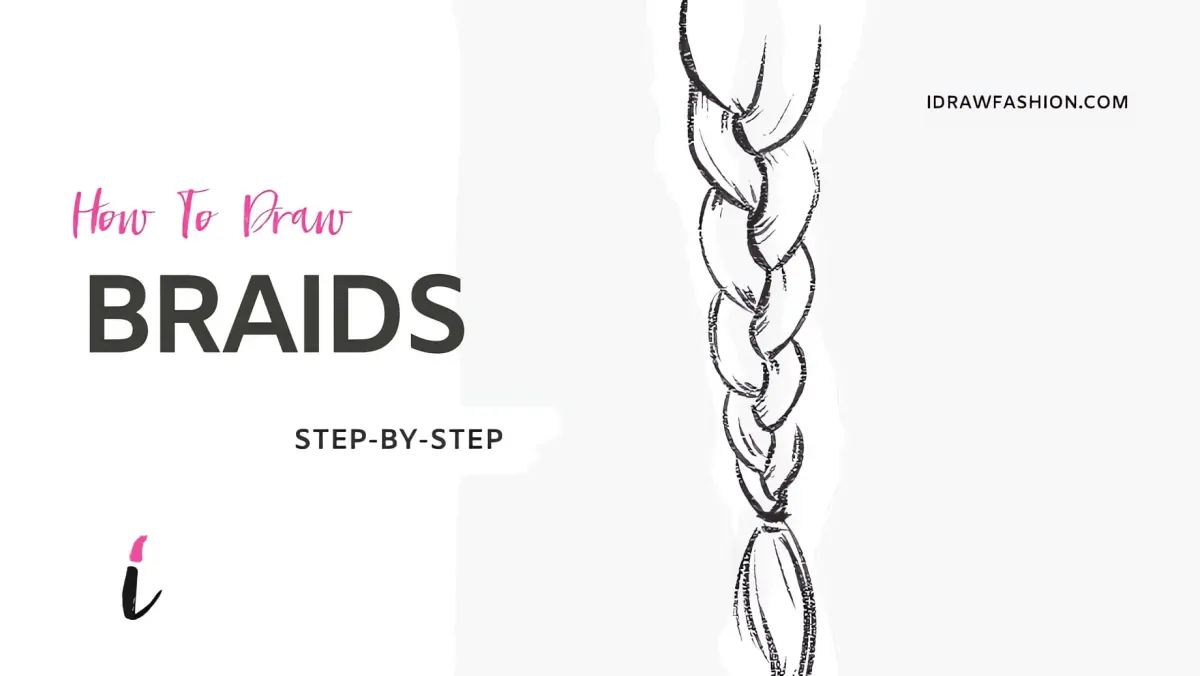
The most effective way to draw a braid is to start with a simple guide line. Draw a long, slightly curved line representing the center of the braid. On either side of this line, draw two parallel lines to define the overall thickness. This creates a "ribbon" shape that acts as your structural boundary.
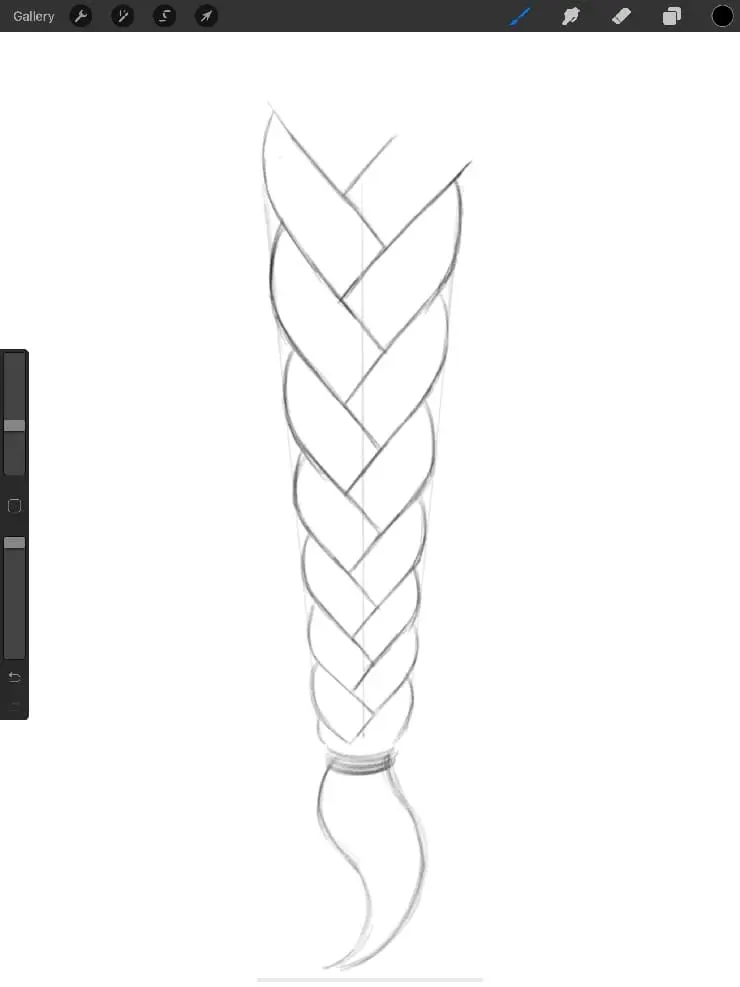
Once the boundary is set, draw a series of interlocking "V" shapes down the center. These "V"s should alternate, pointing downward to suggest the way hair strands weave over and under each other. Keep your pencil strokes light during this phase so you can easily adjust the proportions before finalizing the outline.
- Sketch a long, thin rectangle to define the braid's path.
- Draw a zigzag line down the center of the rectangle.
- Connect the points of the zigzag to the outer edges using curved lines.
- Erase the original center line to reveal the woven pattern.
How to add depth and dimension
To make a braid look realistic, you must indicate volume through shading. Braids are not flat; they have high points where strands catch the light and low points where they dip into the weave. Apply darker shading in the crevices where the strands overlap to create a sense of depth.
Use a cross-hatching technique or smooth gradients to transition from light to dark. The edges of the braid should be slightly rounded rather than sharp, as hair naturally bunches into soft, cylindrical shapes. Focus your darkest shadows at the very bottom of each "V" shape, as this is where the deepest folds occur.
- Use a 2B pencil for soft, buildable shadows.
- Keep highlights on the center of each strand to show roundness.
- Vary the pressure of your pencil to create subtle tonal shifts.
- Avoid uniform shading, which makes the braid appear like a flat, solid object.
How to draw complex braid styles
Once you master the basic three-strand braid, you can experiment with more intricate styles like French or fishtail braids. A French braid begins at the scalp, meaning the strands start thin at the top and gradually widen as you move downward. To draw this, start with a narrow "V" at the top and increase the size of each subsequent segment.
Fishtail braids require a different approach, as they consist of many tiny, thin strands rather than three large ones. Instead of large "V" shapes, use a dense, herringbone pattern. Draw many small, overlapping diagonal lines that meet at a center seam. This creates a tighter, more uniform texture that looks distinct from the loose, chunky look of a standard braid.
- Start with a narrow anchor point for the top of the braid.
- Gradually increase the width of the segments as you move toward the ends.
- Add small, stray hairs at the edges to create a natural, organic appearance.
- Ensure the pattern remains consistent in size throughout the length of the drawing.
Common mistakes when drawing braids
One of the most frequent errors is making the braid segments too uniform or rigid. Real hair is organic and flexible, so the segments should vary slightly in size and shape. If every "V" shape is identical, the drawing will look mechanical and lifeless. Introduce subtle curves and slight asymmetries to mimic the natural behavior of hair strands.
Another common mistake is neglecting the hair's flow at the start and end of the braid. A braid does not simply appear out of nowhere; it usually connects to a ponytail or a section of loose hair. Always draw the strands leading into the braid to show how the hair is gathered and pulled into the weave. Failing to connect these elements makes the braid look like a floating object rather than part of a person's head.
- Avoid drawing perfectly straight lines, as they look unnatural.
- Do not forget to shade the underside of the braid to ground it.
- Ensure the braid follows the contour of the head if it is pinned up.
- Remember that hair has weight, so the braid should hang according to gravity.
Best tools for drawing realistic hair
Using the right tools can significantly improve the quality of your hair drawings. A mechanical pencil is excellent for the initial sketch and the fine, sharp lines required for individual strands. For shading, a range of graphite pencils, such as HB, 2B, and 4B, allows for a full spectrum of tones. A kneaded eraser is essential, as it can be molded into a point to lift highlights out of dark areas.
Smooth-surfaced paper, such as Bristol board, is generally better for hair than textured paper. Textured paper can break up your lines and make it difficult to achieve the sleek, shiny look of healthy hair. By combining these tools with a methodical approach to layering, you can create intricate, professional-looking braids that appear soft, voluminous, and structurally sound. Practice these techniques consistently to build muscle memory for the repeating patterns that define the braided aesthetic.
Key facts
- A basic three-strand braid is constructed by alternating the outer strands over the center strand.
- Use a "V" shape pattern to represent the interlocking strands, which creates the illusion of depth.
- Keep your initial sketch lines light so you can easily erase the overlapping paths later.
- Add small triangular shapes at the edges of the braid to mimic the appearance of hair strands pulling outward.
- Vary the thickness of the strands to make the braid look more natural and less like a rigid rope.
- Practice drawing the braid as a flat ribbon first before attempting to add volume or curvature.
The bottom line
Drawing a realistic braid is primarily about mastering the alternating "V" pattern and understanding how light interacts with overlapping segments. By focusing on the structural rhythm of the strands rather than individual hairs, you can create a convincing effect. Start with light guidelines, maintain consistent angles, and use shading to define depth. With regular practice of these geometric foundations, you will quickly improve your artistic technique.
People also ask
How do I make a braid look three-dimensional?
Add shading to the underside of each overlapping strand to create a sense of depth and shadow. Use a darker pencil tone where the strands tuck behind one another to emphasize the weave.
What is the best way to draw a fishtail braid?
Instead of three strands, use two main sections and move small pieces from the outer edge of one section to the inner edge of the other. This creates a denser, more intricate "V" pattern than a standard braid.
Should I draw individual hairs inside the braid?
Avoid drawing every single hair, as this makes the illustration look messy. Instead, draw long, flowing lines that follow the direction of the braid to suggest texture.
How do I draw a braid that turns or curves?
Draw a curved guideline first and follow that path with your "V" shapes. As the braid turns, the shapes on the outer curve should appear slightly stretched compared to those on the inner curve.
Why does my braid look like a flat ladder?
You are likely drawing the sections too parallel to each other. Ensure the strands cross over the center at an angle rather than meeting straight across horizontally.
How can I show the end of the braid?
Taper the braid toward the bottom by making the "V" shapes progressively smaller. Finish with a simple shape to represent a hair tie or a loose, fraying end.
This answer was created with the help of AI research tools and reference sources. Spotted an error? Let us know — we correct mistakes quickly. See our editorial policy.