What was the Great Depression?
Short answer
The Great Depression was a severe worldwide economic downturn that began in 1929 and lasted until the late 1930s. Triggered by the 1929 U.S. stock market crash, it caused mass unemployment, bank failures, and global trade collapse. It fundamentally reshaped government involvement in the economy and social welfare systems across the globe.
On this page
Why the Great Depression happened
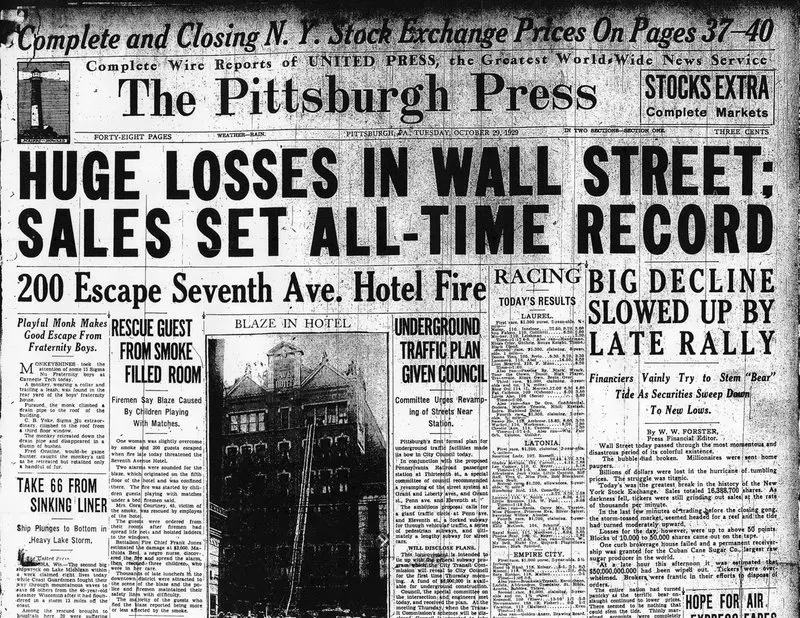
The Great Depression was not caused by a single event but by a convergence of structural weaknesses in the global economy. Throughout the 1920s, excessive speculation in the stock market, fueled by easy credit, created an unsustainable bubble. When the market crashed in October 1929, known as Black Tuesday, billions of dollars in wealth evaporated overnight, shattering investor confidence and consumer spending.
Beyond the stock market, the banking system was inherently fragile. Thousands of banks failed as panicked depositors rushed to withdraw their savings, leading to a massive contraction of the money supply. Simultaneously, agricultural overproduction caused crop prices to plummet, devastating rural economies. Protectionist trade policies, such as the Smoot-Hawley Tariff Act of 1930, worsened the situation by triggering retaliatory tariffs globally, which stifled international commerce and deepened the economic stagnation.
How long the Great Depression lasted
The duration of the Great Depression varied significantly by country, but it generally spanned from 1929 to the late 1930s. In the United States, the economy reached its lowest point in 1933, with unemployment peaking at nearly 25 percent. While the worst of the acute crisis passed by the mid-1930s, full economic recovery remained elusive for many nations until the massive industrial mobilization required for World War II began in 1939.
Several factors influenced the recovery timeline, including:
- Monetary policy shifts, such as abandoning the gold standard.
- Government intervention programs like the New Deal.
- Industrial output increases driven by global rearmament.
- Stabilization of the banking sector through federal regulations.
The recovery was not a linear process. Many countries experienced "double-dip" recessions where initial signs of growth were reversed by subsequent policy errors or banking panics, keeping the world in a state of economic uncertainty for over a decade.
What were the effects of the Great Depression
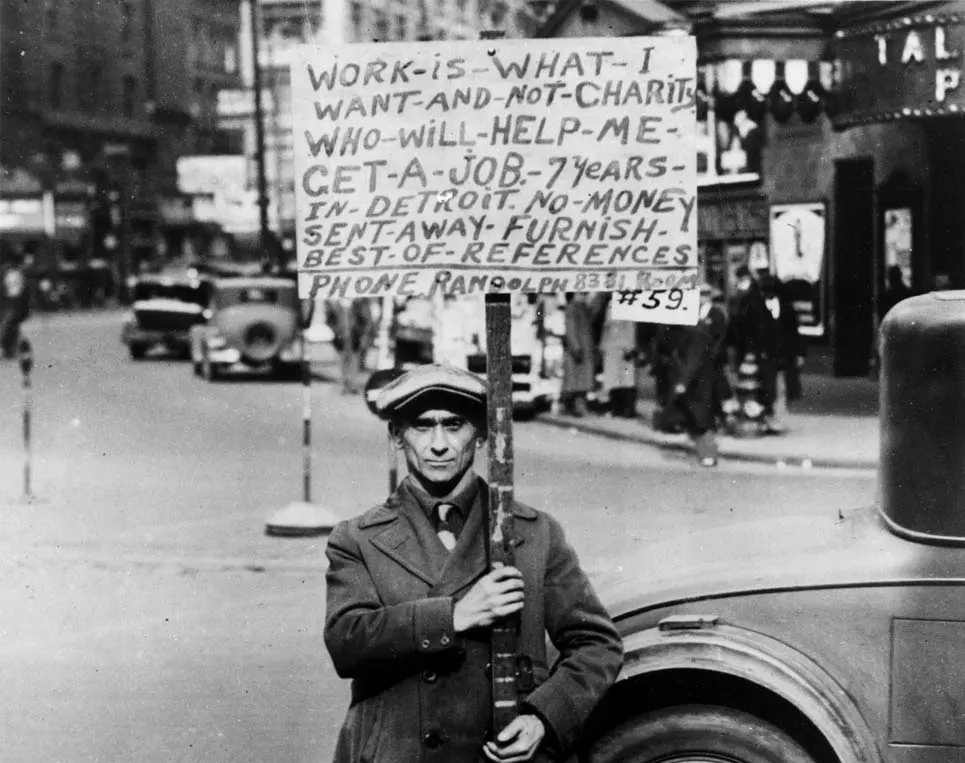
The human cost of the Great Depression was profound, leading to widespread poverty and social upheaval. Millions of families lost their homes and savings, forcing many to live in makeshift shantytowns often called "Hoovervilles." Malnutrition and homelessness became common, and the psychological toll on a generation that had known relative prosperity was immense.
The economic impact was equally transformative:
- Unemployment rates soared, reaching 25 percent in the U.S. and even higher in some European industrial centers.
- Global trade volume dropped by approximately 66 percent between 1929 and 1934.
- Industrial production in the United States fell by nearly 50 percent.
- Deflationary spirals caused wages and prices to drop, making debt repayment impossible for most citizens.
Governments were forced to abandon laissez-faire economic policies. This era birthed modern social safety nets, including unemployment insurance, old-age pensions, and stricter oversight of financial markets to prevent future collapses.
Common mistakes when analyzing the Great Depression
When studying this era, many people mistakenly assume that the stock market crash was the sole cause of the depression. While the crash was the catalyst, the underlying issues were systemic, involving international debt cycles from World War I and rigid monetary policies. Another common error is viewing the Depression as a purely American phenomenon; it was a global crisis that affected every continent, with varying degrees of severity based on a country's dependence on international trade.
Another frequent misconception is that government spending during the 1930s was sufficient to end the crisis. In reality, the fiscal stimulus provided by the New Deal was relatively modest compared to the scale of the economic collapse. Most historians now agree that it was the massive shift in monetary policy and the eventual wartime production boom that finally restored full employment. Ignoring the role of the gold standard in preventing central banks from expanding the money supply is also a common oversight when evaluating why the recovery took so long.
How to learn more about the Great Depression
To gain a comprehensive understanding of this period, one should examine both the macroeconomic data and the personal narratives of those who lived through it. Start by reviewing economic indicators from the era, such as Gross Domestic Product (GDP) trends and unemployment statistics, to grasp the sheer scale of the decline. Comparing the responses of different countries, such as the United Kingdom’s early departure from the gold standard versus the United States’ slower adjustment, provides valuable insight into how policy decisions dictated the pace of recovery.
For a more practical and human-centered approach, consider these steps:
- Read primary source accounts or oral histories from the Dust Bowl period to understand the environmental and agricultural crises.
- Analyze the legislative history of major programs like the Social Security Act to see how the government's role in citizen welfare evolved.
- Watch historical documentaries that utilize archival footage to visualize the era's breadlines and labor strikes.
- Study the political shifts of the 1930s, specifically how economic desperation contributed to the rise of radical political movements in Europe and elsewhere.
By combining statistical analysis with historical context, you can distinguish between the myths and the complex realities of this transformative decade.
Key facts
- The Great Depression began with the U.S. stock market crash on October 29, 1929, known as Black Tuesday.
- Global unemployment rates skyrocketed, with one in four American workers jobless at the peak of the crisis in 1933.
- The Dust Bowl, a period of severe drought and dust storms, devastated American agriculture throughout the 1930s.
- During the crisis, thousands of banks failed, causing millions of depositors to lose their life savings overnight.
- To survive economic downturns, prioritize building an emergency fund covering at least six months of essential living expenses.
- Avoid panic-selling assets during market volatility, as historical data shows that long-term recovery is the standard pattern.
The bottom line
The Great Depression was a decade-long global economic catastrophe defined by extreme unemployment, widespread poverty, and the collapse of financial systems. It transformed the relationship between citizens and their government, leading to the creation of modern social safety nets. Understanding this era provides a vital lesson in economic resilience, emphasizing the importance of diversified savings and cautious financial management during periods of extreme market instability.
People also ask
What caused the Great Depression?
The Depression resulted from a combination of factors including the 1929 stock market crash, bank failures, and a significant reduction in consumer spending. Additionally, protectionist trade policies like the Smoot-Hawley Tariff Act worsened the global economic collapse.
How did the New Deal change the United States?
President Franklin D. Roosevelt’s New Deal introduced federal programs designed to provide relief, recovery, and reform. It established Social Security, created jobs through the Works Progress Administration, and implemented banking regulations to prevent future collapses.
Who was the president during the start of the Great Depression?
Herbert Hoover was president when the stock market crashed in 1929. He is often criticized for his initial belief that the economy would self-correct without heavy government intervention.
What were "Hoovervilles"?
Hoovervilles were makeshift shantytowns built by homeless people during the Depression. They were named mockingly after President Hoover, whom many blamed for the economic misery.
How did the Great Depression end?
While New Deal programs provided stability, the massive industrial mobilization for World War II is widely credited with ending the Depression. The war effort created millions of jobs and spurred unprecedented economic production.
Did the Great Depression affect countries outside the United States?
Yes, the crisis was a global phenomenon that spread through international trade and financial ties. Countries like Germany and Great Britain suffered severe economic declines, which contributed to political instability worldwide.
This answer was created with the help of AI research tools and reference sources. Spotted an error? Let us know — we correct mistakes quickly. See our editorial policy.