What is the easiest language to learn for English speakers?
Short answer
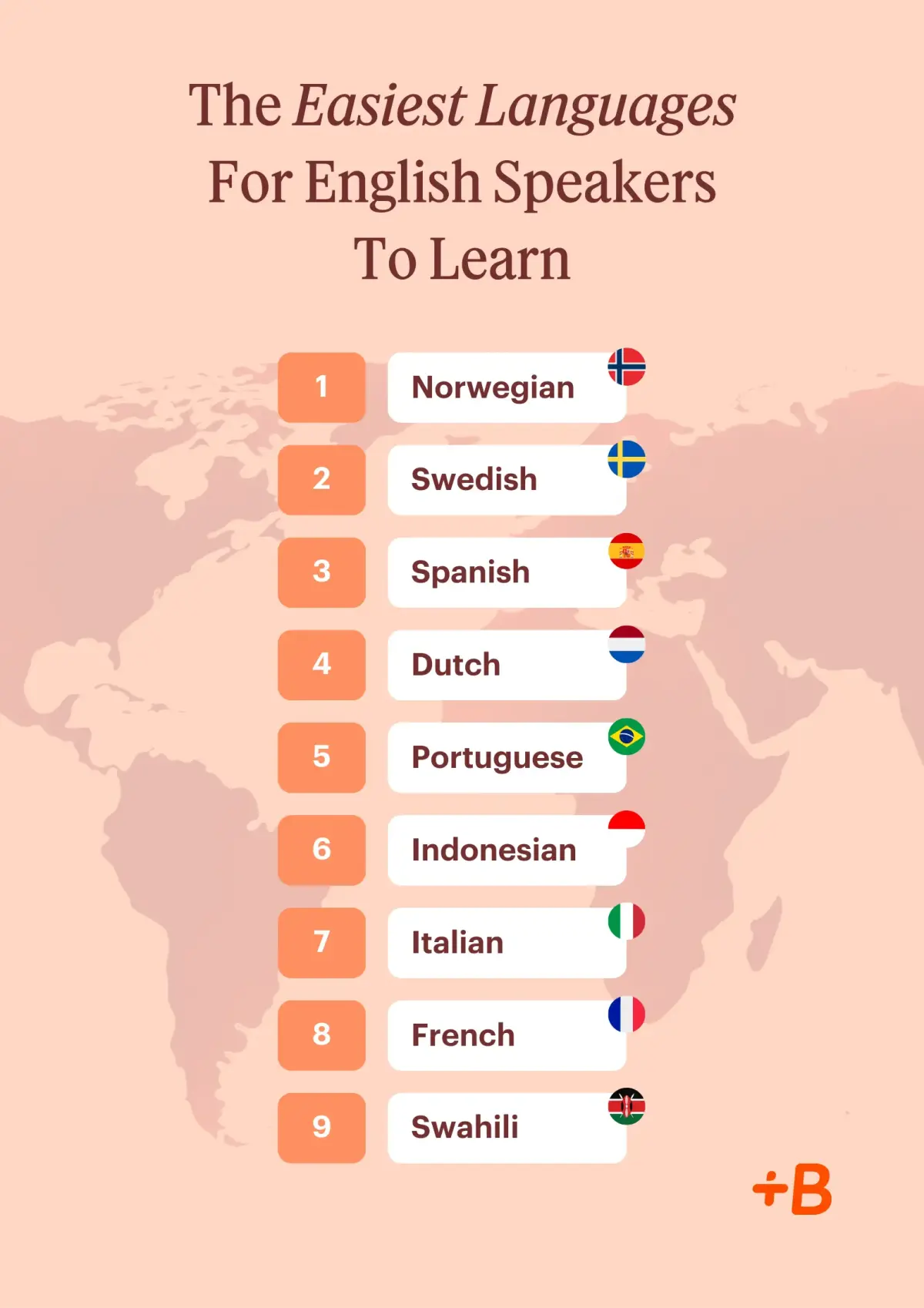
Norwegian is widely considered the easiest language for English speakers to learn. It shares a Germanic root with English, resulting in similar vocabulary and a straightforward grammar structure. While Spanish and Dutch are also highly accessible, Norwegian’s lack of complex verb conjugations and gendered noun systems makes it exceptionally approachable for beginners.
On this page
Why is Norwegian the easiest language to learn?
Norwegian, specifically the Bokmål written standard, shares a significant portion of its vocabulary with English. Because both languages belong to the Germanic branch of the Indo-European family, they utilize similar sentence structures and basic word order. You will find that many everyday words, such as "arm," "finger," "glass," and "land," are nearly identical in both languages.
Beyond vocabulary, the grammatical demands of Norwegian are remarkably light. Unlike many European languages that require complex verb conjugations based on the subject, Norwegian verbs remain the same regardless of whether you are speaking about yourself, someone else, or a group. This eliminates the need to memorize dozens of variations for every single verb you encounter.
- Similar sentence structure (Subject-Verb-Object).
- Shared Germanic roots for common vocabulary.
- Simplified verb conjugation rules.
- High levels of English proficiency in Norway, providing ample practice opportunities.
How long does it take to learn a new language?
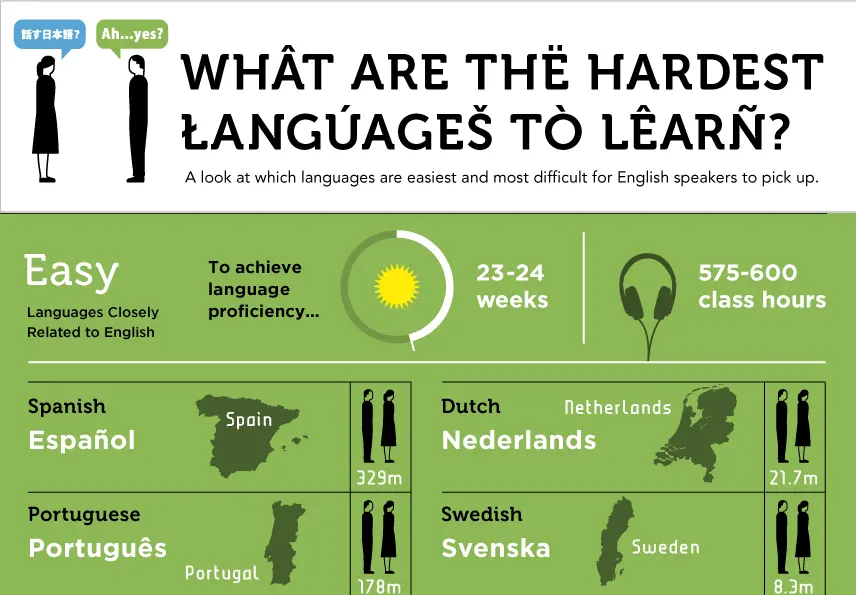
The Foreign Service Institute (FSI) categorizes languages based on the time required for a native English speaker to reach professional proficiency. Category I languages, which include Norwegian, Swedish, Spanish, and Dutch, typically require approximately 600 to 750 hours of study. This estimate assumes a dedicated, immersive approach rather than casual, sporadic practice.
If you study for one hour every day, you can expect to reach a functional conversational level within two years. However, this timeline fluctuates based on your previous experience with other languages and your daily consistency. Intensity matters more than duration; an immersive week of study often yields better retention than a month of infrequent, thirty-minute sessions.
- Set a consistent daily schedule for study.
- Focus on high-frequency vocabulary lists first.
- Incorporate listening practice through podcasts or media.
- Practice speaking aloud to build muscle memory.
Best languages for English speakers to start with
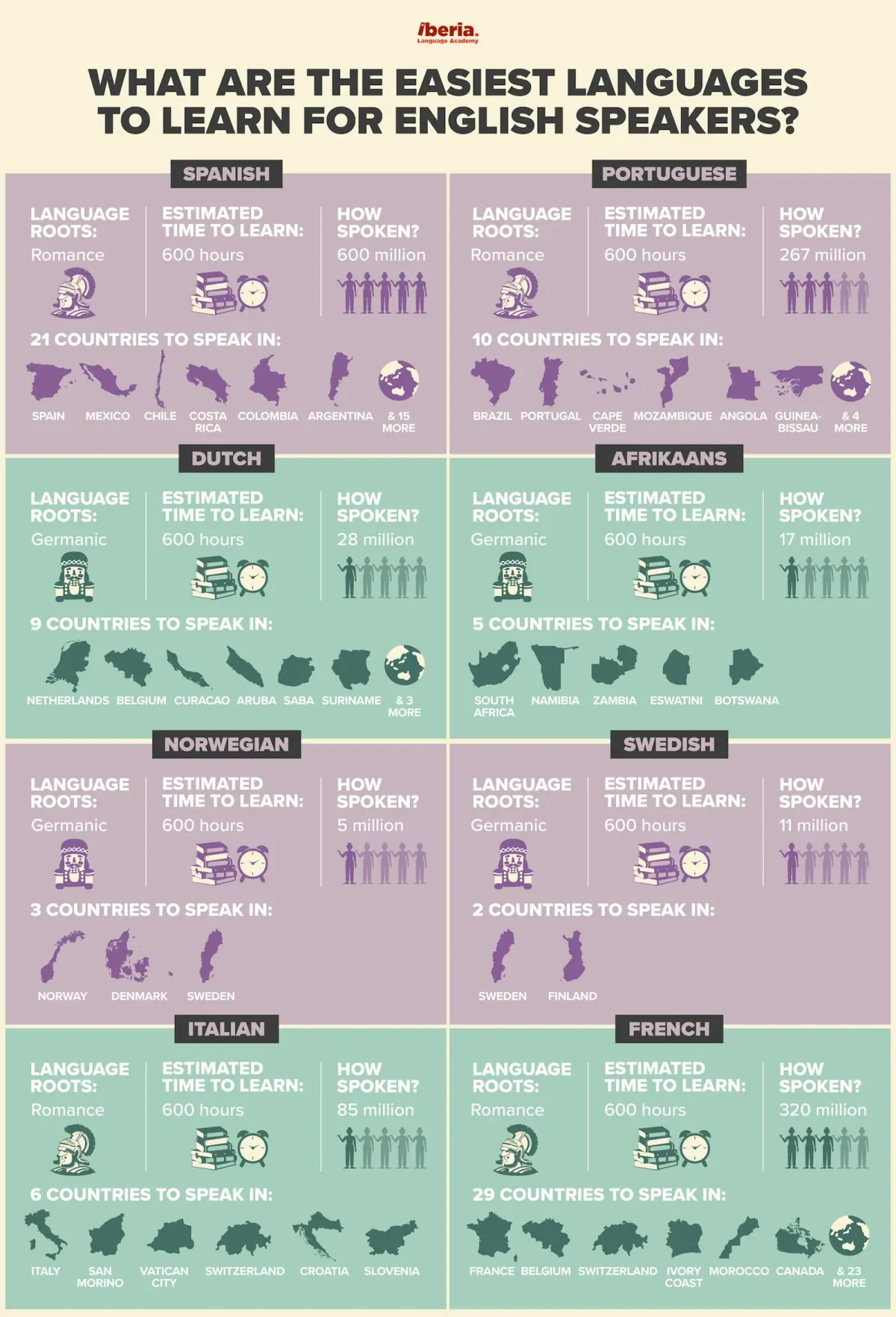
While Norwegian holds the top spot for many linguists, other languages offer similar advantages depending on your goals. Spanish is often cited as the most practical choice due to its massive global reach and the abundance of learning resources available. Its phonetic consistency—meaning words are spelled exactly as they sound—makes it significantly easier to master than English.
Dutch is another excellent contender, sitting almost exactly halfway between English and German in terms of linguistic structure. If you are interested in the history of the English language, Dutch will feel surprisingly familiar. French is also a popular choice, though it presents more challenges regarding pronunciation and complex verb tenses compared to the Germanic options mentioned above.
- Spanish: Vast resources and high utility in the Americas.
- Dutch: Closely related to English with straightforward grammar.
- Swedish: Highly similar to Norwegian with many shared roots.
- Portuguese: Similar to Spanish but with distinct phonetic patterns.
Common mistakes when learning a new language
One of the most frequent errors beginners make is focusing too heavily on grammar textbooks while neglecting active speaking. Learning rules is necessary, but language is a tool for communication, not a mathematical puzzle. If you spend all your time analyzing syntax, you will struggle to produce natural sentences when the time comes to actually speak with a native person.
Another common pitfall is the fear of making mistakes. Beginners often wait until they feel "ready" to speak, but this delay only hinders progress. Every error you make provides a concrete opportunity for your brain to correct its internal model of the language. Embrace the awkwardness of early attempts, as this is the only way to build the confidence required for true fluency.
- Relying exclusively on mobile apps without real-world practice.
- Trying to memorize entire dictionaries instead of context-based phrases.
- Neglecting listening comprehension in favor of reading.
- Being inconsistent with daily study habits.
How to stay motivated while learning
Motivation often wanes after the initial excitement of starting a new project fades. To combat this, connect your learning to personal interests rather than abstract goals. If you enjoy cooking, find recipes in your target language; if you like cinema, watch films with subtitles. By integrating the language into your existing hobbies, you transform study from a chore into a rewarding activity.
Tracking your progress is equally vital for long-term success. Keep a journal of phrases you have mastered or record your voice once a month to hear how your pronunciation improves over time. Seeing tangible evidence of your growth provides the psychological boost needed to push through difficult plateaus. Remember that language acquisition is a marathon, not a sprint, and small, incremental improvements are the key to reaching your final destination.
Key facts
- Norwegian is widely considered the easiest language for English speakers due to its simple grammar and shared Germanic vocabulary.
- The Foreign Service Institute (FSI) categorizes languages by difficulty, placing Category I languages like Spanish and French at approximately 600–750 class hours to reach proficiency.
- Spanish is often the most practical choice because of its massive global reach and the abundance of learning resources available.
- Dutch shares the highest number of cognates with English, making reading comprehension significantly faster for beginners.
- Swedish and Danish are closely related to Norwegian, offering similar structural advantages for English speakers.
- Avoiding the "immersion trap" is vital; beginners should prioritize high-frequency vocabulary rather than complex grammatical structures in the first month.
The bottom line
Choosing the "easiest" language depends on your specific goals and interests. If you prioritize structural simplicity, Norwegian is an excellent starting point. However, Spanish offers the most utility due to its widespread usage. Regardless of the language you choose, success relies on consistent daily practice and a focus on high-frequency vocabulary. Pick the language that excites you most, as motivation remains the greatest predictor of success.
People also ask
Does learning a language require a specific talent?
Language acquisition is primarily a matter of consistent practice and exposure rather than innate talent. While some individuals may find patterns easier to identify, anyone can reach fluency through structured daily habits.
Should I focus on speaking or writing first?
Focusing on speaking and listening is generally more effective for rapid progress. Prioritizing conversational skills builds confidence and helps you internalize the natural rhythm of the language faster than rote writing exercises.
How many words do I need to know to be conversational?
Learning the 1,000 most common words in a language allows you to understand roughly 75% of everyday speech. Focusing on these high-frequency terms provides the quickest path to functional communication.
Is it better to learn two languages at once?
Learning two languages simultaneously is generally discouraged for beginners. It often leads to confusion between vocabulary and grammar rules, significantly slowing down the time it takes to achieve proficiency in either.
How much time should I spend studying each day?
Consistency is more important than duration; 30 minutes of focused study every day is superior to a single five-hour session once a week. Short, frequent sessions help keep the information fresh in your long-term memory.
Should I use mobile apps or formal classes?
Mobile apps are excellent for building vocabulary and habit, but formal classes or tutors provide necessary feedback on pronunciation. A hybrid approach using both tools often yields the best results for most learners.
This answer was created with the help of AI research tools and reference sources. Spotted an error? Let us know — we correct mistakes quickly. See our editorial policy.