What techniques did Jackson Pollock use?
Short answer
Jackson Pollock revolutionized modern art through his signature "drip" technique, which involved pouring, splashing, and flicking fluid paint onto unstretched canvases placed on the floor. By abandoning traditional brushes and easels, he achieved a dynamic, rhythmic style known as action painting, emphasizing the physical movement and energy of the artist.
On this page
How to perform the drip technique
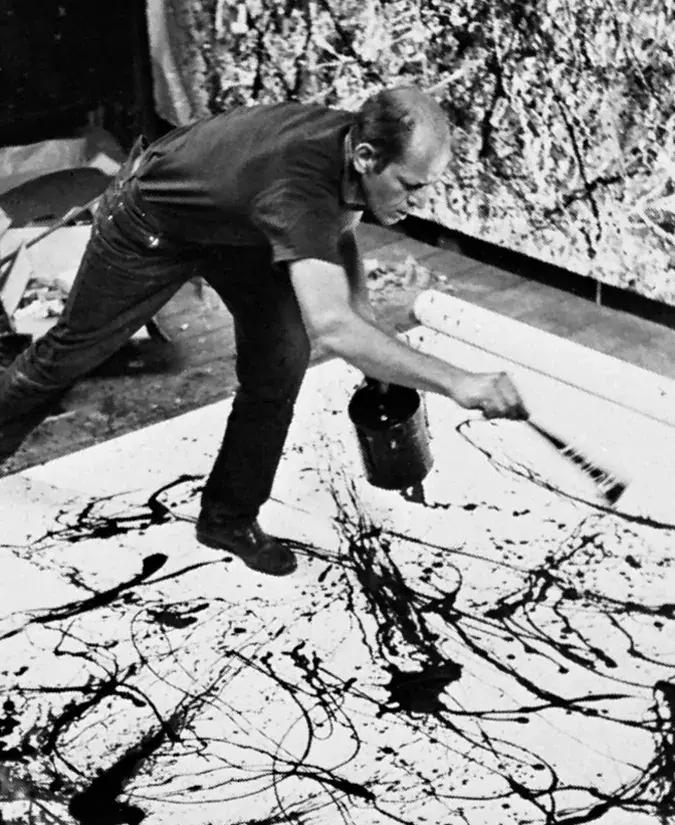
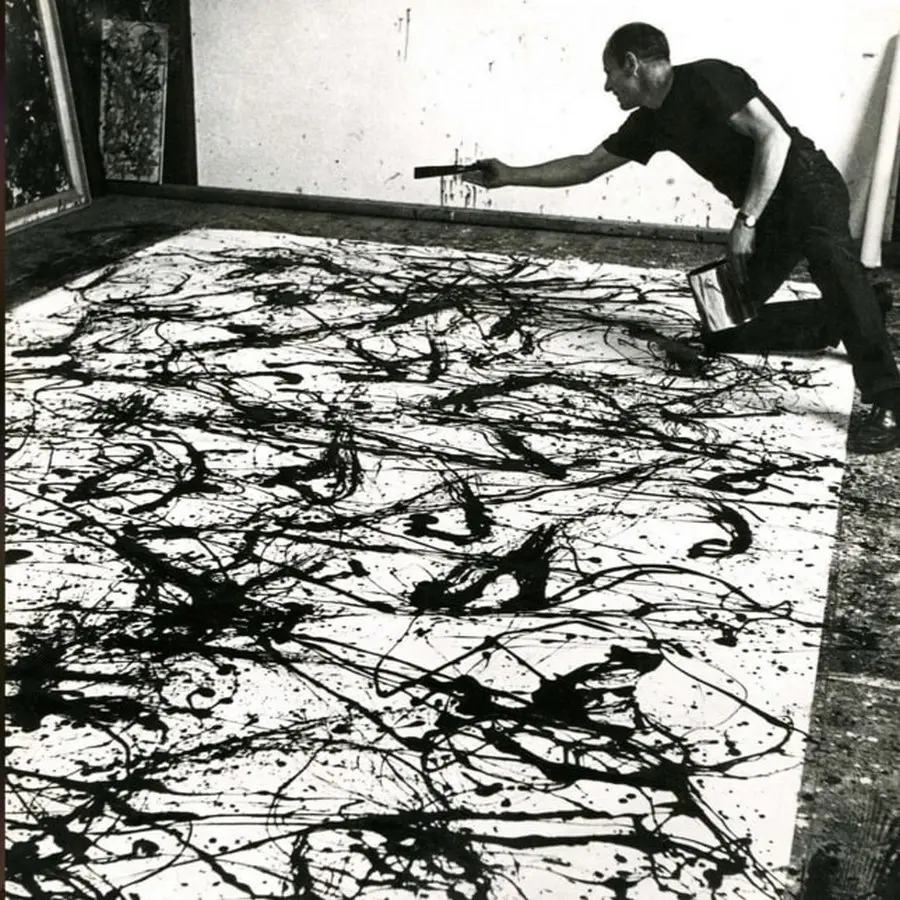
Pollock’s process relied on gravity and the viscosity of his materials rather than the direct touch of a brush. He typically placed unprimed, heavy canvas on the floor of his studio, allowing him to approach the work from all four sides. This perspective enabled him to create complex, layered compositions that lacked a traditional focal point, a style later termed "all-over" painting.
To replicate this method, you must focus on the fluidity of your paint. Pollock often thinned commercial house paints with solvents to achieve the right consistency for flowing off a stick or trowel. You should experiment with the following steps to control your application:
- Lay your canvas flat on a protected surface to prevent paint from pooling unevenly.
- Load a brush, stick, or palette knife with paint and hold it at a consistent height above the surface.
- Move your arm in sweeping, rhythmic motions to create continuous lines, varying your speed to change the thickness of the stream.
- Allow each layer to dry partially before adding new colors to prevent the pigments from muddying into a single brown tone.
Best tools for action painting
The equipment Pollock used was intentionally unconventional, favoring industrial implements over fine-art supplies. He preferred household enamel paints, such as Duco or Devoe, because they flowed more predictably than traditional oil paints. These paints were designed for durability and provided a glossy, hard finish that defined the aesthetic of his mid-1940s works.
Instead of traditional hog-hair brushes, Pollock utilized a variety of household items to manipulate the paint. Consider using these tools to achieve similar textural effects:
- Stiff-bristled house painting brushes for flicking large droplets.
- Wooden sticks or dowels for creating long, thin, continuous lines.
- Turkey basters or syringes for precise, controlled streams of paint.
- Palette knives or trowels for scraping and layering thicker impasto sections.
By using these tools, you remove the barrier between your hand and the canvas, allowing for a more direct transfer of energy. Always ensure your tools are clean, as dried residue can disrupt the flow of the paint and cause unwanted splatters.
Why the floor-based approach matters
Painting on the floor was essential to Pollock’s philosophy of "action painting." By removing the canvas from the wall, he eliminated the vertical plane, which allowed him to work within the painting rather than just in front of it. This physical immersion meant that his entire body was involved in the creative process, turning the act of painting into a performance.
This technique also allowed Pollock to incorporate non-traditional materials into his work, such as sand, broken glass, or pebbles. Because the canvas was flat, these heavy objects stayed in place while the paint dried around them. This added a sculptural, three-dimensional quality to the surface that would be impossible to achieve on an upright easel. The gravity-based approach ensures that the paint settles naturally, creating a sense of depth and movement that draws the viewer’s eye across the entire expanse of the work.
Common mistakes when drip painting
The most frequent error beginners make is losing control of the paint’s viscosity. If the paint is too thick, it will not drip or flow, resulting in clumpy blobs rather than elegant, sweeping lines. Conversely, if the paint is too thin, it will lose its pigment intensity and run uncontrollably, destroying the structure of your composition.
Another common mistake involves a lack of rhythm or intention in the movement. While the results may look chaotic, Pollock’s work was highly controlled and deliberate. Avoid these pitfalls to maintain quality:
- Do not rush the layering process; applying too much wet paint at once causes colors to bleed into one another.
- Avoid standing in one spot; move around the entire perimeter of the canvas to maintain a balanced distribution of lines.
- Do not overthink the composition; allow your physical movements to dictate the flow rather than trying to force a specific shape.
- Ensure your workspace is well-ventilated, as the solvents required to thin house paints can produce strong, harmful fumes.
How to achieve depth and balance
Achieving a sense of balance in an "all-over" composition requires careful attention to the density of your lines. You must learn to vary the intensity of your application, alternating between dense, web-like clusters and open, airy spaces. This interplay creates a visual hierarchy that keeps the viewer engaged, preventing the canvas from appearing like a flat, uniform mess.
To manage the visual weight of your painting, consider the following strategies:
- Use contrasting colors to define different layers, allowing the bottom layers to peek through the top ones.
- Vary the height from which you drip; higher drops create wider, softer splashes, while lower drops create sharp, defined lines.
- Incorporate "negative space" by leaving sections of the canvas unpainted, which provides the eye a place to rest.
- Use a dry brush to occasionally smudge or soften edges, adding a sense of atmosphere to the otherwise rigid lines of the paint.
By mastering these techniques, you can transform a simple surface into a complex, energetic work of art.
Key facts
- Pollock pioneered the "drip" technique by placing unstretched canvas on the floor rather than using an easel.
- He utilized industrial-grade house paints, such as Duco and Davoe, rather than traditional artist oils.
- Instead of brushes, he applied paint using sticks, hardened brushes, trowels, and even poured it directly from the can.
- The technique required rhythmic, full-body movements, often described as "action painting," to create complex webs of lines.
- He frequently incorporated unconventional materials like sand, broken glass, and pebbles into his paint to add physical texture.
- To avoid "muddy" colors, he layered paint only after previous applications had dried or by using contrasting, unmixed colors.
The bottom line
Jackson Pollock’s technique transformed modern art by shifting the focus from the finished image to the physical act of creation. By moving his canvas to the floor and utilizing industrial materials with rhythmic, full-body gestures, he created intricate, layered compositions. His approach teaches that true artistic expression requires a balance of spontaneous movement and careful control over the physical properties of the medium being used.
People also ask
Why did Pollock paint on the floor?
Placing the canvas on the floor allowed him to work from all four sides and move around the piece physically. This orientation removed the barrier between the artist and the work, facilitating a more immersive and gestural process.
Did Pollock ever use traditional brushes?
While he became famous for dripping and pouring, he occasionally used brushes for specific marks or details. However, he often kept the bristles stiff or used them to flick paint rather than applying it in traditional strokes.
How did he keep his lines from becoming a mess?
He achieved control through the viscosity of the paint and the speed of his arm movements. By thinning or thickening the paint, he could dictate how it flowed, dripped, or pooled upon hitting the canvas.
What is the biggest mistake beginners make when trying this?
The most common error is lack of intent, resulting in a chaotic mess rather than a structured composition. Beginners often dump paint randomly instead of focusing on the rhythm and the deliberate trajectory of the lines.
Did he ever plan his paintings in advance?
Although his work appears spontaneous, Pollock often had a specific color palette and a general composition in mind. He practiced controlling the flow of paint to ensure the final web of lines maintained a sense of balance.
How long did it take him to finish a painting?
Some paintings were completed in a single intense session, while others were layered over weeks or months. He would often stop, let the work dry, and return to it later to add new layers of complexity.
This answer was created with the help of AI research tools and reference sources. Spotted an error? Let us know — we correct mistakes quickly. See our editorial policy.