What is Marc Chagall's most famous painting?
Short answer
I and the Village (1911) is widely considered Marc Chagall’s most famous painting. This iconic oil-on-canvas masterpiece, currently housed at the Museum of Modern Art in New York, epitomizes his signature style. It masterfully blends Cubist geometric structure with dreamlike, folkloric imagery, capturing the nostalgic essence of his childhood in Vitebsk, Russia.
On this page
What makes I and the Village famous?
The fame of I and the Village stems from its unique fusion of avant-garde European art movements and the artist's deeply personal Russian-Jewish heritage. Painted shortly after Chagall moved to Paris, the work utilizes the fragmented, multi-perspective approach of Cubism to organize a complex narrative. Rather than focusing solely on abstraction, Chagall infused the geometric shapes with recognizable symbols, such as a peasant, a milkmaid, and a goat.
This painting serves as a visual autobiography. The vibrant color palette and the irrational, floating arrangement of figures established the visual language that would define Chagall’s career for decades. It is frequently cited in art history textbooks as a primary example of how modernism could be used to express cultural identity and memory rather than just formal experimentation.
How to interpret Chagall's symbolism
Chagall’s work is rarely literal; instead, it invites viewers to decode a private language of symbols. To understand his paintings, it is helpful to look for recurring motifs that represent his life experiences. His imagery often functions as a bridge between the physical world and the spiritual or subconscious realm.
When analyzing his most famous works, consider these common symbolic elements:
- The goat: Often represents his childhood in Russia and the importance of livestock in village life.
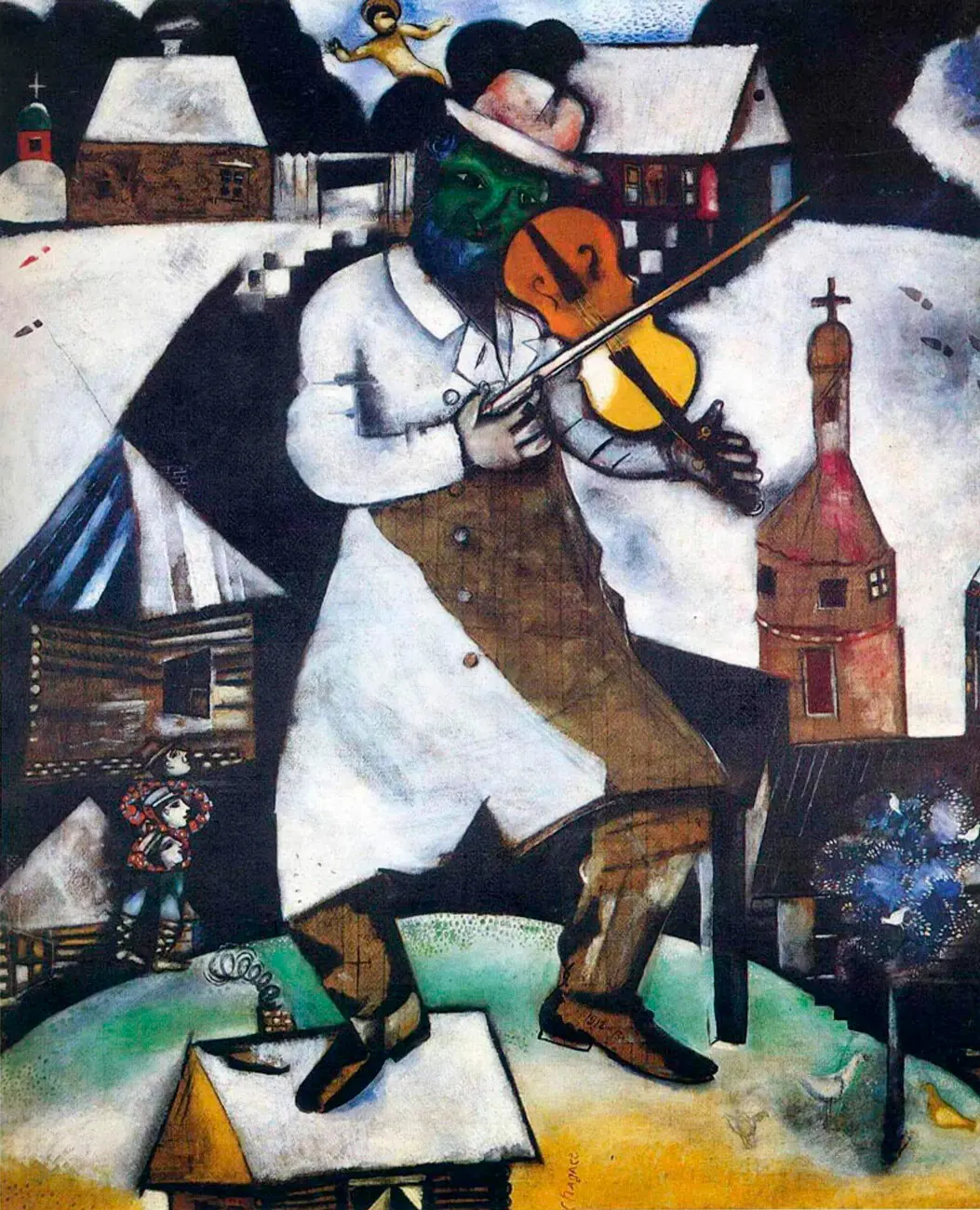
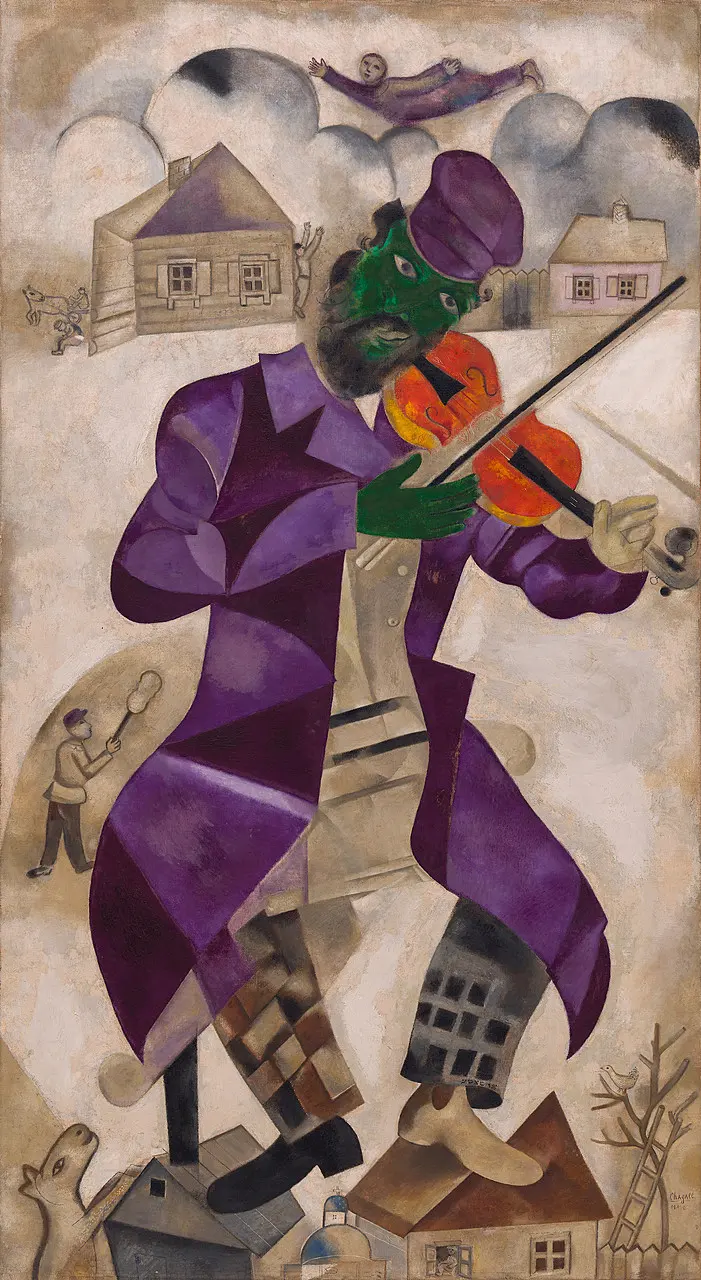
- The violin: Symbolizes the musicality of Jewish culture and the fiddler as a communal figure.
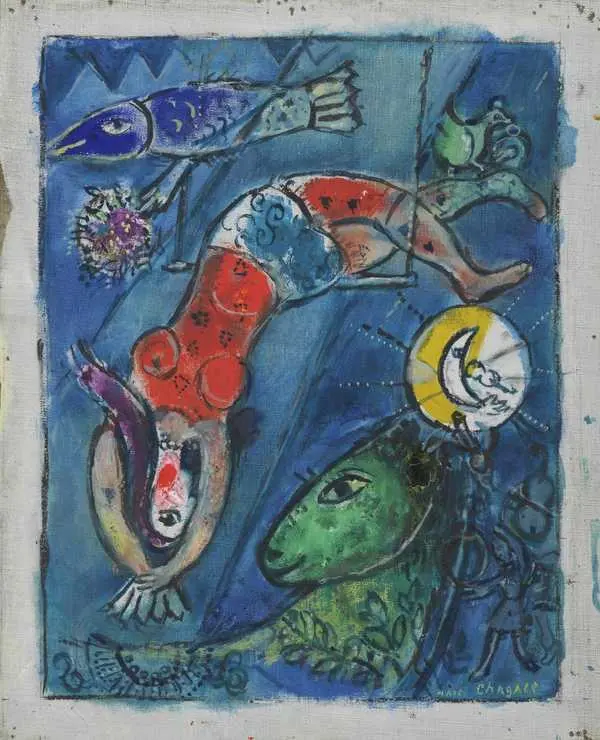
- Floating figures: Represent the joy, weightlessness, and transcendence of love or religious ecstasy.
- The moon and sun: Frequently appear together to suggest a timeless, dreamlike state that exists outside of day or night.
Where to see Chagall’s masterpieces
While I and the Village is a centerpiece of the Museum of Modern Art (MoMA) in New York City, Chagall’s prolific career left a massive footprint across the globe. His works are held in major institutional collections, and several sites are dedicated exclusively to his large-scale public commissions.
If you are planning to view his work in person, consider these destinations:
- The Marc Chagall National Museum in Nice, France, which houses his extensive "Biblical Message" series.
- The Art Institute of Chicago, which holds several major canvases including America Windows.
- The Paris Opera (Palais Garnier), where you can view his massive, colorful ceiling mural commissioned in 1964.
- The Israel Museum in Jerusalem, which contains a significant collection of his paintings and stained-glass designs.
Common mistakes when studying Chagall
Many viewers make the mistake of trying to categorize Chagall into a single artistic movement. While he was friends with Cubists and Surrealists, he consistently resisted being labeled by these groups. He maintained that his art was not a product of intellectual theory but rather an expression of his internal life and memories.
Another frequent error is assuming that his paintings are purely whimsical or decorative. While his work is colorful and often joyful, it is frequently rooted in the trauma of displacement, war, and the loss of his ancestral home. Ignoring the historical context of his life in Russia and his subsequent exile in France can lead to a superficial understanding of his deeper, more melancholic thematic concerns.
How to appreciate his artistic evolution
Chagall’s style evolved significantly from his early days in Vitebsk to his later years in the South of France. His early works, like I and the Village, are characterized by sharp angles and dense, overlapping compositions. As he matured, his brushwork became looser, and his color palettes grew more luminous, often incorporating stained-glass techniques he mastered later in life.
To truly appreciate his evolution, follow this observational path:
- Start with his early Cubist-influenced works from 1910–1915 to see how he structured his memories.
- Observe his mid-career transition toward more fluid, ethereal compositions that emphasize light and atmosphere.
- Study his late-career public projects, such as his stained-glass windows, to see how he adapted his painterly style to architectural spaces.
- Compare his early, muted color schemes with the bold, saturated blues and reds of his final decades to see how his emotional expression shifted over time.
Key facts
- Marc Chagall’s most famous painting is widely considered to be I and the Village, created in 1911.
- The oil-on-canvas work currently resides in the permanent collection of the Museum of Modern Art (MoMA) in New York City.
- The painting features a dreamlike, cubist-influenced composition depicting a green-faced man staring at a goat.
- A common mistake is assuming the work follows a realistic perspective, whereas it actually utilizes fragmented, overlapping planes.
- When viewing the piece in person, look for the small detail of a milkmaid being milked inside the goat's head, which represents memory.
- To better understand the painting, study the influence of Russian folk art and Yiddish culture, which were central to Chagall’s artistic identity.
The bottom line
While Marc Chagall produced a vast body of work, I and the Village remains his most iconic masterpiece. By blending Cubist structure with the whimsical, nostalgic imagery of his Russian-Jewish upbringing, Chagall created a unique visual language. Understanding this painting requires looking past its distorted perspective to appreciate the emotional memories and cultural symbolism that defined the artist's lifelong journey through modern European art history.
People also ask
What artistic movement is Marc Chagall associated with?
Chagall is often linked to Surrealism and Expressionism, though he famously resisted being labeled by any single school of thought. His work frequently blends personal nostalgia with dreamlike imagery.
Did Chagall paint murals as well as canvases?
Yes, Chagall was a prolific muralist and stained-glass designer. His most famous large-scale projects include the ceiling of the Paris Opéra and the windows at the Hadassah Medical Center in Jerusalem.
What is the significance of the goat in Chagall’s paintings?
The goat is a recurring motif in Chagall’s work, symbolizing his childhood in the Russian village of Vitebsk. It represents his deep connection to his Jewish heritage and the rural life he left behind.
How did Chagall’s time in Paris influence his style?
Moving to Paris in 1910 exposed Chagall to the avant-garde experiments of Cubism and Fauvism. These movements helped him break away from traditional representation to create his signature poetic, distorted style.
Are Chagall’s paintings considered expensive?
Yes, original paintings by Chagall are highly valuable and frequently sell for millions of dollars at major auction houses like Sotheby’s and Christie’s. His prints and lithographs are more accessible to collectors.
Is it possible to see Chagall’s work in museums today?
Yes, his works are held in major institutions globally, including the Centre Pompidou in Paris, the Tate in London, and the Marc Chagall National Museum in Nice, France.
This answer was created with the help of AI research tools and reference sources. Spotted an error? Let us know — we correct mistakes quickly. See our editorial policy.