What is Marc Chagall known for?
Short answer
Marc Chagall is celebrated as a pioneer of modernism, renowned for his dreamlike, poetic style that blended Jewish folklore, Russian village life, and surrealist imagery. His prolific career spanned painting, stained glass, ceramics, and stage design, characterized by vibrant colors and gravity-defying figures that evoke deep emotional and spiritual resonance.
On this page
What defines Marc Chagall’s artistic style?
Chagall’s work is instantly recognizable due to his unique fusion of personal memory and mystical symbolism. Born in 1887 in Liozna, near Vitebsk, Belarus, he drew heavily from his Hasidic upbringing and the rustic imagery of his childhood. His paintings often feature floating figures, oversized animals, and distorted perspectives that reject the rigid rules of realism in favor of a subjective, emotional truth.
Critics often categorize his style as a bridge between Fauvism, Cubism, and Surrealism, yet he remained fiercely independent from these movements. He utilized a saturated, jewel-toned palette to represent love, grief, and faith. His iconic motifs—such as the fiddler on the roof, flying lovers, and clock towers—serve as visual metaphors for the human condition. By prioritizing internal experience over external reality, he created a visual language that feels both intimate and universal, inviting viewers to interpret his canvases as personal narratives rather than literal depictions.
How to identify a Chagall painting?
Identifying a genuine Chagall requires looking for specific recurring themes and stylistic markers that define his long career. While his technique evolved from the early, darker canvases of his Paris years to the luminous, ethereal works of his later period, certain elements remain consistent across his diverse body of work.
Key indicators to look for include:
- Floating subjects: Humans, animals, or objects suspended in mid-air to suggest dream states.
- Nostalgic motifs: References to Vitebsk, including wooden houses, carts, and traditional Jewish religious symbols.
- Intense color: The use of deep blues, vibrant reds, and glowing yellows that suggest a stained-glass quality.
- Romantic pairings: Couples embracing or floating, often representing his deep devotion to his first wife, Bella Rosenfeld.
- Hybrid creatures: Figures that merge human and animal characteristics, such as a man with a goat’s head.
Why are his stained glass windows famous?
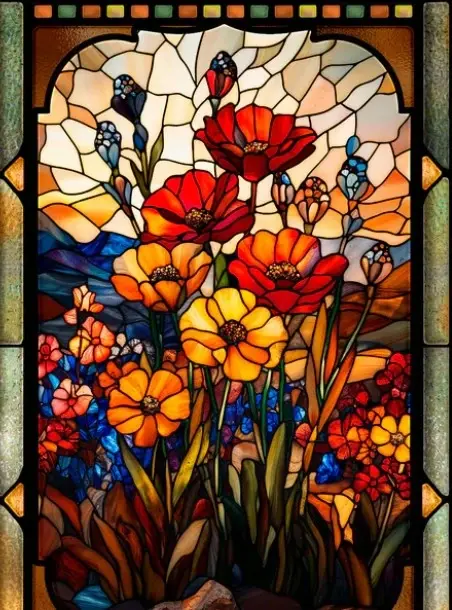
In the latter half of his life, Chagall became one of the world’s most sought-after stained glass artists. He approached the medium with the same painterly freedom he applied to canvas, using a technique called "flashing" to layer colors and create complex, luminous effects. His windows are celebrated for their ability to transform architectural spaces into immersive, meditative environments.
His most famous installations include:
- The Hadassah Medical Center windows in Jerusalem, which represent the twelve tribes of Israel.
- The United Nations headquarters in New York, featuring the "Peace" window.
- The Art Institute of Chicago, where his "America Windows" celebrate the nation’s bicentennial.
- The Reims Cathedral in France, which showcases his ability to integrate modern art into Gothic architecture.
These works are not merely decorative but are intended to interact with the natural light of the building. As the sun shifts, the colors bleed into the interior, creating an ever-changing experience that mirrors the fluid nature of his paintings.
Common mistakes when interpreting his work
A frequent error when viewing Chagall’s art is attempting to find a singular, logical narrative within his paintings. Because he worked through subconscious association rather than linear storytelling, his pieces are often misunderstood as chaotic or nonsensical. Viewers who look for precise historical accuracy in his depictions of Russian villages or biblical scenes often miss the point, as his goal was to capture the "soul" of a subject rather than its physical dimensions.
Another mistake is dismissing his work as merely decorative or whimsical. While his images of flying people and colorful flowers appear lighthearted, they are frequently rooted in themes of persecution, exile, and the trauma of the Holocaust. To truly appreciate his output, one must look past the vibrant surface to the underlying melancholy. Failing to recognize the cultural and religious context of his Jewish heritage also obscures the profound spiritual significance of his work, which serves as a testament to cultural survival.
Where to see the best of his art?
For those looking to experience the breadth of Chagall’s influence, several institutions house essential collections that trace his development from his early Russian period to his final years in the South of France. Visiting these locations provides a comprehensive look at his mastery across multiple mediums, including sketches, gouaches, and large-scale murals.
- The Musée National Marc Chagall in Nice, France: This is the primary destination, housing his massive "Biblical Message" cycle.
- The Centre Pompidou in Paris: Offers an excellent overview of his early experiments with Cubism and his time in the Parisian avant-garde.
- The Museum of Modern Art (MoMA) in New York: Holds several of his most famous early canvases, including "I and the Village."
- The Chagall Museum in Vitebsk, Belarus: Located in his former family home, it provides vital context regarding his early life and the environment that shaped his imagination.
By visiting these sites, one can observe how his technique shifted, yet his core focus on humanity, love, and spiritual wonder remained the constant heartbeat of his creative life.
Key facts
- Marc Chagall was a Russian-French artist born in 1887 who became a pioneer of modernism and a major figure in the School of Paris.
- He is best known for his dreamlike, ethereal style that blends folklore, religious symbolism, and memories of his childhood in Vitebsk.
- His signature color palette often features deep, vibrant blues, reds, and yellows, which he used to create intense emotional resonance.
- Beyond painting, he was a prolific designer of stained-glass windows, including famous installations at the Hadassah Medical Center in Jerusalem and the United Nations.
- When viewing his work, look for recurring motifs like floating figures, fiddlers on roofs, and farm animals, which represent his cultural heritage.
- A common mistake is to categorize him strictly as a Surrealist; while his work is dreamlike, he rejected the label, insisting his paintings were rooted in reality and memory.
The bottom line
Marc Chagall remains a singular figure in 20th-century art, celebrated for his ability to weave personal memory, Jewish folklore, and vibrant color into dreamlike compositions. By blending modern artistic techniques with the emotional depth of his heritage, he created a visual language that feels both intimate and universal. His legacy persists through his extensive contributions to painting, public architecture, and the decorative arts worldwide.
People also ask
Did Marc Chagall paint the ceiling of the Paris Opera?
Yes, in 1964, Chagall completed a massive, vibrant ceiling painting for the Palais Garnier in Paris. The work covers nearly 2,400 square feet and pays tribute to famous composers and their operas through colorful, swirling scenes.
What is the significance of the "Fiddler on the Roof" motif?
The image of a fiddler perched precariously on a rooftop is one of Chagall's most famous symbols. It represents the precarious nature of life for Jewish communities in pre-revolutionary Russia and has become a global icon for cultural resilience.
How did World War II affect his art?
The rise of the Nazi regime and his subsequent exile to the United States in 1941 deeply impacted his work. During this period, his paintings became darker and more preoccupied with themes of suffering, crucifixion, and the loss of his homeland.
Was Chagall involved in religious art?
Chagall frequently explored biblical themes throughout his career. He created a series of etchings illustrating the Bible and designed stained-glass windows for various churches and synagogues, aiming to create art that transcended specific denominational boundaries.
What artistic movements influenced his style?
While he remained independent, Chagall experimented with Cubism, Fauvism, and Expressionism after moving to Paris in 1910. He integrated the geometric structure of Cubism with the bold, non-naturalistic colors of Fauvism to create his own unique visual language.
Are his works accessible to the public today?
His art is held in major museum collections worldwide, including the Musée Marc Chagall in Nice, France. Many of his public commissions, such as his stained-glass windows and mosaics, remain installed in their original locations for public viewing.
This answer was created with the help of AI research tools and reference sources. Spotted an error? Let us know — we correct mistakes quickly. See our editorial policy.