How do you paint leaves in watercolor?
Short answer
Painting watercolor leaves requires mastering brush pressure to create organic shapes. By varying the amount of pigment and water, you can achieve the characteristic translucency of foliage. Start with a light wash for the base, then layer darker tones to define veins and shadows, ensuring the paper remains damp for soft, natural transitions.
On this page
What tools are best for painting watercolor leaves?
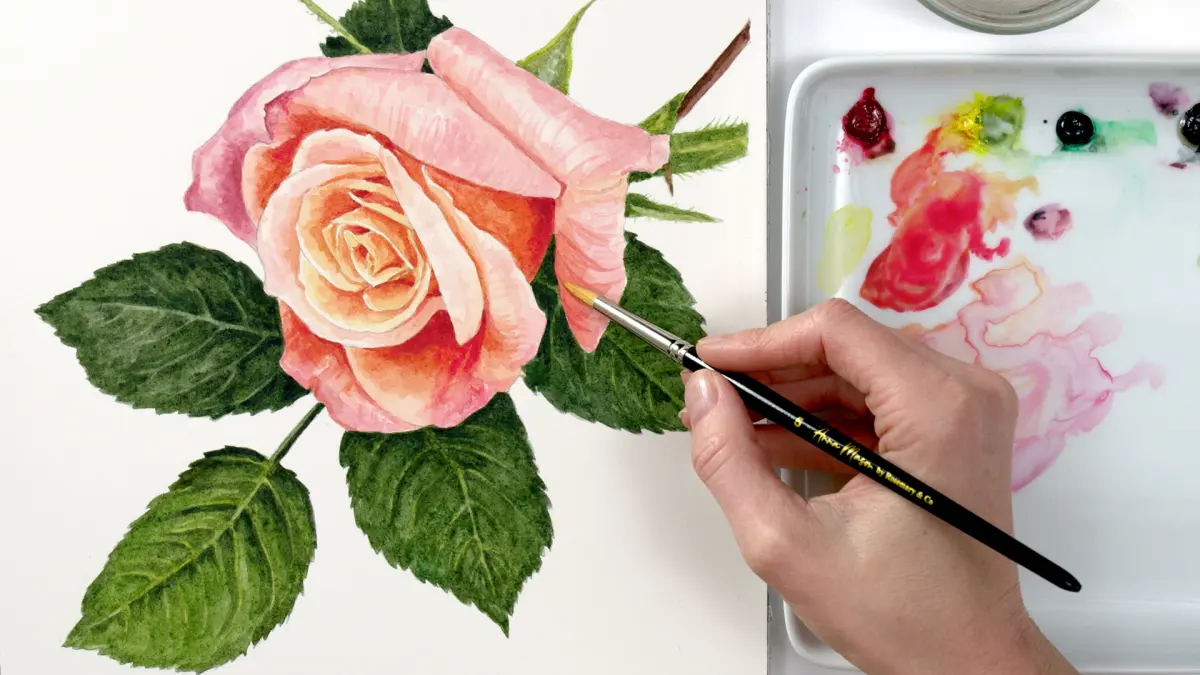
To paint convincing leaves, you need a round brush with a fine, springy point, typically sizes 4, 6, or 8. Synthetic-sable blends are ideal because they hold a significant amount of water while maintaining a sharp tip for crisp edges. Cold-press watercolor paper is the standard choice for beginners because its textured surface helps catch pigment, preventing the paint from pooling unnaturally.
For your palette, select a range of greens, such as Sap Green, Viridian, and Olive Green. You should also keep a small container of clean water and a paper towel nearby to control the moisture levels on your brush. Having a reliable set of paints and a stable surface will allow you to focus on the fluid motion of your hand rather than struggling with inconsistent materials.
How to paint a basic watercolor leaf step by step
The most effective way to paint a leaf is to use the "pressure and release" technique. This method allows the brush stroke to mimic the natural taper of a leaf shape.
- Start by placing the tip of your brush on the paper at the intended base of the leaf.
- Press down firmly to splay the bristles, creating the widest part of the leaf.
- Slowly pull the brush toward the tip while gradually lifting the pressure.
- Finish the stroke by lifting the brush completely off the paper to create a sharp point.
By practicing this motion repeatedly, you will develop the muscle memory needed to create leaves of varying sizes and orientations. Focus on keeping your hand relaxed, as tension often results in stiff, unnatural shapes that lack the grace of real foliage.
How to add depth and detail to leaves
Once your base leaf shape is dry, you can introduce depth by layering colors. This process, known as glazing, involves applying a thin, transparent layer of paint over a dried area. Use a darker green or a touch of brown to paint the central vein or to add shadows along one side of the leaf.
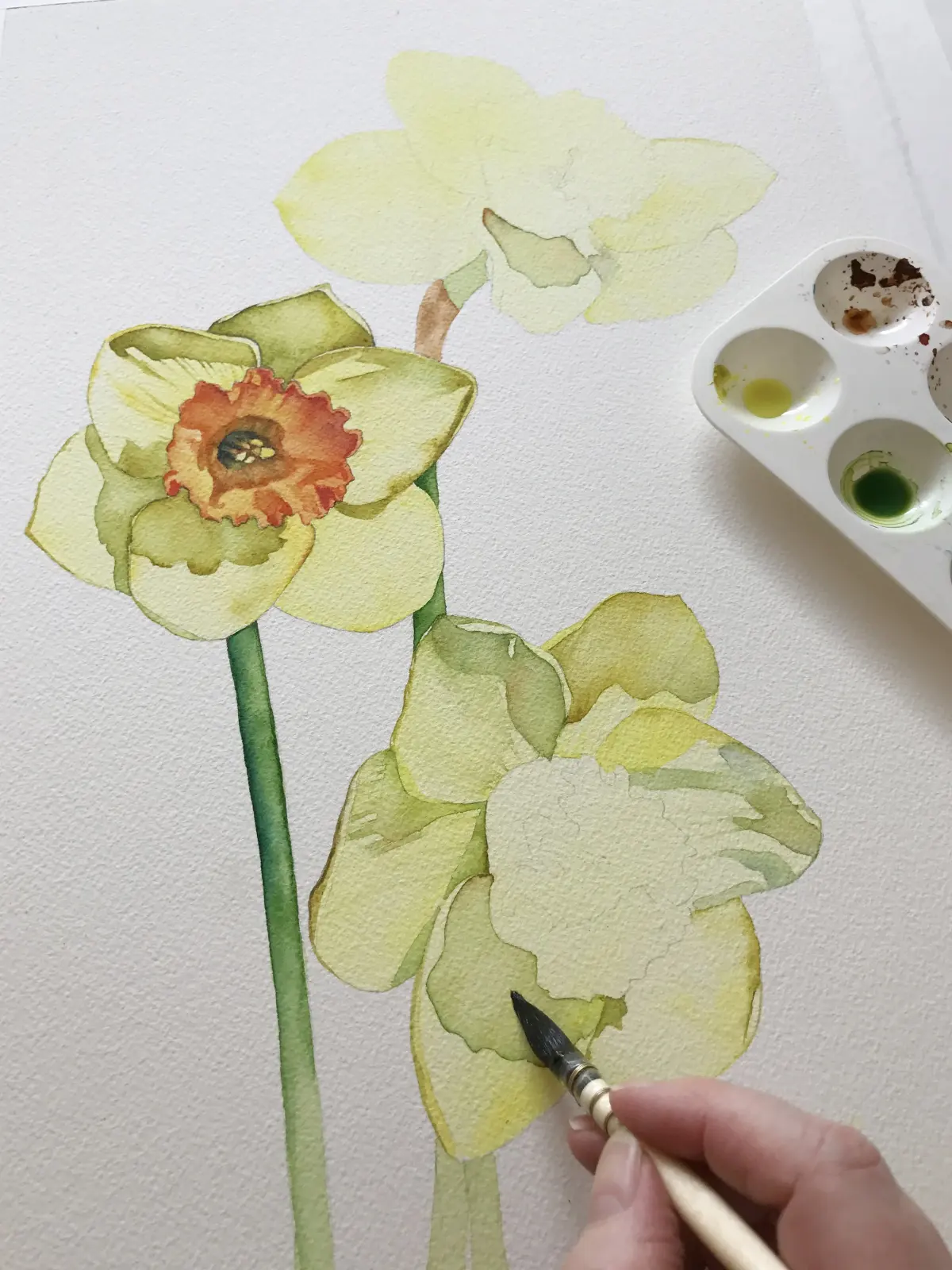
When adding details, ensure the initial layer is completely dry to prevent the colors from bleeding into each other. You can also use a "wet-on-wet" technique to achieve soft, diffused edges. Simply dampen the leaf shape with clear water first, then drop in a concentrated pigment. The paint will spread naturally across the wet surface, creating subtle color variations that mimic the organic look of sunlight hitting a leaf.
Common mistakes when painting leaves in watercolor
One of the most frequent errors is using too much water, which causes the pigment to lose its shape and create unwanted "blooms" or hard edges. Conversely, using paint that is too thick or dry can make the leaves look flat and lifeless. Always test your paint consistency on a scrap piece of paper before applying it to your main work to ensure the transparency is correct.
- Overworking the paint while it is still damp, which leads to muddy colors.
- Using a brush that is too large, making it impossible to control the fine tips of the leaves.
- Failing to leave white space, which is essential for representing highlights and the natural sheen of a leaf surface.
- Painting every leaf the exact same shade of green, which makes the composition look artificial and monotonous.
How to create realistic foliage compositions
To make your leaves look like a cohesive branch or plant, vary the angle and size of each stroke. Real leaves rarely grow in perfectly symmetrical patterns, so introduce slight curves and tilts to your branches. You can connect your leaves using thin, flowing lines painted with the very tip of your brush to represent stems.
When composing your piece, consider the light source. If the light is coming from the left, ensure that the right side of each leaf is slightly darker to create a three-dimensional effect. By consistently applying these principles of light, shadow, and organic shape, you can transform simple brush strokes into a vibrant, realistic botanical illustration that captures the essence of nature.
Key facts
- Use a round brush with a fine point to allow for both broad strokes and delicate tips.
- Apply the "wet-on-wet" technique by dampening the paper first to achieve soft, diffused color transitions.
- Mix multiple shades of green using blue and yellow pigments to avoid a flat, artificial appearance.
- Leave a thin sliver of white paper unpainted to create a crisp highlight along the leaf's center vein.
- Vary the pressure on your brush to create organic, tapered edges that mimic natural growth patterns.
- Wait for the first layer to dry completely before adding darker veins to prevent the colors from bleeding.
The bottom line
Painting watercolor leaves requires a balance of deliberate brushwork and controlled water application. By focusing on color variation, maintaining white highlights, and allowing the paper to guide the pigment flow, you can capture the organic essence of nature. Practice consistent pressure and patience during the drying process to ensure your final piece features clean, professional details that bring your botanical subjects to life on the page.
People also ask
What is the best paper weight for watercolor leaves?
Use 140-pound (300 gsm) cold-press watercolor paper. This thickness prevents the paper from buckling when saturated with water and provides enough texture to hold pigments effectively.
How do I create realistic leaf veins?
Use a small, pointed detail brush or a sharp synthetic liner brush. Gently drag the tip through the damp paint or wait until the base layer is dry to paint fine lines with a darker pigment.
Why do my colors look muddy when painting leaves?
Muddy colors often result from over-mixing pigments on the paper or using too many complementary colors at once. Rinse your brush thoroughly between color changes and avoid excessive scrubbing.
How do I achieve a gradient effect on a single leaf?
Load your brush with a light color, paint the leaf, and then drop a darker pigment into the wet edge. Gravity and water tension will pull the darker color across the leaf naturally.
Can I use masking fluid for veins?
Yes, apply masking fluid with a ruling pen or a silicone-tipped tool before painting. Once the paint is dry, rub off the fluid to reveal sharp, white veins that stand out.
How do I paint autumn leaves?
Use a palette of burnt sienna, cadmium orange, and deep crimson. Apply these colors while the paper is damp, allowing them to bleed into one another to replicate the mottled look of dying foliage.
This answer was created with the help of AI research tools and reference sources. Spotted an error? Let us know — we correct mistakes quickly. See our editorial policy.