What is value in art?
Short answer
Value in art refers to the relative lightness or darkness of a color. It is a fundamental element of design used to create contrast, depth, and volume on a two-dimensional surface. By manipulating the range of tones from pure white to deep black, artists guide the viewer’s eye and establish realistic form.
On this page
How to understand value in art
Value is independent of color; it describes the luminosity of a surface. Even in a vibrant painting, if you were to convert the image to grayscale, the underlying structure relies entirely on the relationship between light and dark tones. Artists use a value scale, typically ranging from 1 (white) to 10 (black), to organize their compositions and ensure a balanced distribution of light.
Understanding these relationships allows an artist to manipulate the viewer's perception of space. High-contrast areas—where very light values sit next to very dark values—naturally draw the eye, serving as a focal point. Conversely, areas with low contrast, where values are similar, tend to recede into the background. Mastering this concept is essential for moving beyond flat, cartoon-like illustrations toward sophisticated, three-dimensional representations.
Why value creates depth and form
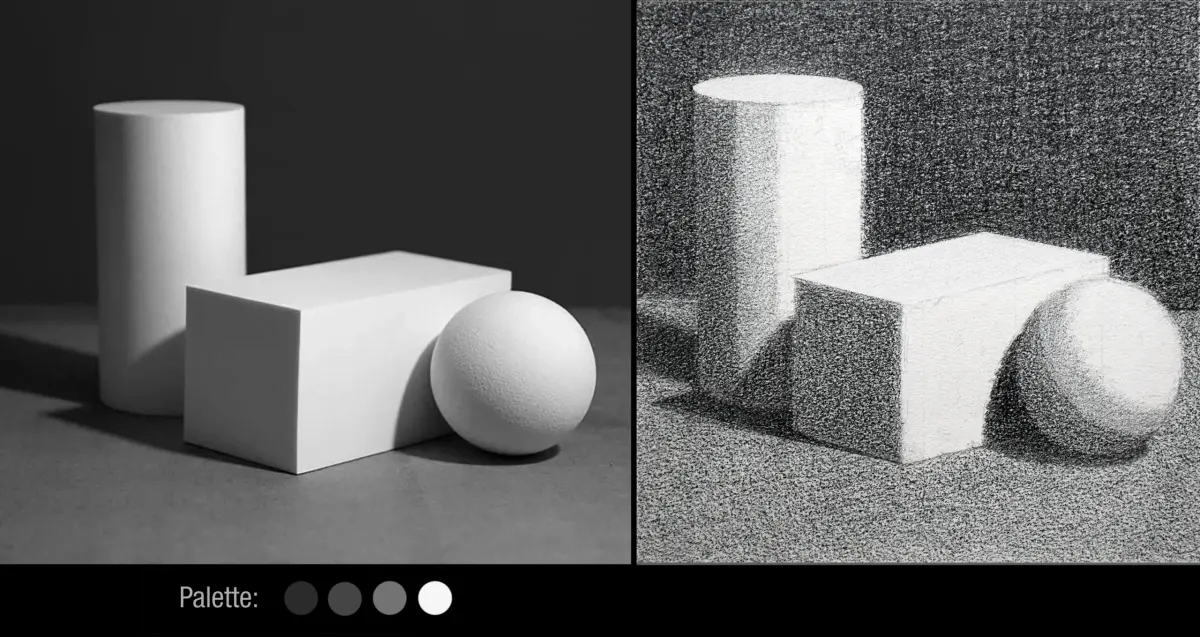
The primary function of value is to simulate the physical properties of light hitting a three-dimensional object. When light strikes a sphere, for example, it creates a predictable pattern of highlights, midtones, and shadows. By accurately rendering these transitions, an artist tricks the brain into perceiving a solid object on a flat canvas. This process is often referred to as modeling or chiaroscuro.
Without variation in value, objects appear as silhouettes or flat shapes. To create the illusion of volume, artists must look beyond the local color of an object and observe how light defines its contours. Consider these key elements of light and shadow:
- Highlight: The point where the light source hits the object directly.
- Core Shadow: The darkest area on the object itself, located away from the light.
- Cast Shadow: The dark shape projected onto surrounding surfaces by the object.
- Reflected Light: Subtle illumination bouncing back into the shadow area from the environment.
How to improve your shading technique
Developing a consistent shading technique requires practice and a disciplined approach to observation. Many beginners make the mistake of using only midtones, resulting in muddy, lifeless images. To achieve a professional look, you must push your darks to be darker and your lights to be brighter, effectively expanding your tonal range.
Follow these steps to improve your value application:
- Identify your light source and keep its position consistent throughout the work.
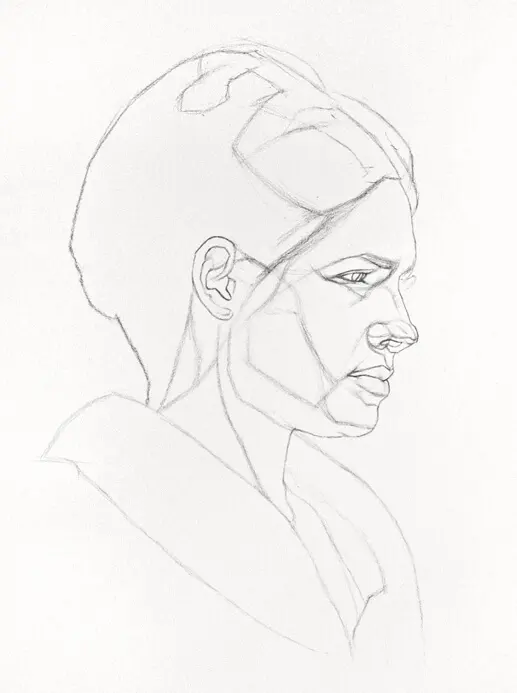
- Map out the darkest shadows first to establish the boundaries of your composition.
- Apply midtones to define the transition between light and dark areas.
- Reserve your brightest highlights for the final stage to ensure they remain crisp.
- Use a blending tool or cross-hatching to smooth transitions, ensuring that the shift between values feels natural rather than abrupt.
Common mistakes when using value
One of the most frequent errors is the "fear of the dark," where artists avoid using deep blacks or dark grays. This results in "chalky" drawings that lack punch and visual impact. Another common mistake is failing to account for ambient light, which causes shadows to appear as flat, empty voids rather than nuanced areas containing reflected light and detail.
Additionally, beginners often struggle with "value grouping." This occurs when an artist focuses on small details before establishing the overall value structure of the piece. If the large shapes of light and dark are not correctly placed, no amount of fine detail will save the composition. Always squint at your subject to blur the details; this helps you see the primary value masses clearly. If you cannot identify the main shapes of light and shadow while squinting, your composition likely lacks the necessary structure to succeed.
Best tools for practicing value
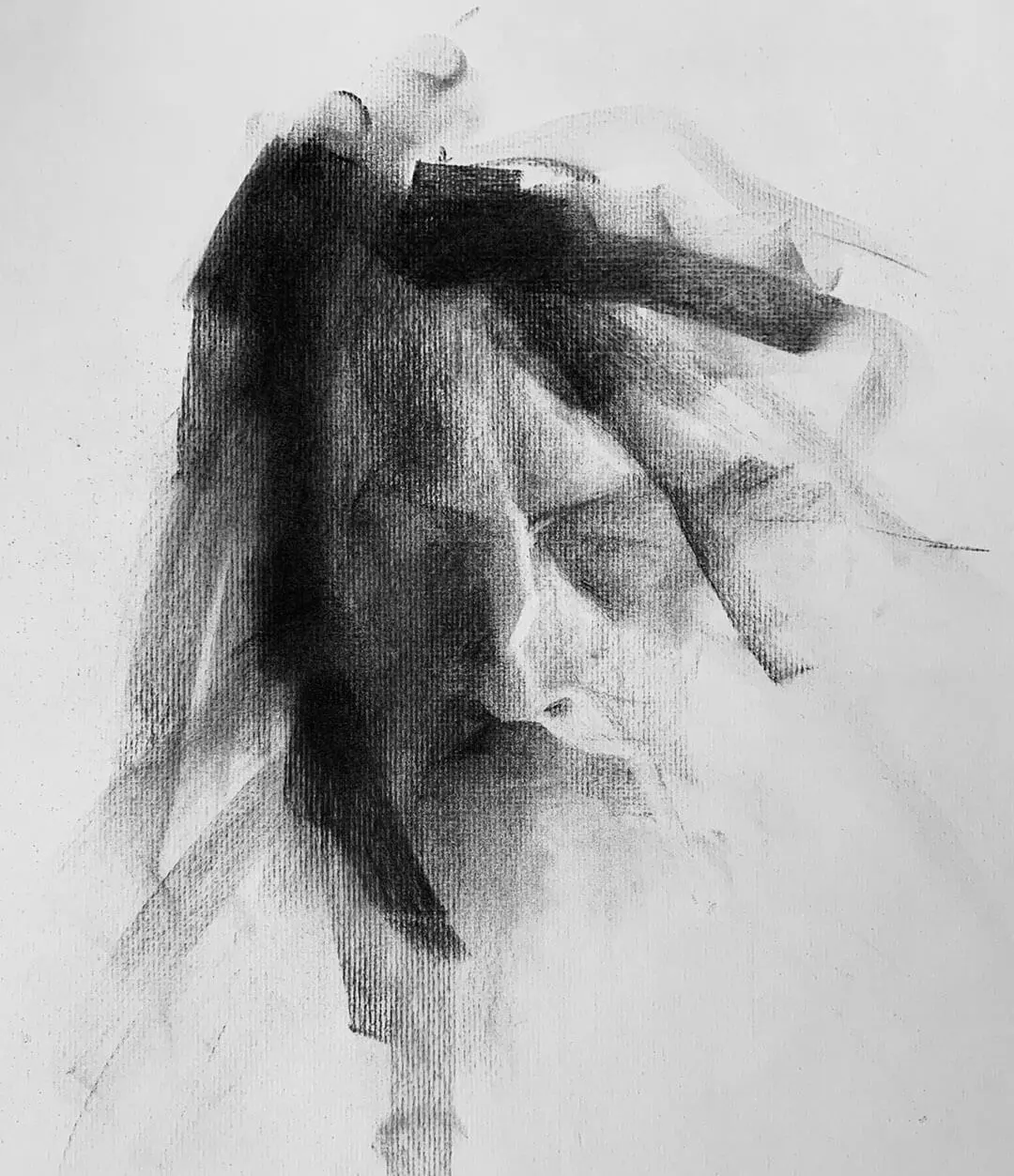
To master value, start with monochromatic media, which removes the distraction of color theory. Graphite pencils, charcoal, and ink are the industry standards for learning these principles. Graphite allows for a wide range of subtle gray tones, while charcoal provides deep, rich blacks that are excellent for high-contrast studies. Ink, particularly through techniques like stippling or hatching, forces you to be deliberate with every mark.
When practicing, use a value scale chart to calibrate your eyes. Try to match the tones in your drawing to the specific steps on the scale. Digital artists can also benefit from using "value check" layers, which temporarily turn a color image into grayscale to reveal hidden flaws in tonal balance. Regardless of the medium, the goal remains the same: to train your brain to see the world not as a collection of colors, but as a complex map of light and shadow. Consistent practice with these tools will eventually make the application of value an intuitive part of your creative process.
Key facts
- Provenance, or the documented history of an artwork's ownership, significantly increases its market value.
- Scarcity dictates that works by deceased artists often hold more stable value than those by living artists.
- Physical condition is paramount; restoration or damage can reduce an object's market price by 50 percent or more.
- The "Blue Chip" label refers to artists like Pablo Picasso or Andy Warhol, whose works consistently fetch high prices at auction.
- Authenticity is verified through catalogues raisonnés, which serve as the definitive, scholarly lists of an artist's complete works.
- Aesthetic value is subjective, but market value is established by the intersection of supply, demand, and historical significance.
The bottom line
Value in art is a complex blend of objective historical significance and subjective cultural demand. While aesthetic beauty attracts the eye, financial value is anchored by provenance, rarity, and institutional validation. For collectors, understanding the difference between personal appreciation and market potential is essential. By focusing on documented history and professional authentication, you can navigate the art market with greater confidence and avoid common financial pitfalls.
People also ask
Why do some paintings sell for millions while others cost very little?
High prices are driven by an artist's historical importance, the rarity of the piece, and the prestige of the galleries that represent them. A painting by a major figure like Jean-Michel Basquiat carries the weight of art history, whereas decorative art lacks that institutional demand.
How does an artist’s death affect the value of their work?
When an artist dies, their total body of work becomes finite, which often triggers a rise in prices due to increased scarcity. Collectors feel more confident investing because the supply will never again increase, effectively ending the artist's production.
What role do galleries play in setting art prices?
Galleries act as gatekeepers that curate an artist's career and establish a "primary market" price for new works. By placing pieces in museums and prestigious collections, they build the social proof necessary to sustain or increase market demand over time.
Can art be considered a reliable financial investment?
Art is an alternative asset class that can offer high returns but carries significant risks, including illiquidity and high transaction costs. Unlike stocks, art does not pay dividends and requires ongoing expenses for insurance, storage, and conservation.
What is the difference between aesthetic value and market value?
Aesthetic value refers to the emotional or intellectual impact a work has on a viewer, which is entirely subjective. Market value is an objective economic figure determined by what a buyer is willing to pay in a competitive auction or private sale.
How can I verify the authenticity of an artwork?
You should consult an expert or a professional appraiser who can cross-reference the piece with the artist's catalogue raisonné. Never rely solely on an unsigned certificate of authenticity, as these are easily forged and carry no legal weight without expert verification.
This answer was created with the help of AI research tools and reference sources. Spotted an error? Let us know — we correct mistakes quickly. See our editorial policy.