What is the largest flower in the world?
Short answer
The Rafflesia arnoldii is the largest individual flower in the world. Found in the rainforests of Sumatra and Borneo, this parasitic plant produces a single bloom that can reach up to three feet in diameter and weigh as much as 15 pounds, emitting a distinct odor of decaying organic matter.
On this page
What does the Rafflesia arnoldii look like?
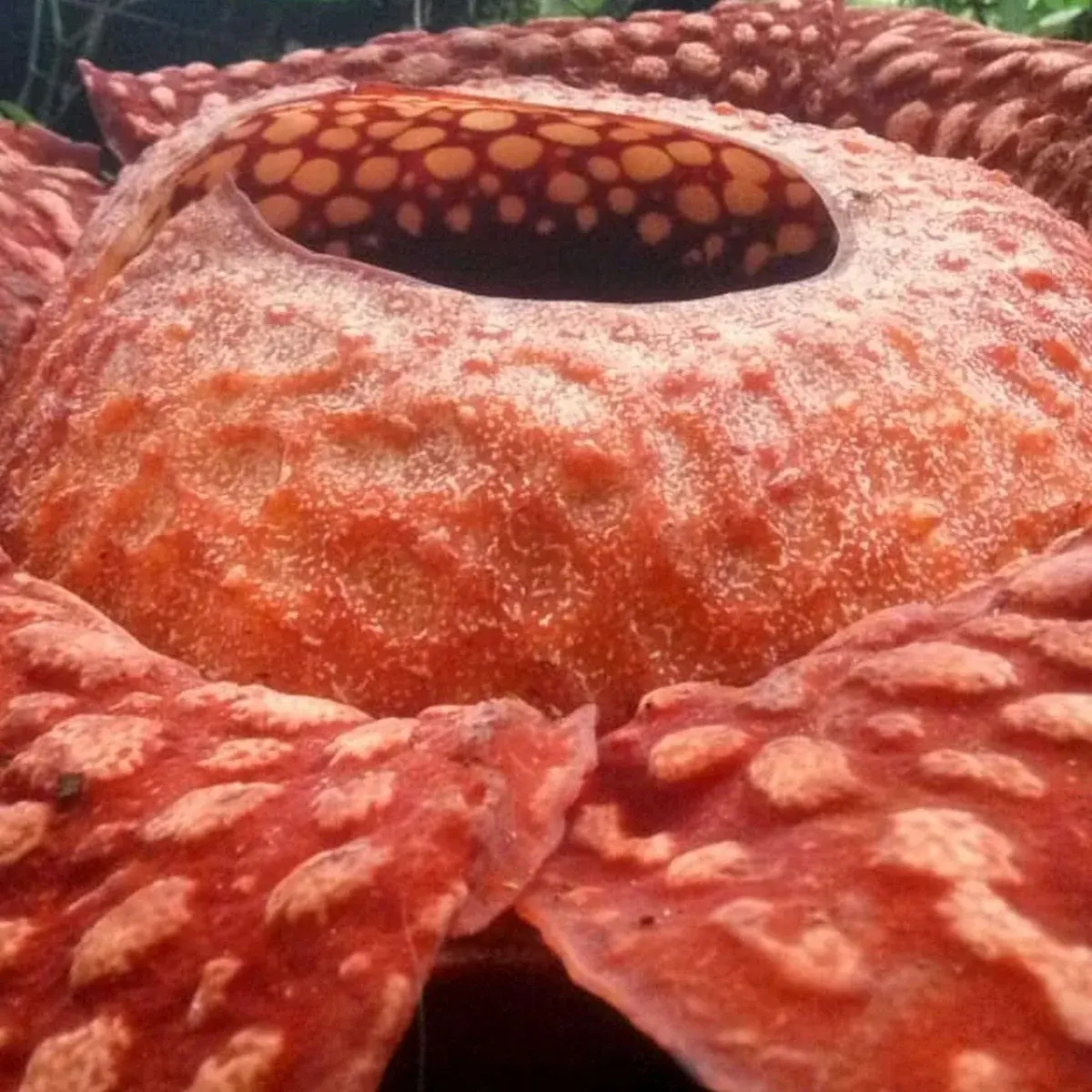
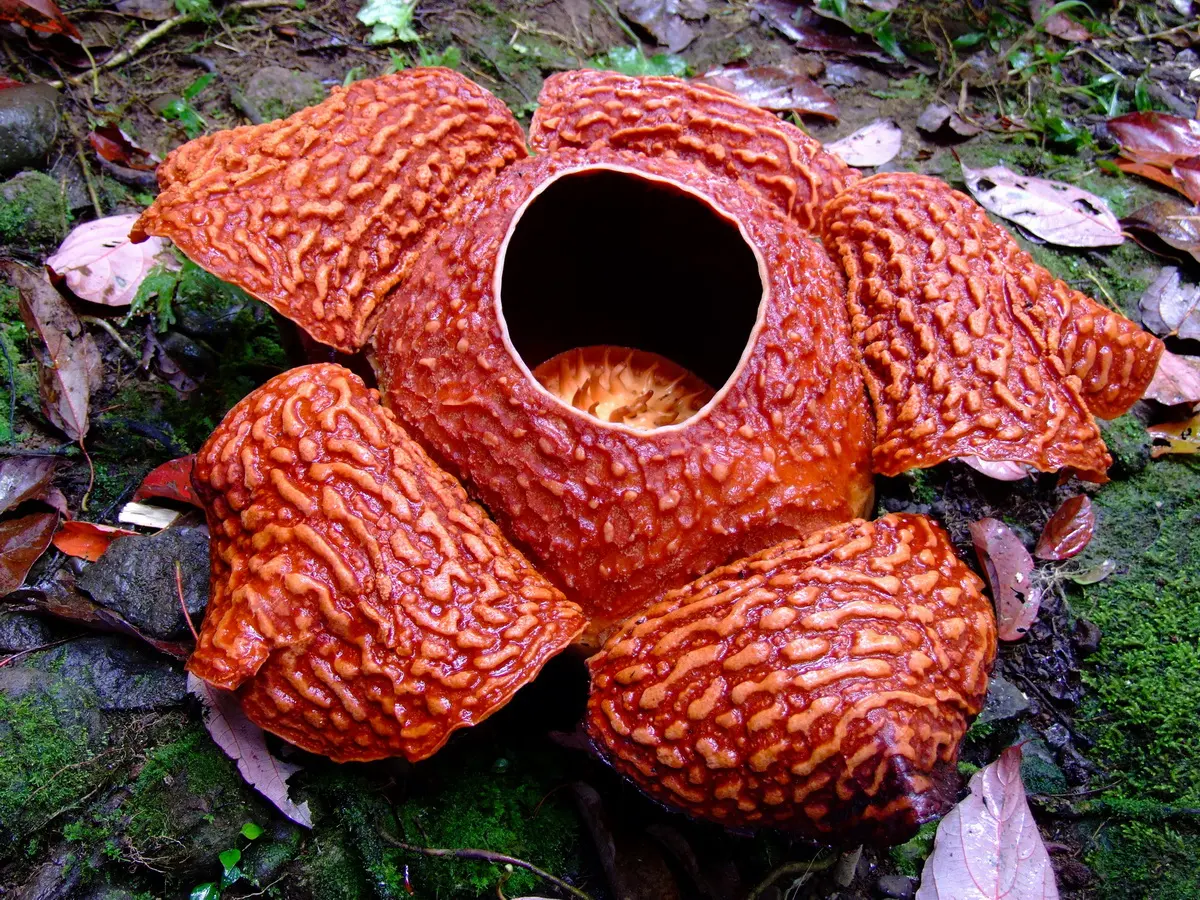
The Rafflesia arnoldii is a botanical marvel that lacks visible leaves, stems, or roots. Instead, it exists primarily as a network of thread-like filaments that live inside the tissues of its host vine, the Tetrastigma. When the plant is ready to reproduce, it pushes a cabbage-like bud through the host's bark, which eventually unfurls into a massive, five-petaled blossom. The flower is characterized by its fleshy, reddish-brown color, which is covered in white, wart-like spots that help camouflage it against the forest floor.
Because the flower is so large and heavy, it sits directly on the ground rather than growing on a stalk. The central part of the flower features a deep, bowl-shaped cavity known as a diaphragm, which can hold several liters of water. This structure is essential for the plant's survival and reproductive strategy, as it serves as a landing platform for the flies that pollinate it. Despite its impressive size, the flower is remarkably fragile and ephemeral, often lasting only a few days before it begins to decompose into a black, slimy mass.
Why does the Rafflesia smell like rotting meat?
The pungent, foul odor of the Rafflesia arnoldii is a highly specialized evolutionary adaptation designed to ensure the plant's survival. By mimicking the scent of decomposing animal flesh, the flower attracts carrion-feeding insects, particularly blowflies and carrion beetles. These insects are deceived into visiting the flower, thinking they have found a carcass to lay their eggs on or feed upon. As they crawl over the sticky, textured surfaces of the bloom, they inadvertently pick up or deposit pollen, facilitating cross-pollination between distant plants.
This strategy is common among plants that inhabit dense, dark rainforest environments where traditional pollinators like bees or butterflies may be scarce. The odor is most intense during the first few days of the bloom, which is when the plant is most receptive to pollination. While the smell is repulsive to humans, it is a highly effective chemical signal in the wild. This biological trickery is why the plant is colloquially referred to as the "corpse flower," a nickname it shares with the Amorphophallus titanum, which is a different species entirely.
How do you find a Rafflesia in the wild?
Finding a Rafflesia in its natural habitat is an extremely difficult task, even for experienced botanists. Because the plant spends most of its life cycle hidden inside the host vine, it is invisible for the vast majority of the year. When it does bloom, the flowers appear unpredictably and in remote, inaccessible areas of the Indonesian rainforest. If you are planning an expedition to see one, you must follow specific protocols to ensure both your safety and the protection of the rare plant.
- Hire a local guide who has intimate knowledge of the forest and current bloom locations.
- Visit during the transition between the wet and dry seasons, as this is when budding is most frequent.
- Wear sturdy, waterproof hiking boots to navigate the dense, muddy terrain of the jungle.
- Carry a GPS device and a map, as the forest floor is disorienting and lacks clear trails.
- Practice "leave no trace" principles to avoid damaging the delicate host vines or the surrounding ecosystem.
Common mistakes when searching for the Rafflesia
One of the most frequent errors visitors make is assuming that the Rafflesia is a common sight that can be found at any time. Many tourists travel to Sumatra or Borneo expecting to see a bloom, only to find that the plants have not flowered for months. Another common mistake is attempting to touch or harvest the bloom. The plant is incredibly sensitive to human interference, and trampling the area around the host vine can kill the internal root system, preventing future blooms from ever appearing.
- Do not attempt to dig up the host vine to take home; the plant cannot survive outside its specific parasitic relationship.
- Avoid using strong perfumes or insect repellents, as these can interfere with the scent signals that attract pollinators.
- Never clear away vegetation around the bloom for a better photograph, as this exposes the plant to harsh sunlight and dehydration.
- Do not assume that every large flower you see in the forest is a Rafflesia, as other species may mimic its appearance.
- Refrain from visiting in large groups, as the noise and vibration can disturb the local wildlife and the insects necessary for pollination.
What is the difference between Rafflesia and Titan Arum?
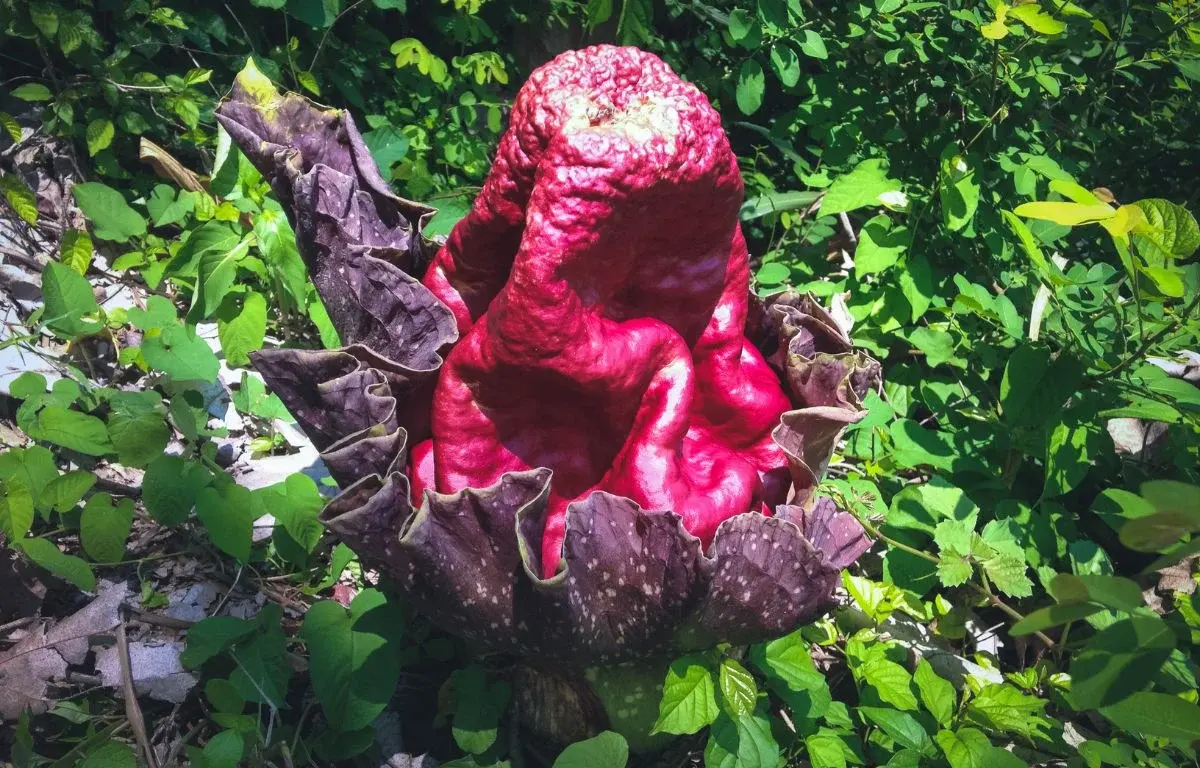
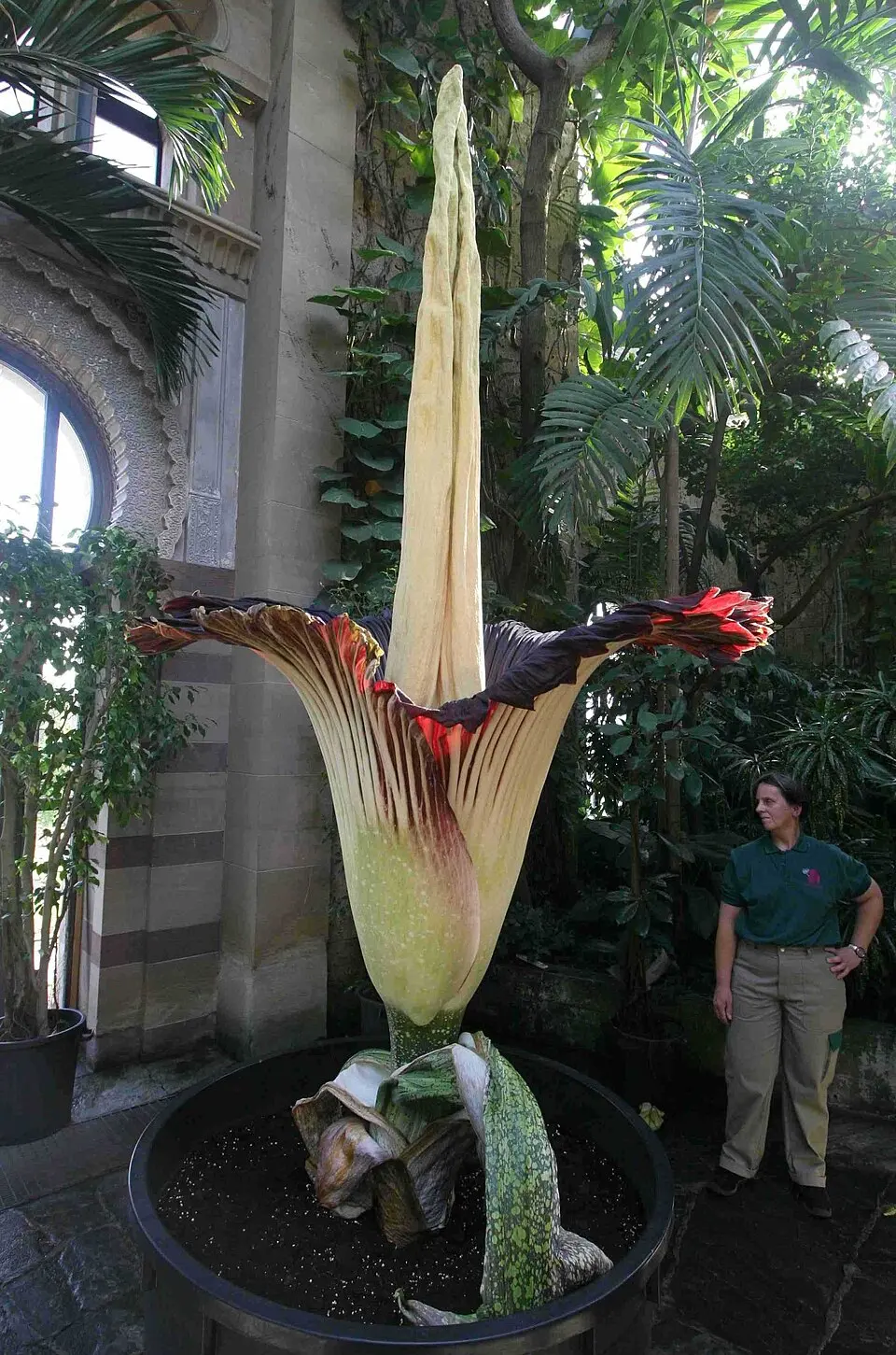
A common point of confusion is the distinction between the Rafflesia arnoldii and the Amorphophallus titanum, or Titan Arum. While both are famous for their massive size and foul odor, they belong to entirely different plant families and have different growth structures. The Rafflesia is a single, massive flower that sits on the ground. In contrast, the Titan Arum produces an inflorescence, which is a giant cluster of many tiny flowers arranged on a tall, central spike called a spadix, surrounded by a large, leaf-like structure called a spathe.
The Titan Arum can reach heights of over ten feet, making it the tallest unbranched inflorescence in the world, whereas the Rafflesia holds the title for the largest individual flower. Furthermore, the Titan Arum grows from a large underground tuber and can be cultivated in botanical gardens under specific conditions. The Rafflesia, however, has never been successfully cultivated outside of its native rainforest environment because it relies on a complex, symbiotic relationship with its host vine and specific forest soil conditions. Understanding these differences helps clarify why the Rafflesia remains one of the most enigmatic and protected species in the botanical world.
Key facts
- The Rafflesia arnoldii holds the title for the world's largest individual flower, reaching diameters of up to three feet.
- This parasitic plant lacks visible leaves, stems, or roots, drawing all its nutrients directly from the Tetrastigma vine.
- It is famously known as the "corpse flower" due to its pungent odor, which mimics rotting meat to attract carrion flies for pollination.
- The bloom is exceptionally rare and short-lived, typically remaining open for only five to seven days before decaying.
- Because it is a parasite, it cannot be grown in a traditional garden; it requires a specific host vine found only in the rainforests of Sumatra and Borneo.
- If you are traveling to see one, hire a local guide who tracks the forest floor, as the buds are difficult to spot and bloom unpredictably.
The bottom line
The Rafflesia arnoldii stands as nature’s most impressive floral giant, renowned for its massive size and unmistakable scent. While it is a biological marvel, it remains an elusive inhabitant of Southeast Asian rainforests, impossible to replicate in home gardens. Understanding its parasitic nature and reliance on specific host vines highlights the critical importance of preserving these fragile ecosystems to ensure the survival of such rare species.
People also ask
Is the Rafflesia the same as the Titan Arum?
No, the Titan Arum (Amorphophallus titanum) produces the world's largest unbranched inflorescence, which is a cluster of many tiny flowers rather than a single bloom. While the Titan Arum can grow over ten feet tall, the Rafflesia remains the largest single-stemmed flower.
Why does the flower smell like rotting meat?
The scent is a survival strategy designed to attract carrion-feeding flies and beetles. By mimicking the smell of decay, the plant successfully lures insects that facilitate pollination in the dense, dark rainforest environment.
Can I grow a Rafflesia in my backyard?
It is impossible to cultivate this flower in a domestic setting. The plant relies entirely on a complex biological relationship with a specific host vine and requires the unique, humid microclimate of the Southeast Asian rainforest.
How long does it take for the flower to bloom?
The plant spends most of its life cycle as a thread-like structure inside the host vine. It can take several months for a bud to develop, but the actual flowering event is fleeting, lasting less than a week.
Is the Rafflesia considered an endangered species?
Yes, the flower is threatened by habitat loss due to deforestation and the destruction of its host vines. Conservation efforts are focused on protecting the remaining rainforest tracts in Indonesia and Malaysia where the plant is found.
Does the flower have any medicinal uses?
While there is some traditional folklore surrounding the plant, there is no scientific evidence supporting its use as a medicine. The plant is extremely difficult to study due to its rarity and the delicate nature of its ecosystem.
This answer was created with the help of AI research tools and reference sources. Spotted an error? Let us know — we correct mistakes quickly. See our editorial policy.